Paddle Boards
Paddle Boards, Explained by the Numbers
Two specs decide whether you stand up on your first afternoon: how wide the board is and how much volume it has. Both are printed on the listing you are already looking at, and neither is usually explained.

Almost everything written about buying a first paddle board sorts boards by price and then describes them. That is a catalog, not advice. The useful question is narrower and has an actual answer: given how much you weigh and what you are carrying, which boards will hold you high enough out of the water to stand on comfortably, and which will not?
That question is settled by two published numbers — **volume** in liters and **width** at the widest point — and by one piece of physics that nobody bothers to explain. A liter of displaced fresh water supports about a kilogram. A board whose volume in liters equals your loaded weight in kilograms therefore floats you exactly at deck level: technically afloat, and completely useless to stand on. The multiplier every manufacturer publishes exists to buy back the freeboard that arithmetic just spent.
Width is the spec that decides your first afternoon
Volume decides whether the board floats you well. Width decides whether you stand up. They are not the same question and a board can pass one and fail the other — a long, narrow touring board can have plenty of volume and still put a first-timer on their knees for an hour.
Thurso Surf publishes the width bands most of the industry works to: 32 inches and over is beginner-stable, 30 to 32 inches is intermediate, and under 30 inches is an advanced shape. We add the weight dimension to that, because a 32 inch board under a 240 lb paddler sits deeper in the water and behaves nothing like the same board under a 140 lb paddler.
| Your weight | Narrowest sensible | What we would buy |
|---|---|---|
| 120 lb | 31 in | 32 in |
| 150 lb | 32 in | 33 in |
| 180 lb | 32 in | 33 in |
| 210 lb | 33 in | 34 in |
| 240 lb | 33 in | 34 in |
| 270 lb | 34 in | 35 in |
Six inches of thickness, not four
Thickness is the third number and the one most often mistaken for something else. A four-inch inflatable board flexes in the middle under an adult, and that flex — the board bending a little under your feet with every stroke — is what people describe as the board feeling unstable. It is not instability, it is sag, and six inches of drop-stitch construction almost eliminates it.
Drop-stitch is thousands of threads running between the top and bottom skins of the board, holding them a fixed distance apart when the board is inflated. It is what makes an inflatable board rigid enough to be a board rather than a lilo, and it only works at pressure. A board two PSI under its rated figure feels soft in exactly the way a four-inch board does, which is why the pump you use matters more than it should.
What to read on the listing, in order
- **Width at the widest point.** 32 to 34 inches for a first board. This is the number that decides whether you stand up today.
- **Rated capacity.** Multiply by 0.65 to get the load the board actually behaves well at. A 330 lb board is a 215 lb board in practice.
- **Thickness.** Six inches. Four-inch boards exist and they are for children and very light adults.
- **Length.** 10 ft to 10 ft 6 in is the all-around default. 11 ft 6 in tracks better and turns worse. Under 9 ft is a child's board.
- **Board weight.** Under 25 lb, ideally. This is the number that decides how often you carry it past the first parking lot, and a surprising number of listings do not publish it at all.
If a listing does not publish one of those, that absence is information. We say so explicitly on every pick where it happens rather than filling the gap with a plausible figure.
Start here
- **Do not know your size yet?** Work out your volume and width from your weight — it takes about ten seconds and it shows its working.
- **Not sure a board is even the right craft?** Kayak or paddle board is the honest comparison, and we earn the same either way.
- **Worried about the inflatable question?** Inflatable versus hard settles it, and for a first board the answer is nearly always inflatable.
- **Want to know the real total?** What a first setup actually costs adds up the board, the paddle, the PFD and the parts nobody mentions.
We have not paddled these boards
That is worth saying plainly at the top of a section that recommends things. Every large site in this category claims to have tested the gear, and some of them genuinely have. We have not, and we are not going to imply otherwise to look more like them.
What we did instead is compile the published specifications from manufacturer listings and spec sheets, run the displacement and capacity arithmetic on them, and show every step so you can check it. That is a smaller claim than a test lab and it is a claim that happens to be true. Here is the full methodology, including what we would need to change before we could honestly say anything stronger.
Every page in this section
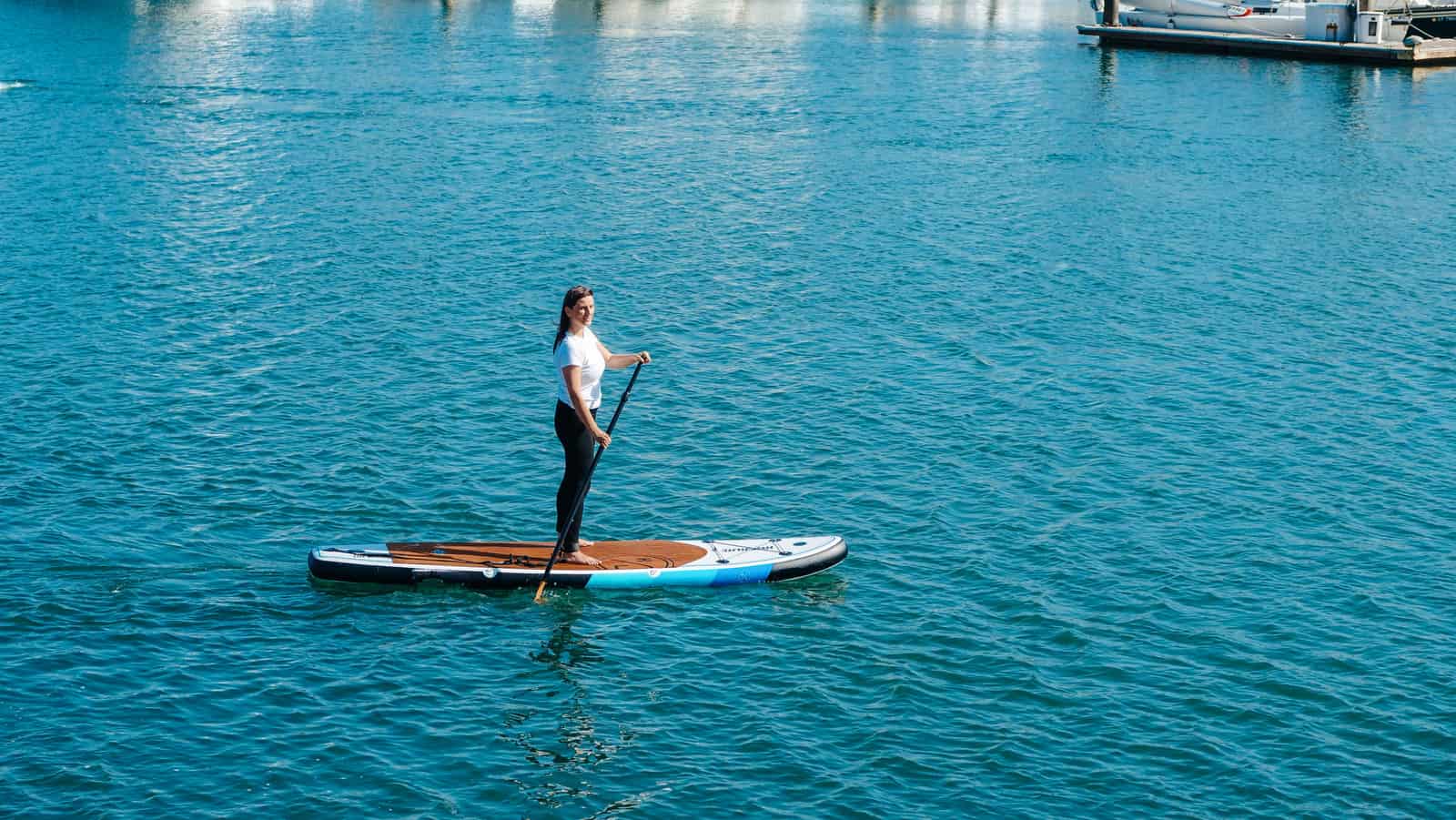
Best First Board
The Best Paddle Boards for Beginners
Five beginner boards ranked on published width and usable capacity, with the displacement arithmetic run on each one.
Top pick
Roc Inflatable Stand Up Paddle Board, 10 ft 6 in x 33 in
The default first inflatable board
#ad · how this is funded · price as of October 18, 2026
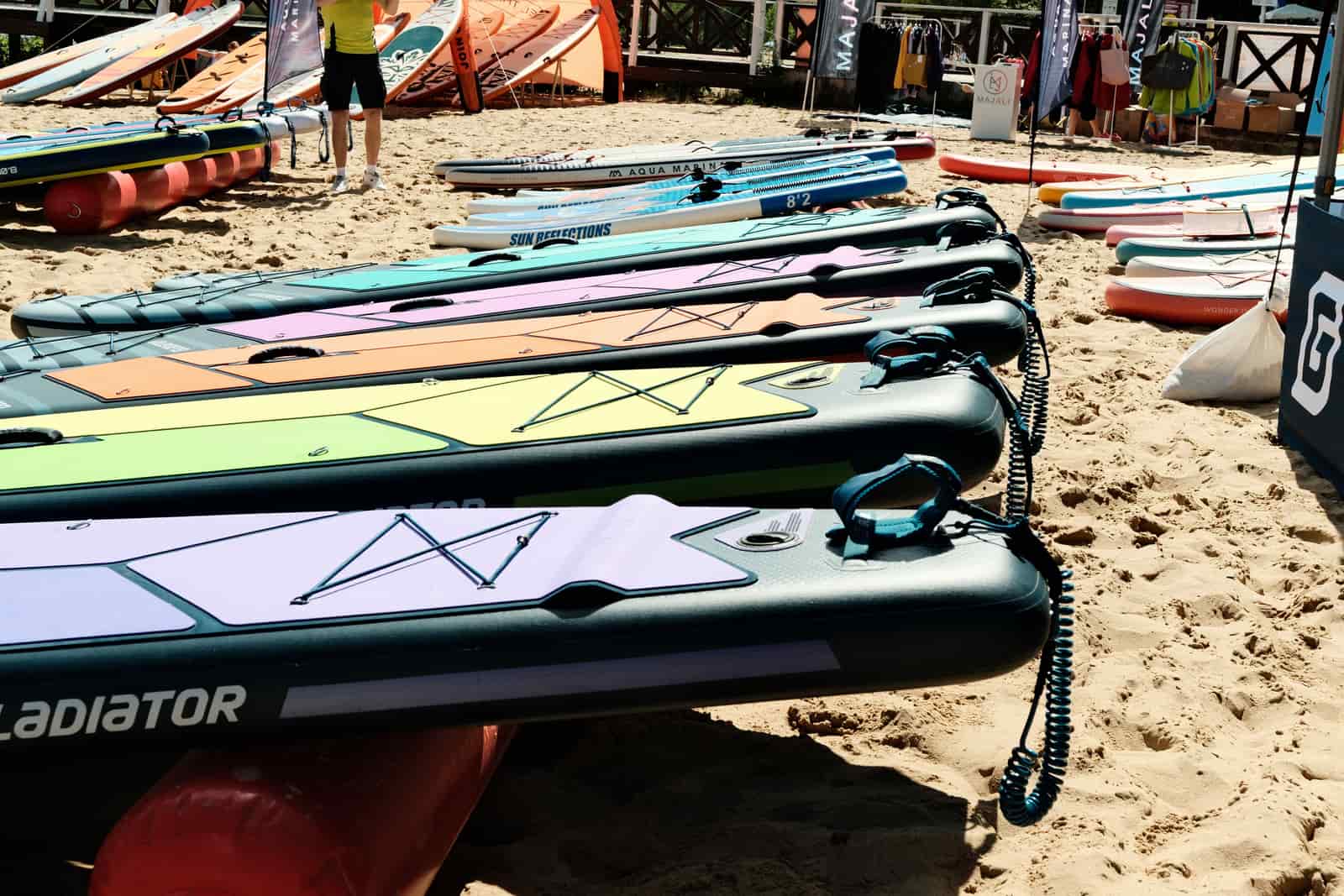
Best Inflatable
The Best Inflatable Paddle Boards
Inflatable SUPs ranked on width, thickness, capacity and packed weight, with every figure read off the listing.
Top pick
Roc Inflatable Stand Up Paddle Board, 10 ft 6 in x 33 in
The default first inflatable board
#ad · how this is funded · price as of October 18, 2026

What Size Paddle Board Do I Need?
A volume and width calculator that shows its working, and ends in an actual board rather than a chart.
Top pick
Roc Inflatable Stand Up Paddle Board, 10 ft 6 in x 33 in
The default first inflatable board
#ad · how this is funded · price as of October 18, 2026

Inflatable vs Hard Paddle Board
Hard boards are better boards. Inflatables are better first boards. Here is exactly where each one wins.
Top pick
Roc Inflatable Stand Up Paddle Board, 10 ft 6 in x 33 in
The default first inflatable board
#ad · how this is funded · price as of October 18, 2026

Best with a Dog
The Best Paddle Boards for Dogs
A dog is 30 to 90 lb of load that moves. Boards with the width and usable capacity to take it.
Top pick
FunWater Inflatable Stand Up Paddle Board, 10 ft 6 in x 35 in
Maximum stability in a standard length
#ad · how this is funded · price as of October 18, 2026
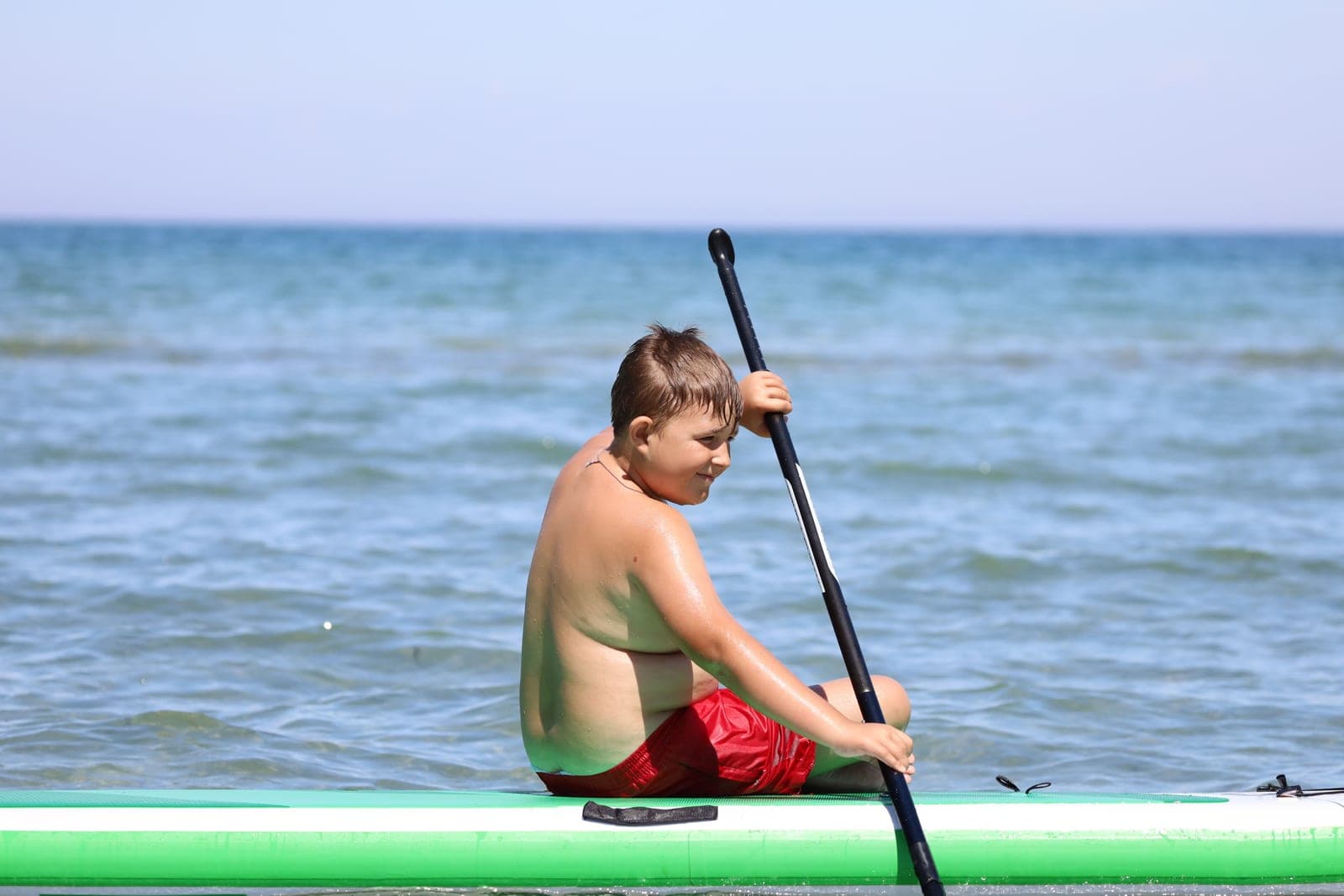
Best for Kids
The Best Paddle Boards for Kids
Kids' boards sized on weight and reach, plus the point at which a narrow adult board becomes the better buy.
Top pick
Retrospec Weekender-Nano Inflatable Paddle Board, 8 ft
A child's own board
#ad · how this is funded · price as of October 18, 2026

Paddle Board Weight Limits, Explained
Rated capacity is not usable capacity. The 65 percent rule, where it comes from, and what happens when you ignore it.
Top pick
SereneLife XL Extra-Wide Inflatable Paddle Board, 35 in
A heavier paddler, or a board that carries the family
#ad · how this is funded · price as of October 18, 2026
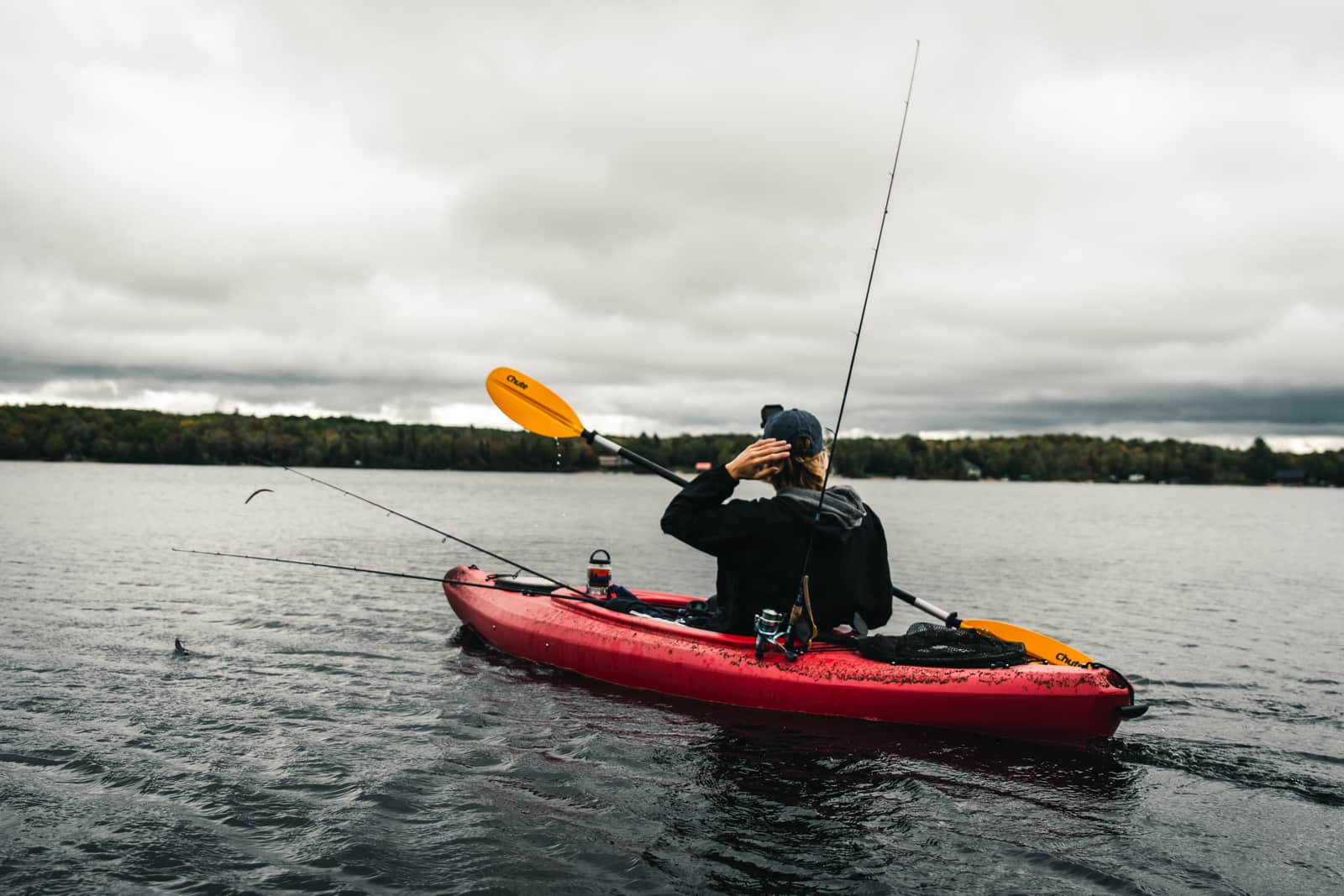
Best for Fishing
The Best Paddle Boards for Fishing
Fishing boards need width, capacity for tackle, and a seat. Here is what actually changes versus a normal board.
Top pick
Retrospec June Inflatable Fishing Paddle Board, 11 ft 6 in
Fishing, or paddling seated
#ad · how this is funded · price as of October 18, 2026
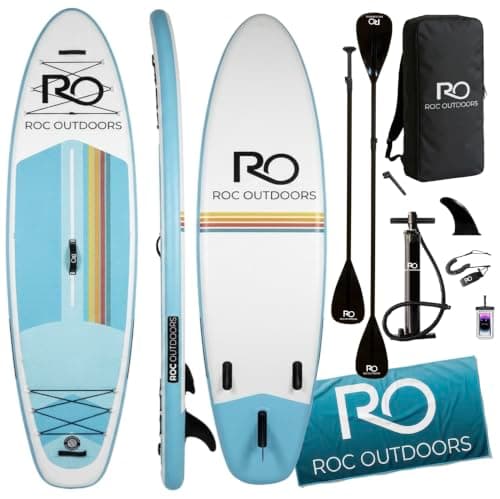
Roc 10'6" Inflatable Paddle Board: What the Specs Say
33 inches wide, 6 inches thick, rated to 350 lb — the numbers behind the most-recommended first board there is.
Top pick
Roc Inflatable Stand Up Paddle Board, 10 ft 6 in x 33 in
The default first inflatable board
#ad · how this is funded · price as of October 18, 2026
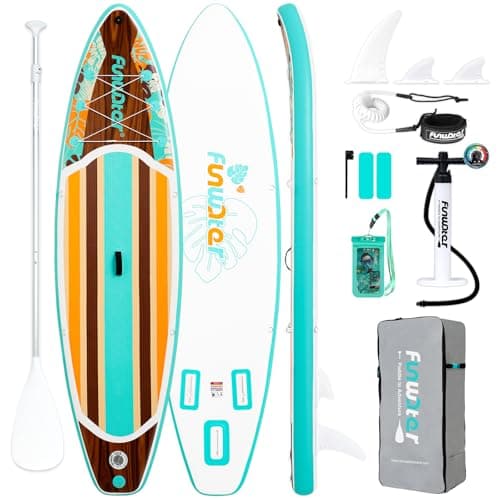
FunWater 10'6" Paddle Board: What 35 Inches Buys You
35.1 inches wide in a standard 10 ft 6 in length — the most forgiving shape here, and what that width costs.
Top pick
FunWater Inflatable Stand Up Paddle Board, 10 ft 6 in x 35 in
Maximum stability in a standard length
#ad · how this is funded · price as of October 18, 2026
Bigfly 11'6" Paddle Board: Distance Without the Wobble
138 x 35 x 6 in at 19.8 lb — a foot more waterline than an all-around board with none of the usual narrowing.
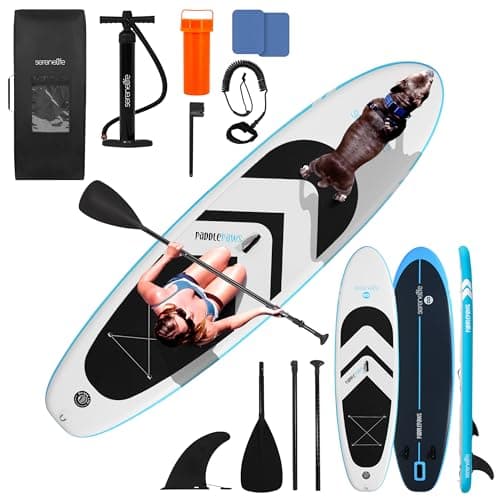
SereneLife XL Extra-Wide Paddle Board: What the Specs Say
35 in wide with up to 485 lb rated — the most usable load here, provided you buy the size the number belongs to.
Top pick
SereneLife XL Extra-Wide Inflatable Paddle Board, 35 in
A heavier paddler, or a board that carries the family
#ad · how this is funded · price as of October 18, 2026
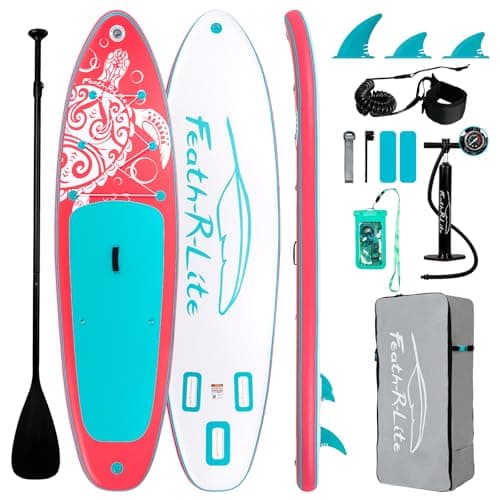
FEATH-R-LITE 10 ft 6 in Paddle Board: What the Specs Say
18.9 lb published board weight and 330 lb rated — the lightest carry here, with a width that sets a limit on paddler size.
Top pick
FEATH-R-LITE Inflatable Stand Up Paddle Board, 10 ft 6 in x 31.5 in
The lightest board to carry to the water
#ad · how this is funded · price as of October 18, 2026

Best for Rivers
The Best Paddle Boards for Rivers
Rivers reward short boards, inflatable hulls and a flexible fin. Which of our picks suit moving water, and where the honest line is for a beginner.
Top pick
Roc Inflatable Stand Up Paddle Board, 10 ft 6 in x 33 in
The default first inflatable board
#ad · how this is funded · price as of October 18, 2026
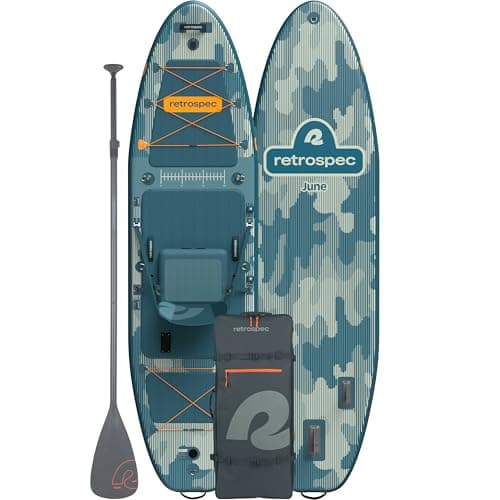
Retrospec June 11 ft 6 in Fishing Paddle Board: What the Specs Say
35 in wide, 24.5 lb, rated to 320 lb, with a removable seat — the numbers behind a fishing board that suits nervous beginners just as well.
Top pick
Retrospec June Inflatable Fishing Paddle Board, 11 ft 6 in
Fishing, or paddling seated
#ad · how this is funded · price as of October 18, 2026
Best for Heavier Paddlers
The Best Paddle Boards for Heavier Paddlers
Rated capacity divided by 0.65 is the number that fits you, and it rules out most beginner boards above about 215 lb. The boards with genuine headroom, ranked.
Top pick
SereneLife XL Extra-Wide Inflatable Paddle Board, 35 in
A heavier paddler, or a board that carries the family
#ad · how this is funded · price as of October 18, 2026

Best Budget Board
The Best Budget Paddle Boards
The entry-tier boards where the compromise is one you can live with — a missing spec, a narrower deck, a starter paddle — named per board so you choose the right one.
Top pick
Roc Inflatable Stand Up Paddle Board, 10 ft 6 in x 33 in
The default first inflatable board
#ad · how this is funded · price as of October 18, 2026

Roc vs FunWater Paddle Board
The two entry boards everyone cross-shops, compared on the only two published specs that differ: width and rated capacity. Which to buy, by paddler.
Top pick
Roc Inflatable Stand Up Paddle Board, 10 ft 6 in x 33 in
The default first inflatable board
#ad · how this is funded · price as of October 18, 2026

Best for Yoga
The Best Paddle Boards for Yoga
Width for balance, length to lie down, and a deck with nothing on it. The three specs that make a board work for yoga, and which of ours have them.
Top pick
FunWater Inflatable Stand Up Paddle Board, 10 ft 6 in x 35 in
Maximum stability in a standard length
#ad · how this is funded · price as of October 18, 2026
Lightest to Carry
The Lightest Paddle Boards, and What a Board Really Weighs
Published board weights run 12.2 to 24.5 lb across the boards we cover — and three of seven publish nothing at all. The lightest boards, and what light costs you.
Top pick
FEATH-R-LITE Inflatable Stand Up Paddle Board, 10 ft 6 in x 31.5 in
The lightest board to carry to the water
#ad · how this is funded · price as of October 18, 2026
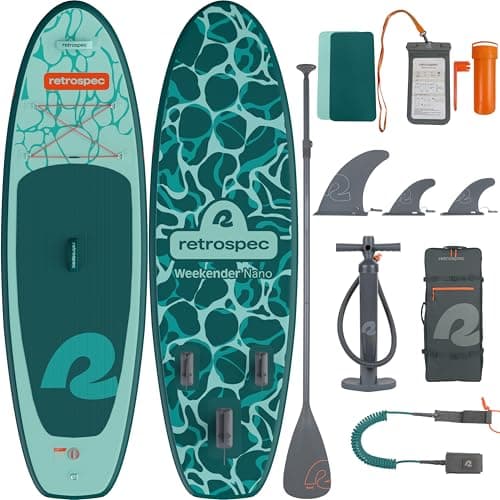
Retrospec Weekender-Nano: The Board a Child Can Actually Carry
12.2 lb, 8 ft 6 in and 28 in wide, with paddle, pump and backpack in the box. Rated 140 lb, which is the number that decides how many seasons you get.
Top pick
Retrospec Weekender-Nano Inflatable Paddle Board, 8 ft
A child's own board
#ad · how this is funded · price as of October 18, 2026
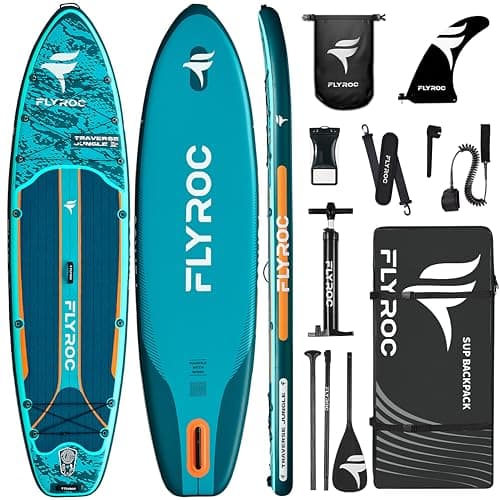
Flyroc 11'6" x 35": Distance Without Giving Up Width
138 x 35 x 6 in, 450 lb rated and a published 18 lb. A foot more waterline with no narrowing — and two listing figures we would treat carefully.
Top pick
Flyroc 11 ft 6 in x 35 in Inflatable Paddle Board
Distance without giving up width
#ad · how this is funded · price as of October 18, 2026
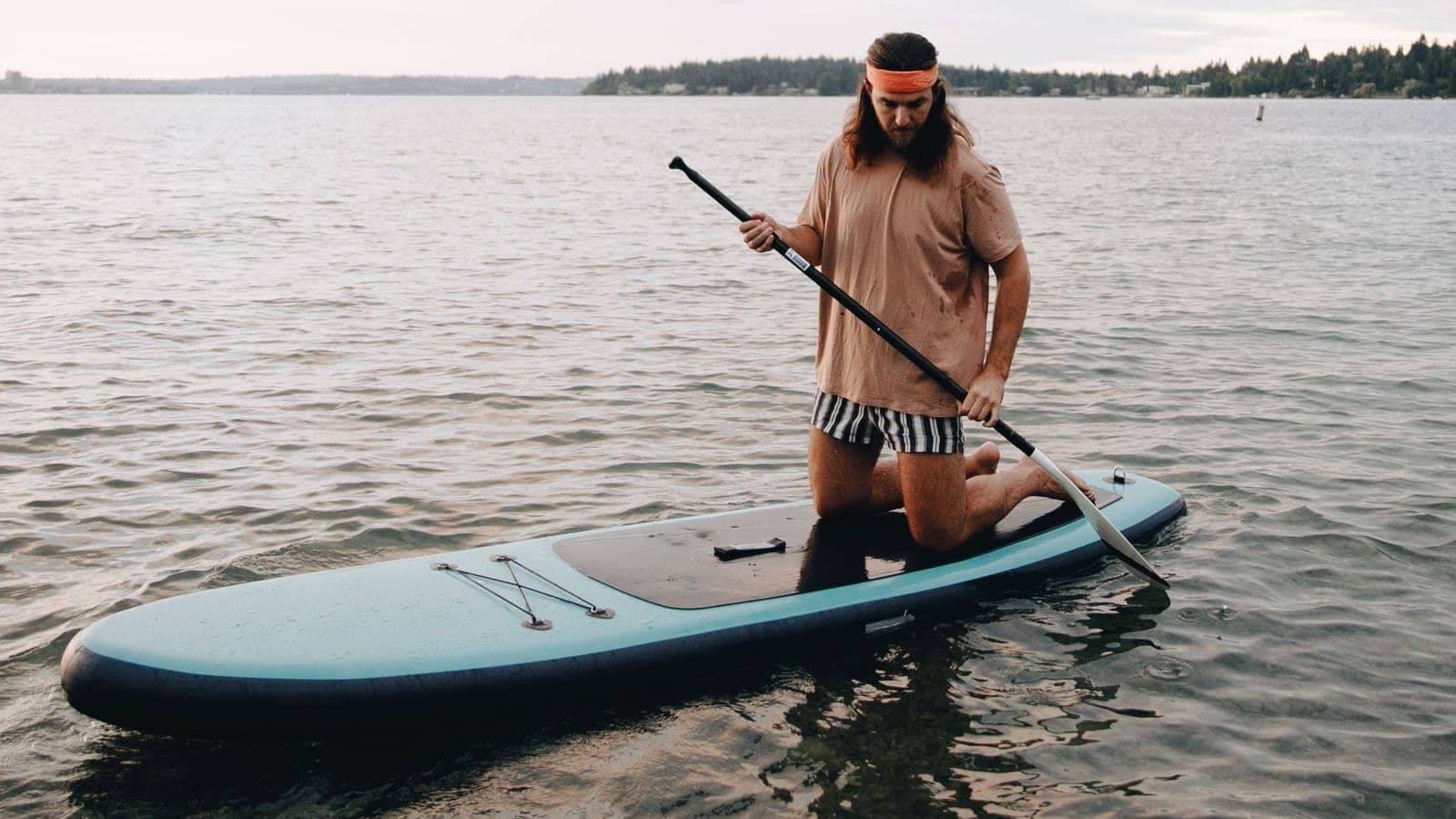
Can You Use a Paddle Board Like a Kayak?
A seat and a convertible paddle turn a board into a sit-down craft. The two parts, the boards they fit, and the three things you give up.
Top pick
Pelican Sit-on-Top Kayak or SUP Seat
A Pelican or Lifetime sit-on-top, or a paddle board
#ad · how this is funded · price as of October 18, 2026
Can Two People Ride One Paddle Board?
Two adults need about 400 lb rated and 35 in of width. Why most beginner boards cannot do it, and the three that can.
Top pick
Retrospec Weekender XL Inflatable Paddle Board, 11 ft
Two adults who want one board, not a raft
#ad · how this is funded · price as of October 18, 2026
Questions people actually ask
What size paddle board do I need for my weight?
Is a 10'6" board big enough for me?
Should my first board be inflatable or hard?
How wide should a beginner paddle board be?
Do I really need a life jacket on a paddle board?
How much does a complete paddle board setup cost?
Where these numbers came from
Every figure on this page traces to one of these. Where a number could not be sourced, the page says so rather than estimating it.
- Thurso Surf — What Size Paddle Board Is Right for You (manufacturer, states the weight-in-kg x 2 volume rule and the 32 in beginner width band)
- Eddyline Kayaks — Maximum weight capacity versus ideal capacity for various styles of kayaks (manufacturer, states the 60-70% ideal-capacity band)
- ISLE Paddle Boards — Paddle Board Size & Weight Chart (manufacturer, published per-model capacities)
- U.S. Coast Guard — Life Jacket Wear / Wearing Your Life Jacket (federal carriage and under-13 wear requirements)
Why there is nothing to buy on this page: This is the section's front door, not a roundup. The picks live on the pages below, each of which carries its own top choice, its published specs and a live buy link.