Choosing Your First
Your First Time on the Water
Very little goes wrong on flat water in warm weather with a life jacket on. The things that do go wrong are predictable, which means they are avoidable.

We have not paddled these, and we are not going to pretend we have. Here is what we did instead. Links to Amazon earn us a commission at no extra cost to you, and commission never decides a pick — how this site is funded.
| # | Product | Best for | The spec it turns on | Price |
|---|---|---|---|---|
| 1 | 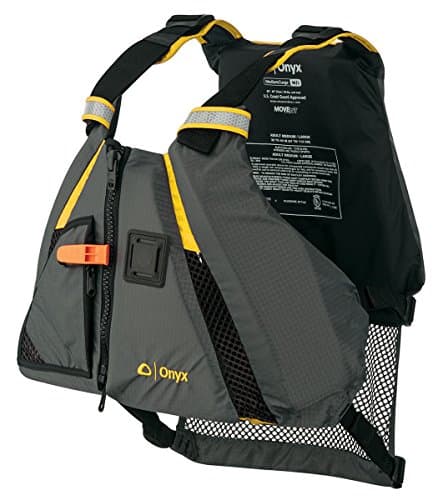 Onyx MoveVent Dynamic Paddle VestTop pickA paddling-cut vest with a mesh lower back, which is the design difference that stops a PFD from being pushed up your neck every time you sit against a seat back. | The PFD you will actually keep on | USCG and Transport Canada approved, 90 to 300 lb range, 1.7 lb, ventilated back panel | |
| 2 | 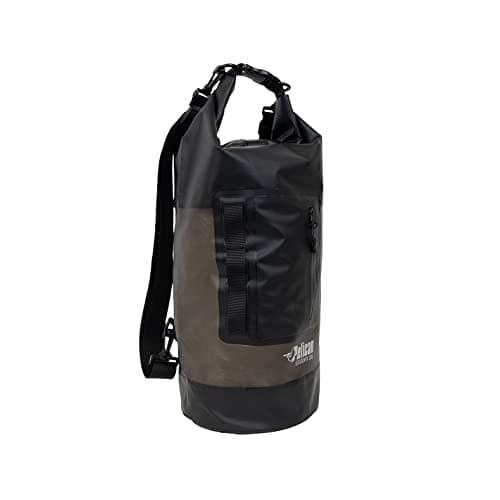 Pelican ExoDry 20L Dry BagTwenty liters is the size that takes a dry layer, a towel, a phone and a lunch -- which is the actual list, rather than the 5 L that only takes a phone. | Keeping the phone, keys and a dry layer dry | 20 L, roll-top closure, shoulder straps, 1.2 lb | |
| 3 | 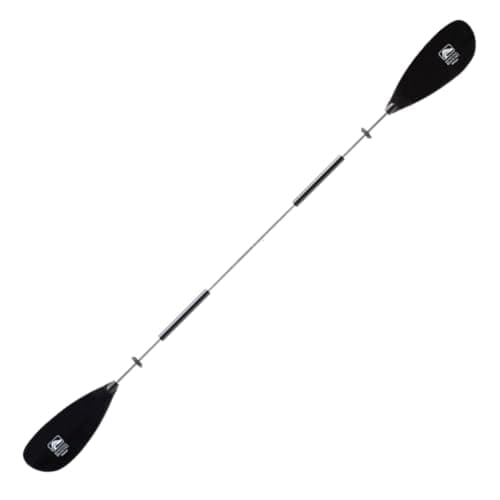 Bending Branches Whisper Kayak Paddle, 230 cm230 cm is the length our formula puts most adults in a 28 to 32 in recreational kayak on, and this is the least expensive paddle at that length made by a company that only makes paddles. | The first paddle worth keeping | 230 cm, two-piece aluminum shaft, polypropylene blades, 0 and 60 degree feathering |
Flat water, warm day, life jacket on: this is one of the lower-risk outdoor activities there is. That is the honest framing and it should not be buried under a wall of hazard warnings.
It is also an activity where the small number of things that go wrong go wrong in predictable ways, and where a first outing done badly puts people off permanently. So here is what to expect and the short list that actually matters.
Choosing where and when
- **Pick water you could stand up in.** A small lake, a sheltered bay, a slow river. That single choice converts every possible mistake from an incident into a story.
- **Go in the morning.** Wind almost always builds through the day, so a calm start is more reliable than a calm afternoon.
- **Check the wind forecast, not the weather forecast.** Under 10 mph is comfortable. Above 12 mph a beginner will spend the session steering rather than paddling.
- **Check the water temperature, not the air temperature.** Air at 75 degrees and water at 55 is a spring day that feels warm and is not. Cold water is what makes an unplanned swim serious.
- **Tell somebody where you are going and when you will be back.** Thirty seconds, and it is the whole rescue plan.
What to bring
This list is deliberately short. A long list is a list nobody follows.
- **The life jacket, worn.** Not in the boat. It is legally required and this is the reason it exists.
- **Water.** More than you think. Paddling in sun is dehydrating in a way that does not feel like effort.
- **A dry bag with your phone, keys and a warm layer.** 20 liters is the useful size.
- **A whistle**, on the PFD. Sound carries across water far better than a voice does.
- **Sun protection.** Water reflects, so you burn from above and below. Long sleeves beat sunscreen for a whole afternoon.
- **Shoes you can swim in.** Not flip-flops, which come off, and not bare feet on a launch you cannot see the bottom of.
What the first hour is actually like
In a kayak: you will feel unstable for about ninety seconds and then you will not. Recreational kayaks are stable and the sensation passes almost immediately. You will paddle in a slight zigzag for the first twenty minutes, which is normal and self-correcting. Your arms will not be tired; your lower back might be, and that is a seat and posture issue rather than a fitness one.
On a board: start on your knees. Paddle a hundred yards kneeling to get a feel for how the board moves, then stand up in one motion with the paddle across the board for support. You will probably fall in at some point in the first session and it will be fine. Your legs and feet will ache before your arms do, which surprises everyone.
The three mistakes beginners reliably make
1. Going too far out
The single most common error. Paddling out is easy and interesting and you feel fine; the return leg is into the wind that has built while you were out, with tired arms. Turn back at half your energy rather than half your time.
2. Going out in wind
A breeze that feels pleasant on the bank is a significant force on the water, especially standing on a board. If the forecast says 15 mph, do something else. This is not caution — it is the difference between an enjoyable first session and a demoralizing one.
3. Not wearing the life jacket
Carrying one satisfies the federal requirement for an adult. Wearing one is what actually works, because the moment you need it is the moment you cannot reach it. This is also the only item on the list where the cheap version and the expensive version differ in exactly the way that matters: comfort determines whether it stays on.
If you fall in
- **Stay with the craft.** A board or a boat floats, is large, and is visible. You are neither.
- **Get your breath back before doing anything.** Cold water makes you gasp involuntarily for about a minute. Hold onto the boat and wait for it to pass.
- **Off a board: pull yourself on from the side, at the middle**, not the nose or tail. Grab the far rail, kick, and slide on flat.
- **Off a sit-on-top: same principle.** Get your chest across the deck at the middle, then swing a leg over and roll.
- **Off a sit-inside in deep water: this is the hard one.** The cockpit fills. Get to shore with the boat if you possibly can, rather than trying to re-enter and pump in deep water. This is the main argument for a sit-on-top as a first boat.
The three things worth buying before the first trip
Top pick — The PFD you will actually keep on
Onyx MoveVent Dynamic Paddle Vest
A paddling-cut vest with a mesh lower back, which is the design difference that stops a PFD from being pushed up your neck every time you sit against a seat back.
What the listing publishes
USCG and Transport Canada approved, 90 to 300 lb range, 1.7 lb, ventilated back panel
The U.S. Coast Guard requires a wearable approved PFD for every person aboard a recreational vessel, and requires children under 13 to wear one while under way. Kayaks, canoes and paddle boards count as vessels. Carrying it satisfies the law for adults; wearing it is what actually works.
The 90 to 300 lb rating on the listing is a chest-size and buoyancy fit range, not a capacity. Get the size right -- a PFD that rides up when you lift your arms is one you will take off.
The ventilated back panel exists because kayak seats have backrests. A flat-backed general-purpose vest and a seat back fight each other for the same space, and the vest loses.
What it does well
- Cut for paddling, so the lower back clears a kayak seat
- Ventilated panel makes it bearable in real summer heat
- USCG and Transport Canada approved, which is the only certification that counts
What it costs you
- Costs several times a general-purpose orange vest
- Sized ranges mean you must check the fit chart, not just buy a Medium
- Mesh back panels snag on rough gear
Skip this if this is a once-a-year rental-style outing. A cheap approved vest is legally identical and the comfort argument only pays off with hours in it.
#ad · how this is funded · price as of October 18, 2026
Pick 2 — Keeping the phone, keys and a dry layer dry
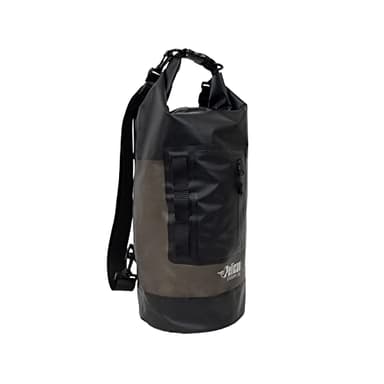
Pelican ExoDry 20L Dry Bag
Twenty liters is the size that takes a dry layer, a towel, a phone and a lunch -- which is the actual list, rather than the 5 L that only takes a phone.
What the listing publishes
20 L, roll-top closure, shoulder straps, 1.2 lb
Roll-top closure is the whole mechanism. Three folds and a clip, and it is watertight; two folds and it is a bag with a hole in it. Roll it properly.
20 L is the useful size for a day. 5 L bags are for a phone and a wallet, and 30 L bags do not fit through a kayak hatch.
It floats when it is sealed and mostly full of soft goods, which is a genuine safety feature the day something goes over the side.
What it does well
- 20 L is the size that actually holds a day's kit
- Roll-top and clip, so there is no zip to fail
- Shoulder straps for the walk from the car
What it costs you
- Roll-tops are only waterproof if you roll them three times
- Wide bags can be awkward through a small kayak hatch
- No structure, so hard objects poke through against your back
Skip this if you only need to keep a phone dry. A 5 L bag or a phone case is a fraction of the price and easier to stow.
#ad · how this is funded · price as of October 18, 2026
Pick 3 — The first paddle worth keeping
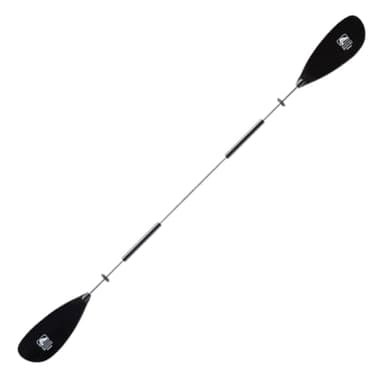
Bending Branches Whisper Kayak Paddle, 230 cm
230 cm is the length our formula puts most adults in a 28 to 32 in recreational kayak on, and this is the least expensive paddle at that length made by a company that only makes paddles.
What the listing publishes
230 cm, two-piece aluminum shaft, polypropylene blades, 0 and 60 degree feathering
230 cm is what 104 + 1.333 x (boat width + your height in inches) returns for a 5 ft 8 in paddler in a 30 in boat. If you are much taller or your boat is much wider, check the chart before you buy this length rather than the paddle.
The 0 and 60 degree feather settings are the useful part. Feathering angles the second blade so it slices through wind instead of catching it, and being able to turn it off while you learn matters more than the setting itself.
An aluminum shaft is cold in the hands in spring and fall, and it is the reason people upgrade. It is not a reason to avoid this paddle as a first one.
What it does well
- 230 cm suits the great majority of recreational kayaks and adult paddlers
- Two feather settings, including flat, which is what a beginner should start with
- Made by a dedicated paddle manufacturer rather than bundled with a boat
What it costs you
- Aluminum shaft is genuinely cold to hold in cool weather
- Polypropylene blades flex more than fiberglass under a hard stroke
- Only two lengths of adjustment -- it is a fixed size, so get the size right
Skip this if our chart puts you at 240 or 250 cm. A wide inflatable kayak or a tall paddler needs more paddle, and the right length in a cheaper paddle beats the wrong length in a better one.
#ad · how this is funded · price as of October 18, 2026
Questions people actually ask
Is kayaking hard for beginners?
How long should a first kayaking trip be?
What should I wear kayaking for the first time?
What happens if you fall out of a kayak?
Do I need lessons to start kayaking?
How windy is too windy for a beginner?
Where these numbers came from
Every figure on this page traces to one of these. Where a number could not be sourced, the page says so rather than estimating it.
- U.S. Coast Guard — Life Jacket Wear / Wearing Your Life Jacket (federal carriage and under-13 wear requirements)
- U.S. Coast Guard — Recreational Boaters (federal equipment requirements for vessels, paddlecraft included)
- Onyx MoveVent Dynamic Paddle Vest — manufacturer specification as published on the Amazon listing, read 2026-09-02
- Pelican ExoDry 20L Dry Bag — manufacturer specification as published on the Amazon listing, read 2026-09-02
Read next
Should You Rent or Buy Your First Kayak?
Rental breaks even against a starter kayak in about four to six outings. The math, plus the three cases where renting is genuinely the better call.
Top pick
Lifetime Lotus Sit-on-Top Kayak, 8 ft (paddle included)
The cheapest complete way onto flat water
#ad · how this is funded · price as of October 18, 2026
Best Life Jacket
The Best Life Jackets for Paddling
Approved vests compared on cut and comfort — the variables that decide whether it stays on.
Top pick
Onyx MoveVent Dynamic Paddle Vest
The PFD you will actually keep on
#ad · how this is funded · price as of October 18, 2026
Life Jacket Rules for Paddlers
The federal PFD requirement, the under-13 wear rule, and why your state matters — sourced, not paraphrased.
Top pick
Onyx MoveVent Dynamic Paddle Vest
The PFD you will actually keep on
#ad · how this is funded · price as of October 18, 2026

Sit-On-Top vs Sit-In Kayak
Water temperature and remounting decide this, not preference. The honest comparison, with picks for each.
Top pick
Perception Tribe 11.5 Sit-on-Top Kayak
The all-round first sit-on-top
#ad · how this is funded · price as of October 18, 2026
The First Trip Checklist
A deliberately short packing list for a first outing, plus the two-minute check before you launch.
Top pick
Onyx MoveVent Dynamic Paddle Vest
The PFD you will actually keep on
#ad · how this is funded · price as of October 18, 2026
Best First Kayak
The Best Kayaks for Beginners
Beginner kayaks ranked on width, carry weight and usable capacity — with the 65 percent arithmetic run on every one.
Top pick
Perception Tribe 11.5 Sit-on-Top Kayak
The all-round first sit-on-top
#ad · how this is funded · price as of October 18, 2026