Kayaks
The Best Kayaks for Camping
Kayak camping is a capacity problem wearing a packing problem. Both are solved on the spec sheet before you ever load a dry bag, and almost every beginner discovers that in the wrong order.

We have not paddled these, and we are not going to pretend we have. Here is what we did instead. Links to Amazon earn us a commission at no extra cost to you, and commission never decides a pick — how this site is funded.
| # | Product | Best for | The spec it turns on | Price |
|---|---|---|---|---|
| 1 | 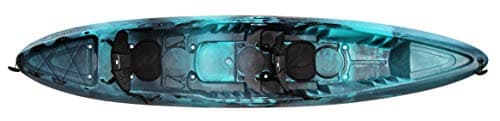 Perception Rambler 13.5 Tandem Sit-on-Top KayakTop pick550 lb rated is the highest here, and it is the only figure on this page that genuinely covers two adults and a passenger once the 65 percent rule is applied. | Two adults plus a child or a dog | 162 in long, 34 in beam, 78 lb hull, 550 lb rated capacity | |
| 2 | 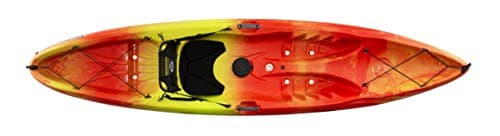 Perception Tribe 11.5 Sit-on-Top KayakThe combination almost nothing else manages: 350 lb of rating, a 30 in beam and enough waterline to hold a line, in a hull a first-timer can climb back onto from the water. | The all-round first sit-on-top | 137 in long, 30.25 in beam, 52 lb hull, 350 lb rated capacity | |
| 3 | 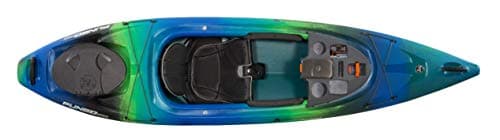 Wilderness Systems Pungo 105 Recreational Kayak, 10 ft 6 inThe only hull here that will still feel right in year three, because the seat and the waterline were designed for people who paddle for three hours rather than forty minutes. | The boat you keep after your first season | 126 in long, 30 in beam, 47 lb hull, 300 lb rated capacity | |
| 4 | 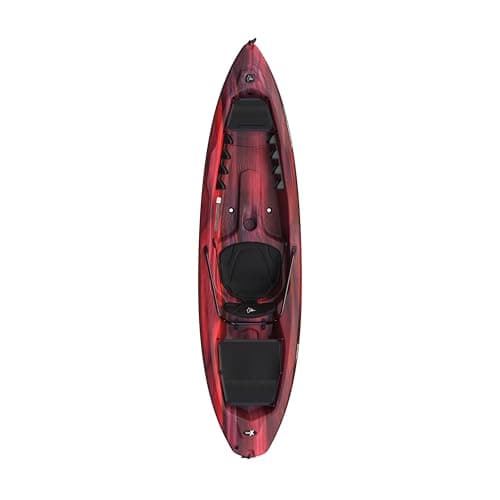 Pelican Seek 100X Sit-on-Top Kayak, 10 ftNine pounds lighter and seventeen inches shorter than the Tribe, for eight pounds less usable capacity. That trade is the whole reason to pick this one. | A sit-on-top that still fits a small car | 120 in long, 30 in beam, 43.1 lb hull, 300 lb rated capacity |
An overnight kayak trip asks two things of a boat that a day paddle never does. It has to carry a lot more weight, and it has to keep some of that weight dry for twenty-four hours. Those are separate specs and people usually only check the first one.
What a camping load actually weighs
The number that surprises people is water. Everything else on a one-night list is lighter than it feels; water is heavy and there is no way around it.
| Item | Typical weight |
|---|---|
| Tent, bag and pad | 8 to 14 lb |
| Water, 2 gallons | 16.7 lb |
| Food and cookset for one night | 6 to 10 lb |
| Clothing, dry layer, headlamp, first aid | 6 to 10 lb |
| Dry bags themselves | 2 to 4 lb |
| Total | roughly 40 to 55 lb |
Call it 45 lb for a careful packer on one night, and 70 lb for two nights or a paddler who likes a chair and a real stove. Now put that against a rated capacity the way a manufacturer says to.
That single number removes most beginner kayaks from consideration, and it is why the honest first recommendation for kayak camping is a tandem paddled solo. A 550 lb tandem hull gives a 190 lb paddler about 168 lb of gear headroom. Nothing in the single-seat beginner class comes close, and the tandem is usually cheaper than a touring single.
Dry storage is a deck-type question
Where the gear goes matters as much as whether it fits, and the two deck types fail in opposite directions.
- **Sit-inside** gives you a genuinely dry cockpit and usually a sealed bulkhead hatch. The catch is reach: anything in the bow hatch is inaccessible on the water, and a capsize floods the whole compartment you were relying on.
- **Sit-on-top** gives you open tank wells you can reach and strap to, and nothing on it is dry by default. Every item goes in a dry bag, which is a discipline rather than a drawback — and if you capsize, nothing fills.
- **Inflatable** is the wrong tool for an overnight unless the trip is short and flat. The capacities in the entry class are too low once a camping load is on board.
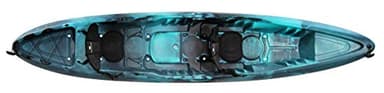
Top pick — Two adults plus a child or a dog
Perception Rambler 13.5 Tandem Sit-on-Top Kayak
550 lb rated is the highest here, and it is the only figure on this page that genuinely covers two adults and a passenger once the 65 percent rule is applied.
What the listing publishes
162 in long, 34 in beam, 78 lb hull, 550 lb rated capacity
Usable at the 65 percent rule: 358 lb (range 330–385 lb), which leaves about 338 lb of paddler after a 20 lb day kit. Why 65 percent.
550 lb rated is about 358 lb usable at 65 percent. Two 150 lb adults plus gear fits with room; two 200 lb adults plus gear does not, and no tandem's marketing copy will tell you that.
78 lb is a two-person carry, permanently. That is not a criticism, it is a planning fact: a tandem needs two people to move it and two people to paddle it well.
34 in of beam across 13 ft 6 in is why a dog can stand up on the back of this without it becoming an incident.
What it does well
- 550 lb rated capacity, the only figure here with room for three bodies
- 34 in beam is stable enough for a dog or a fidgeting child
- 13 ft 6 in tracks properly, so two paddlers out of sync still make progress
What it costs you
- 78 lb is a two-person lift every single time
- Needs roof bars and a real plan -- this does not go inside a car
- A tandem paddled solo from the back seat is genuinely awkward
Skip this if you will mostly paddle alone. A tandem solo is unbalanced and unpleasant, and two cheap solo boats often cost less than one good tandem.
#ad · how this is funded · price as of October 9, 2026
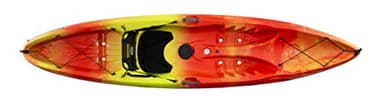
Pick 2 — The all-round first sit-on-top
Perception Tribe 11.5 Sit-on-Top Kayak
The combination almost nothing else manages: 350 lb of rating, a 30 in beam and enough waterline to hold a line, in a hull a first-timer can climb back onto from the water.
What the listing publishes
137 in long, 30.25 in beam, 52 lb hull, 350 lb rated capacity
Usable at the 65 percent rule: 228 lb (range 210–245 lb), which leaves about 208 lb of paddler after a 20 lb day kit. Why 65 percent.
350 lb rated is about 228 lb usable at 65 percent and 208 lb of paddler after a day kit -- the most headroom of any single boat here, and enough that a 200 lb adult is inside the comfortable band rather than at the edge of it.
Sit-on-top means the deck is open and self-draining. The reason that matters to a beginner is not comfort, it is that remounting from deep water is a maneuver you can actually perform, where a flooded sit-inside cockpit is not.
52 lb is the price. This is at the top of what one person carries any distance, and the reason a cart appears in our cost totals for this boat and not for the Argo.
What it does well
- 350 lb rated capacity gives real headroom for larger adults or a child up front
- Open self-draining deck is the forgiving choice for a first summer
- 137 in of hull tracks far better than the 9 and 10 ft boats here
What it costs you
- 52 lb is a two-person lift onto a roof for most people
- You will get wet. Sit-on-tops always do, and that is a season decision not a design flaw
- 11 ft 5 in needs more storage length than the 10 ft boats
Skip this if you paddle in cold water or a cold shoulder season. An open deck in 55-degree water is a different and less pleasant sport, and a sit-inside is the right answer there.
#ad · how this is funded · price as of October 9, 2026
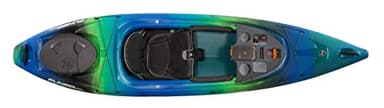
Pick 3 — The boat you keep after your first season
Wilderness Systems Pungo 105 Recreational Kayak, 10 ft 6 in
The only hull here that will still feel right in year three, because the seat and the waterline were designed for people who paddle for three hours rather than forty minutes.
What the listing publishes
126 in long, 30 in beam, 47 lb hull, 300 lb rated capacity
Usable at the 65 percent rule: 195 lb (range 180–210 lb), which leaves about 175 lb of paddler after a 20 lb day kit. Why 65 percent.
126 in of waterline with a defined keel line is why this tracks straight where a 9 ft 5 in flat-bottom does not. Distance stops being a fight, which is the difference between a boat you use twice and one you use twenty times.
300 lb rated is about 195 lb usable and 175 lb of paddler after a day kit. That is less headroom than the Flash despite being the better boat -- the rating is not the quality signal, and this is the clearest example of it on the site.
47 lb is the practical ceiling for a one-person carry from a driveway to a launch. Past this you are into cart territory, and a cart is a real cost that belongs in the total.
What it does well
- 126 in waterline plus a keel line means it holds a course without constant correction
- The seat is the reason people keep these boats -- it is a chair, not a molded dent
- 30 in beam is stable enough that a nervous first-timer relaxes inside ten minutes
What it costs you
- 47 lb is a real carry and gets old across a long parking lot
- 300 lb rating is mid-pack, so a heavier paddler runs out of room before the boat runs out of quality
- Costs more than every other sit-inside here, usually by a wide margin
Skip this if this is a once-or-twice-a-summer boat. Nothing about a better seat and a truer waterline is worth paying for if the hull spends eleven months against a garage wall.
#ad · how this is funded · price as of October 9, 2026
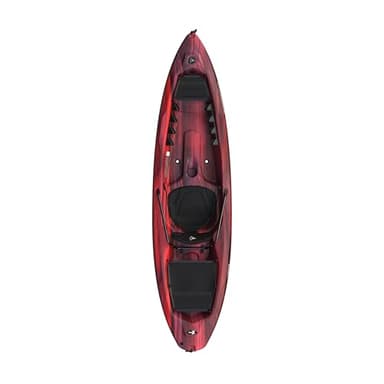
Pick 4 — A sit-on-top that still fits a small car
Pelican Seek 100X Sit-on-Top Kayak, 10 ft
Nine pounds lighter and seventeen inches shorter than the Tribe, for eight pounds less usable capacity. That trade is the whole reason to pick this one.
What the listing publishes
120 in long, 30 in beam, 43.1 lb hull, 300 lb rated capacity
Usable at the 65 percent rule: 195 lb (range 180–210 lb), which leaves about 175 lb of paddler after a 20 lb day kit. Why 65 percent.
300 lb rated is about 195 lb usable and 175 lb of paddler after gear -- enough for most adults, and 33 lb less headroom than the Tribe.
43 lb and 10 ft is the point where a sit-on-top becomes a one-person, one-trip job. Ten feet also fits inside a lot of vehicles that 11 ft 5 in does not.
The twin-arch hull section trades a little flat-water stillness for a hull that leans predictably rather than suddenly, which is a genuinely nicer feel once you are past the first hour.
What it does well
- 43 lb keeps this a one-person carry, unusual for a sit-on-top
- 30 in beam at only 10 ft means stability without the storage problem
- Self-draining deck with the same easy remount as any sit-on-top
What it costs you
- 300 lb rating is 50 lb short of the Tribe's
- 10 ft of hull wanders more than 11 ft 5 in on open water
- Same cold-water objection as every sit-on-top
Skip this if you and a child will regularly be on it together. The usable capacity does not cover two people once you subtract gear, and the Tribe or a tandem does.
#ad · how this is funded · price as of October 9, 2026
Length is your friend here, and it has a cost
A loaded boat is a slow boat, and waterline is what buys the speed back. Thirteen and a half feet with 200 lb aboard still tracks and still glides; ten feet with the same load plows. This is the one part of the site where we push people toward a longer hull than the beginner default.
The cost arrives on land. A 78 lb tandem is a two-person carry or a cart, it needs a real roof rack rather than foam blocks, and it needs somewhere to live. Those are genuine costs and they belong in the decision. Getting a boat to the water covers the rack question honestly.
Trim: where the weight goes, not just how much
A kayak that is correctly loaded and a kayak that is badly loaded behave like different boats at the same total weight, and trim is the part of camping nobody explains to a first-timer.
- **Heavy items low and centered.** Water is the heaviest thing you carry and it wants to sit in the middle of the hull, on the bottom, close to your seat. Weight high makes the boat feel tippy in a way that no amount of beam fixes.
- **Balance bow to stern, then check it floating.** A bow-heavy boat plows and steers badly. A stern-heavy boat weathercocks — the bow blows downwind and you spend the day correcting. Load it, float it empty of yourself, and look at whether it sits level.
- **Slightly stern-heavy is the safe error** if you cannot get it perfect. It keeps the bow light enough to rise over chop.
- **Strap everything.** Loose gear that shifts mid-stroke is a stability problem, and loose gear in a capsize is gone.
Load a tandem paddled solo from the rear seat and the trim problem solves itself: you are already aft, so the gear goes forward and the boat sits level. That is a second reason the tandem answer works, beyond the capacity number.
Planning a first overnight
The distances people plan for a first kayak-camping trip are usually far too ambitious, because they are estimated from a day paddle in an empty boat.
| Empty day boat | Loaded overnight | |
|---|---|---|
| Comfortable pace | roughly 2.5 to 3 mph | roughly 2 mph |
| Sensible first-trip distance | 6 to 10 miles | 4 to 6 miles |
| Time to allow for loading | minutes | the better part of an hour |
| Wind tolerance | moderate | low — a loaded boat is slow to correct |
Four to six miles sounds trivially short and it is the right number for a first loaded trip. You will be slower than you expect, you will stop more, and the point of the first overnight is to find out what you packed wrong somewhere you can still get home from.
What you can ignore
- **Bulkhead count.** Two sealed bulkheads are nice and one is fine. Dry bags do the same job for a fraction of the price difference.
- **Rudders, at this stage.** Useful on long crossings in wind, irrelevant on the small protected water where a first overnight should happen.
- **Camping-specific branding.** There is no such thing as a camping kayak. There are hulls with enough rated capacity and hulls without.
- **Deck bungee webbing.** It holds a jacket. It does not hold anything you would mind losing, and it is not a substitute for straps.
The safety part that is specific to overnights
A loaded boat behaves differently from the one you learned in. It is slower to accelerate, much slower to turn, and it sits lower, so the freeboard you had in chop is reduced. Load it at home, paddle it loaded on water you know, and find that out somewhere you can walk home from.
Tell somebody your route and your expected return, and take a means of calling for help that is in a dry bag rather than a pocket. On an overnight you are, by definition, out after the last other paddler has gone home, and that is the entire safety difference between this and a day trip.
The other one is cold. Overnight trips run into dawn and dusk on both ends, which is when water is coldest and help is furthest away. A life jacket worn rather than stowed is the whole safety plan on a solo overnight. The rules, and what they do not cover.
Questions people actually ask
What size kayak do I need for camping?
Can you camp out of a 10 ft recreational kayak?
Is a tandem kayak good for solo camping?
Sit-on-top or sit-inside for kayak camping?
How do you keep gear dry in a kayak?
How much water should I carry per day?
How far can you paddle in a day with camping gear?
Where should the heavy gear go in a kayak?
Where these numbers came from
Every figure on this page traces to one of these. Where a number could not be sourced, the page says so rather than estimating it.
- Eddyline Kayaks — Maximum weight capacity versus ideal capacity for various styles of kayaks (manufacturer, states the 60-70% ideal-capacity band)
- U.S. Coast Guard — Life Jacket Wear / Wearing Your Life Jacket (federal carriage and under-13 wear requirements)
- Perception Rambler 13.5 Tandem Sit-on-Top Kayak — manufacturer specification as published on the Amazon listing, read 2026-09-02
- Perception Tribe 11.5 Sit-on-Top Kayak — manufacturer specification as published on the Amazon listing, read 2026-09-02
- Wilderness Systems Pungo 105 Recreational Kayak — manufacturer specification as published on the Amazon listing, read 2026-09-02
- Pelican Seek 100X Sit-on-Top Kayak — manufacturer specification as published on the Amazon listing, read 2026-09-02
Read next
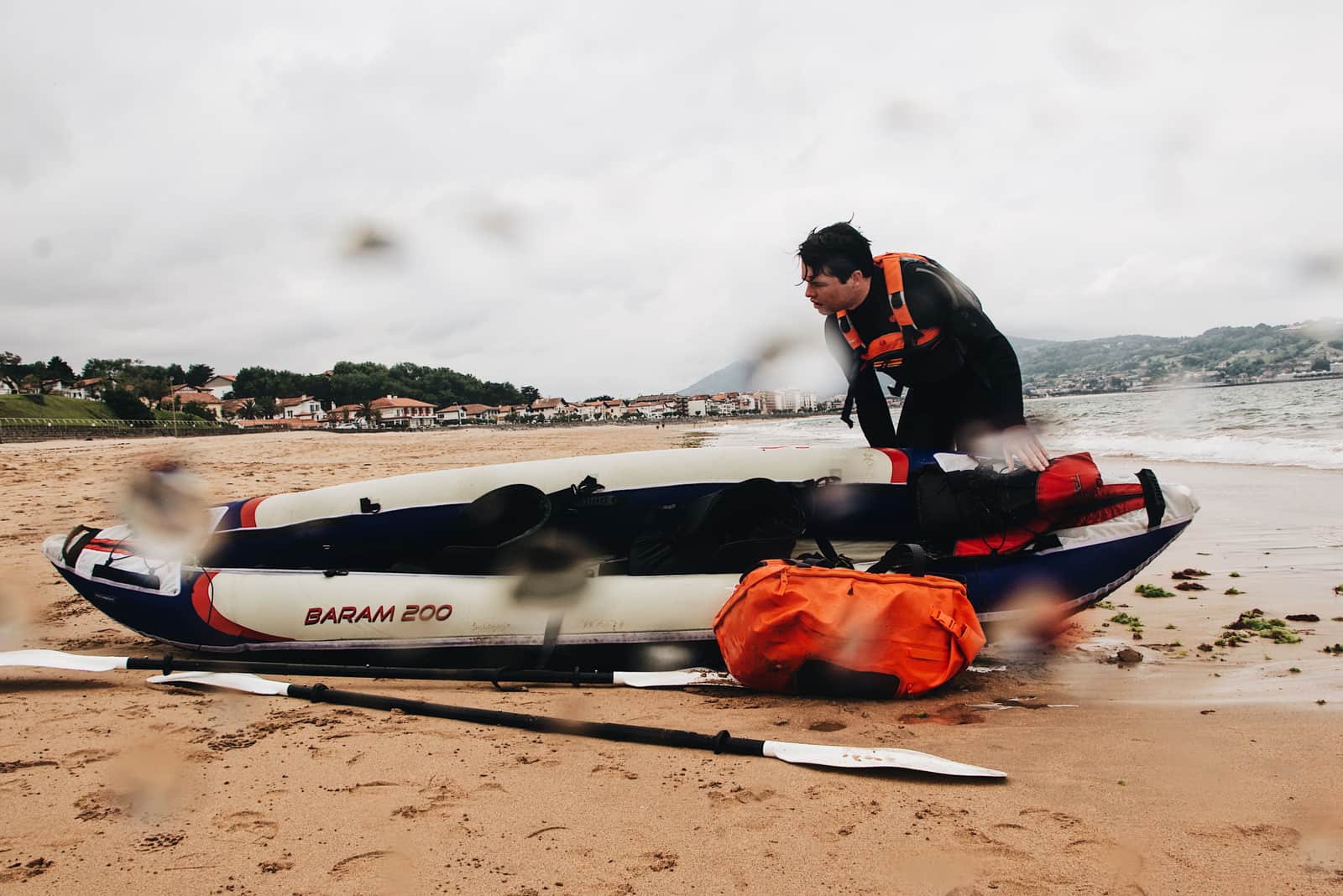
Kayak Weight Capacity, Explained
The 65 percent rule, where it comes from, what happens when you ignore it, and how to size around it.
Top pick
Perception Tribe 11.5 Sit-on-Top Kayak
The all-round first sit-on-top
#ad · how this is funded · price as of October 9, 2026

Best Dry Bag
Dry Bags and Keeping Things Dry
20 liters, roll-top, done. Why the size matters and why the number of folds does too.
Top pick
Pelican ExoDry 20L Dry Bag
Keeping the phone, keys and a dry layer dry
#ad · how this is funded · price as of October 9, 2026
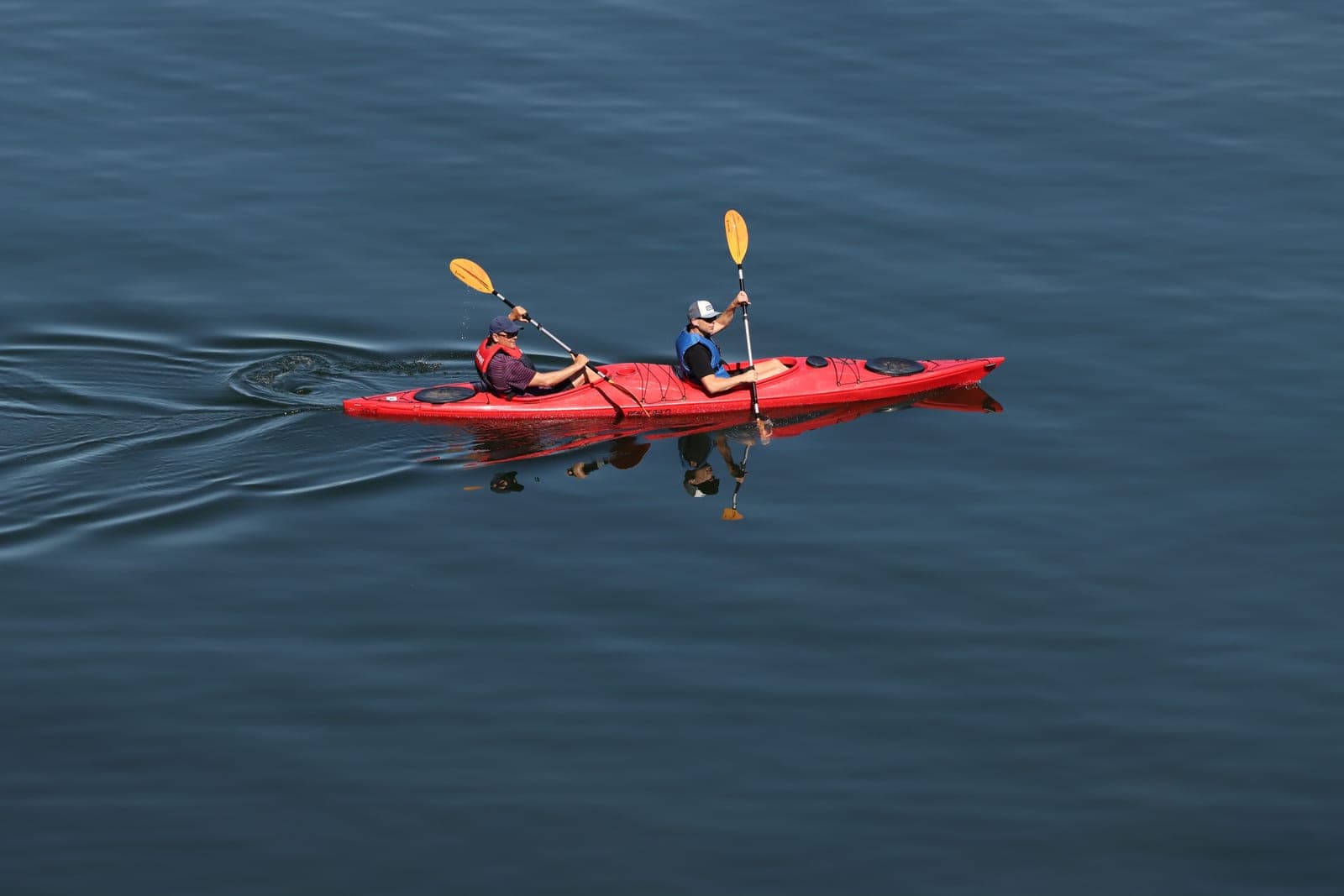
Best Tandem
The Best Tandem Kayaks
Tandem kayaks with the usable-capacity arithmetic done — a 500 lb tandem covers less than most buyers assume.
Top pick
Perception Rambler 13.5 Tandem Sit-on-Top Kayak
Two adults plus a child or a dog
#ad · how this is funded · price as of October 9, 2026
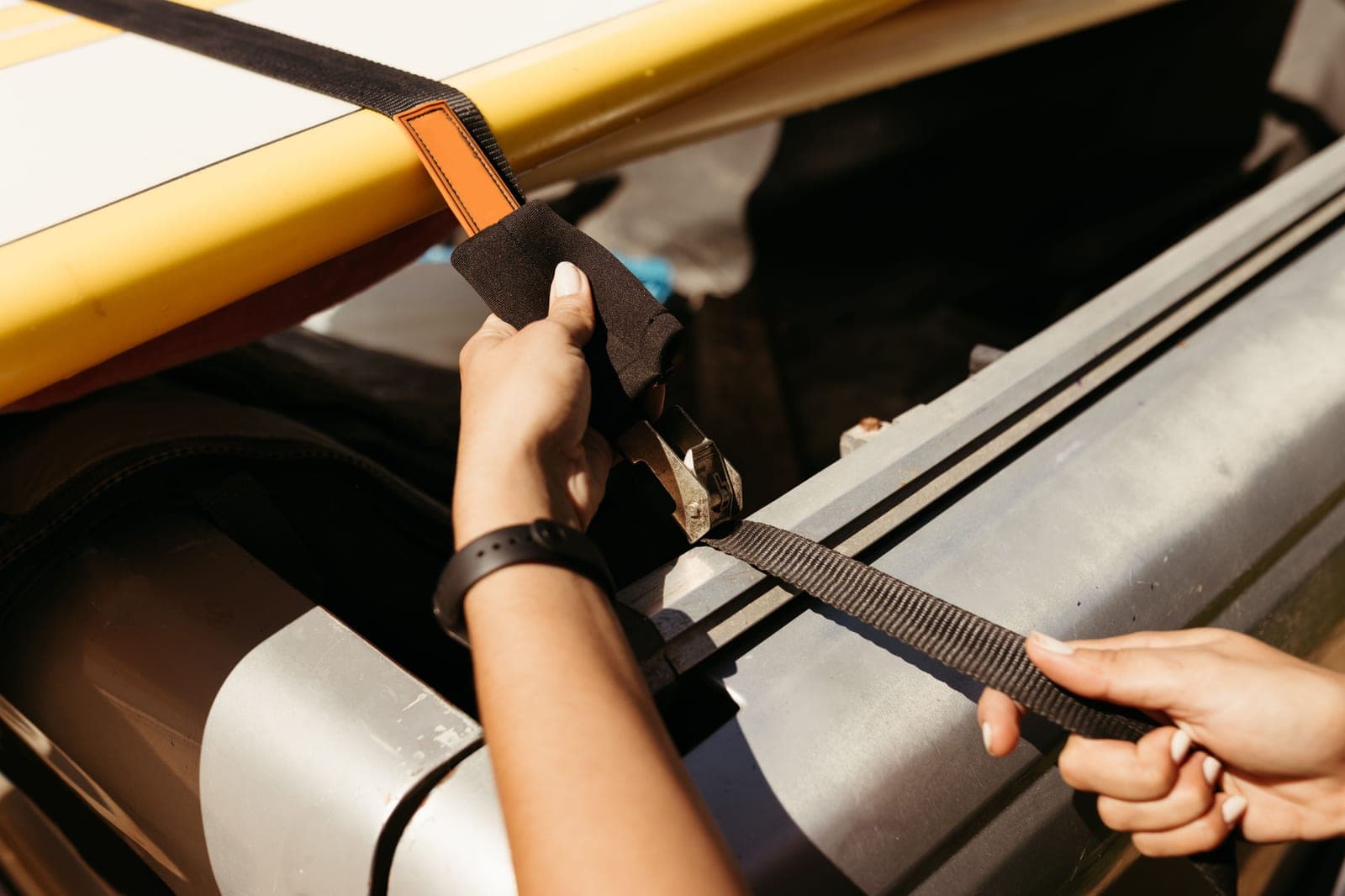
Getting Your Kayak to the Water
Four ways to move a kayak, including one that needs no roof bars and one that removes the problem entirely.
Top pick
Attwood Universal Rack-Free Car-Top Kayak Carrier Kit
A car with no roof bars at all
#ad · how this is funded · price as of October 9, 2026

Sit-On-Top vs Sit-In Kayak
Water temperature and remounting decide this, not preference. The honest comparison, with picks for each.
Top pick
Perception Tribe 11.5 Sit-on-Top Kayak
The all-round first sit-on-top
#ad · how this is funded · price as of October 9, 2026