Gear & Getting There
The Best Kayak Paddles for Beginners
The right length in a cheap paddle beats the wrong length in a good one, every time. So this list is organized by the length you need rather than by price.
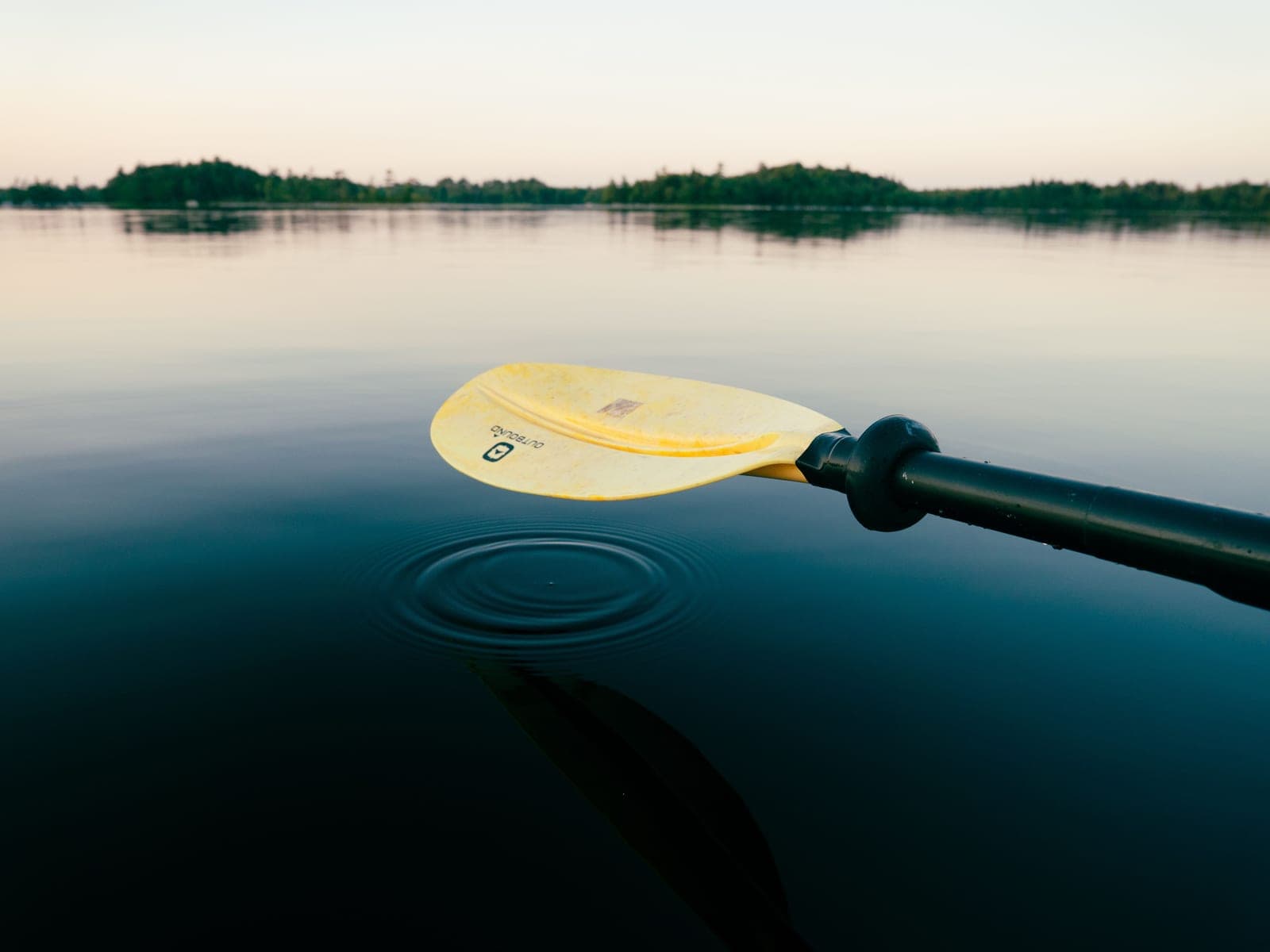
We have not paddled these, and we are not going to pretend we have. Here is what we did instead. Links to Amazon earn us a commission at no extra cost to you, and commission never decides a pick — how this site is funded.
| # | Product | Best for | The spec it turns on | Price |
|---|---|---|---|---|
| 1 | 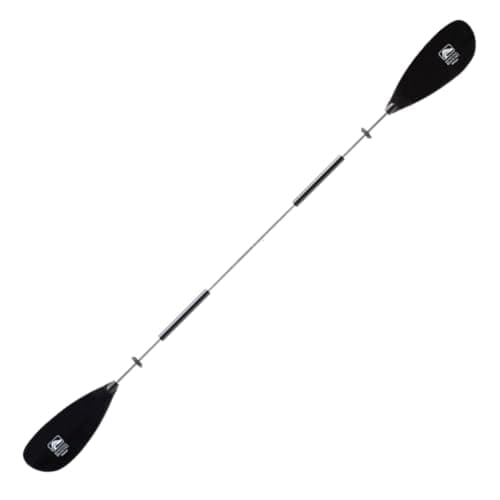 Bending Branches Whisper Kayak Paddle, 230 cmTop pick230 cm is the length our formula puts most adults in a 28 to 32 in recreational kayak on, and this is the least expensive paddle at that length made by a company that only makes paddles. | The first paddle worth keeping | 230 cm, two-piece aluminum shaft, polypropylene blades, 0 and 60 degree feathering | |
| 2 | 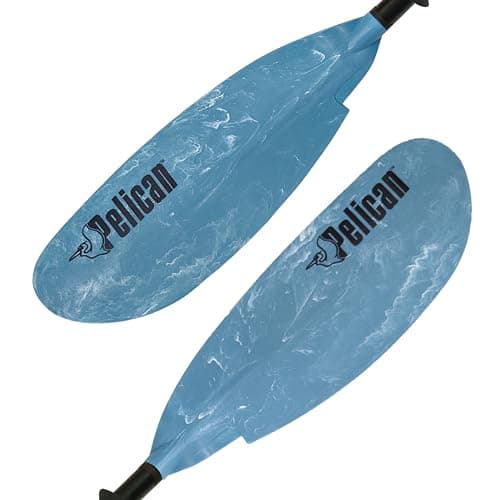 Pelican Poseidon Kayak Paddle, 230 cmFiberglass-reinforced blades for close to a polypropylene price, which is the one upgrade that changes how a stroke actually feels. | A stiffer blade at an entry price | 90.5 in / 229.87 cm, aluminum shaft, reinforced fiberglass blades, 2.4 lb | |
| 3 | 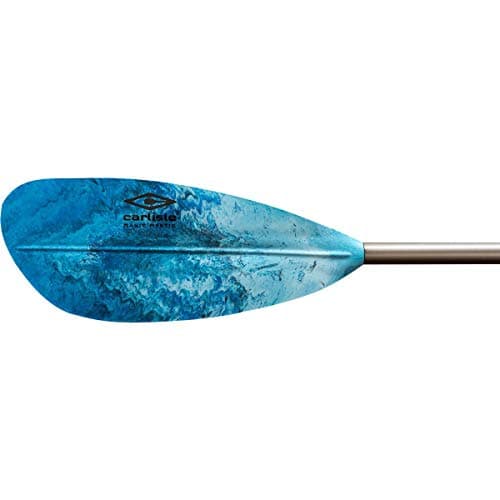 Carlisle Magic Mystic Kayak Paddle, 220 cmThe 220 cm answer for the buyer our chart actually puts there -- a paddler under about 5 ft 6 in, or any narrow recreational boat. | Shorter paddlers and narrower boats | 220 cm, aluminum shaft, polypropylene blades | |
| 4 | 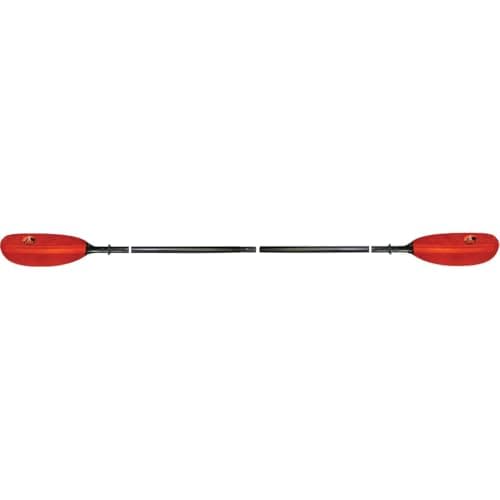 Advanced Elements Axis 4-Part Fiberglass Kayak Paddle, 230 cmA four-part shaft packs to 29 inches, which is the difference between a paddle that fits in the boat bag and one that rides loose in the car. | Anyone whose boat lives in a bag | 230 cm, four-part fiberglass shaft, packs to 29 in |
Paddle roundups are usually organized by price, which is the wrong axis. A paddle is a lever sized to a specific person in a specific boat, and a beautiful carbon paddle 10 cm too long is worse than a plain aluminum one that fits.
So work out your length before you read any further. The calculator is here and it takes ten seconds.
Work out your paddle length
Boat width matters exactly as much as your height does, which is why a shop that only asks how tall you are will sell you the wrong paddle for a wide inflatable.
5 ft 8 in
The widest point, off the listing.
Your paddle
230 cm
235 cm falls between two stocked sizes. Take 230 cm; 240 cm is the defensible alternative if you are between height bands or paddle a loaded boat.
Where that came from
paddle length (cm) = 104 + 1.333 x (boat width in inches + paddler height in inches)
104 + 1.333 x (30 + 68) = 235 cm
That formula is ours, fitted to the low-angle chart NRS publishes. It puts the same weight on an inch of boat width as on an inch of paddler height, which is why a 34 in inflatable needs more paddle than a shop will hand you by default.
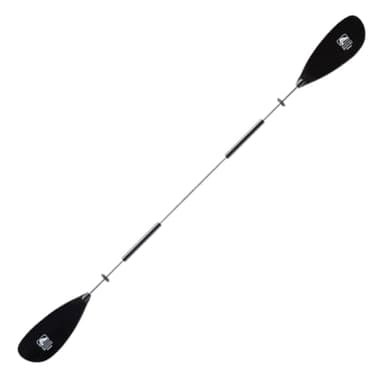
Top pick — The first paddle worth keeping
Bending Branches Whisper Kayak Paddle, 230 cm
230 cm is the length our formula puts most adults in a 28 to 32 in recreational kayak on, and this is the least expensive paddle at that length made by a company that only makes paddles.
What the listing publishes
230 cm, two-piece aluminum shaft, polypropylene blades, 0 and 60 degree feathering
230 cm is what 104 + 1.333 x (boat width + your height in inches) returns for a 5 ft 8 in paddler in a 30 in boat. If you are much taller or your boat is much wider, check the chart before you buy this length rather than the paddle.
The 0 and 60 degree feather settings are the useful part. Feathering angles the second blade so it slices through wind instead of catching it, and being able to turn it off while you learn matters more than the setting itself.
An aluminum shaft is cold in the hands in spring and fall, and it is the reason people upgrade. It is not a reason to avoid this paddle as a first one.
What it does well
- 230 cm suits the great majority of recreational kayaks and adult paddlers
- Two feather settings, including flat, which is what a beginner should start with
- Made by a dedicated paddle manufacturer rather than bundled with a boat
What it costs you
- Aluminum shaft is genuinely cold to hold in cool weather
- Polypropylene blades flex more than fiberglass under a hard stroke
- Only two lengths of adjustment -- it is a fixed size, so get the size right
Skip this if our chart puts you at 240 or 250 cm. A wide inflatable kayak or a tall paddler needs more paddle, and the right length in a cheaper paddle beats the wrong length in a better one.
#ad · how this is funded · price as of October 18, 2026
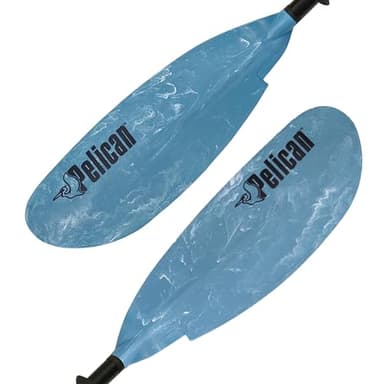
Pick 2 — A stiffer blade at an entry price
Pelican Poseidon Kayak Paddle, 230 cm
Fiberglass-reinforced blades for close to a polypropylene price, which is the one upgrade that changes how a stroke actually feels.
What the listing publishes
90.5 in / 229.87 cm, aluminum shaft, reinforced fiberglass blades, 2.4 lb
Blade stiffness is what you feel. A flexible blade loses part of every stroke to bending the plastic instead of moving the boat, and reinforced fiberglass loses noticeably less of it.
2.4 lb is a published weight, and paddle weight matters more than people expect: you lift it roughly a thousand times an hour.
229.87 cm is 230 cm in practice -- the odd figure is just the inch conversion showing through.
What it does well
- Reinforced fiberglass blades are stiffer than the polypropylene at this price
- 2.4 lb published weight, at the light end for an aluminum-shafted paddle
- Adjustable ferrule rather than a fixed joint
What it costs you
- Aluminum shaft, with the same cold-hands problem as any aluminum paddle
- Stiffer blades are less forgiving of a sloppy catch while you are learning
- Sold at a single length, so check the chart first
Skip this if you already own a paddle that is the right length. Blade material is a real upgrade and it is a smaller one than getting the length right.
#ad · how this is funded · price as of October 18, 2026
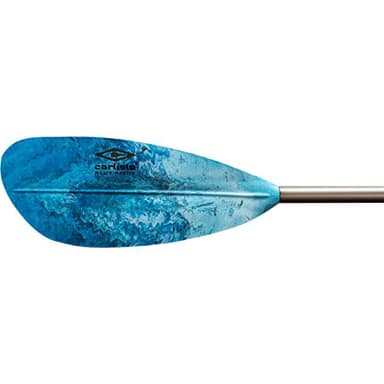
Pick 3 — Shorter paddlers and narrower boats
Carlisle Magic Mystic Kayak Paddle, 220 cm
The 220 cm answer for the buyer our chart actually puts there -- a paddler under about 5 ft 6 in, or any narrow recreational boat.
What the listing publishes
220 cm, aluminum shaft, polypropylene blades
220 cm is what the formula returns for a 5 ft paddler in a 26 to 30 in boat, and for a 5 ft 4 in paddler in a 26 in boat. Both of those people are routinely sold a 230 because it is what the shelf has.
A paddle that is too long is worse than one slightly too short: you reach further, you catch the water later, and your shoulders pay for it every stroke.
Same aluminum and polypropylene construction as the Whisper, at a similar price. The reason to choose it is the length, not the parts.
What it does well
- 220 cm is genuinely hard to find on a shelf and is the correct size for many people
- Straightforward, durable construction with nothing to go wrong
- Inexpensive enough to buy alongside a first boat
What it costs you
- Polypropylene blades flex under load
- Aluminum shaft, cold in cool weather
- Wrong for anyone in a wide inflatable, which is most inflatable owners
Skip this if your boat is wider than about 30 in. Width drives length as hard as your height does, and a 220 in a 34 in inflatable will have you knuckling the rail every stroke.
#ad · how this is funded · price as of October 18, 2026
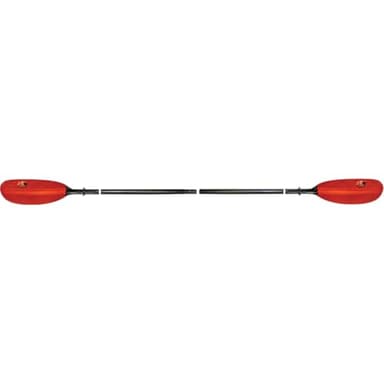
Pick 4 — Anyone whose boat lives in a bag
Advanced Elements Axis 4-Part Fiberglass Kayak Paddle, 230 cm
A four-part shaft packs to 29 inches, which is the difference between a paddle that fits in the boat bag and one that rides loose in the car.
What the listing publishes
230 cm, four-part fiberglass shaft, packs to 29 in
Four-part paddles exist for inflatable owners. If the whole appeal of your boat is that it fits in a cupboard, a 230 cm two-piece paddle is the thing that undoes it.
A fiberglass shaft is warmer to hold than aluminum and lighter, and on a paddle you assemble and disassemble constantly, fewer cold metal joints is a real quality-of-life difference.
Every extra joint is a place a paddle can rattle or bind. Four-part paddles trade a little stiffness for packability and that is a fair trade only if you actually need the packing.
What it does well
- Packs to 29 in, so it fits the same bag the boat does
- Fiberglass shaft is warmer and lighter than aluminum
- 230 cm suits the wide inflatables it is designed to go with
What it costs you
- Three joints instead of one -- more flex, more to keep clean
- Costs more than a two-piece paddle of similar materials
- Pointless if your boat lives on a roof rack anyway
Skip this if you paddle a hard-shell. You are paying for packability you will never use and losing stiffness for it.
#ad · how this is funded · price as of October 18, 2026
What actually differs between these
| Spec | What it changes | What to buy first time |
|---|---|---|
| Length | Everything. Reach, efficiency, shoulder load | Whatever the formula says. This is not negotiable |
| Blade material | Stiffness. Flexible blades lose part of each stroke | Polypropylene is fine; reinforced fiberglass is better |
| Shaft material | Weight and how cold it is to hold | Aluminum is fine and cold; fiberglass is warmer and lighter |
| Number of pieces | Whether it fits in the boat bag | Two-piece for a hard-shell, four-piece for an inflatable |
Blade stiffness is the upgrade you feel
Every stroke you take, part of the effort goes into moving the boat and part goes into bending the blade. A flexible polypropylene blade loses noticeably more of it than a fiberglass-reinforced one, and over an hour that adds up in a way weight does not.
It is also the cheapest meaningful upgrade in the category — the Pelican Poseidon has reinforced fiberglass blades at close to polypropylene money. If you have the length right and want to spend a little more, spend it here rather than on the shaft.
Shaft material: warmth more than weight
Aluminum shafts are cold. In July that is irrelevant; in April, holding a metal tube in wet hands for two hours is genuinely unpleasant, and it is the most common reason people replace their first paddle.
Fiberglass is warmer and lighter and costs more. Carbon is lighter still and costs much more, and it is a year-two or year-three purchase rather than a first one.
Feathering, explained once
Feathering means the two blades are offset from each other rather than being in the same plane, so that as one blade is in the water the other slices edge-on through the air rather than catching the wind.
It genuinely helps in a headwind and it requires you to rotate the shaft in one hand on every stroke, which is a thing to learn. Start unfeathered — both blades in the same plane — and try the feathered setting once the basic stroke is automatic. A paddle with 0 and 60 degree settings, like the Whisper, lets you do exactly that.
Two-piece or four-piece
Two-piece is the default and is stiffer, because there is only one joint. Four-piece packs down to about 29 inches, which is the difference between a paddle that fits in an inflatable's bag and one that rides loose in the car.
If your boat lives in a bag, buy the four-piece. If it lives on a roof rack, do not — you are paying for packability you will never use and losing a little stiffness for it.
What to skip in year one
- **Carbon shafts.** A real upgrade and an expensive one, and completely wasted if the length is wrong.
- **Bent-shaft paddles.** They reduce wrist strain over long distances and confuse the stroke while you are learning it.
- **Wing blades.** A racing shape. Actively unhelpful for recreational paddling.
- **A spare paddle**, until you paddle somewhere where losing one would matter.
The paddle in the box
Cheap sit-on-tops and nearly every inflatable board and kayak include a paddle. Those are starter parts: heavy, flexible, and usually a single length that may or may not be yours.
They work. Use one for a season, learn what you want, and replace it in year two — with the exception that if the included paddle is visibly the wrong length for you by the formula, replace it immediately. Length is the one thing not worth living with.
Questions people actually ask
What is the best kayak paddle for a beginner?
How much should I spend on a kayak paddle?
Is an aluminum kayak paddle OK?
What is paddle feathering and do I need it?
Should I buy a 2-piece or 4-piece kayak paddle?
Is the paddle that came with my kayak good enough?
Where these numbers came from
Every figure on this page traces to one of these. Where a number could not be sourced, the page says so rather than estimating it.
- NRS — Kayak Paddle Sizing Guides (manufacturer, publishes the low-angle and high-angle length charts our formula is fitted to)
- Aqua-Bound — Kayak Paddle Sizing Guide (manufacturer, the size-longer and size-shorter adjustment rules)
- Bending Branches — Kayak Paddle Sizing Guide (manufacturer, low-angle and high-angle adjustments)
- Bending Branches Whisper Kayak Paddle, 230 cm — manufacturer specification as published on the Amazon listing, read 2026-09-02
- Pelican Poseidon Kayak Paddle, 230 cm — manufacturer specification as published on the Amazon listing, read 2026-09-02
- Carlisle Magic Mystic Kayak Paddle, 220 cm — manufacturer specification as published on the Amazon listing, read 2026-09-02
- Advanced Elements Axis 4-Part Fiberglass Kayak Paddle, 230 cm — manufacturer specification as published on the Amazon listing, read 2026-09-02
Read next
Bending Branches Whisper: The First Paddle Worth Keeping
230 cm, dihedral polypropylene blades, 0/60 feathering, made in Wisconsin. The honest entry paddle — and the two specs that make people upgrade later.
Top pick
Bending Branches Whisper Kayak Paddle, 230 cm
The first paddle worth keeping
#ad · how this is funded · price as of October 18, 2026

Best SUP Paddle
The Best SUP Paddles for a First Board
The kit paddle is the first upgrade on any board. Length by the height-plus-nine rule, weight that compounds a thousand strokes an hour, and two honest picks.
Top pick
OCEANBROAD Adjustable SUP Paddle, aluminum shaft
Replacing the paddle that came in the box
#ad · how this is funded · price as of October 18, 2026
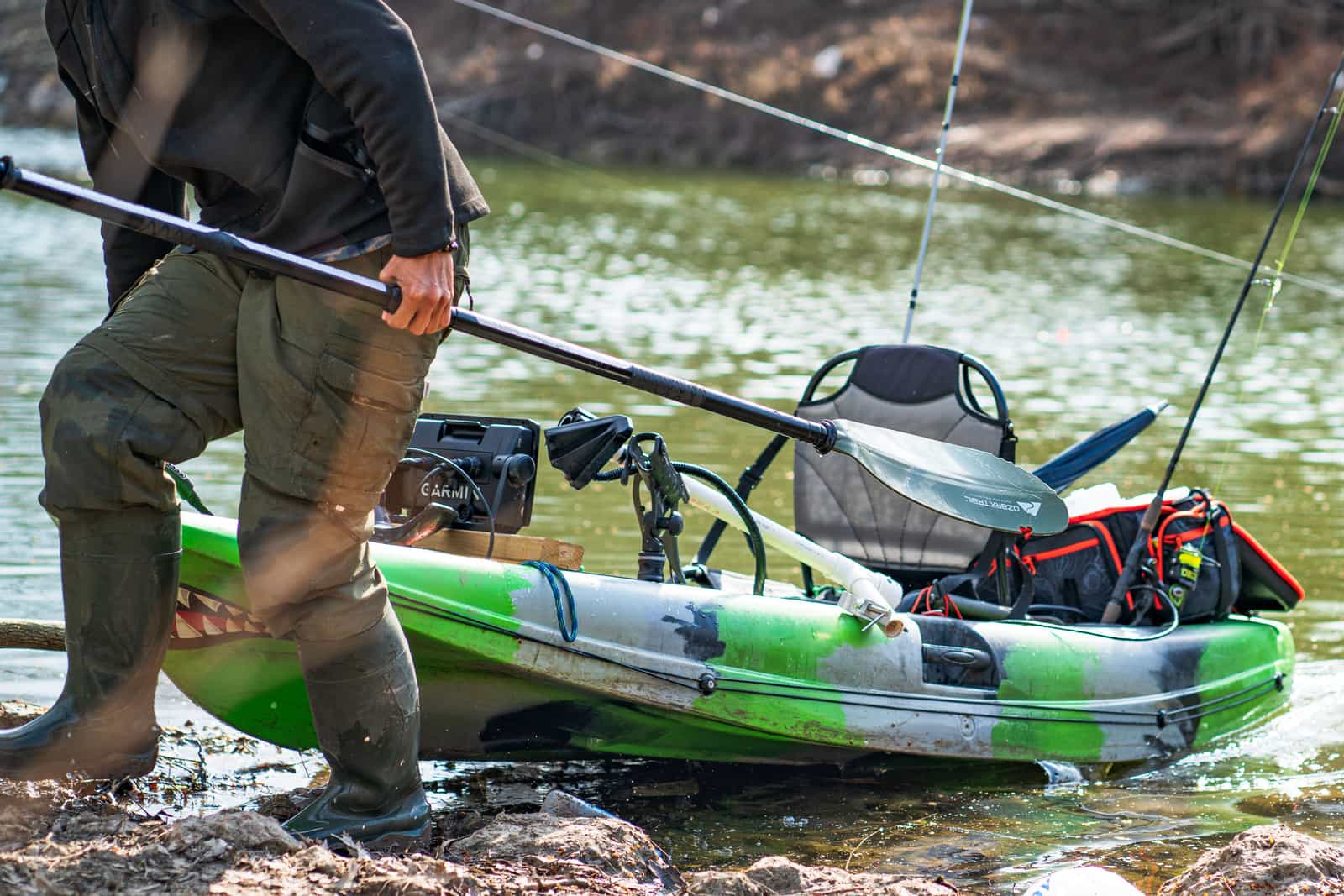
Best First Accessory
Kayak Accessories: What Actually Earns a Place
Five accessories that change every outing, ranked by how much they improve it per dollar — and the ones you can safely skip for a season.
Top pick
Bending Branches Whisper Kayak Paddle, 230 cm
The first paddle worth keeping
#ad · how this is funded · price as of October 18, 2026
What Length Paddle Do You Need?
A paddle length calculator fitted to a manufacturer's published chart, with the derivation shown.
Top pick
Bending Branches Whisper Kayak Paddle, 230 cm
The first paddle worth keeping
#ad · how this is funded · price as of October 18, 2026

Best First Kayak
The Best Kayaks for Beginners
Beginner kayaks ranked on width, carry weight and usable capacity — with the 65 percent arithmetic run on every one.
Top pick
Perception Tribe 11.5 Sit-on-Top Kayak
The all-round first sit-on-top
#ad · how this is funded · price as of October 18, 2026

What a First Setup Actually Costs
Every line item in a first setup, including the ones that surprise people — with live prices rather than stale numbers.
Top pick
Perception Tribe 11.5 Sit-on-Top Kayak
The all-round first sit-on-top
#ad · how this is funded · price as of October 18, 2026