Kayaks
The Best Kayaks for Fishing
A fishing kayak is a kayak you can load heavily, sit in for hours, and turn around in without thinking about it. Three published numbers decide all of that, and the word ANGLER printed on the hull is not one of them.
We have not paddled these, and we are not going to pretend we have. Here is what we did instead. Links to Amazon earn us a commission at no extra cost to you, and commission never decides a pick — how this site is funded.
| # | Product | Best for | The spec it turns on | Price |
|---|---|---|---|---|
| 1 | 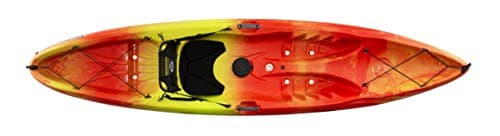 Perception Tribe 11.5 Sit-on-Top KayakTop pickThe combination almost nothing else manages: 350 lb of rating, a 30 in beam and enough waterline to hold a line, in a hull a first-timer can climb back onto from the water. | The all-round first sit-on-top | 137 in long, 30.25 in beam, 52 lb hull, 350 lb rated capacity | |
| 2 | 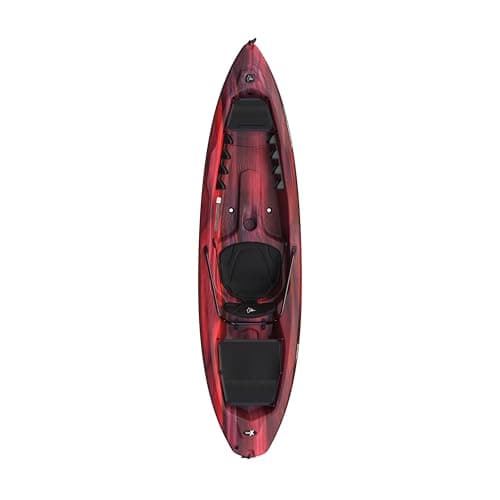 Pelican Seek 100X Sit-on-Top Kayak, 10 ftNine pounds lighter and seventeen inches shorter than the Tribe, for eight pounds less usable capacity. That trade is the whole reason to pick this one. | A sit-on-top that still fits a small car | 120 in long, 30 in beam, 43.1 lb hull, 300 lb rated capacity | |
| 3 | 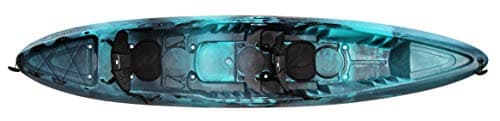 Perception Rambler 13.5 Tandem Sit-on-Top Kayak550 lb rated is the highest here, and it is the only figure on this page that genuinely covers two adults and a passenger once the 65 percent rule is applied. | Two adults plus a child or a dog | 162 in long, 34 in beam, 78 lb hull, 550 lb rated capacity | |
| 4 | 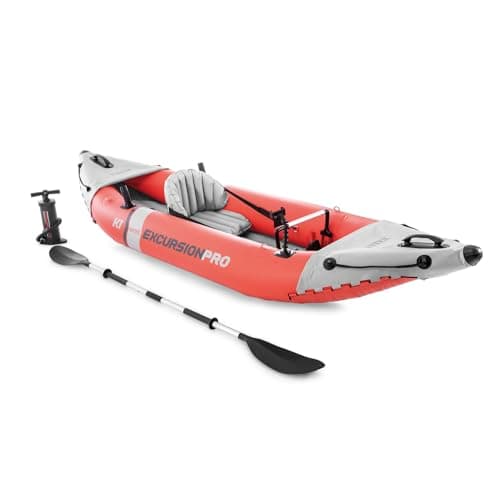 Intex Excursion Pro K1 Inflatable Kayak (paddle and pump included)A laminate hull and a high-pressure floor rather than plain vinyl, which is the difference between an inflatable that tracks and one that argues with you. | The stiffest inflatable in the entry price class | 120 in long, 36 in beam, 31.2 lb packed, 220 lb rated capacity |
Paddling and fishing load a kayak in opposite ways. Paddling is a moving activity: your weight shifts with each stroke, you carry almost nothing, and a certain amount of instability gets absorbed by the fact that you are busy. Fishing is sitting still with your hands full, a lot of weight aboard, occasionally leaning out over one side to land something.
That changes which specs matter, and it changes them in a specific order. Capacity first, beam second, deck type third. Everything a fishing kayak listing wants to talk about — rod holders, gear tracks, camera mounts, a camouflage finish — sits below all three.
Fishing is a capacity problem first
Anglers underestimate what they carry. A rod or two, a tackle box, a landing net, a small cooler, a dry bag, water, and something to keep fish in adds up fast. Forty to fifty pounds is normal and it is easy to go past that. All of it counts against the same rated capacity as your body weight.
And rated capacity is not usable capacity. A kayak loaded to its printed maximum sits so low that it handles badly and takes water over the side in any chop. Manufacturers are fairly open about this — Eddyline publishes a 60 to 70 percent band as the load a boat actually paddles well at. We use 65 percent everywhere on this site, and it is the single most useful piece of arithmetic an angler can do before buying.
That number is why so many people buy a cheap angler kayak and quietly stop using it. The boat was never wrong; it was rated 275 lb and it was being asked to carry a 190 lb adult plus 45 lb of tackle, which is 235 lb against a comfortable working load of about 179 lb. It sat low, it felt tippy, and the owner concluded that kayak fishing was not for them.
Beam decides whether you can turn around
Width is what lets you rotate your upper body, reach behind you for the net, and lean out to one side without the boat objecting. For ordinary paddling we recommend 29 to 31 inches for a first kayak. For fishing, treat 30 inches as the floor rather than the middle, and understand that every inch past that buys stability at a small cost in speed you will not notice on a lake.
Hull shape matters as much as the number. A flat or multi-chine bottom gives you initial stability — the settled feeling when you are sitting still, which is exactly the state you fish in. A rounded hull is faster and feels alive underneath you, which is the last thing you want while tying on a hook. What each hull shape does covers this in full.
Open deck or closed: this one is not close
For fishing, a sit-on-top wins clearly, and it is the one recommendation on this page we would make without qualification.
- **You can reach everything.** An open deck lets you put a crate behind the seat and get to it. In a sit-inside, anything not in the cockpit with you is behind a bulkhead and out of reach on the water.
- **It drains.** Scupper holes mean water from a landed fish, a wet net or a rain shower leaves on its own. A sit-inside cockpit collects all of it.
- **You can get back on.** If you go over while reaching for something, remounting a sit-on-top in deep water is a maneuver most people can do. Remounting a swamped sit-inside is not.
- **You can stand, carefully, on a wide one.** Sight-casting from standing is a real advantage in shallow water, and it is impossible in a sit-inside.
The cost is that you will get wet, and that makes an open deck a warm-season decision. If your fishing is mostly in cold water or a cold shoulder season, a sit-inside is the more comfortable boat and you accept the storage compromise. The full comparison.
What the angler badge actually buys you
Here is the part nobody prints. Purpose-built angler kayaks add rod holders, gear tracks and usually a better seat. What they mostly do not add is capacity — and capacity is the spec that was binding.
| Boat | Length | Beam | Hull weight | Rated capacity | Usable at 65% |
|---|---|---|---|---|---|
| Perception Tribe 11.5 (our pick, no rod holders) | 137 in | 30.25 in | 52 lb | 350 lb | 228 lb |
| Perception Pescador 10.0 (angler, 2 rod holders) | 126 in | 32 in | 52 lb | 325 lb | 211 lb |
| Pelican Sentinel 100X Angler (4 rod holders) | 114 in | 30 in | 44 lb | 275 lb | 179 lb |
The Pescador is a genuinely good fishing kayak and its extra two inches of beam are worth having. But it carries 25 lb less than the Tribe. The Sentinel, which has twice as many rod holders as the Pescador, carries 75 lb less — and 179 lb of comfortable working load does not cover a 190 lb adult at all, before a single item of tackle goes aboard.
Top pick — The all-round first sit-on-top
Perception Tribe 11.5 Sit-on-Top Kayak
The combination almost nothing else manages: 350 lb of rating, a 30 in beam and enough waterline to hold a line, in a hull a first-timer can climb back onto from the water.
What the listing publishes
137 in long, 30.25 in beam, 52 lb hull, 350 lb rated capacity
Usable at the 65 percent rule: 228 lb (range 210–245 lb), which leaves about 208 lb of paddler after a 20 lb day kit. Why 65 percent.
350 lb rated is about 228 lb usable at 65 percent and 208 lb of paddler after a day kit -- the most headroom of any single boat here, and enough that a 200 lb adult is inside the comfortable band rather than at the edge of it.
Sit-on-top means the deck is open and self-draining. The reason that matters to a beginner is not comfort, it is that remounting from deep water is a maneuver you can actually perform, where a flooded sit-inside cockpit is not.
52 lb is the price. This is at the top of what one person carries any distance, and the reason a cart appears in our cost totals for this boat and not for the Argo.
What it does well
- 350 lb rated capacity gives real headroom for larger adults or a child up front
- Open self-draining deck is the forgiving choice for a first summer
- 137 in of hull tracks far better than the 9 and 10 ft boats here
What it costs you
- 52 lb is a two-person lift onto a roof for most people
- You will get wet. Sit-on-tops always do, and that is a season decision not a design flaw
- 11 ft 5 in needs more storage length than the 10 ft boats
Skip this if you paddle in cold water or a cold shoulder season. An open deck in 55-degree water is a different and less pleasant sport, and a sit-inside is the right answer there.
#ad · how this is funded · price as of October 9, 2026
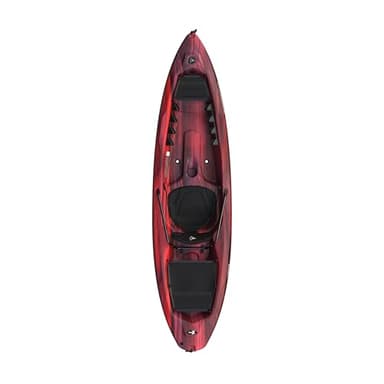
Pick 2 — A sit-on-top that still fits a small car
Pelican Seek 100X Sit-on-Top Kayak, 10 ft
Nine pounds lighter and seventeen inches shorter than the Tribe, for eight pounds less usable capacity. That trade is the whole reason to pick this one.
What the listing publishes
120 in long, 30 in beam, 43.1 lb hull, 300 lb rated capacity
Usable at the 65 percent rule: 195 lb (range 180–210 lb), which leaves about 175 lb of paddler after a 20 lb day kit. Why 65 percent.
300 lb rated is about 195 lb usable and 175 lb of paddler after gear -- enough for most adults, and 33 lb less headroom than the Tribe.
43 lb and 10 ft is the point where a sit-on-top becomes a one-person, one-trip job. Ten feet also fits inside a lot of vehicles that 11 ft 5 in does not.
The twin-arch hull section trades a little flat-water stillness for a hull that leans predictably rather than suddenly, which is a genuinely nicer feel once you are past the first hour.
What it does well
- 43 lb keeps this a one-person carry, unusual for a sit-on-top
- 30 in beam at only 10 ft means stability without the storage problem
- Self-draining deck with the same easy remount as any sit-on-top
What it costs you
- 300 lb rating is 50 lb short of the Tribe's
- 10 ft of hull wanders more than 11 ft 5 in on open water
- Same cold-water objection as every sit-on-top
Skip this if you and a child will regularly be on it together. The usable capacity does not cover two people once you subtract gear, and the Tribe or a tandem does.
#ad · how this is funded · price as of October 9, 2026
Pick 3 — Two adults plus a child or a dog
Perception Rambler 13.5 Tandem Sit-on-Top Kayak
550 lb rated is the highest here, and it is the only figure on this page that genuinely covers two adults and a passenger once the 65 percent rule is applied.
What the listing publishes
162 in long, 34 in beam, 78 lb hull, 550 lb rated capacity
Usable at the 65 percent rule: 358 lb (range 330–385 lb), which leaves about 338 lb of paddler after a 20 lb day kit. Why 65 percent.
550 lb rated is about 358 lb usable at 65 percent. Two 150 lb adults plus gear fits with room; two 200 lb adults plus gear does not, and no tandem's marketing copy will tell you that.
78 lb is a two-person carry, permanently. That is not a criticism, it is a planning fact: a tandem needs two people to move it and two people to paddle it well.
34 in of beam across 13 ft 6 in is why a dog can stand up on the back of this without it becoming an incident.
What it does well
- 550 lb rated capacity, the only figure here with room for three bodies
- 34 in beam is stable enough for a dog or a fidgeting child
- 13 ft 6 in tracks properly, so two paddlers out of sync still make progress
What it costs you
- 78 lb is a two-person lift every single time
- Needs roof bars and a real plan -- this does not go inside a car
- A tandem paddled solo from the back seat is genuinely awkward
Skip this if you will mostly paddle alone. A tandem solo is unbalanced and unpleasant, and two cheap solo boats often cost less than one good tandem.
#ad · how this is funded · price as of October 9, 2026
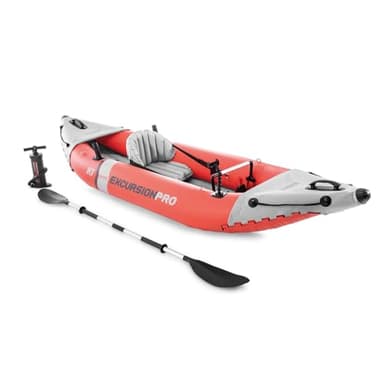
Pick 4 — The stiffest inflatable in the entry price class
Intex Excursion Pro K1 Inflatable Kayak (paddle and pump included)
A laminate hull and a high-pressure floor rather than plain vinyl, which is the difference between an inflatable that tracks and one that argues with you.
What the listing publishes
120 in long, 36 in beam, 31.2 lb packed, 220 lb rated capacity
Usable at the 65 percent rule: 143 lb (range 132–154 lb), which leaves about 123 lb of paddler after a 20 lb day kit. Why 65 percent.
220 lb rated is about 143 lb usable and 123 lb of paddler after gear -- the same limiting number as the Challenger K1, despite the better construction. Construction quality and capacity are separate specs and this is the clearest case of it on the site.
Stiffness is the whole story with inflatables. A high-pressure floor makes the hull behave like a shape instead of a bag, and it is the single upgrade that most changes how one paddles.
36 in of beam plus a stiff floor is an unusually settled platform for standing to fish or to take a photo.
What it does well
- Laminate hull and high-pressure floor track far better than plain vinyl
- 36 in beam plus a stiff floor is stable enough to stand on carefully
- 31 lb in a bag, still no rack required
What it costs you
- 220 lb rated -- roughly 123 lb of paddler after gear, same as the cheapest Intex
- Higher pressure means more pumping, and a gauge you should actually read
- Costs meaningfully more than the Challenger K1 for no extra capacity
Skip this if capacity is your constraint rather than feel. The Explorer K2 has 180 lb more rating for less money, and it is the better answer for a heavier paddler.
#ad · how this is funded · price as of October 9, 2026
Adding rod holders to a boat that does not have them
This is a genuinely small job and it is why we are comfortable recommending hulls without them. Two routes, depending on whether you are willing to drill:
- **Clamp-on holders.** They grip a molded handle, a gear track or the rim of a tank well, and they come off in seconds. Nothing is drilled, nothing is permanent, and they cost a small fraction of the price difference between hulls. This is the right first move.
- **A milk crate behind the seat.** The oldest trick in kayak fishing and still one of the best. A crate bungeed into the rear tank well of a sit-on-top holds tackle boxes and takes rod tubes zip-tied to its corners. Total cost is close to nothing.
- **Flush-mount holders.** These require cutting a hole in the hull and sealing it. They are tidy and permanent, and they are worth doing once you know you like the boat — not in week one.
What you can safely ignore
- **Rod holder count above two.** You cannot meaningfully fish more than one rod from a kayak. A second holder parks a spare. Four is a marketing number.
- **Camouflage finish.** Fish do not see the hull from above the waterline the way the catalog implies. A bright hull is easier for a boat to see, which matters more.
- **Gear tracks you have no plan for.** They are useful once you own accessories. On a first boat they are unused rails.
- **Pedal drives, at this stage.** They are excellent and they cost several times what any boat here costs. That is a second-kayak decision, not a first one.
- **Length beyond about 12 feet.** More waterline tracks better and stores worse, and a longer hull is harder to hold over a spot in wind.
The safety part that is specific to fishing
Anglers are over-represented in paddlecraft fatalities, and the reason is not the boats. It is that fishing means sitting still for hours in cool water, often alone, often at dawn or dusk, with a life jacket taken off because it is uncomfortable to cast in.
The other fishing-specific hazard is anchoring. If you anchor to hold a spot, anchor from a side D-ring with a quick-release you can reach, never from the bow or stern in moving water — a hull held at one end in current can be pulled under. On still water, in your first season, a drift and a paddle is usually enough.
Questions people actually ask
What size kayak is best for fishing?
Do I need a kayak that says angler on it?
Sit-on-top or sit-inside for fishing?
Can you stand up and fish in a beginner kayak?
How much gear weight should I plan for?
Is a paddle board any good for fishing?
Where these numbers came from
Every figure on this page traces to one of these. Where a number could not be sourced, the page says so rather than estimating it.
- Eddyline Kayaks — Maximum weight capacity versus ideal capacity for various styles of kayaks (manufacturer, states the 60-70% ideal-capacity band)
- U.S. Coast Guard — Life Jacket Wear / Wearing Your Life Jacket (federal carriage and under-13 wear requirements)
- Confluence Outdoor / Perception — Pescador 10.0 fishing kayak (manufacturer, published specification table: 126 in, 32 in beam, 52 lb, 325 lb capacity, 2 molded-in rod holders), read 2026-09-04
- Confluence Outdoor / Pelican — Sentinel 100X Angler fishing kayak (manufacturer, published specification table: 114 in, 30 in beam, 44 lb, 275 lb capacity), read 2026-09-04
- Perception Tribe 11.5 Sit-on-Top Kayak — manufacturer specification as published on the Amazon listing, read 2026-09-02
- Pelican Seek 100X Sit-on-Top Kayak — manufacturer specification as published on the Amazon listing, read 2026-09-02
- Perception Rambler 13.5 Tandem Sit-on-Top Kayak — manufacturer specification as published on the Amazon listing, read 2026-09-02
- Intex Excursion Pro K1 Inflatable Kayak — manufacturer specification as published on the Amazon listing, read 2026-09-02
Read next
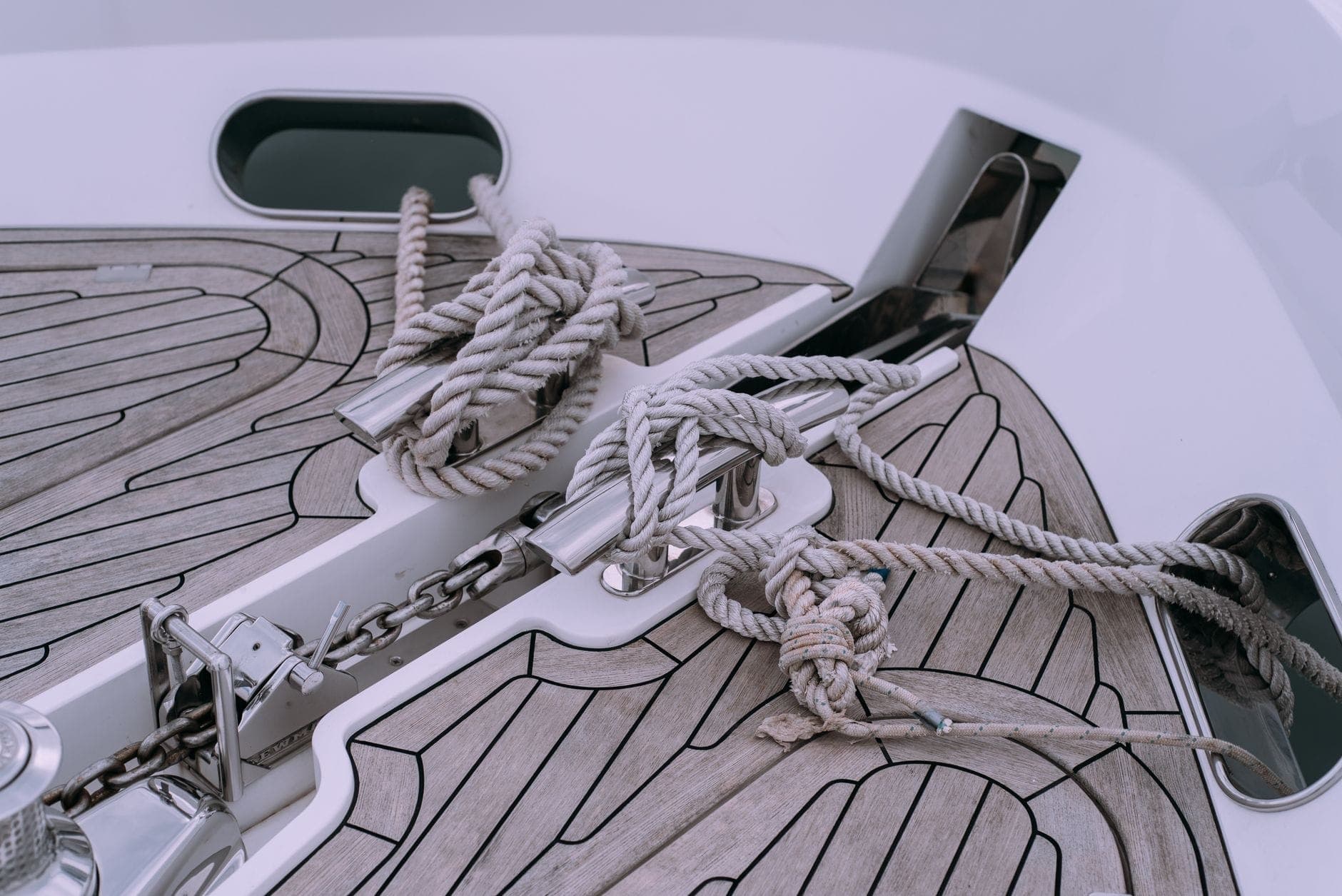
Best Anchor Setup
The Best Anchors for Kayaks and Paddle Boards
A 3.5 lb folding grapnel is the standard answer, 1.5 lb for a board. Which kit, how much rope, and the side-attachment rule that keeps an anchored hull upright.
Top pick
MarineNow 3.5 lb Folding Grapnel Anchor Kit with 25 ft Rope
The complete kit, for most people
#ad · how this is funded · price as of October 9, 2026
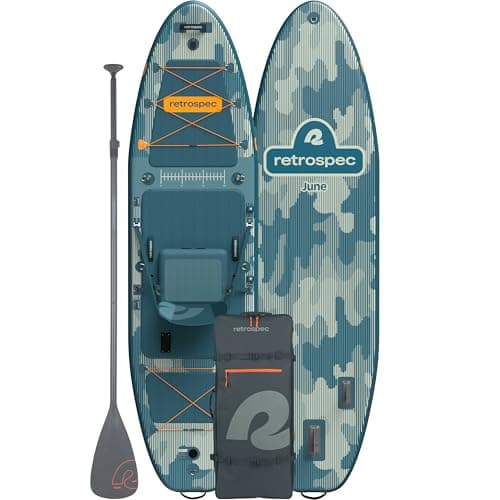
Retrospec June 11 ft 6 in Fishing Paddle Board: What the Specs Say
35 in wide, 24.5 lb, rated to 320 lb, with a removable seat — the numbers behind a fishing board that suits nervous beginners just as well.
Top pick
Retrospec June Inflatable Fishing Paddle Board, 11 ft 6 in
Fishing, or paddling seated
#ad · how this is funded · price as of October 9, 2026
Kayak Weight Capacity, Explained
The 65 percent rule, where it comes from, what happens when you ignore it, and how to size around it.
Top pick
Perception Tribe 11.5 Sit-on-Top Kayak
The all-round first sit-on-top
#ad · how this is funded · price as of October 9, 2026

Sit-On-Top vs Sit-In Kayak
Water temperature and remounting decide this, not preference. The honest comparison, with picks for each.
Top pick
Perception Tribe 11.5 Sit-on-Top Kayak
The all-round first sit-on-top
#ad · how this is funded · price as of October 9, 2026
Best for Lakes
The Best Kayaks for Lakes
Lake paddling rewards waterline length. The boats that hold a line when the wind gets up, with the numbers.
Top pick
Perception Tribe 11.5 Sit-on-Top Kayak
The all-round first sit-on-top
#ad · how this is funded · price as of October 9, 2026
Best for Fishing
The Best Paddle Boards for Fishing
Fishing boards need width, capacity for tackle, and a seat. Here is what actually changes versus a normal board.
Top pick
Retrospec June Inflatable Fishing Paddle Board, 11 ft 6 in
Fishing, or paddling seated
#ad · how this is funded · price as of October 9, 2026