Gear & Getting There
The Best Anchors for Kayaks and Paddle Boards
Anchoring a small boat is the one piece of gear advice on this site where getting it wrong is dangerous rather than disappointing. The kit is cheap and simple; where you tie it is the part that matters.
We have not paddled these, and we are not going to pretend we have. Here is what we did instead. Links to Amazon earn us a commission at no extra cost to you, and commission never decides a pick — how this site is funded.
| # | Product | Best for | The spec it turns on | Price |
|---|---|---|---|---|
| 1 | 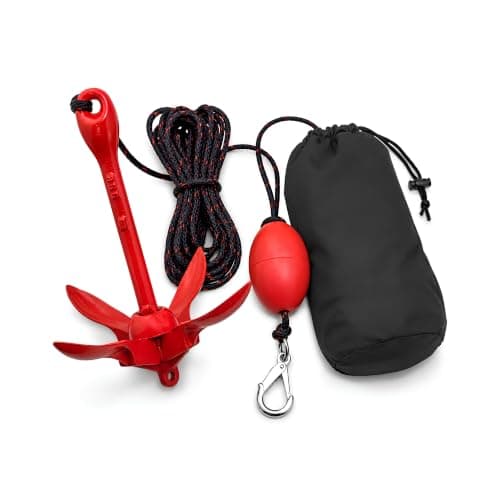 MarineNow 3.5 lb Folding Grapnel Anchor Kit with 25 ft RopeTop pickEverything you need in one box, including the two parts people forget: a buoy so you can find and release the anchor, and a padded bag so 3.5 lb of galvanized steel does not live loose against your hull. | The complete kit, for most people | 3.5 lb galvanized steel folding grapnel, 25 ft marine-grade rope, PVC buoy, stainless steel snap hook, padded storage bag; folds to 12 x 3 in | |
| 2 | 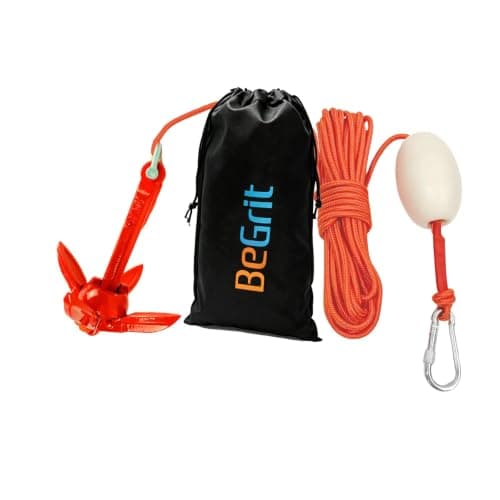 BeGrit Kayak Anchor Kit, 1.5 lb Folding Anchor with 32.8 ft RopeHalf the weight and a third more rope than the 3.5 lb kits. On a paddle board, where every pound is carried on your back to the water, that trade is usually the right one. | A paddle board, or anywhere weight is the constraint | 1.5 lb galvanized carbon steel 4-fluke folding anchor, 32.8 ft tow rope with hook, buoy ball, storage bag; folds to 7 x 1.77 x 1.77 in | |
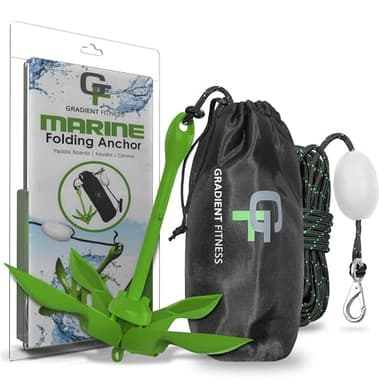
| 3 | 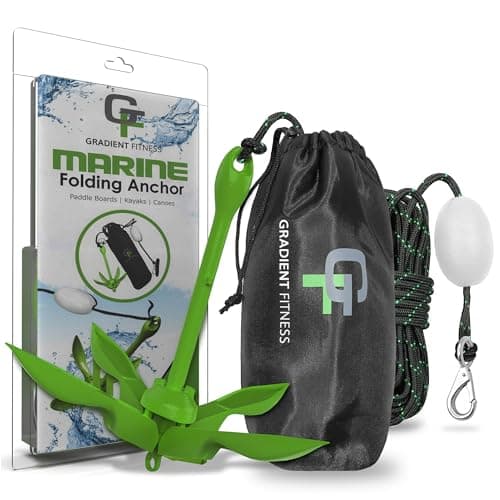 Gradient Fitness Kayak Anchor Kit, 3.5 lb Folding Grapnel with 25 ft RopeThe same 3.5 lb kit as the MarineNow with a different locking mechanism, and the locking mechanism is the part you actually interact with every time you deploy it. | A twist-lock collar you can work in gloves | 3.5 lb cast iron 4-fluke folding anchor with twist-lock collar, 25 ft braided polyethylene rope, floating buoy, stainless steel carabiner, padded storage bag | |
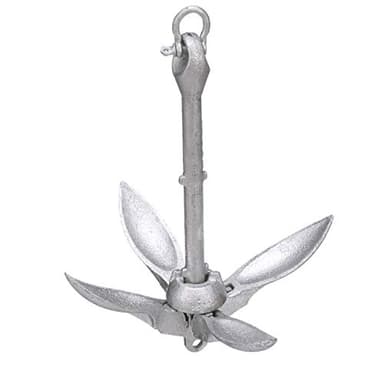
| 4 | 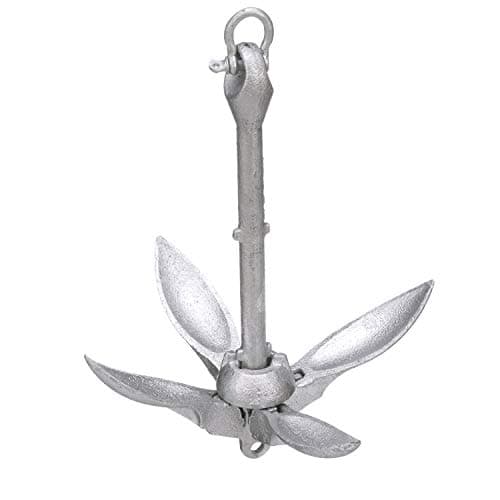 SEACHOICE Folding Grapnel Anchor, 3.5 lbThe anchor on its own, from an established marine-hardware brand, for less than the kits. Malleable iron and heavy galvanizing is the specification that decides how many seasons it lasts. | Just the anchor, from a marine brand | 3.5 lb malleable iron folding grapnel, heavily galvanized, locks in the open or closed position; anchor only, no rope or buoy | |
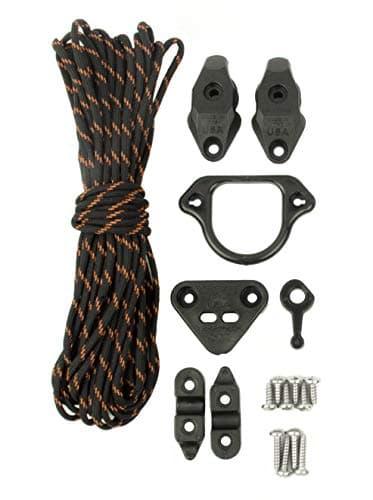
| 5 | 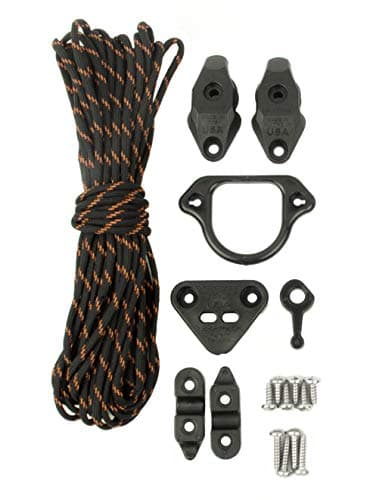 YakAttack LeverLoc Anchor Trolley KitNot an anchor. A trolley is the loop of line along the side of your hull that lets you slide the anchor's attachment point fore and aft — which is how you decide whether the boat sits nose-to-wind or beam-on. | Choosing which way the boat lies once anchored | Anchor trolley kit, all mounting hardware included, made in the USA. The listing publishes no meaningful dimensions |
We have told readers on three pages of this site that a small folding anchor is worth more to a kayak angler or a board angler than any amount of onboard storage, and we have never told them which one to buy. This page fixes that. It is a short shopping decision wrapped around one genuinely important safety rule, so the rule comes first.
How we judged these
- **Can you release it fast.** Everything else is secondary. A kit with a buoy and a snap hook can be cast off and recovered later; a rope knotted to a D-ring cannot.
- **Weight matched to the job, not the craft.** What decides anchor weight is how hard the wind can push you, and a seated angler in a fishing kayak is a far bigger sail than a board with nobody on it.
- **Rope length, published.** An anchor holds by pulling along the bottom rather than straight up, so the line has to be several times the depth. We rank on the length in the box.
- **Whether the flukes lock open.** A folding anchor that closes under load is not an anchor. Every pick here locks, and we say how.
- **Whether it comes with a bag.** Four bare steel points loose in a kayak is a hull puncture and a shin wound waiting to happen.
Why a folding grapnel and not something heavier
Every pick on this page is a folding grapnel: four hinged flukes on a central shank that fold flat for storage and lock open for use. That is not a coincidence, it is the only anchor type that suits a small paddle craft.
An anchor does not work by weight. It works by lying over on the bottom and letting one or two flukes dig in, so the load pulls horizontally against the bottom rather than vertically against the anchor's mass. That is why a 3.5 lb grapnel holds a kayak that a 3.5 lb rock would slide along behind. It is also why the rope angle matters more than the anchor does.
| Kit | Anchor | Rope | Buoy | Bag |
|---|---|---|---|---|
| MarineNow | 3.5 lb galvanized steel | 25 ft | Yes, PVC | Yes, padded |
| BeGrit | 1.5 lb galvanized carbon steel | 32.8 ft | Yes, ball | Yes |
| Gradient Fitness | 3.5 lb cast iron | 25 ft, floating braid | Yes, floating | Yes, padded |
| SEACHOICE | 3.5 lb malleable iron | None | No | No |
| YakAttack LeverLoc | Trolley only — no anchor | — | — | — |
Top pick — The complete kit, for most people
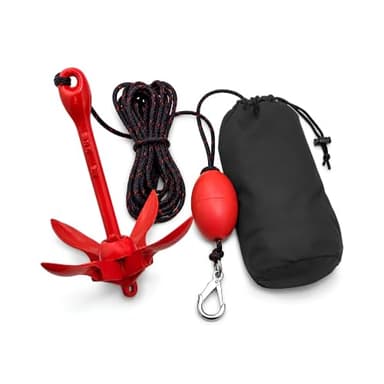
MarineNow 3.5 lb Folding Grapnel Anchor Kit with 25 ft Rope
Everything you need in one box, including the two parts people forget: a buoy so you can find and release the anchor, and a padded bag so 3.5 lb of galvanized steel does not live loose against your hull.
What the listing publishes
3.5 lb galvanized steel folding grapnel, 25 ft marine-grade rope, PVC buoy, stainless steel snap hook, padded storage bag; folds to 12 x 3 in
3.5 lb is the standard weight for this job and it is enough on a lake. An anchor holds by lying flat and dragging its flukes into the bottom, not by being heavy, which is why a folding grapnel this size stops a kayak that a 3.5 lb rock would not.
Twenty-five feet of rope is fine for most inland water and short for deep water. The rope has to run out at a shallow angle for the flukes to bite, so it needs to be several times the depth you anchor in, not just longer than it.
The padded bag sounds like packaging and is not. Four steel flukes loose in a kayak will find your hull, your dry bag or your shin.
What it does well
- Genuinely complete: anchor, rope, buoy, snap hook and padded bag
- Folds to 12 x 3 in, so it stows in a hatch or tank well
- Stainless hardware and marine-grade rope rather than hardware-store parts
What it costs you
- 25 ft of rope limits how deep you can usefully anchor
- 3.5 lb is dead weight against your rated capacity on every trip
- Galvanized steel will eventually rust where the coating chips
Skip this if you already own rope and a carabiner. The bare SEACHOICE anchor does the same job for less, and you will not use two buoys.
#ad · how this is funded · price as of October 9, 2026
Pick 2 — A paddle board, or anywhere weight is the constraint
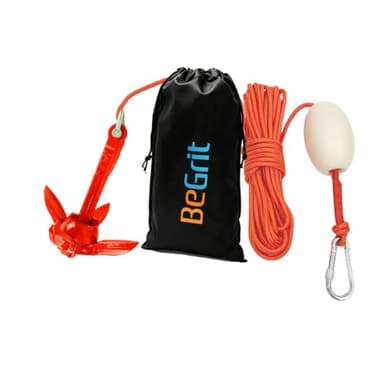
BeGrit Kayak Anchor Kit, 1.5 lb Folding Anchor with 32.8 ft Rope
Half the weight and a third more rope than the 3.5 lb kits. On a paddle board, where every pound is carried on your back to the water, that trade is usually the right one.
What the listing publishes
1.5 lb galvanized carbon steel 4-fluke folding anchor, 32.8 ft tow rope with hook, buoy ball, storage bag; folds to 7 x 1.77 x 1.77 in
1.5 lb holds less, and on a board in still air that is not the limiting factor — a board has almost no windage compared to a fishing kayak with a seated angler acting as a sail. Match the anchor to how much the wind can push, not to the craft's name.
32.8 feet of rope is the most here, which partly offsets the lighter anchor: more line out means a shallower pull angle, and a shallower pull angle is what makes flukes bite.
Folded to seven inches it is the only anchor on this page that genuinely disappears into a paddle board's deck bag.
What it does well
- 1.5 lb, the lightest here, and it folds to 7 in
- 32.8 ft of rope, the longest included line on this page
- Buoy ball and storage bag included at the lowest price here
What it costs you
- 1.5 lb will drag in wind that a 3.5 lb anchor holds in
- Carbon steel under galvanizing rusts quickly once the coating is broken
- Not enough anchor for a loaded fishing kayak on an exposed lake
Skip this if you fish from a kayak on open water. A seated angler is a sail, and this is the anchor that will quietly let you drift off the spot.
#ad · how this is funded · price as of October 9, 2026
Pick 3 — A twist-lock collar you can work in gloves
Gradient Fitness Kayak Anchor Kit, 3.5 lb Folding Grapnel with 25 ft Rope
The same 3.5 lb kit as the MarineNow with a different locking mechanism, and the locking mechanism is the part you actually interact with every time you deploy it.
What the listing publishes
3.5 lb cast iron 4-fluke folding anchor with twist-lock collar, 25 ft braided polyethylene rope, floating buoy, stainless steel carabiner, padded storage bag
The flukes fold for storage and have to be locked open before use, or the anchor closes when it loads. This one uses a twist-lock collar; the listing describes rotating and lifting the ring, unfolding the flukes, then twisting to lock. It is a deliberate two-handed action, which is what you want.
Braided polyethylene rope floats, which matters more than it sounds: a sinking rope finds your fin, your rudder and the bottom. A floating line stays where you can see it.
Cast iron rather than the galvanized steel of the MarineNow. Cast iron is more brittle and less prone to surface rust; neither material is a reason to choose between these two.
What it does well
- Twist-lock collar is positive and workable with cold hands
- Floating braided rope stays clear of fins and rudders
- Buoy, stainless carabiner and padded bag all included
What it costs you
- Typically costs more than the equivalent MarineNow kit
- Cast iron chips rather than scuffs if you drop it on rock
- 25 ft of rope, same depth limit as the kit above
Skip this if you want the lightest thing that will hold a board still on a calm pond. At 3.5 lb this is more anchor than that job needs.
#ad · how this is funded · price as of October 9, 2026
Pick 4 — Just the anchor, from a marine brand
SEACHOICE Folding Grapnel Anchor, 3.5 lb
The anchor on its own, from an established marine-hardware brand, for less than the kits. Malleable iron and heavy galvanizing is the specification that decides how many seasons it lasts.
What the listing publishes
3.5 lb malleable iron folding grapnel, heavily galvanized, locks in the open or closed position; anchor only, no rope or buoy
Malleable iron is the detail worth knowing. Unlike plain cast iron it deforms rather than snapping, which is the failure mode that matters when a fluke is wedged under a rock and you are pulling on it.
It locks in either the open or the closed position, so it cannot fold under load and cannot flap about in the boat. Both halves of that matter.
No rope, no buoy, no bag. If you do not already own those, one of the kits above is cheaper than buying them separately.
What it does well
- Malleable iron bends rather than snaps under a wedged load
- Heavily galvanized for corrosion resistance, including salt water
- The cheapest way to get a real anchor if you have your own line
What it costs you
- No rope, buoy, snap hook or bag — budget for all four
- Nothing to protect your hull from the bare flukes in transit
- Sold as marine hardware, so no kayak-specific fitting advice on the listing
Skip this if this is your first anchor. Buying the pieces separately usually costs more than a kit and you will get the rope length wrong the first time.
#ad · how this is funded · price as of October 9, 2026
Pick 5 — Choosing which way the boat lies once anchored
YakAttack LeverLoc Anchor Trolley Kit
Not an anchor. A trolley is the loop of line along the side of your hull that lets you slide the anchor's attachment point fore and aft — which is how you decide whether the boat sits nose-to-wind or beam-on.
What the listing publishes
Anchor trolley kit, all mounting hardware included, made in the USA. The listing publishes no meaningful dimensions
Without a trolley, your anchor line is tied wherever you tied it, and the boat lies however that dictates. With one, you move the attachment toward the bow or the stern from your seat and the boat swings to suit.
That is also the safety mechanism. Being able to slide the attachment point to the end of the boat, or release it entirely, is what stops a hull being held broadside by current — the situation that capsizes anchored kayaks.
It is an installation rather than an accessory: the kit includes hardware and it goes on with fittings through your hull. Plan the job, and check your boat's deck before ordering.
What it does well
- Lets you set which way the boat lies without re-tying anything
- Hardware included, and made in the USA
- The specific product category built for this job rather than a generic pulley kit
What it costs you
- Requires drilling or fitting hardware to your hull
- No use at all without a separate anchor and line
- The listing's published dimensions are placeholder values, so there is nothing to check before ordering
Skip this if you anchor occasionally on a calm lake, or you paddle a board. A trolley earns its place on a fishing kayak that anchors every trip, and is over-engineering for a picnic stop.
#ad · how this is funded · price as of October 9, 2026
1.5 lb or 3.5 lb?
This is the only real specification decision and it is usually framed as kayak-versus-board, which is the wrong axis. What decides it is windage — how much of you and your craft the wind can push against.
- **3.5 lb** for a fishing kayak, anything on an exposed lake, or any time you are sitting upright with a rod. A seated angler is a surprisingly effective sail and this is the weight that holds against it.
- **1.5 lb** for a paddle board, a sheltered cove, or any situation where you are carrying the kit to the water on your back. Two pounds saved is real when the bag is already heavy.
- **Heavier than 3.5 lb** is not a kayak anchor. You are adding dead weight against your rated capacity on every trip for holding power you cannot use, because the limit is the rope angle and the bottom, not the anchor.
Rope: the spec that actually decides whether it holds
If the line runs steeply down from the boat, the pull on the anchor is upward and the flukes lift out. If it runs out at a shallow angle, the pull is sideways and the flukes dig in. That is the whole mechanism, and the only thing you control is how much rope you let out.
So the working rule is that your line has to be several times the depth of the water, not merely longer than it. Twenty-five feet — what the two 3.5 lb kits here include — is comfortable in shallow inland water and short the moment you are over about twelve or fifteen feet. The BeGrit's 32.8 ft is the most line on this page and it is attached to the lightest anchor, which is a slightly odd pairing that works out in its favor.
What an anchor trolley does, and whether you need one
A trolley is a loop of line running along the side of the hull through two pulleys, with a ring on it that your anchor line clips to. Sliding the ring moves the anchor's attachment point anywhere between bow and stern without you re-tying anything or leaving your seat.
That sounds like a convenience and is mostly a control. Where the line attaches decides which way the boat lies: near the bow it points into the wind, amidships it sits beam-on. For an angler who wants to face a particular way, that is the difference between a productive stop and a frustrating one — and the ability to slide the attachment right to one end, or cast it off, is a genuine safety margin.
You need one if you fish from a kayak and anchor most trips. You do not need one to stop for lunch on a lake twice a summer, and you cannot usefully fit one to a paddle board.
Anchoring, step by step
- **Pick your spot and check the depth** before you commit. You cannot judge rope length without it.
- **Lock the flukes open.** Both the MarineNow and the Gradient Fitness anchors need a positive action to lock; do it in the boat, not in the water.
- **Clip the line to a side attachment point** you can reach while seated — a trolley ring, or a side D-ring with a snap hook. Not the bow. Not the stern. Not a knot.
- **Lower it, do not throw it.** A thrown anchor lands on its own line and fouls, and on a board it lands on the deck.
- **Pay out several times the depth**, then take up the slack gently until you feel it set.
- **Attach the buoy if you are in any doubt.** If the anchor jams, you cast off the whole thing, paddle clear, and come back for the float rather than fighting a fixed line from a small boat.
What you can ignore
- **Anchor weight beyond 3.5 lb.** More mass is not more holding on a kayak, it is more load against your capacity. Which is a real number.
- **Stainless steel anchors.** Galvanized steel and malleable iron are the normal materials, and the galvanizing is the corrosion protection. Stainless costs more and does not hold better.
- **Chain.** Chain improves the pull angle on a yacht. On a kayak it is weight in the wrong place and one more thing to store.
- **Anchoring at all, in your first season.** On still water a drift and a couple of correcting strokes is usually enough, and it is what we would recommend while you are learning. What actually earns a place in the boat.
Questions people actually ask
What size anchor do I need for a kayak?
How much rope do I need for a kayak anchor?
Where should you attach a kayak anchor?
Do I need an anchor trolley?
Can you anchor a paddle board?
Why is a grapnel anchor used for kayaks?
Is a heavier anchor better?
Where these numbers came from
Every figure on this page traces to one of these. Where a number could not be sourced, the page says so rather than estimating it.
- Eddyline Kayaks — Maximum weight capacity versus ideal capacity for various styles of kayaks (manufacturer, states the 60-70% ideal-capacity band)
- MarineNow 3.5 lb Folding Grapnel Anchor Kit with 25 ft Rope — manufacturer specification as published on the Amazon listing, read 2026-09-20
- BeGrit Kayak Anchor 1.5 lb with 32.8 ft Rope — manufacturer specification as published on the Amazon listing, read 2026-09-20
- Gradient Fitness Kayak Anchor Kit, 3.5 lb with 25 ft Rope — manufacturer specification as published on the Amazon listing, read 2026-09-20
- Seachoice Folding Grapnel Anchor 3.5 lb, 41000 — manufacturer specification as published on the Amazon listing, read 2026-09-20
- YakAttack LeverLoc Anchor Trolley Kit — manufacturer specification as published on the Amazon listing, read 2026-09-20
Read next
Best Fishing Kayak
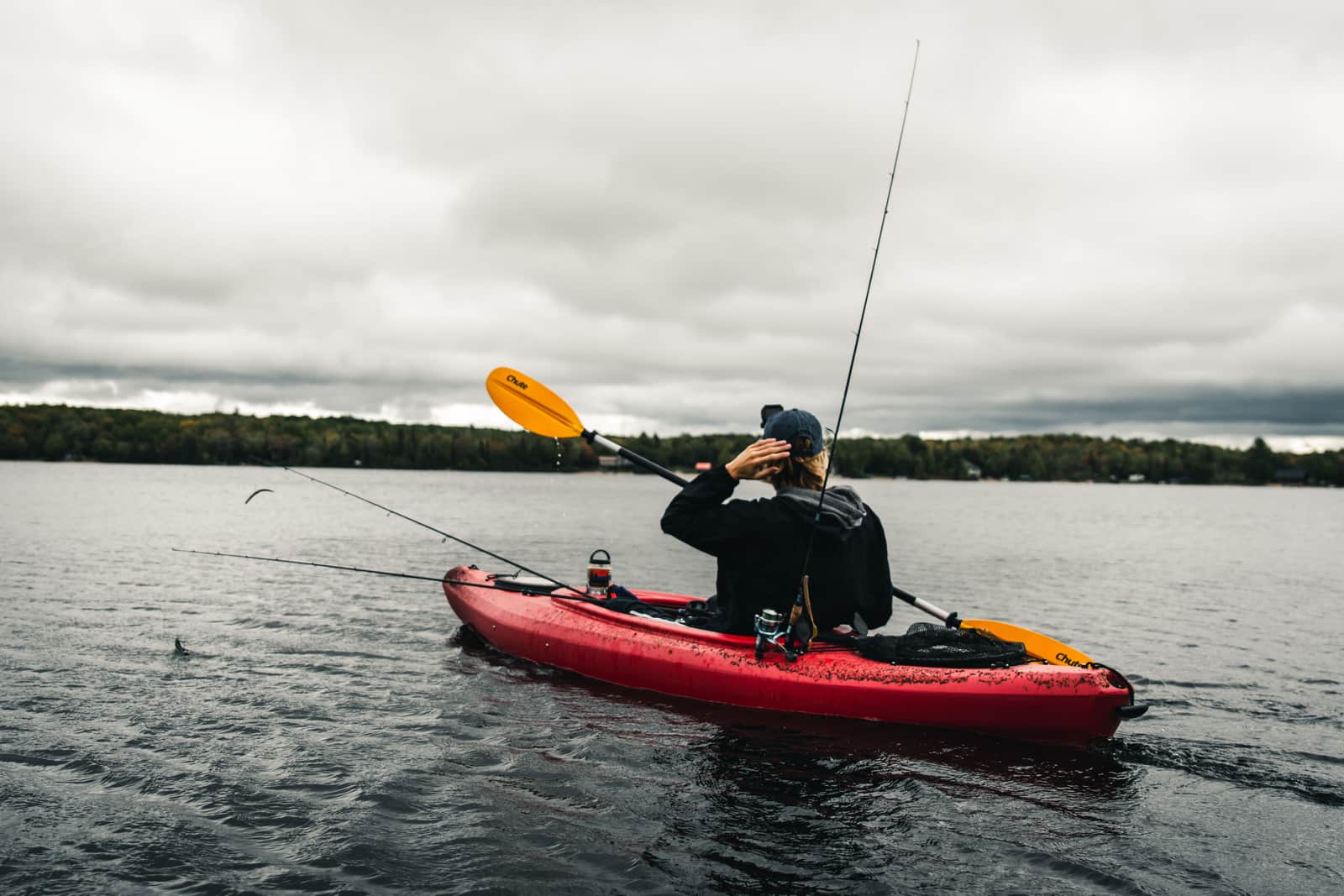
The Best Kayaks for Fishing
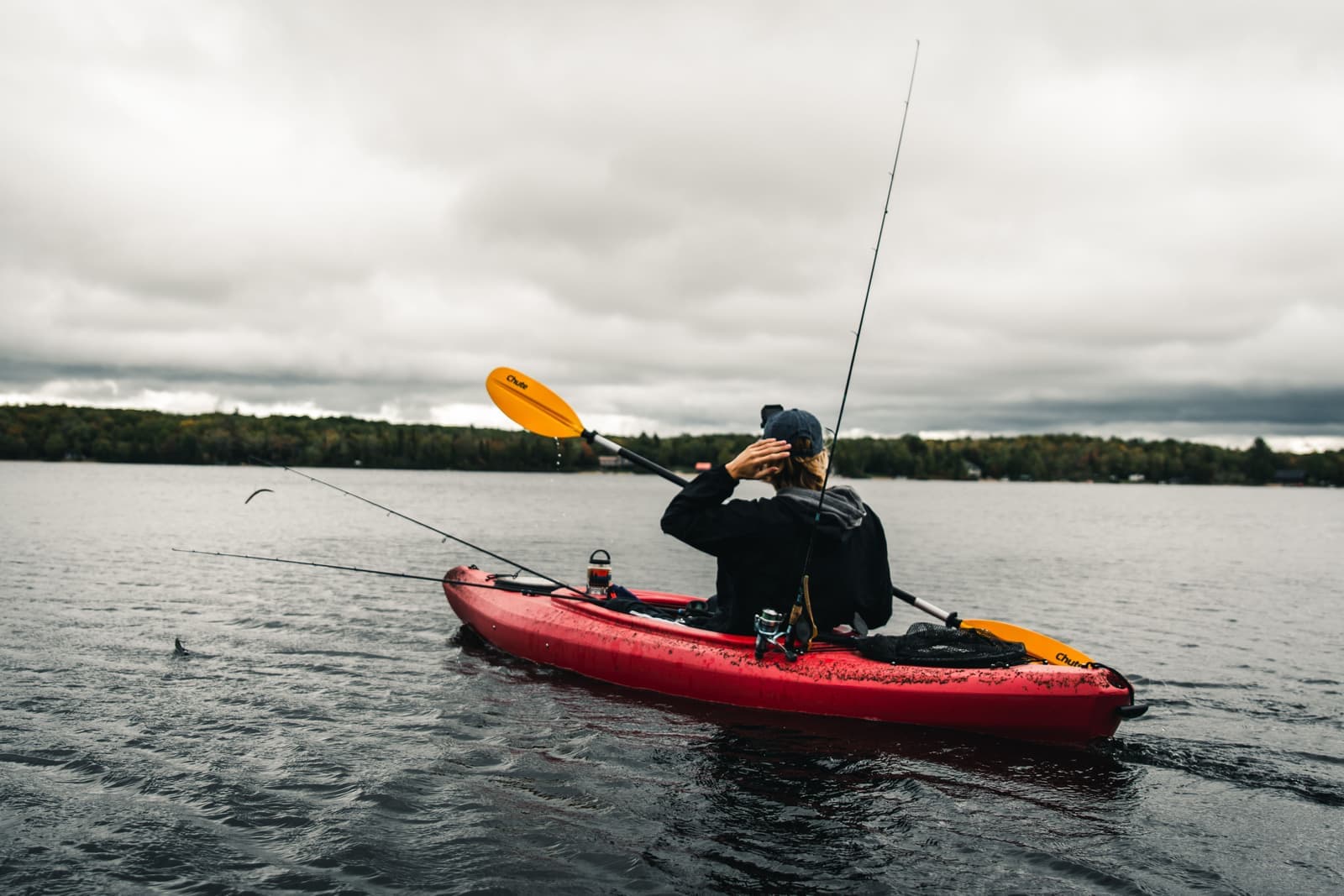
Tackle is heavier than anyone plans for. The capacity, beam and deck specs that actually decide a first fishing kayak — and why the angler badge is not one of them.
Top pick
Perception Tribe 11.5 Sit-on-Top Kayak
The all-round first sit-on-top
#ad · how this is funded · price as of October 9, 2026
Best for Fishing
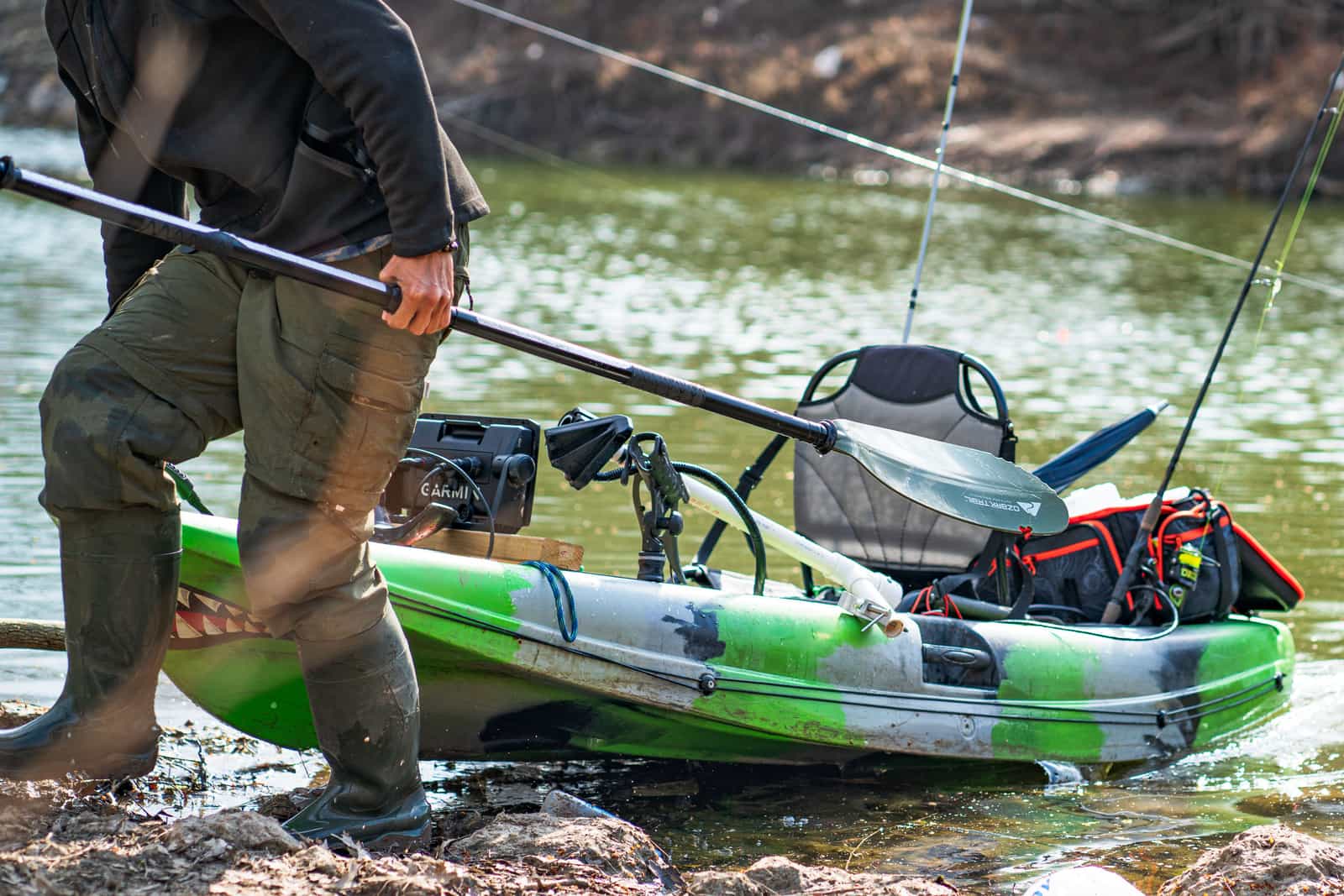
The Best Paddle Boards for Fishing
Fishing boards need width, capacity for tackle, and a seat. Here is what actually changes versus a normal board.
Top pick
Retrospec June Inflatable Fishing Paddle Board, 11 ft 6 in
Fishing, or paddling seated
#ad · how this is funded · price as of October 9, 2026
Best First Accessory
Kayak Accessories: What Actually Earns a Place
Five accessories that change every outing, ranked by how much they improve it per dollar — and the ones you can safely skip for a season.
Top pick
Bending Branches Whisper Kayak Paddle, 230 cm
The first paddle worth keeping
#ad · how this is funded · price as of October 9, 2026
Best SUP Leash
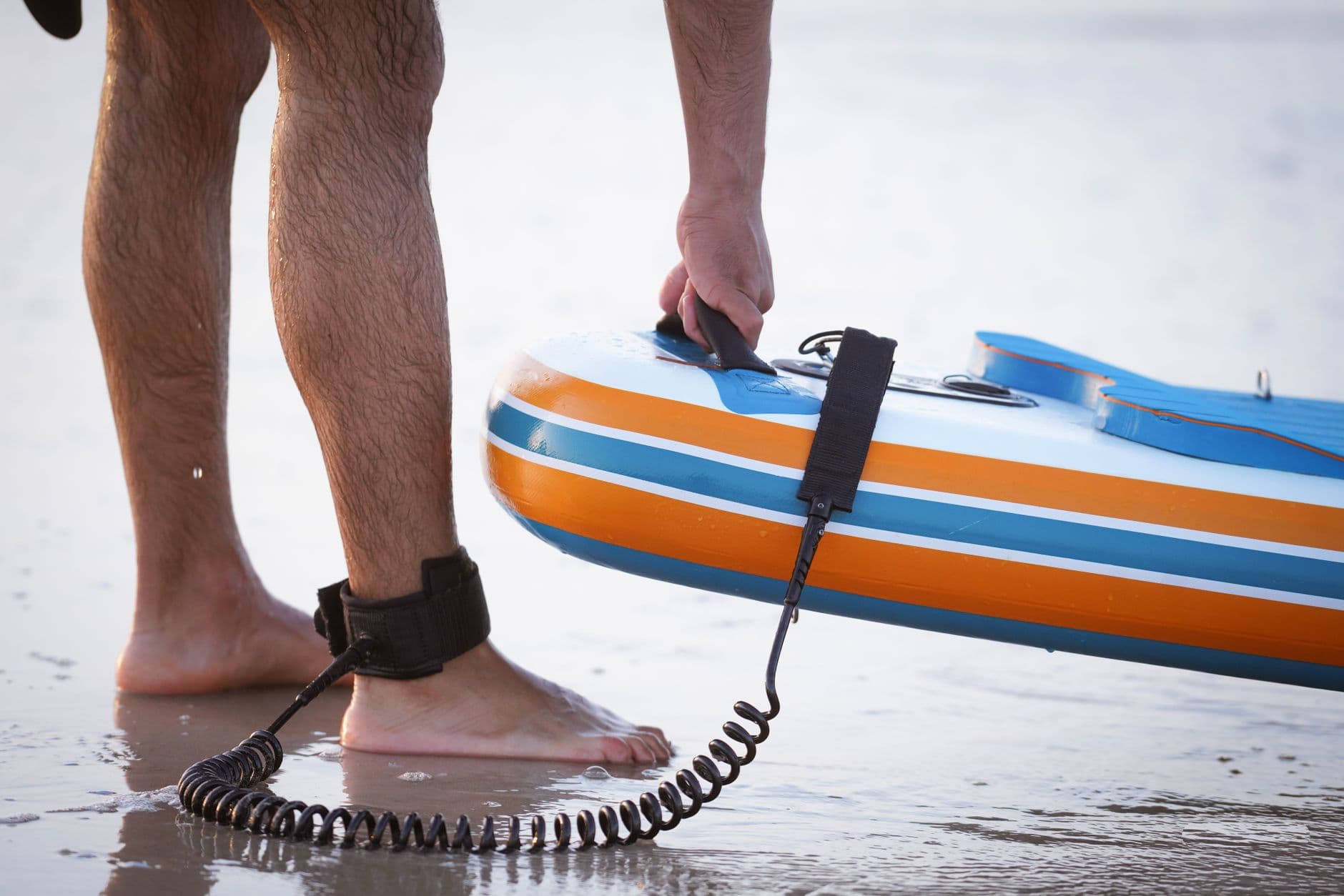
The Best Paddle Board Leashes
The water decides the leash: coiled for flat, straight for surf, quick-release for anything moving. Six picks, and the river rule that makes the choice a safety one.
Top pick
Dakine SUP Coiled Ankle Leash, 10 ft x 3/16 in
Flat water, and the default if you buy one leash
#ad · how this is funded · price as of October 9, 2026
Best for Yoga
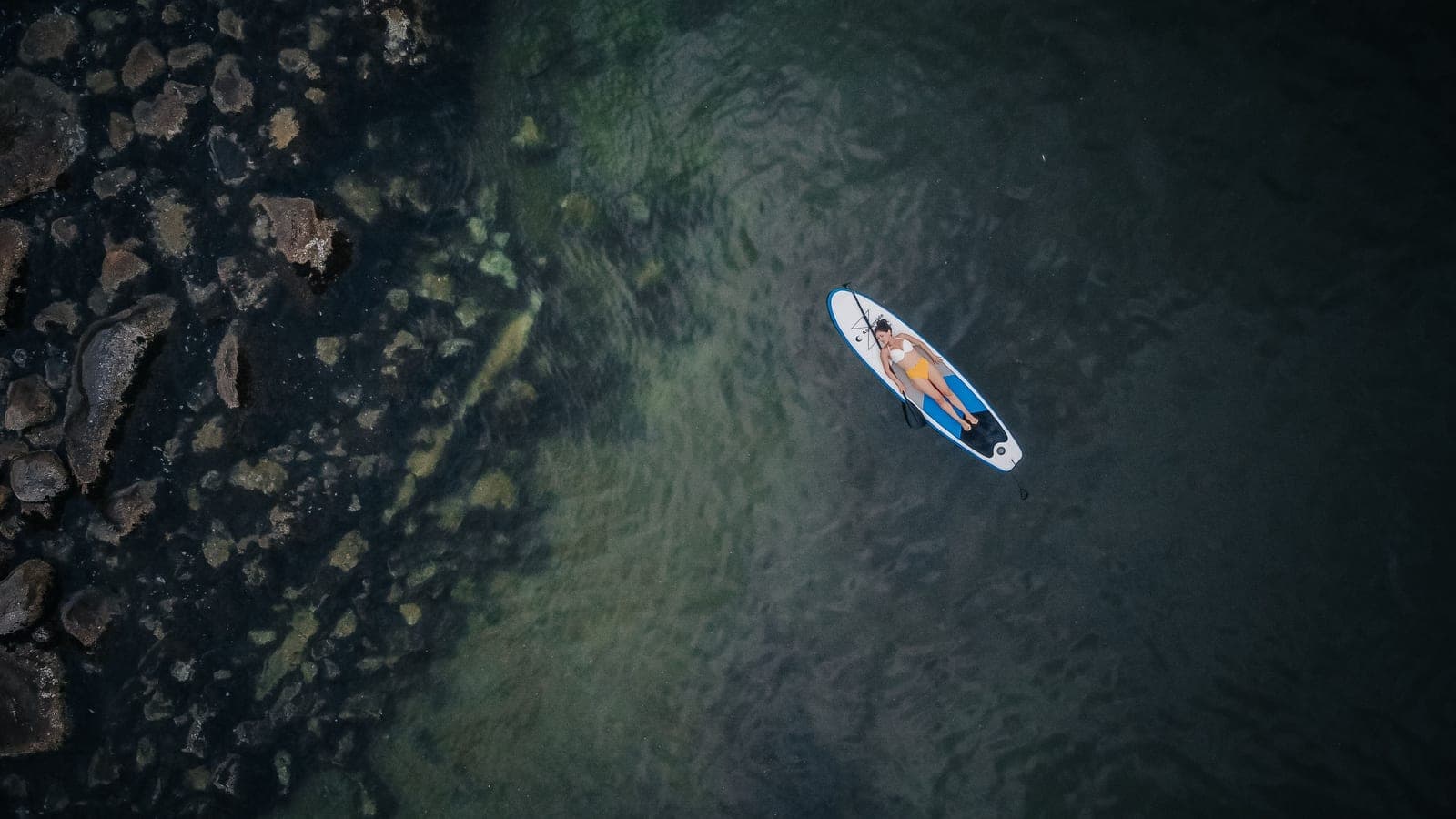
The Best Paddle Boards for Yoga
Width for balance, length to lie down, and a deck with nothing on it. The three specs that make a board work for yoga, and which of ours have them.
Top pick
FunWater Inflatable Stand Up Paddle Board, 10 ft 6 in x 35 in
Maximum stability in a standard length
#ad · how this is funded · price as of October 9, 2026
Kayak Weight Capacity, Explained
The 65 percent rule, where it comes from, what happens when you ignore it, and how to size around it.
Top pick
Perception Tribe 11.5 Sit-on-Top Kayak
The all-round first sit-on-top
#ad · how this is funded · price as of October 9, 2026