Kayaks
Kayak Hull Types: What Each Shape Does on the Water
The shape of the boat below the waterline decides how it behaves before length, width, brand or price get a say. Here is what the four shapes do, in language that assumes you have never heard any of these words.
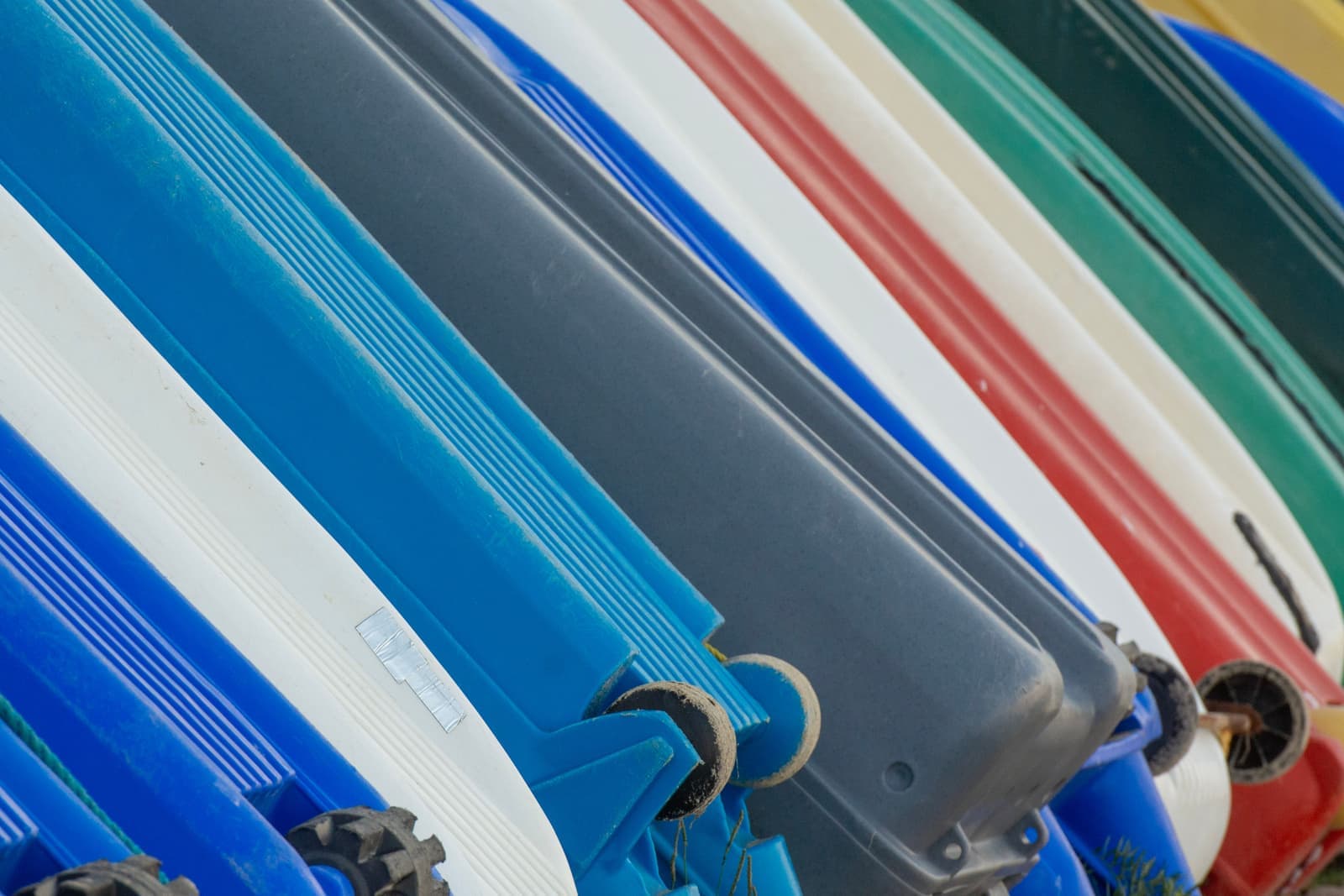
We have not paddled these, and we are not going to pretend we have. Here is what we did instead. Links to Amazon earn us a commission at no extra cost to you, and commission never decides a pick — how this site is funded.
| # | Product | Best for | The spec it turns on | Price |
|---|---|---|---|---|
| 1 | 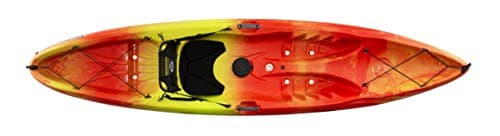 Perception Tribe 11.5 Sit-on-Top KayakTop pickThe combination almost nothing else manages: 350 lb of rating, a 30 in beam and enough waterline to hold a line, in a hull a first-timer can climb back onto from the water. | The all-round first sit-on-top | 137 in long, 30.25 in beam, 52 lb hull, 350 lb rated capacity | |
| 2 | 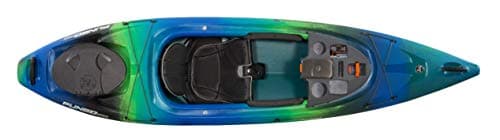 Wilderness Systems Pungo 105 Recreational Kayak, 10 ft 6 inThe only hull here that will still feel right in year three, because the seat and the waterline were designed for people who paddle for three hours rather than forty minutes. | The boat you keep after your first season | 126 in long, 30 in beam, 47 lb hull, 300 lb rated capacity | |
| 3 | 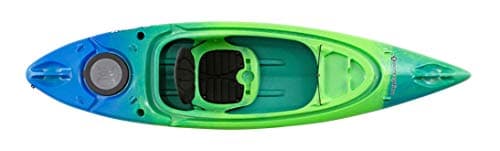 Perception Flash 9.5 Sit-Inside KayakA 325 lb rating in a hull under ten feet is unusual, and it is what makes this the short-boat answer for a larger paddler who still has to store it in an apartment. | The most capacity in the shortest hull | 113 in long, 28.5 in beam, 41 lb hull, 325 lb rated capacity |
This is the page this site was built around, so it is worth being careful with it. Nearly every kayak buying guide sorts boats by brand and by price. The shape of the hull under the water decides more about how a boat behaves than either, and it is described on the listing in one or two words that mean nothing to a first-time buyer.
Two definitions first, because every explanation of hull shape depends on them and almost nobody supplies them.
That distinction is the key to the whole subject, and it explains why the boat that feels safest at the dock is often the one that surprises you on the water.
Flat-bottom hulls
Exactly what it sounds like: the bottom of the boat is broadly flat from side to side. This is what most cheap recreational kayaks are, and what most first-time paddlers end up in.
A flat bottom has the highest primary stability of any shape. Sit in one on flat water and it feels like a raft — solid, settled, no sensation of balancing at all. That is genuinely valuable for a first outing and it is why the shape dominates the beginner end of the market.
The costs are real and they show up later. It is slow, because a flat bottom pushes a lot of water. It wanders, because there is no shape to hold a line. And its secondary stability is poor: a flat hull resists tipping right up until it does not, and the transition is abrupt. What feels like the safest boat at the dock is the one that goes over most suddenly in a boat wake.
Shallow-V hulls
A gentle V running down the center line, so the boat comes to a soft point underneath instead of a flat plane. Most mid-range recreational kayaks are some version of this.
The V does two things. It gives the hull a keel-like line that helps it hold a course, so you correct less and paddle more. And it makes the boat lean progressively — as it tips, more hull enters the water on that side and resistance builds, so the boat tells you where it is going.
The cost is a small reduction in primary stability. A shallow-V feels slightly less rock-solid at rest than a flat bottom. For a first boat that is a trade worth making, because the predictable lean is worth more in the moment something actually happens.
Rounded hulls
A smooth curve from side to side, with no flat section and no point. Touring and sea kayaks use this shape, and it is the fastest of the four.
A rounded hull has the least wetted surface for its volume, which means the least drag. It also has excellent secondary stability — leaned over, it firms up and holds, which is what lets a skilled paddler edge a boat deliberately to turn it.
Its primary stability is poor, and that is the whole story for a beginner. A rounded hull feels lively and unsettled sitting still, in a way that is unnerving if you have not built the balance for it. This is not a first-boat shape and no amount of enthusiasm changes that.
Pontoon and tunnel hulls
Two separate hull sections with a channel between them, so the boat rides on two contact patches rather than one. Fishing kayaks and stand-up-capable boats use this shape.
The primary stability is enormous — pontoon hulls are what allow a person to stand up in a kayak and cast. Secondary stability is good too, because the outer edge of each pontoon provides resistance as the boat leans.
The cost is speed and it is significant. Two hulls means roughly twice the wetted surface, and the channel between them traps water. These boats are slow in a way you feel on every stroke, which is fine when you are fishing and tiring when you are traveling.
Chines: the edge between the bottom and the side
One more word you will see on listings. A **chine** is the transition between the bottom of the hull and its side. A **hard chine** is a defined edge, almost a corner. A **soft chine** is a smooth curve.
Hard chines give a boat a definite point at which the lean firms up — you feel a shelf. Soft chines lean progressively with no distinct step. A **multi-chine** hull, which several boats on this site are, uses two or three faceted panels to approximate a round hull while keeping some of the flat-bottom stability. It is a compromise shape and, for a recreational boat, usually a good one.
The four shapes, side by side
| Hull | Primary stability | Secondary stability | Speed | Tracking | Right for |
|---|---|---|---|---|---|
| Flat | Highest | Poor — abrupt | Slowest | Wanders | Ponds, first outings, standing to fish |
| Shallow-V | Good | Good — progressive | Moderate | Good | A first boat on lakes and slow rivers |
| Rounded | Poor | Excellent | Fastest | Excellent | Touring and sea kayaking, with skill |
| Pontoon | Highest | Good | Slowest | Poor | Fishing and standing platforms |
What this means when you are actually shopping
- **Look for flat or shallow-V.** Those are the two beginner-appropriate shapes and between them they cover nearly the whole recreational market.
- **Pick shallow-V if your water has any chop or boat traffic.** The progressive lean is worth more than the extra stillness of a flat bottom the moment a wake arrives.
- **Pick flat if you paddle a pond, or you want to stand up.** Maximum primary stability is exactly right when nothing is going to disturb the boat.
- **Do not buy a rounded hull as a first boat**, however good the deal is. It is a better boat that you cannot use yet.
- **Ignore pontoon hulls unless you fish.** The speed penalty is real and you pay it on every stroke.
Then check the numbers: does the capacity fit you, and is it a sit-on-top or a sit-inside. Those three answers together are the whole decision.
Boats in each of the two beginner shapes
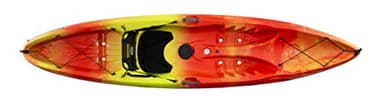
Top pick — The all-round first sit-on-top
Perception Tribe 11.5 Sit-on-Top Kayak
The combination almost nothing else manages: 350 lb of rating, a 30 in beam and enough waterline to hold a line, in a hull a first-timer can climb back onto from the water.
What the listing publishes
137 in long, 30.25 in beam, 52 lb hull, 350 lb rated capacity
Usable at the 65 percent rule: 228 lb (range 210–245 lb), which leaves about 208 lb of paddler after a 20 lb day kit. Why 65 percent.
350 lb rated is about 228 lb usable at 65 percent and 208 lb of paddler after a day kit -- the most headroom of any single boat here, and enough that a 200 lb adult is inside the comfortable band rather than at the edge of it.
Sit-on-top means the deck is open and self-draining. The reason that matters to a beginner is not comfort, it is that remounting from deep water is a maneuver you can actually perform, where a flooded sit-inside cockpit is not.
52 lb is the price. This is at the top of what one person carries any distance, and the reason a cart appears in our cost totals for this boat and not for the Argo.
What it does well
- 350 lb rated capacity gives real headroom for larger adults or a child up front
- Open self-draining deck is the forgiving choice for a first summer
- 137 in of hull tracks far better than the 9 and 10 ft boats here
What it costs you
- 52 lb is a two-person lift onto a roof for most people
- You will get wet. Sit-on-tops always do, and that is a season decision not a design flaw
- 11 ft 5 in needs more storage length than the 10 ft boats
Skip this if you paddle in cold water or a cold shoulder season. An open deck in 55-degree water is a different and less pleasant sport, and a sit-inside is the right answer there.
#ad · how this is funded · price as of October 18, 2026
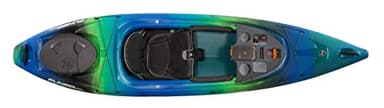
Pick 2 — The boat you keep after your first season
Wilderness Systems Pungo 105 Recreational Kayak, 10 ft 6 in
The only hull here that will still feel right in year three, because the seat and the waterline were designed for people who paddle for three hours rather than forty minutes.
What the listing publishes
126 in long, 30 in beam, 47 lb hull, 300 lb rated capacity
Usable at the 65 percent rule: 195 lb (range 180–210 lb), which leaves about 175 lb of paddler after a 20 lb day kit. Why 65 percent.
126 in of waterline with a defined keel line is why this tracks straight where a 9 ft 5 in flat-bottom does not. Distance stops being a fight, which is the difference between a boat you use twice and one you use twenty times.
300 lb rated is about 195 lb usable and 175 lb of paddler after a day kit. That is less headroom than the Flash despite being the better boat -- the rating is not the quality signal, and this is the clearest example of it on the site.
47 lb is the practical ceiling for a one-person carry from a driveway to a launch. Past this you are into cart territory, and a cart is a real cost that belongs in the total.
What it does well
- 126 in waterline plus a keel line means it holds a course without constant correction
- The seat is the reason people keep these boats -- it is a chair, not a molded dent
- 30 in beam is stable enough that a nervous first-timer relaxes inside ten minutes
What it costs you
- 47 lb is a real carry and gets old across a long parking lot
- 300 lb rating is mid-pack, so a heavier paddler runs out of room before the boat runs out of quality
- Costs more than every other sit-inside here, usually by a wide margin
Skip this if this is a once-or-twice-a-summer boat. Nothing about a better seat and a truer waterline is worth paying for if the hull spends eleven months against a garage wall.
#ad · how this is funded · price as of October 18, 2026
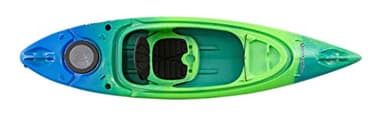
Pick 3 — The most capacity in the shortest hull
Perception Flash 9.5 Sit-Inside Kayak
A 325 lb rating in a hull under ten feet is unusual, and it is what makes this the short-boat answer for a larger paddler who still has to store it in an apartment.
What the listing publishes
113 in long, 28.5 in beam, 41 lb hull, 325 lb rated capacity
Usable at the 65 percent rule: 211 lb (range 195–227 lb), which leaves about 191 lb of paddler after a 20 lb day kit. Why 65 percent.
325 lb rated works out to about 211 lb usable at 65 percent, and roughly 191 lb of that is paddler once a paddle, PFD, water and a dry bag are subtracted. That is 30 lb more headroom than the Argo in a boat that is seven inches shorter.
Under 10 ft is the length that stops being a two-person carry and starts fitting on a balcony or standing on end in a closet. It is also the length that wanders on open water, because there is not enough waterline to hold a straight line in a crosswind.
The flat-bottom section is why the numbers work: a flatter hull carries more load for its length and feels solid at rest, at the cost of speed you were not going to use.
What it does well
- 325 lb rating is the highest of the sub-10-ft boats here
- Short enough to store somewhere a 12 ft boat will never fit
- Flat-bottom section feels settled the moment you sit down
What it costs you
- 9 ft 5 in wanders in wind -- you will correct your course constantly
- 41 lb is manageable but noticeably heavier than the Argo
- Slow. This is a hull for pottering, not for covering distance
Skip this if your water is a large lake or an open bay. Short hulls are hard work in wind, and that is a length problem no amount of technique fixes.
#ad · how this is funded · price as of October 18, 2026
Questions people actually ask
What is the most stable kayak hull type?
What is the difference between primary and secondary stability?
What hull type is best for a beginner kayak?
What is a chine on a kayak?
Are rounded hull kayaks unstable?
Does hull shape matter more than length?
Where these numbers came from
Every figure on this page traces to one of these. Where a number could not be sourced, the page says so rather than estimating it.
- Eddyline Kayaks — Maximum weight capacity versus ideal capacity for various styles of kayaks (manufacturer, states the 60-70% ideal-capacity band)
- Aqua-Bound — Kayak Paddle Sizing Guide (manufacturer, the size-longer and size-shorter adjustment rules)
- Perception Tribe 11.5, multi-chine sit-on-top hull — manufacturer specification as published on the Amazon listing, read 2026-09-02
- Wilderness Systems Pungo 105, shallow-arch hull with a defined keel — manufacturer specification as published on the Amazon listing, read 2026-09-02
- Perception Flash 9.5, flat-bottom sit-inside hull — manufacturer specification as published on the Amazon listing, read 2026-09-02
Read next

Sit-On-Top vs Sit-In Kayak
Water temperature and remounting decide this, not preference. The honest comparison, with picks for each.
Top pick
Perception Tribe 11.5 Sit-on-Top Kayak
The all-round first sit-on-top
#ad · how this is funded · price as of October 18, 2026
Best First Kayak
The Best Kayaks for Beginners
Beginner kayaks ranked on width, carry weight and usable capacity — with the 65 percent arithmetic run on every one.
Top pick
Perception Tribe 11.5 Sit-on-Top Kayak
The all-round first sit-on-top
#ad · how this is funded · price as of October 18, 2026
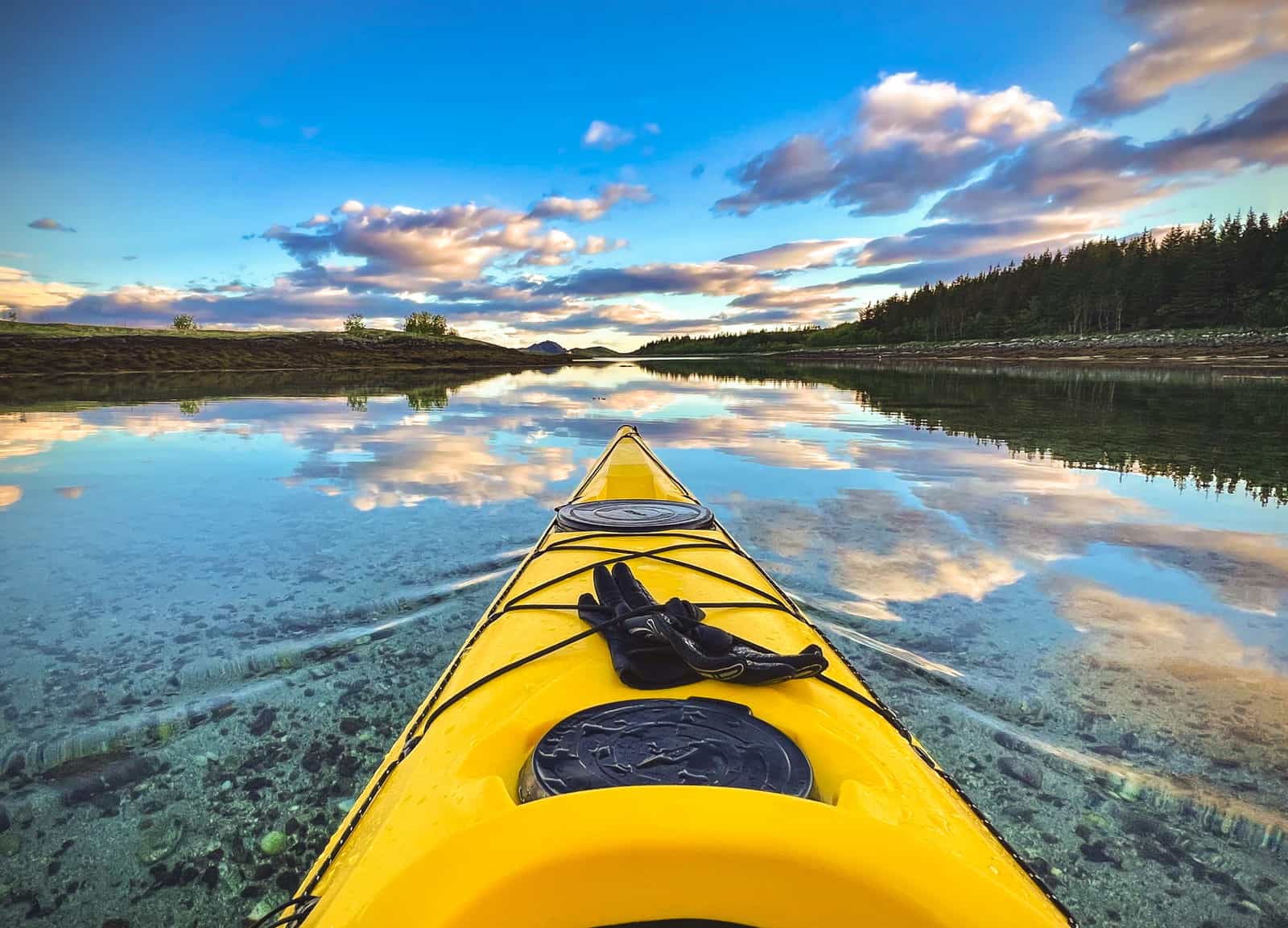
What Size Kayak Do I Need?
Capacity, length and width worked out properly — including the 65 percent rule that changes which boats you should be looking at.
Top pick
Perception Tribe 11.5 Sit-on-Top Kayak
The all-round first sit-on-top
#ad · how this is funded · price as of October 18, 2026
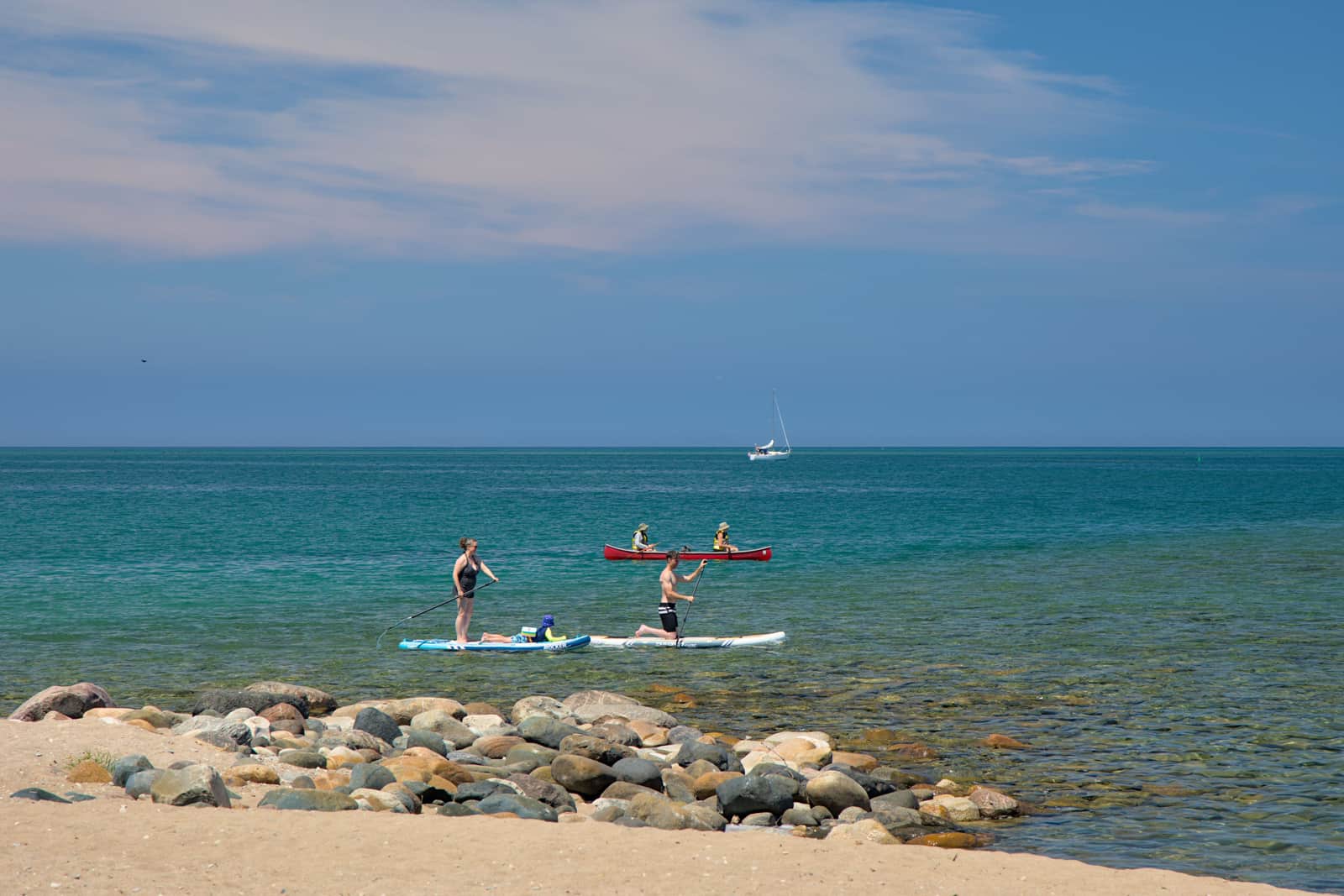
Paddle Board or Kayak?
The honest board-versus-boat comparison, from a site that earns identically either way.
Top pick
Roc Inflatable Stand Up Paddle Board, 10 ft 6 in x 33 in
The default first inflatable board
#ad · how this is funded · price as of October 18, 2026

Kayaks, Starting with the Hull
Hull shape, real usable capacity and honest picks — the three things a first kayak buyer needs and rarely gets.
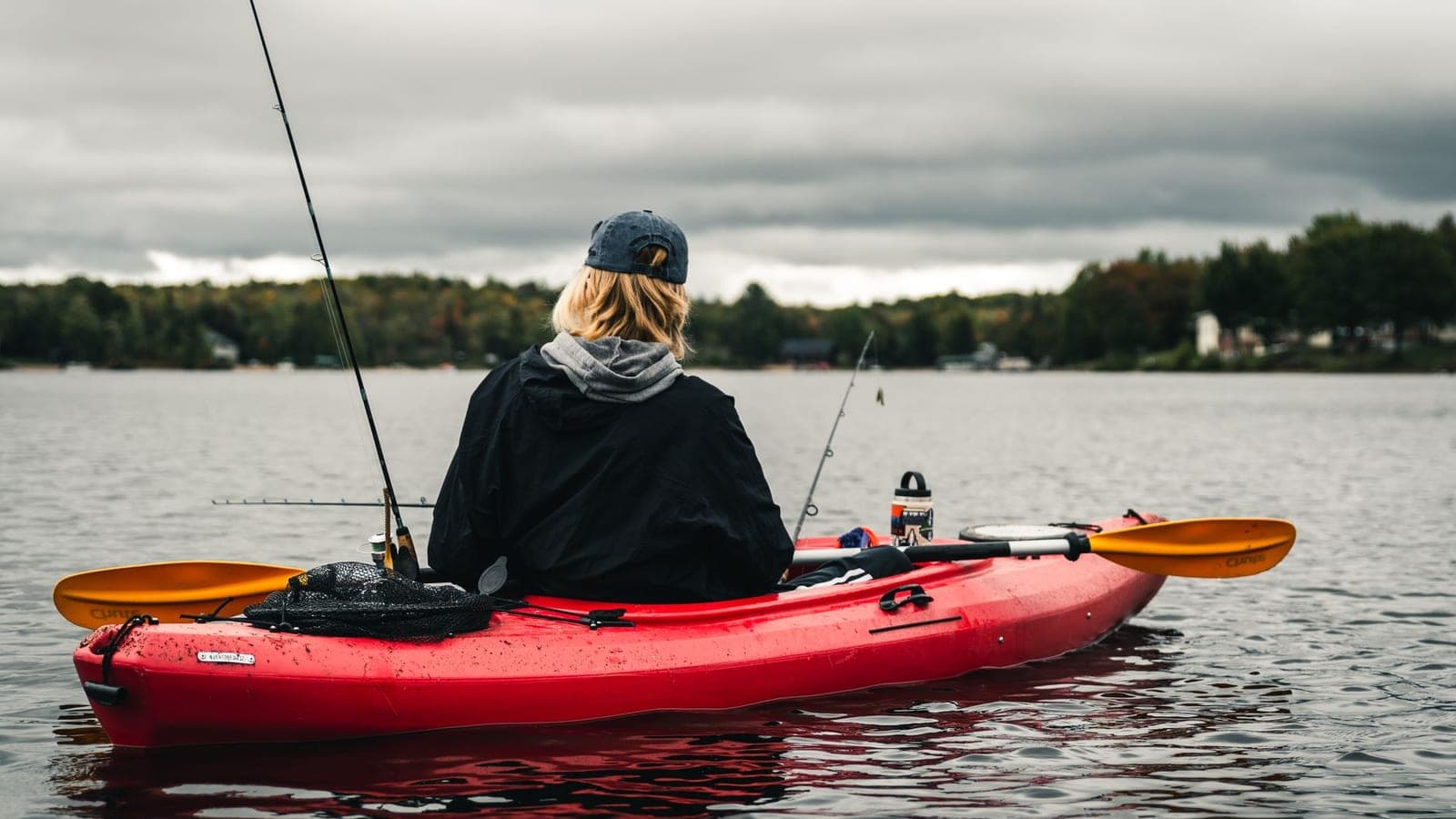
Do You Need Kayak Stabilizers?
Outriggers solve a narrow hull and a standing angler. Two situations, three product classes, and the spec nobody in the category publishes.
Top pick
VEVOR Kayak Stabilizers, 2 PCS Inflatable Outrigger Float Kit
A first outrigger set, complete and cheap
#ad · how this is funded · price as of October 18, 2026