Kayaks
The Best Kayaks Under $500
This is the most useful price bracket in kayaking, because it is where the category changes shape. A little under it you are choosing between inflatables. Right at it, two rotomolded hulls appear. That line is the whole page.
We have not paddled these, and we are not going to pretend we have. Here is what we did instead. Links to Amazon earn us a commission at no extra cost to you, and commission never decides a pick — how this site is funded.
| # | Product | Best for | The spec it turns on | Price |
|---|---|---|---|---|
| 1 | 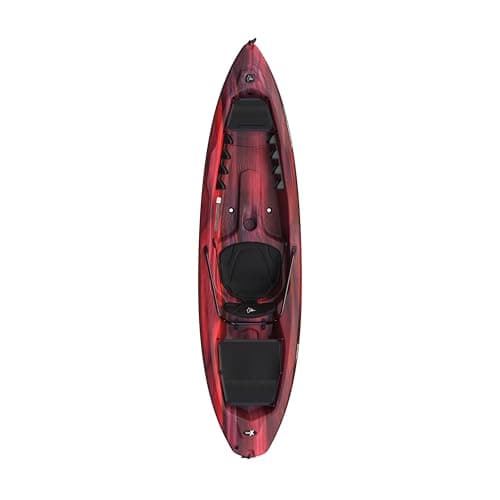 Pelican Seek 100X Sit-on-Top Kayak, 10 ftTop pickNine pounds lighter and seventeen inches shorter than the Tribe, for eight pounds less usable capacity. That trade is the whole reason to pick this one. | A sit-on-top that still fits a small car | 120 in long, 30 in beam, 43.1 lb hull, 300 lb rated capacity | |
| 2 | 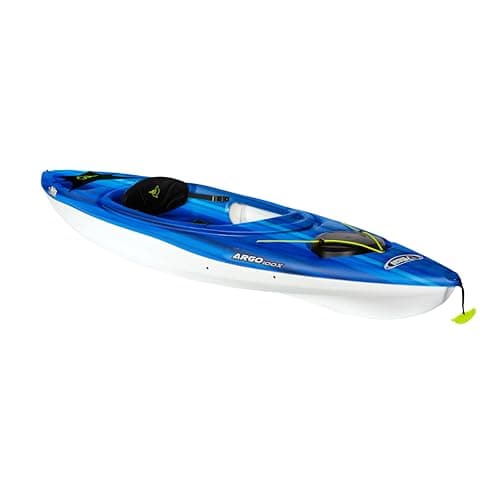 Pelican Argo 100X Sit-In Kayak, 10 ftThirty-six pounds is the number that matters here: it is the only 10-footer on this page one average adult can get off a car roof without a second person or a bad decision. | The lightest sit-inside to carry alone | 120 in long, 28 in beam, 36 lb hull, 275 lb rated capacity | |
| 3 | 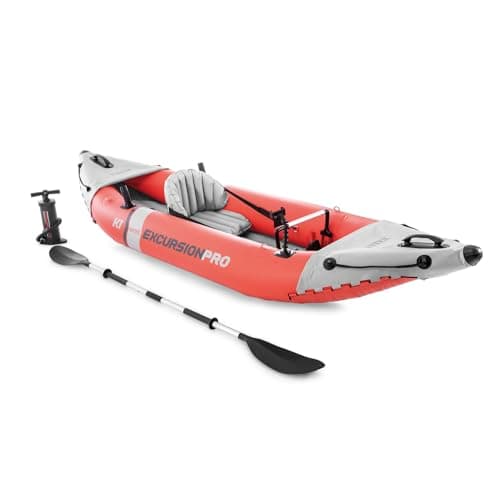 Intex Excursion Pro K1 Inflatable Kayak (paddle and pump included)A laminate hull and a high-pressure floor rather than plain vinyl, which is the difference between an inflatable that tracks and one that argues with you. | The stiffest inflatable in the entry price class | 120 in long, 36 in beam, 31.2 lb packed, 220 lb rated capacity | |
| 4 | 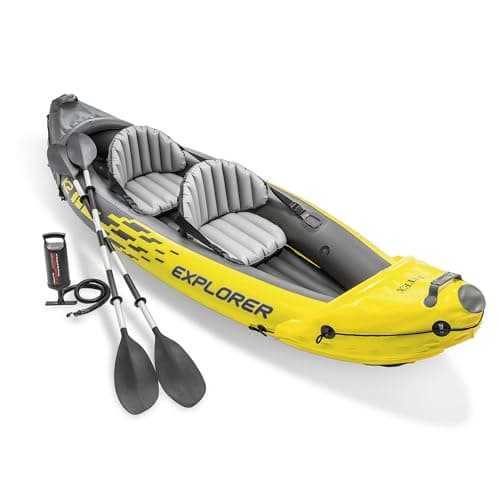 Intex Explorer K2 Inflatable Kayak, 2-person (oars and pump included)Bought as a tandem it disappoints; bought as a very roomy solo boat with 400 lb of rating and no rack requirement, it is the most useful inflatable here. | Two people, no roof rack, small budget | 123 in long, 36 in beam, 35 lb packed, 400 lb rated capacity, two oars and a pump included | |
| 5 | 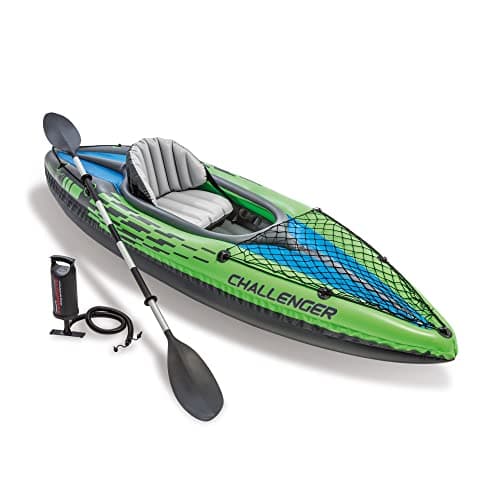 Intex Challenger K1 Inflatable Kayak (paddle and pump included)The honest answer to 'I have an apartment and a sedan'. It is a real boat on flat water and it is not a hard-shell substitute, and it is worth being clear about which of those you are buying. | No car rack, no garage, no storage | 108 in long, 30 in beam, 26 lb packed, 220 lb rated capacity, paddle and pump in the box |
Most price-bracket articles are a list of whatever the writer could find under the number. This one is about the number itself, because in kayaking $500 is not an arbitrary line. It is roughly where the cost of rotomolding a full-size polyethylene hull, shipping a 40-odd pound object, and still leaving a retail margin stops being impossible. Cross it and the choice widens enormously. Sit just under it and there are exactly two hard-shells worth having.
How we judged these
- **Rated capacity first, as always.** A cheap boat that does not carry you is not cheap, it is wasted. Every pick is stated with its usable load at the 65 percent rule so you can check it against your own weight before anything else.
- **Then hull type, because it is what the bracket is really deciding.** Rotomolded plastic, or air. The two behave completely differently on the water and the price bracket is the place that choice gets forced.
- **Then the honest total.** A hull is not a setup. Some of these include a paddle and a pump; most do not include anything. We say which, because a $485 boat plus a paddle plus a life jacket is a different number from $485.
- **Then what it costs you.** Every pick here gives something up — capacity, dryness, tracking, setup time. Those are named per boat rather than buried.
Where the line actually falls
Set the boats out in price order and the bracket sorts itself into two populations with a gap in the middle. That gap is the most useful thing on this page.
| Boat | Type | Rated | Usable at 65% | Weight |
|---|---|---|---|---|
| Intex Challenger K1 | Vinyl inflatable | 220 lb | 143 lb | 26 lb packed |
| Intex Explorer K2 | Vinyl inflatable | 400 lb | 260 lb | 35 lb packed |
| Intex Excursion Pro K1 | Laminate inflatable | 220 lb | 143 lb | 31.2 lb packed |
| Lifetime Lotus | Rotomolded, 8 ft | 250 lb | 163 lb | 39 lb |
| Pelican Seek 100X | Rotomolded, 10 ft | 300 lb | 195 lb | 43.1 lb |
| Pelican Argo 100X | Rotomolded, 10 ft | 275 lb | 179 lb | 36 lb |
The two Pelicans sit within a few dollars of each other at the very top of the bracket, and everything else is a long way below them. There is almost nothing in between. That is not a coincidence — it is the price floor for a full-size rotomolded recreational hull showing up in the data, and it is why the honest advice for this bracket is either stretch to the top of it or drop well below it. The middle is where the poor value lives.
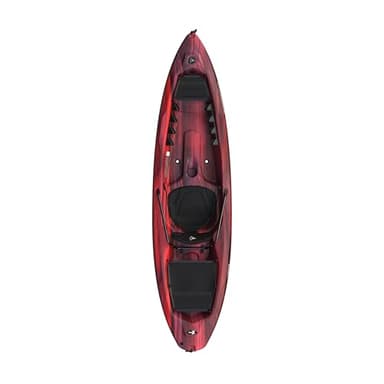
Top pick — A sit-on-top that still fits a small car
Pelican Seek 100X Sit-on-Top Kayak, 10 ft
Nine pounds lighter and seventeen inches shorter than the Tribe, for eight pounds less usable capacity. That trade is the whole reason to pick this one.
What the listing publishes
120 in long, 30 in beam, 43.1 lb hull, 300 lb rated capacity
Usable at the 65 percent rule: 195 lb (range 180–210 lb), which leaves about 175 lb of paddler after a 20 lb day kit. Why 65 percent.
300 lb rated is about 195 lb usable and 175 lb of paddler after gear -- enough for most adults, and 33 lb less headroom than the Tribe.
43 lb and 10 ft is the point where a sit-on-top becomes a one-person, one-trip job. Ten feet also fits inside a lot of vehicles that 11 ft 5 in does not.
The twin-arch hull section trades a little flat-water stillness for a hull that leans predictably rather than suddenly, which is a genuinely nicer feel once you are past the first hour.
What it does well
- 43 lb keeps this a one-person carry, unusual for a sit-on-top
- 30 in beam at only 10 ft means stability without the storage problem
- Self-draining deck with the same easy remount as any sit-on-top
What it costs you
- 300 lb rating is 50 lb short of the Tribe's
- 10 ft of hull wanders more than 11 ft 5 in on open water
- Same cold-water objection as every sit-on-top
Skip this if you and a child will regularly be on it together. The usable capacity does not cover two people once you subtract gear, and the Tribe or a tandem does.
#ad · how this is funded · price as of October 9, 2026
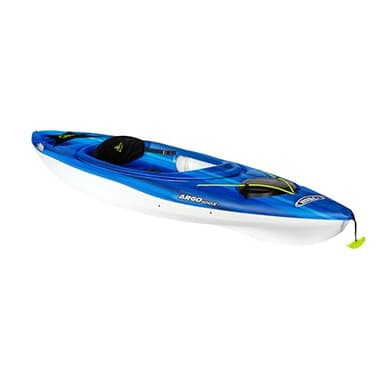
Pick 2 — The lightest sit-inside to carry alone
Pelican Argo 100X Sit-In Kayak, 10 ft
Thirty-six pounds is the number that matters here: it is the only 10-footer on this page one average adult can get off a car roof without a second person or a bad decision.
What the listing publishes
120 in long, 28 in beam, 36 lb hull, 275 lb rated capacity
Usable at the 65 percent rule: 179 lb (range 165–193 lb), which leaves about 159 lb of paddler after a 20 lb day kit. Why 65 percent.
A 275 lb rating sounds generous until you apply the 60 to 70 percent band Eddyline publishes for usable capacity. At 65 percent that is 179 lb of paddler, gear, clothing and PFD -- so a 160 lb paddler is comfortable and a 200 lb paddler is at the rating's edge before they pack anything.
The 28 in beam is the narrowest here, and narrow is the trade you make for a hull this light. It is stable enough for flat water and it will feel twitchier than a 30 in boat for the first hour.
Sit-inside means your legs are in a cockpit and out of the wind, which is why this is the shoulder-season pick rather than the July one.
What it does well
- 36 lb is genuinely one-person liftable, which decides how often the boat actually gets used
- Sit-inside cockpit keeps your legs dry and out of the wind on cool mornings
- 10 ft turns easily on a small lake and fits diagonally in most garages
What it costs you
- 28 in is the narrowest beam here and feels it on day one
- 275 lb rating is the lowest of the adult sit-insides on this page
- A cockpit is harder to get back into after a capsize than a sit-on-top deck
Skip this if you weigh over about 200 lb, or you expect to swim off the boat on hot days -- a sit-on-top is easier to remount and this hull's usable capacity runs out early.
#ad · how this is funded · price as of October 9, 2026
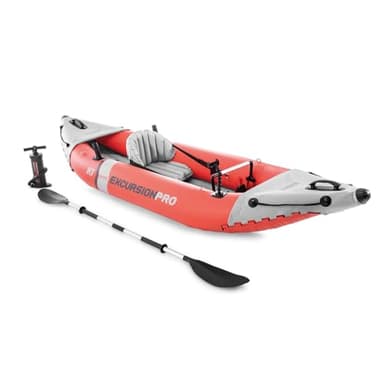
Pick 3 — The stiffest inflatable in the entry price class
Intex Excursion Pro K1 Inflatable Kayak (paddle and pump included)
A laminate hull and a high-pressure floor rather than plain vinyl, which is the difference between an inflatable that tracks and one that argues with you.
What the listing publishes
120 in long, 36 in beam, 31.2 lb packed, 220 lb rated capacity
Usable at the 65 percent rule: 143 lb (range 132–154 lb), which leaves about 123 lb of paddler after a 20 lb day kit. Why 65 percent.
220 lb rated is about 143 lb usable and 123 lb of paddler after gear -- the same limiting number as the Challenger K1, despite the better construction. Construction quality and capacity are separate specs and this is the clearest case of it on the site.
Stiffness is the whole story with inflatables. A high-pressure floor makes the hull behave like a shape instead of a bag, and it is the single upgrade that most changes how one paddles.
36 in of beam plus a stiff floor is an unusually settled platform for standing to fish or to take a photo.
What it does well
- Laminate hull and high-pressure floor track far better than plain vinyl
- 36 in beam plus a stiff floor is stable enough to stand on carefully
- 31 lb in a bag, still no rack required
What it costs you
- 220 lb rated -- roughly 123 lb of paddler after gear, same as the cheapest Intex
- Higher pressure means more pumping, and a gauge you should actually read
- Costs meaningfully more than the Challenger K1 for no extra capacity
Skip this if capacity is your constraint rather than feel. The Explorer K2 has 180 lb more rating for less money, and it is the better answer for a heavier paddler.
#ad · how this is funded · price as of October 9, 2026
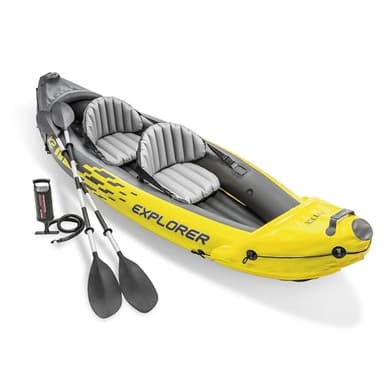
Pick 4 — Two people, no roof rack, small budget
Intex Explorer K2 Inflatable Kayak, 2-person (oars and pump included)
Bought as a tandem it disappoints; bought as a very roomy solo boat with 400 lb of rating and no rack requirement, it is the most useful inflatable here.
What the listing publishes
123 in long, 36 in beam, 35 lb packed, 400 lb rated capacity, two oars and a pump included
Usable at the 65 percent rule: 260 lb (range 240–280 lb), which leaves about 240 lb of paddler after a 20 lb day kit. Why 65 percent.
400 lb rated is about 260 lb usable at 65 percent. Two adults and gear will exceed that more often than not, which is why we recommend it as a spacious single rather than a genuine two-seater.
As a solo it is transformative: 260 lb of usable capacity against the Challenger K1's 143 lb, for nine extra pounds in the bag.
36 in of beam is wider than every hard-shell on this site. Inflatables are wide because air is what makes them stiff, and the side effect is a very forgiving platform.
What it does well
- 400 lb rated capacity -- 260 lb usable, which covers almost any solo adult with gear
- 36 in beam is the most stable platform on this site
- 35 lb in a bag: no rack, no straps, no garage
What it costs you
- Genuinely tight as a two-adult tandem once you apply the usable-capacity rule
- The included oars are oars, not proper kayak paddles -- budget to replace them
- Vinyl construction wallows in wind like every boat in this class
Skip this if you want a true two-adult tandem. Buy a hard-shell tandem with 500 lb or more of rating, or accept this as the roomiest solo inflatable in the price class.
#ad · how this is funded · price as of October 9, 2026
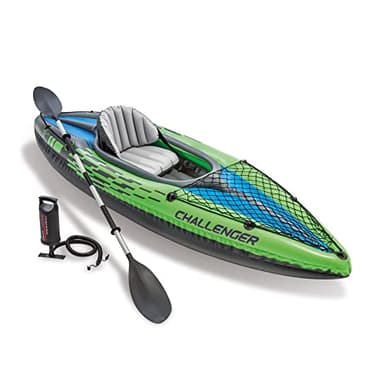
Pick 5 — No car rack, no garage, no storage
Intex Challenger K1 Inflatable Kayak (paddle and pump included)
The honest answer to 'I have an apartment and a sedan'. It is a real boat on flat water and it is not a hard-shell substitute, and it is worth being clear about which of those you are buying.
What the listing publishes
108 in long, 30 in beam, 26 lb packed, 220 lb rated capacity, paddle and pump in the box
Usable at the 65 percent rule: 143 lb (range 132–154 lb), which leaves about 123 lb of paddler after a 20 lb day kit. Why 65 percent.
220 lb rated is about 143 lb usable at 65 percent and roughly 123 lb of paddler once a PFD, paddle and water are subtracted. That is the single most important number on this listing and it rules out most adult men.
26 lb packed into a bag is what you are actually paying for. No roof bars, no straps, no cart, no garage wall -- the entire transport problem this site spends a page on simply does not exist.
Vinyl over a drop-stitch floor is not the same construction as a drop-stitch inflatable board. Expect fifteen minutes of setup, expect it to be soft, and do not expect it to hold a line in wind.
What it does well
- 26 lb in a bag removes the roof rack, the straps and the storage problem in one purchase
- Paddle and pump are included, so the number on the listing is close to the total
- 30 in beam and a wide flat floor is very stable at rest
What it costs you
- 220 lb rated is about 123 lb of paddler after gear -- read that before anything else
- Fifteen minutes of pumping at each end of every trip
- Soft hull, so it wallows in wind and tracks poorly
Skip this if you weigh over about 125 lb dressed and carrying gear. The capacity arithmetic is unambiguous and the Excursion Pro or the Explorer K2 are the honest upgrades.
#ad · how this is funded · price as of October 9, 2026
The capacity arithmetic, which does not get cheaper
A budget does not change the physics. Rated capacity is not usable capacity, and a boat loaded near its printed maximum sits low, handles badly and takes water in chop. Manufacturers publish a comfortable band around 65 percent, and that is the number to shop against at any price.
That is the most uncomfortable fact on this page and it deserves stating plainly rather than hiding in a table. If you are a larger adult, the under-$500 bracket does not contain a hard-shell that fits you. The Seek's 300 lb rating covers about 175 lb of paddler after a day kit; the Argo's 275 lb covers about 159 lb. Above roughly 190 lb the honest answer is either the Explorer K2 paddled solo, which carries 260 lb usable for a third of the money, or saving up past this bracket entirely — the boats with genuine headroom start above it.
Hard-shell or inflatable, forced by the budget
In this bracket you are not really choosing a boat, you are choosing a construction and then taking the best one available in it. The trade is worth understanding before you spend.
- **Rotomolded plastic** tracks better, launches in seconds, survives being dragged up gravel, and lasts a decade. It also needs a roof rack, a place to live for eleven months, and a lift you can manage alone.
- **Inflatable** removes the rack, the garage and the overhead lift, and costs you fifteen to twenty minutes at each end of every trip plus a hull that wind pushes around. Whether that trade is right for you is a longer conversation than a price bracket.
- **The budget forces it more than preference does.** At the top of this bracket a hard-shell is possible; at the bottom only air is. If you know you need a hard-shell and cannot reach $480, the honest move is to wait rather than to buy a smaller plastic boat that does not fit you.
The trap in the middle of this bracket
There is one boat we would not buy at its current price and it is worth naming, because it sits exactly where a price-sorted list puts it in front of you.
The Lifetime Lotus is an 8 ft rotomolded sit-on-top rated to 250 lb, and it is genuinely the cheapest complete way onto flat water when it is cheap — it ships with a paddle. But it currently sits in the four-hundreds, close enough to the Seek 100X that the comparison becomes unavoidable: for a small amount more you get two extra feet of hull, 50 lb more rating, and a boat that holds a line instead of blowing around. The Lotus makes sense as a hundred-and-something pond boat and much less sense at the top of this bracket. Our full take on it sits in the budget roundup.
What $500 does not include
The sticker is the hull. A boat you can actually use costs more than the boat, and on a tight budget that gap is the thing most likely to catch you out.
- **A paddle**, unless the box says otherwise. The two Pelicans do not include one; the three Intex boats do, and theirs are starter parts. What a first paddle needs to do.
- **A life jacket**, never included with anything, and legally required for every person aboard. The rules in full.
- **Getting it to the water.** A hard-shell needs foam blocks and straps at minimum if the car has no bars. An inflatable needs none of that, which is a real part of its price advantage. Carrying a boat without a rack.
- **A whistle.** Federally required as a sound signal on most paddlecraft, costs almost nothing, and is the most commonly missing item on a first boat.
Budget roughly another hundred to hundred and fifty dollars for the parts that are not the hull, and more if the car needs a rack. Every line item, with live prices against each.
What you can ignore in this bracket
- **Seat marketing.** Every boat at this price has a padded backrest, not a chair. A real frame seat is a feature of boats well above this bracket, or an upgrade you add afterward.
- **Rod holders and fishing trim.** They add price and no capacity, and the badge is the wrong thing to buy on — why.
- **Hull color.** Pick bright for visibility from a powerboat and stop thinking about it.
- **Brand loyalty.** At this price both major brands are making the same kind of object. Pelican versus Lifetime, on the published numbers.
- **Sticker capacity as a target.** It is the number to divide by 0.65, not the number to aim at.
If you can stretch, and if you cannot
Two honest exits from this bracket, depending on which direction your constraint runs.
- **Stretch past it** and the field opens fast: 325 lb and 350 lb hulls, better seats, and boats that still feel right in year three. If you are over about 190 lb, that is not a luxury, it is the first bracket that actually fits you.
- **Drop well below it** and buy an inflatable that clears your capacity number, then spend what you saved on a paddle and a life jacket you will keep on. A cheap boat with good kit beats an expensive boat with neither.
- **Or rent once before you do either.** An afternoon on the water is the cheapest possible test of whether any of this is worth spending on — rent or buy, with the break-even math.
Questions people actually ask
Can you get a decent kayak for under $500?
What is the best kayak under $500?
Is a $500 kayak better than a $200 inflatable?
Do kayaks under $500 come with a paddle?
How much should a beginner spend on a first kayak?
Are cheap kayaks safe?
Where these numbers came from
Every figure on this page traces to one of these. Where a number could not be sourced, the page says so rather than estimating it.
- Eddyline Kayaks — Maximum weight capacity versus ideal capacity for various styles of kayaks (manufacturer, states the 60-70% ideal-capacity band)
- U.S. Coast Guard — Recreational Boaters (federal equipment requirements for vessels, paddlecraft included)
- Pelican Seek 100X Sit-on-Top Kayak — manufacturer specification as published on the Amazon listing, read 2026-09-02
- Pelican Argo 100X Sit-In Kayak — manufacturer specification as published on the Amazon listing, read 2026-09-02
- Intex Excursion Pro K1 Inflatable Kayak — manufacturer specification as published on the Amazon listing, read 2026-09-02
- Intex Explorer K2 Inflatable Kayak — manufacturer specification as published on the Amazon listing, read 2026-09-02
- Intex Challenger K1 Inflatable Kayak — manufacturer specification as published on the Amazon listing, read 2026-09-02
Read next
Pelican Seek 100X: The Sit-On-Top That Fits a Small Car
43.1 lb and 10 ft make it a one-person carry, rare for a sit-on-top. A 30 in beam lands in the beginner band. The 300 lb rating is the limit to check.
Top pick
Pelican Seek 100X Sit-on-Top Kayak, 10 ft
A sit-on-top that still fits a small car
#ad · how this is funded · price as of October 9, 2026
Best Seat Upgrade
The Best Kayak Seat Upgrades
The seat is the weakest part of a budget kayak and the cheapest to fix. Which kind fits your hull, what back height actually helps, and five honest picks.
Top pick
BKC UH-PS223 Memory Foam Kayak Seat
A tall back on a sit-on-top, for the least money
#ad · how this is funded · price as of October 9, 2026

Best Budget Kayak
The Best Budget Kayaks
Budget kayaks with the specific compromise each one makes, named. Capacity is usually the one that catches people.
Top pick
Intex Explorer K2 Inflatable Kayak, 2-person (oars and pump included)
Two people, no roof rack, small budget
#ad · how this is funded · price as of October 9, 2026
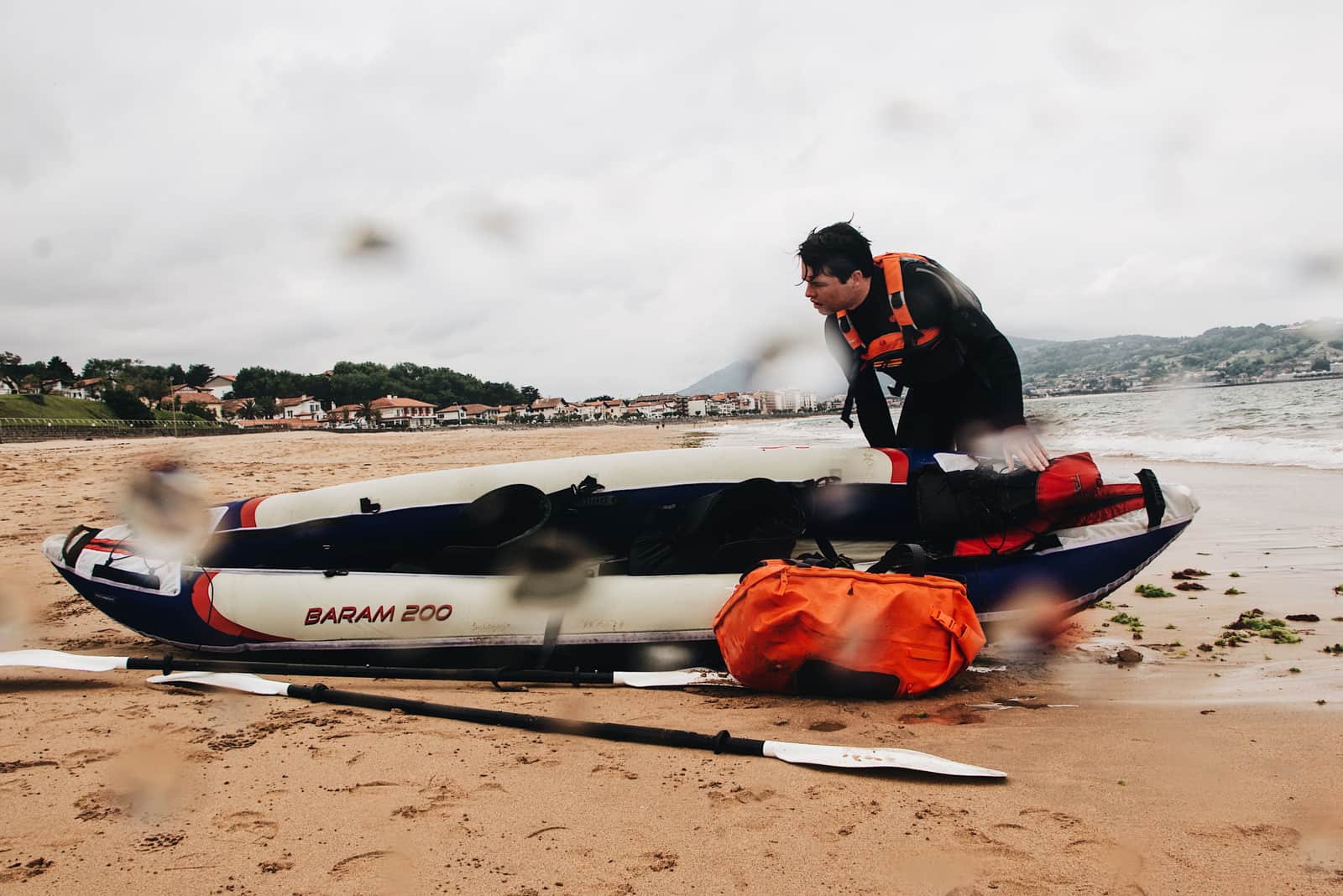
Kayak Weight Capacity, Explained
The 65 percent rule, where it comes from, what happens when you ignore it, and how to size around it.
Top pick
Perception Tribe 11.5 Sit-on-Top Kayak
The all-round first sit-on-top
#ad · how this is funded · price as of October 9, 2026
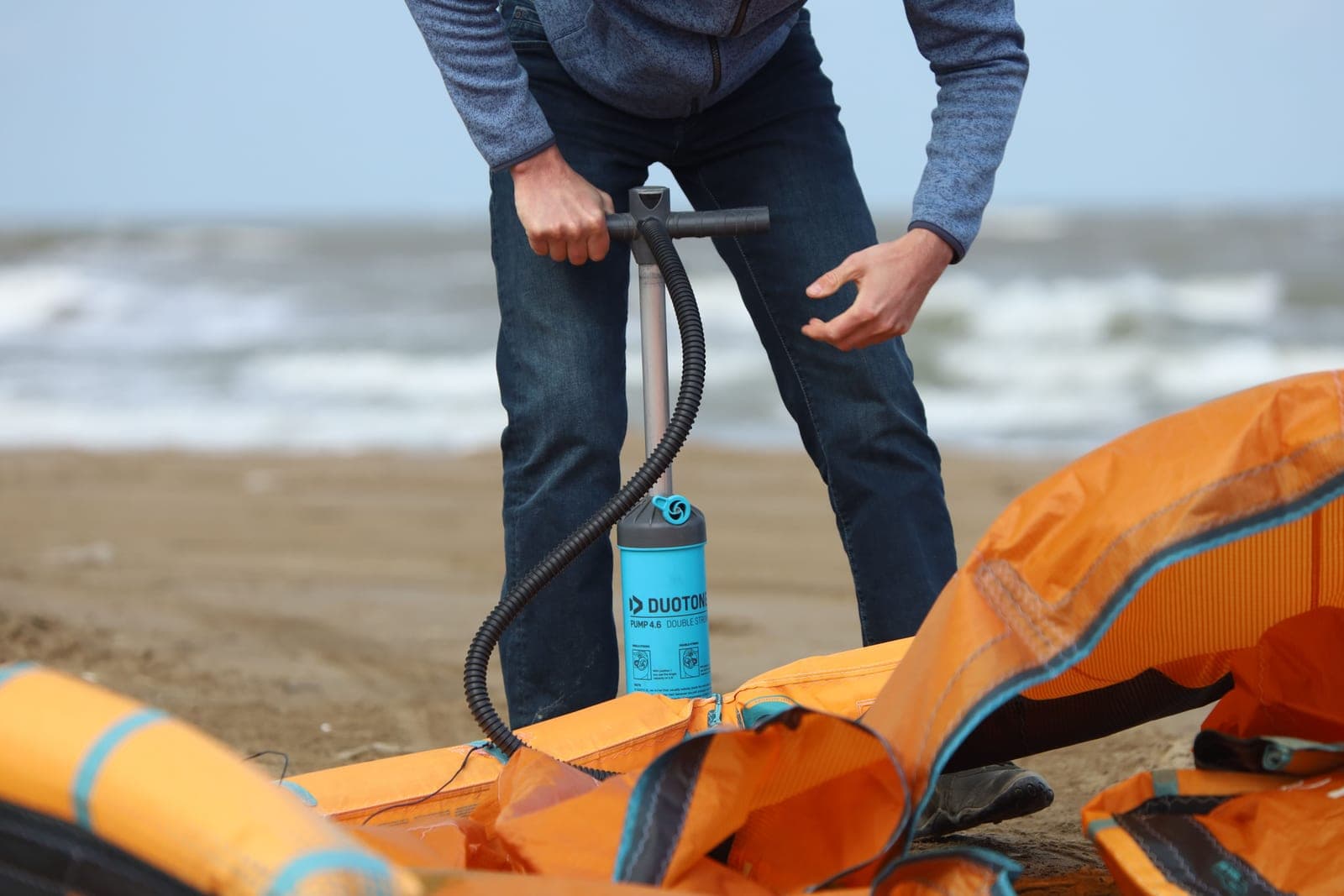
Are Inflatable Kayaks Worth It?
Worth it if storage or a roof rack is your problem. Not worth it if performance is. How to tell which buyer you are from the published capacity and your own garage.
Top pick
Intex Explorer K2 Inflatable Kayak, 2-person (oars and pump included)
Two people, no roof rack, small budget
#ad · how this is funded · price as of October 9, 2026

What a First Setup Actually Costs
Every line item in a first setup, including the ones that surprise people — with live prices rather than stale numbers.
Top pick
Perception Tribe 11.5 Sit-on-Top Kayak
The all-round first sit-on-top
#ad · how this is funded · price as of October 9, 2026