Choosing Your First
Getting Your Kayak to the Water
The question that turns a purchase into a regret. There are four answers, one of them needs no roof bars at all, and one removes the problem entirely.
We have not paddled these, and we are not going to pretend we have. Here is what we did instead. Links to Amazon earn us a commission at no extra cost to you, and commission never decides a pick — how this site is funded.
| # | Product | Best for | The spec it turns on | Price |
|---|---|---|---|---|
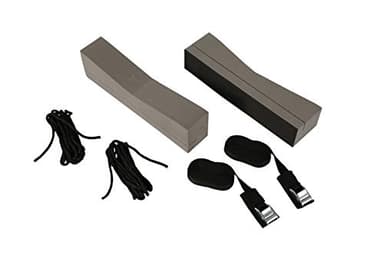
| 1 | 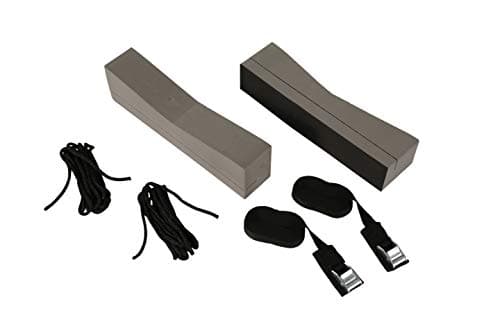 Attwood Universal Rack-Free Car-Top Kayak Carrier KitTop pickThe whole no-rack problem solved for the price of a tank of fuel, provided you accept that the straps go through the inside of your car. | A car with no roof bars at all | Foam blocks, cam straps, bow and stern lines, 600 lb load capacity | |
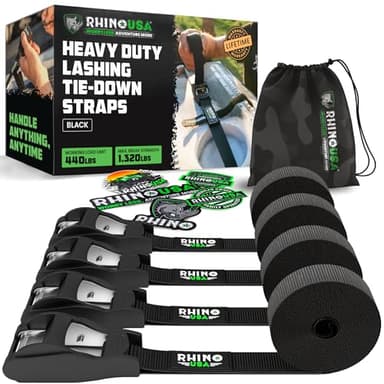
| 2 | 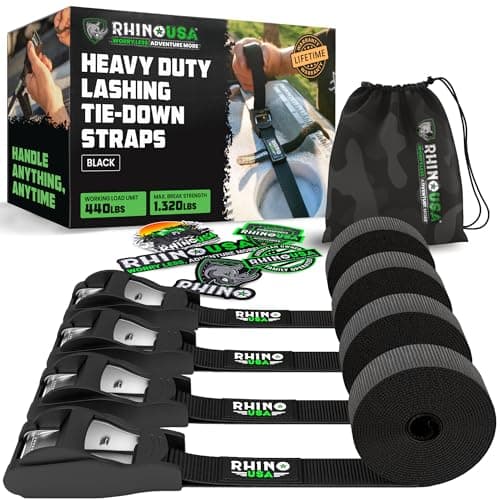 Rhino USA Lashing Straps, 1 in x 12 ft, 4-pack cam buckleCam buckles rather than ratchets, which is exactly what you want against a plastic hull: tight enough to hold and impossible to crush the boat with. | Replacing whatever straps came with your rack | 1 in x 12 ft, four-pack, cam buckle, 1,320 lb break strength | |
| 3 | 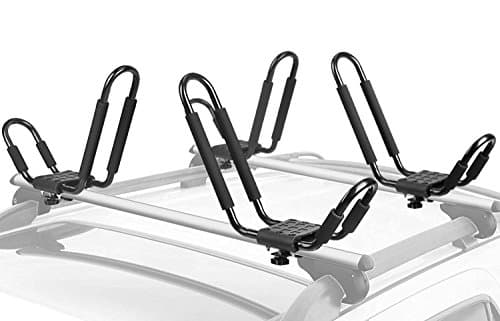 Leader Accessories J-Bar Kayak Roof Rack, 2 pairs with tie-downsJ-cradles put the hull on its side, which is how two kayaks fit across a roof that would only take one lying flat. | Carrying two boats on existing crossbars | Two pairs of J-cradles, 150 lb capacity, tie-down straps included, mounts to crossbars | |
| 4 | 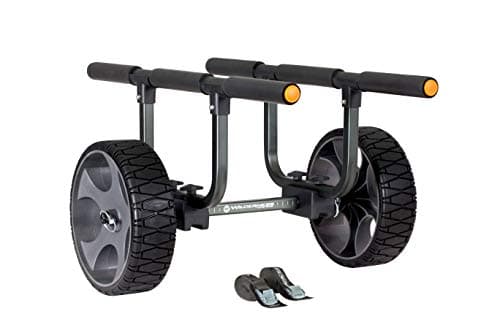 Wilderness Systems Heavy Duty Kayak CartThe purchase that decides how often a 52 lb boat gets used, because the distance from the car to the water is what people actually give up on. | A long walk from the parking lot to the water | 13 lb, 32 x 26 x 16 in, for kayaks and canoes | |
| 5 | 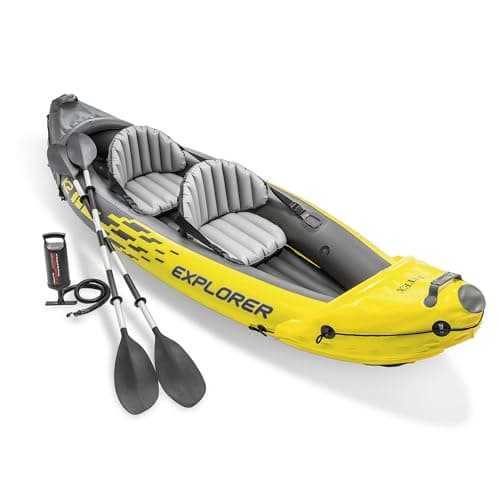 Intex Explorer K2 Inflatable Kayak, 2-person (oars and pump included)Bought as a tandem it disappoints; bought as a very roomy solo boat with 400 lb of rating and no rack requirement, it is the most useful inflatable here. | Two people, no roof rack, small budget | 123 in long, 36 in beam, 35 lb packed, 400 lb rated capacity, two oars and a pump included |
This is the part of buying a first kayak that people leave until after they have bought the kayak, and it is the single most common reason a boat gets used four times instead of twenty.
It is two separate problems and they need separate solutions: getting the boat from your house to the launch, and getting it from the parking lot to the water. Most advice only addresses the first.
Problem one: your house to the launch
Option A: a foam block kit, if your car has no roof bars
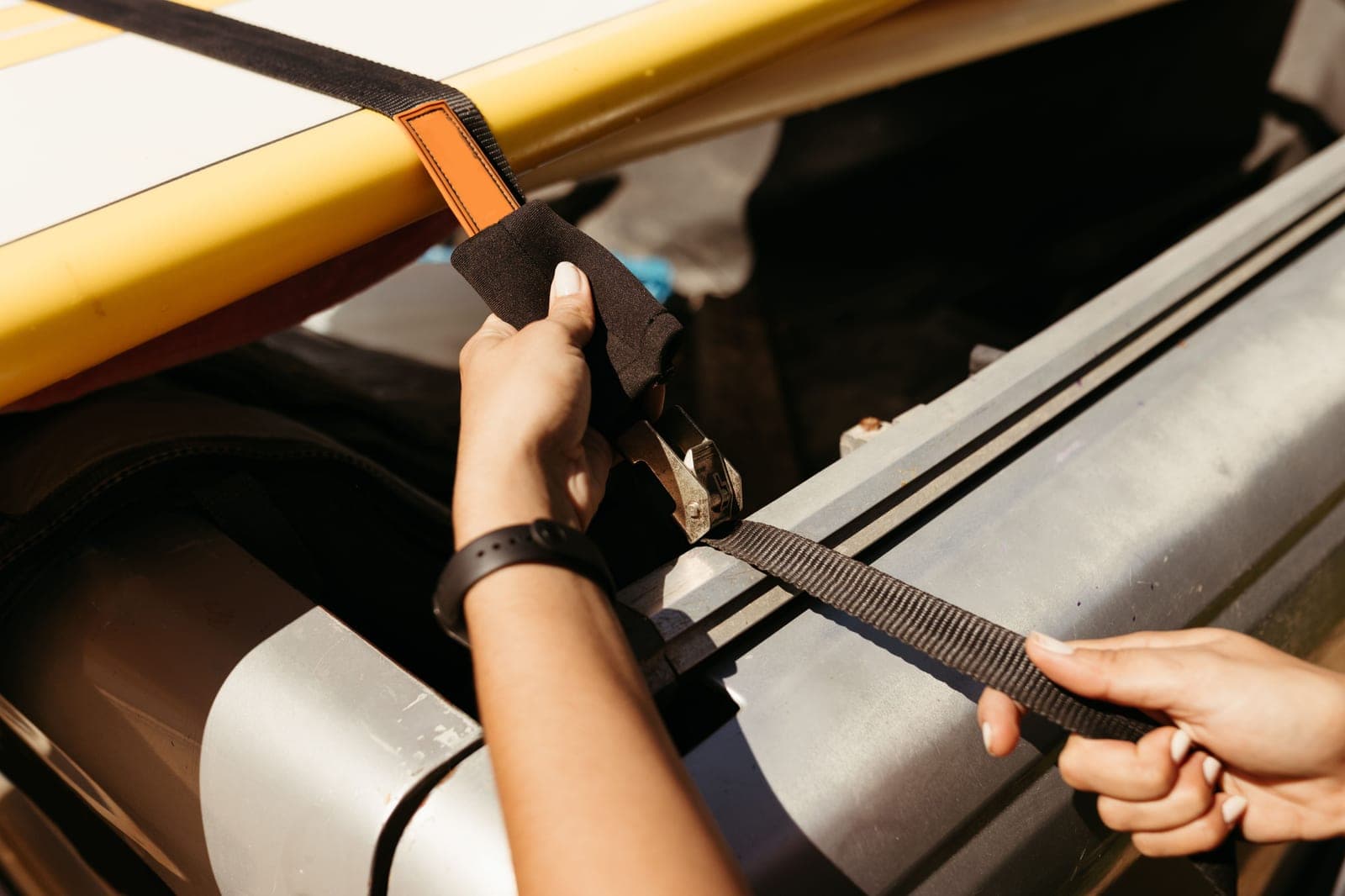
The answer most people do not know exists. Foam blocks sit on the bare roof, the hull sits on the blocks, and cam straps run over the hull and through the car's door openings — in through one door, out through the other — and cinch tight.
It is secure, it costs a fraction of a rack system, and it fits any car with a roof. The trade is that the straps run through the cabin, so the doors cannot be opened while the boat is loaded, and there is constant wind noise where the straps pass through the door seals.
Option B: J-cradles, if your car has roof bars
J-cradles hold the kayak on its side rather than flat. That matters because a 30 inch kayak lying flat takes most of a car roof, while the same boat on edge takes about a foot — so two boats fit where one did.
They are faster to load than blocks, quieter, and they hold the hull in a shape it likes. They also require crossbars, which most cars do not have as standard, and which usually cost several times what the cradles do.
Option C: inside the car
Worth checking before you buy anything. A 10 foot kayak fits inside a lot of vans and some large wagons with the seats down and the tailgate open, and an 8 foot boat fits in more vehicles than people assume. If the boat lives inside the car, everything on this page becomes unnecessary.
Option D: buy an inflatable instead
The nuclear option and, for a meaningful number of people, the right one. A 26 to 37 lb bag in the trunk is not a transport problem at all. The inflatable kayaks that are actually worth owning.
Problem two: the parking lot to the water
Nobody warns you about this one and it is the one that decides how often you go. Carry weight and carry distance multiply, and the product is what people actually give up on.
| Hull weight | Under 50 yards | 50 to 150 yards | Over 150 yards |
|---|---|---|---|
| Under 30 lb | Carry it | Carry it | Carry it |
| 30 to 45 lb | Carry it | Carry it, once | Cart |
| 45 to 55 lb | Carry it | Cart | Cart |
| Over 55 lb | Two people | Cart | Cart, definitely |
A cart is 13 lb of kit that you also have to get back to the car or leave at the launch, and neither is a problem. It is the least glamorous purchase on this site and one of the most consequential.
Everything you might need
Top pick — A car with no roof bars at all
Attwood Universal Rack-Free Car-Top Kayak Carrier Kit
The whole no-rack problem solved for the price of a tank of fuel, provided you accept that the straps go through the inside of your car.
What the listing publishes
Foam blocks, cam straps, bow and stern lines, 600 lb load capacity
Rack-free kits work by passing cam straps through the open doors and cinching them over the hull. That is secure and it means your doors cannot be opened while the boat is on -- plan the loading order.
Bow and stern lines are not optional decoration on a rack-free setup. Without them a hull can lift and pivot at highway speed, and the straps alone will not stop it.
The 600 lb load figure is a strap rating, not a permission slip: your car's roof load limit is the real ceiling and it is usually between 100 and 165 lb.
What it does well
- Turns any car with a roof into a kayak carrier for very little money
- Includes the bow and stern lines that make it safe rather than just tight
- Packs into a boot when not in use
What it costs you
- Straps run through the cabin, so doors stay shut while loaded
- Slower to fit than a proper cradle every single trip
- Wind noise through the cabin seals is real and constant
Skip this if you already have factory crossbars. Cradles are faster, quieter and hold the hull in a shape it likes.
#ad · how this is funded · price as of October 18, 2026
Pick 2 — Replacing whatever straps came with your rack
Rhino USA Lashing Straps, 1 in x 12 ft, 4-pack cam buckle
Cam buckles rather than ratchets, which is exactly what you want against a plastic hull: tight enough to hold and impossible to crush the boat with.
What the listing publishes
1 in x 12 ft, four-pack, cam buckle, 1,320 lb break strength
A cam buckle tightens only as hard as you can pull the tail. A ratchet multiplies your force several times over, and on a rotomolded kayak that is how a permanent dent happens.
12 ft is the length that goes over a boat and around a crossbar with enough tail to tie off. Eight-foot straps are the common frustration.
1,320 lb break strength is far past anything a kayak needs. The failure mode on a roof is never the webbing, it is the buckle slipping or the boat lifting -- which is why bow and stern lines exist.
What it does well
- Cam buckles cannot over-tighten a plastic hull the way ratchets can
- 12 ft covers a hull plus a crossbar with tail left to tie
- Four in a pack, which is two straps per boat
What it costs you
- Cam buckles need a firm pull and a second check after ten minutes of driving
- Metal buckles will mark paint if you let them rest on it
- Not a substitute for bow and stern lines
Skip this if your rack came with good straps. This is a replacement part, not an upgrade with a payoff.
#ad · how this is funded · price as of October 18, 2026
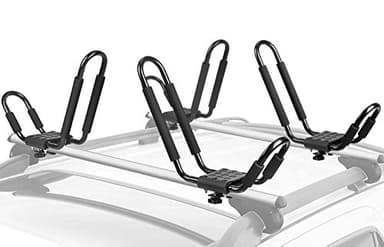
Pick 3 — Carrying two boats on existing crossbars
Leader Accessories J-Bar Kayak Roof Rack, 2 pairs with tie-downs
J-cradles put the hull on its side, which is how two kayaks fit across a roof that would only take one lying flat.
What the listing publishes
Two pairs of J-cradles, 150 lb capacity, tie-down straps included, mounts to crossbars
On-edge carrying is the point. A 30 in kayak lying flat eats most of a car roof; the same boat on its side takes about a foot, and two of them fit where one did.
This requires crossbars. If your car has bare roof, you need bars first and that is usually several times the cost of the cradles.
Four ratchet straps are included. Ratchets are easy to over-tighten on a plastic hull -- a rotomolded kayak will take a set if you crank it down and leave it in the sun.
What it does well
- Two boats on a roof that only holds one flat
- Folds down when not carrying, so it stays on the car
- Straps included, so it is a complete purchase
What it costs you
- Useless without crossbars, which most cars do not have as standard
- Ratchet straps can deform a plastic hull if over-tightened
- Loading a boat overhead onto a J-cradle is a two-person job on a tall car
Skip this if you have no crossbars and no plan to buy them. The foam block kit is the answer for a bare roof.
#ad · how this is funded · price as of October 18, 2026
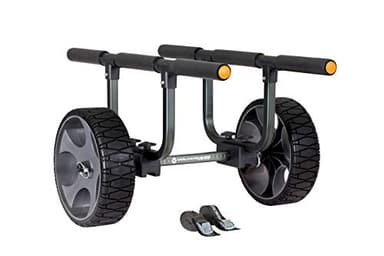
Pick 4 — A long walk from the parking lot to the water
Wilderness Systems Heavy Duty Kayak Cart
The purchase that decides how often a 52 lb boat gets used, because the distance from the car to the water is what people actually give up on.
What the listing publishes
13 lb, 32 x 26 x 16 in, for kayaks and canoes
Carry weight and carry distance multiply. A 52 lb boat over 30 yards is nothing; the same boat over 300 yards is the reason it stays on the roof.
13 lb of cart is 13 lb you also have to carry back to the car, or leave at the launch. Neither is a problem and both are worth knowing in advance.
This is the cost line most first-time buyers leave out, and it is the one that most changes how many times a year the boat gets wet.
What it does well
- Turns a long portage from a decision into a non-event
- Fits kayaks and canoes, so it survives your next boat
- Folds down enough to stow in a hatch or a boot
What it costs you
- 13 lb to carry back to the car or to leave unattended
- Small wheels struggle in soft sand
- Another thing to store
Skip this if you launch from a boat ramp you can park beside. A cart solves a distance problem and buys nothing if you do not have one.
#ad · how this is funded · price as of October 18, 2026
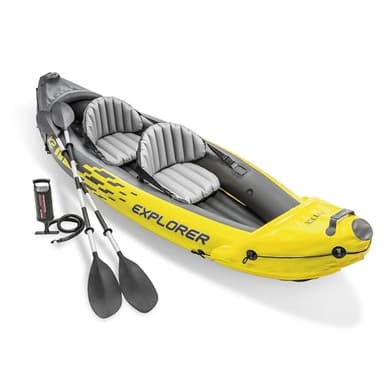
Pick 5 — Two people, no roof rack, small budget
Intex Explorer K2 Inflatable Kayak, 2-person (oars and pump included)
Bought as a tandem it disappoints; bought as a very roomy solo boat with 400 lb of rating and no rack requirement, it is the most useful inflatable here.
What the listing publishes
123 in long, 36 in beam, 35 lb packed, 400 lb rated capacity, two oars and a pump included
Usable at the 65 percent rule: 260 lb (range 240–280 lb), which leaves about 240 lb of paddler after a 20 lb day kit. Why 65 percent.
400 lb rated is about 260 lb usable at 65 percent. Two adults and gear will exceed that more often than not, which is why we recommend it as a spacious single rather than a genuine two-seater.
As a solo it is transformative: 260 lb of usable capacity against the Challenger K1's 143 lb, for nine extra pounds in the bag.
36 in of beam is wider than every hard-shell on this site. Inflatables are wide because air is what makes them stiff, and the side effect is a very forgiving platform.
What it does well
- 400 lb rated capacity -- 260 lb usable, which covers almost any solo adult with gear
- 36 in beam is the most stable platform on this site
- 35 lb in a bag: no rack, no straps, no garage
What it costs you
- Genuinely tight as a two-adult tandem once you apply the usable-capacity rule
- The included oars are oars, not proper kayak paddles -- budget to replace them
- Vinyl construction wallows in wind like every boat in this class
Skip this if you want a true two-adult tandem. Buy a hard-shell tandem with 500 lb or more of rating, or accept this as the roomiest solo inflatable in the price class.
#ad · how this is funded · price as of October 18, 2026
Loading a kayak alone, without hurting yourself
- Park somewhere flat and put a towel or a piece of carpet on the back edge of the roof to protect the paint.
- Stand the boat on its end at the back of the car, hull against your legs, and lift the bow onto the towel.
- Walk to the stern, lift, and push the boat forward onto the roof. You are sliding rather than carrying, which is the whole trick.
- Center it front to back, then strap over the hull and through the door openings or around the crossbars.
- Tighten until it does not move when you push the boat sideways. On a cam buckle that is a firm pull, not a wrestle.
- Add the bow and stern lines and take up the slack. Snug, not tight — these are there to stop lift, not to compress the hull.
- Drive for ten minutes, then stop and check everything again. Straps settle and this is where you find out.
The mistakes worth avoiding
- **Ratchet straps on a plastic hull.** A ratchet multiplies your force several times over and a rotomolded kayak left cranked down in the sun will take a permanent set. Cam buckles cannot do this.
- **Skipping bow and stern lines.** Straps stop sideways movement; they do not stop lift at 70 mph.
- **Not knowing your car's roof load limit.** Usually 100 to 165 lb and it is in the handbook. A 52 lb kayak plus a rack is well inside it; two tandems are not.
- **Loading before the doors are shut**, on a rack-free setup. Get in and out first, then strap.
- **Assuming the straps stay tight.** They settle in the first ten minutes. Stop and check.
Questions people actually ask
How do you transport a kayak without a roof rack?
Do I need a roof rack for a kayak?
Can you put a kayak on a car without crossbars?
Should I use ratchet straps on a kayak?
Do I need bow and stern lines on a kayak?
Is a kayak cart worth it?
Where these numbers came from
Every figure on this page traces to one of these. Where a number could not be sourced, the page says so rather than estimating it.
- U.S. Coast Guard — Recreational Boaters (federal equipment requirements for vessels, paddlecraft included)
- Attwood Universal Rack-Free Car-Top Kayak Carrier Kit, 600 lb load capacity — manufacturer specification as published on the Amazon listing, read 2026-09-02
- Rhino USA Cam Buckle Lashing Straps, 1 in x 12 ft — manufacturer specification as published on the Amazon listing, read 2026-09-02
- Wilderness Systems Heavy Duty Kayak Cart, 13 lb — manufacturer specification as published on the Amazon listing, read 2026-09-02
Read next
Wilderness Systems Heavy Duty Kayak Cart: The Purchase That Decides How Often You Go
450 lb rated, flat-free wheels, adjustable bunker bars and no scupper posts needed — so it works with sit-insides and canoes too. It is 13 lb you also have to deal with.
Top pick
Wilderness Systems Heavy Duty Kayak Cart
A long walk from the parking lot to the water
#ad · how this is funded · price as of October 18, 2026
Lightest to Carry
The Best Lightweight Kayaks
Ranked on published hull weight, because the carry is what decides whether a kayak leaves the garage. What each pound saved costs in capacity.
Top pick
Pelican Argo 100X Sit-In Kayak, 10 ft
The lightest sit-inside to carry alone
#ad · how this is funded · price as of October 18, 2026

Best Car-Top Carrier
Car-Top Carriers, Straps and Carts
Foam kits, J-cradles, cam straps and carts — which you need depends on your car and your parking lot.
Top pick
Attwood Universal Rack-Free Car-Top Kayak Carrier Kit
A car with no roof bars at all
#ad · how this is funded · price as of October 18, 2026

Best Inflatable Kayak
The Best Inflatable Kayaks
Inflatable kayaks ranked on capacity and hull stiffness — including the 220 lb rating that rules out most adults.
Top pick
Intex Explorer K2 Inflatable Kayak, 2-person (oars and pump included)
Two people, no roof rack, small budget
#ad · how this is funded · price as of October 18, 2026

What a First Setup Actually Costs
Every line item in a first setup, including the ones that surprise people — with live prices rather than stale numbers.
Top pick
Perception Tribe 11.5 Sit-on-Top Kayak
The all-round first sit-on-top
#ad · how this is funded · price as of October 18, 2026
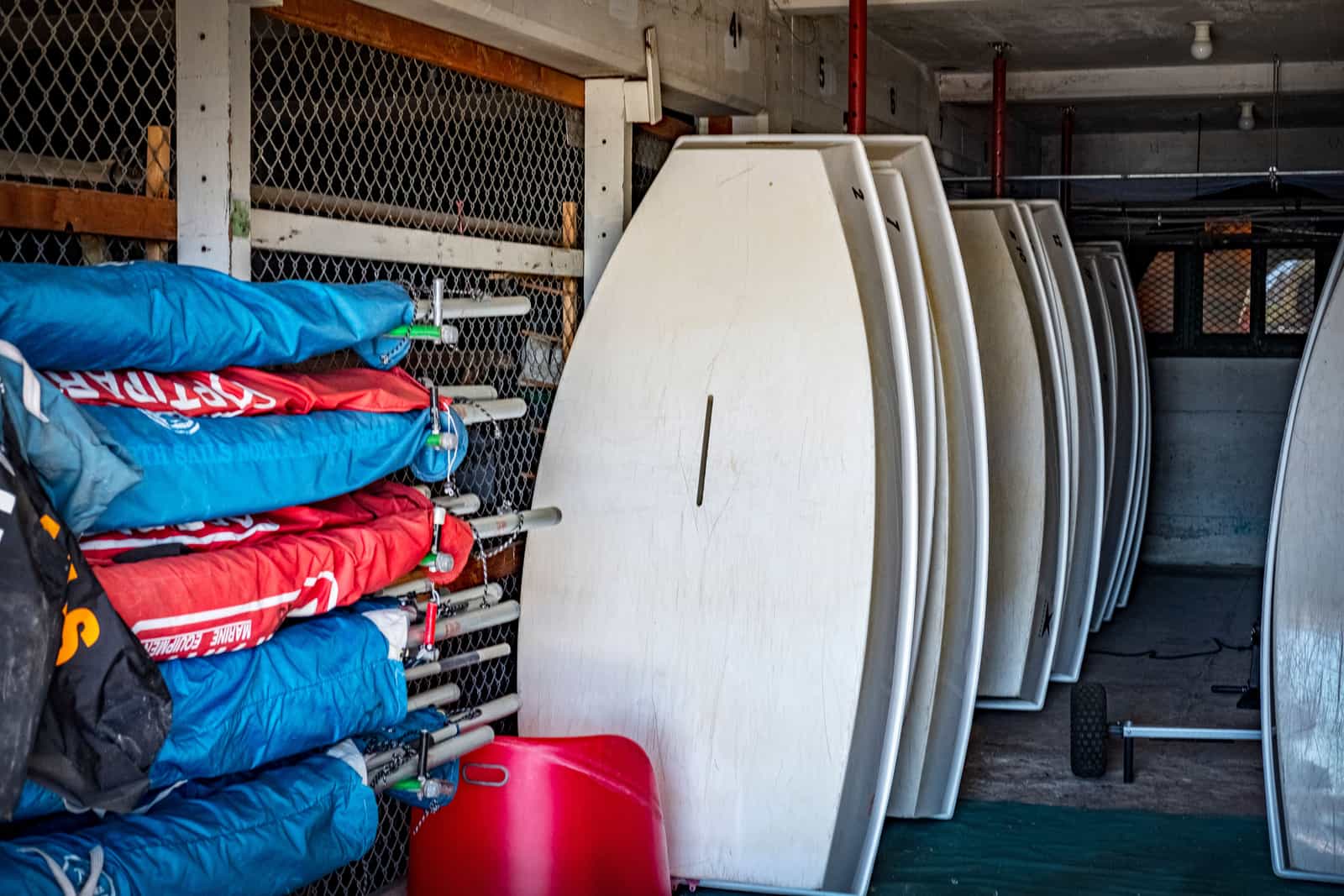
Where to Keep a Kayak or Paddle Board
Where to put it, how to avoid deforming the hull, and what the off-season actually requires.
Top pick
Roc Inflatable Stand Up Paddle Board, 10 ft 6 in x 33 in
The default first inflatable board
#ad · how this is funded · price as of October 18, 2026