Paddle Boards
The Best Paddle Boards for Fishing
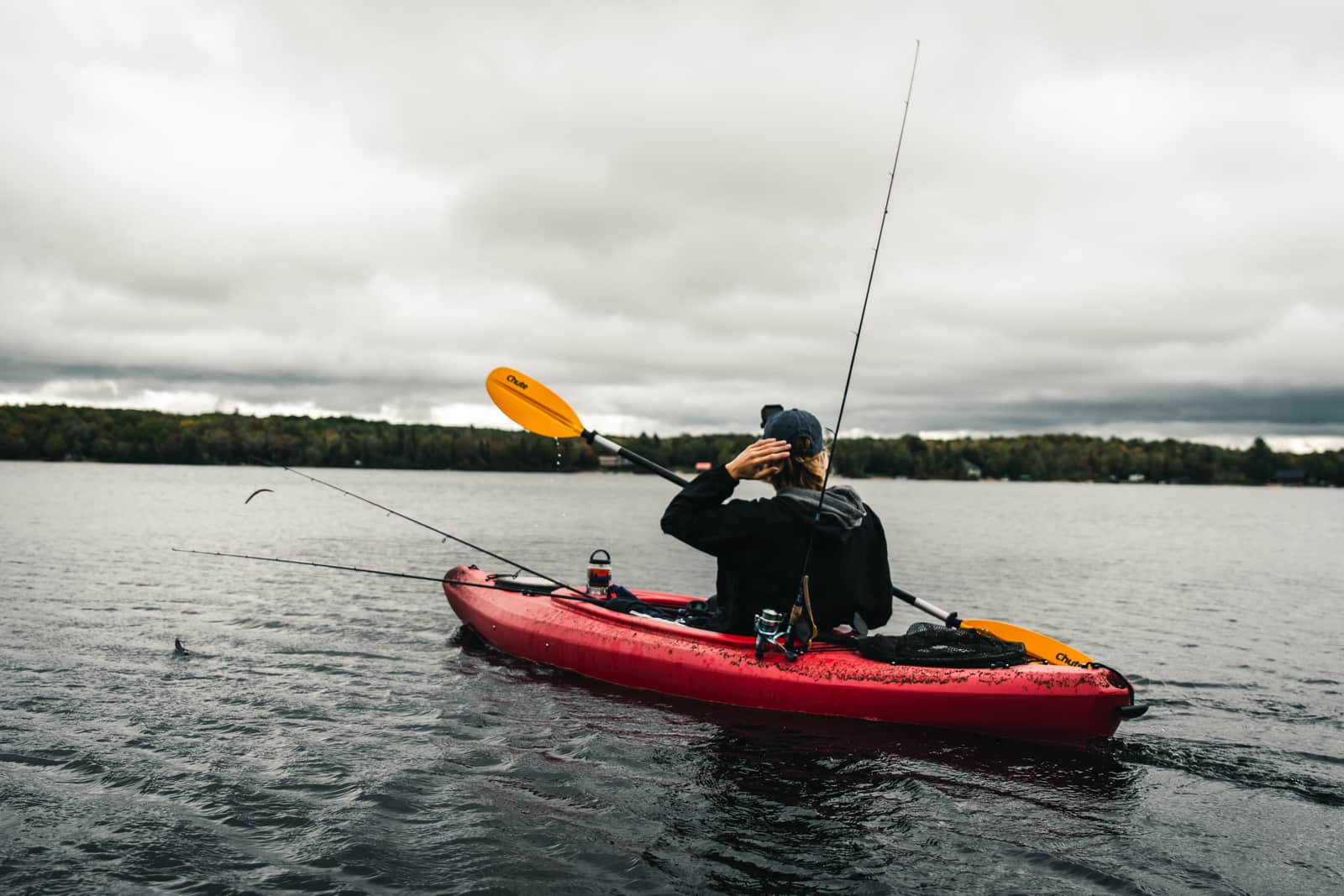
Fishing turns a board into a platform you stand still on while doing something else with your hands. That is a different specification from paddling, and only a couple of numbers change.
We have not paddled these, and we are not going to pretend we have. Here is what we did instead. Links to Amazon earn us a commission at no extra cost to you, and commission never decides a pick — how this site is funded.
| # | Product | Best for | The spec it turns on | Price |
|---|---|---|---|---|
| 1 | 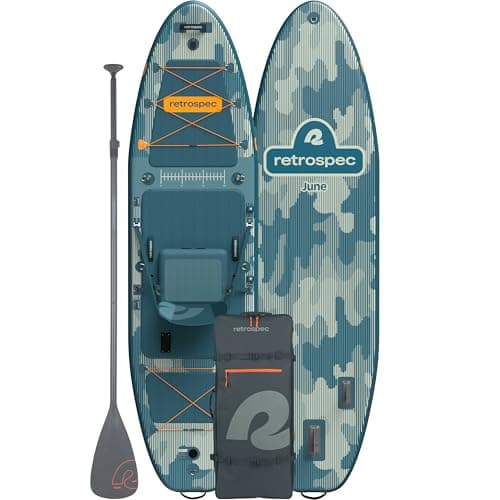 Retrospec June Inflatable Fishing Paddle Board, 11 ft 6 inTop pickThe removable seat is what makes this useful to a beginner who is not a fisherman: a board you can sit on is a board you keep using when your legs give out or the wind gets up. | Fishing, or paddling seated | 138 x 35 x 6 in, 24.5 lb board weight, 320 lb rated capacity, removable seat and rod holders | |
| 2 | 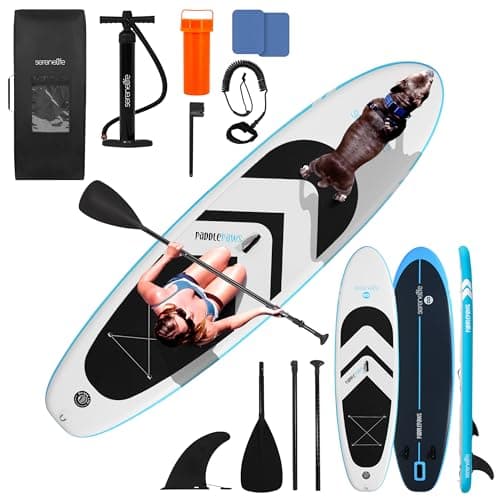 SereneLife XL Extra-Wide Inflatable Paddle Board, 35 in485 lb of rated capacity is the highest on this site, and for a paddler over 250 lb it is one of very few boards where the usable-capacity arithmetic still works. | A heavier paddler, or a board that carries the family | 35.04 in wide, up to 485 lb rated capacity depending on size, double-layer side rails | |
| 3 | 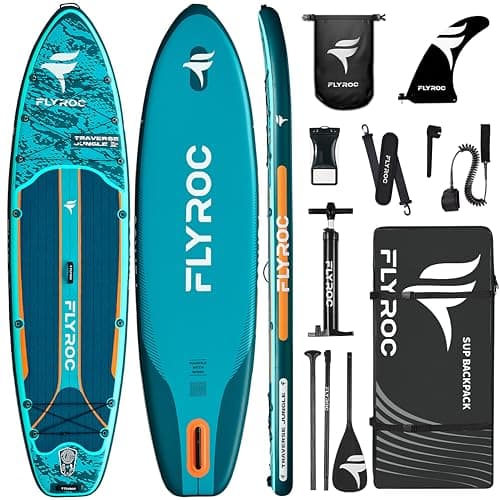 Flyroc 11 ft 6 in x 35 in Inflatable Paddle BoardA foot more waterline than the all-around boards with no narrowing to pay for it, and the highest rated capacity of any board here bar one. The published 18 lb is the figure to treat with some caution. | Distance without giving up width | 138 x 35 x 6 in, 18 lb board weight, 450 lb rated capacity, 15 D-rings |
Paddling and fishing ask opposite things of a board. Paddling is a dynamic activity — you are moving, your weight shifts with each stroke, and a certain amount of instability is absorbed by the fact you are busy. Fishing is standing still, hands occupied, weight in one place, occasionally leaning over to net something.
That changes two specs and leaves the rest alone.
Width goes up, and stays up
Our width recommendation for a first paddling board tops out at 35 inches for a heavy paddler. For fishing we would take 34 inches as the floor at any weight and 35 as the sensible number. You are standing still with your hands full, which is exactly the situation where initial stability is doing all the work.
Capacity has to cover the tackle
Fishing gear is heavier than people account for. A rod, a small tackle box, a net, a cooler and a dry bag is easily 25 to 40 lb — two to three times a normal day kit — and it all counts against the same rated capacity.
The seat is the feature that matters most
A removable seat converts the board into a slow, very stable sit-on craft. For fishing that is not a gimmick — most actual fishing happens sitting down, and standing is for moving between spots and for sight-casting.
It is also the single most useful feature on a fishing board for a nervous beginner who does not fish, which is why we mention it on the general roundups too. A board you can sit down on is a board you keep using when the wind gets up or your legs give out. Our full look at the Retrospec June works through what its published specification means, including the argument for buying it even if you never own a rod.
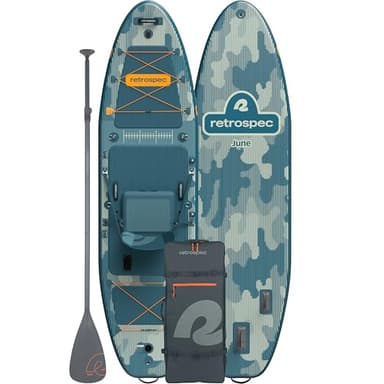
Top pick — Fishing, or paddling seated
Retrospec June Inflatable Fishing Paddle Board, 11 ft 6 in
The removable seat is what makes this useful to a beginner who is not a fisherman: a board you can sit on is a board you keep using when your legs give out or the wind gets up.
What the listing publishes
138 x 35 x 6 in, 24.5 lb board weight, 320 lb rated capacity, removable seat and rod holders
Usable at the 65 percent rule: 208 lb (range 192–224 lb), which leaves about 188 lb of paddler after a 20 lb day kit. Why 65 percent.
320 lb rated is about 208 lb of loaded paddler at 65 percent, which is enough for an adult plus tackle but not an adult plus a passenger.
Sitting down on a board converts it into a slow, very stable kayak. For a nervous first-timer that is a genuinely useful fallback rather than a gimmick, and most all-around boards do not offer it.
24.5 lb is heavy for an inflatable board and light for what it does. Rod holders, mounting points and a seat all cost weight.
What it does well
- Removable seat turns it into a stable sit-down craft when standing stops being fun
- 35 in wide and 11 ft 6 in long, so it is settled enough to fish from
- 320 lb rating covers an adult and a reasonable amount of tackle
What it costs you
- 24.5 lb is the heaviest board here
- Rod holders and mounts are clutter if you never fish
- Costs more than a plain all-around board of the same dimensions
Skip this if you only want to stand up and paddle. You are paying for hardware you will not use and carrying five extra pounds of it.
#ad · how this is funded · price as of October 18, 2026
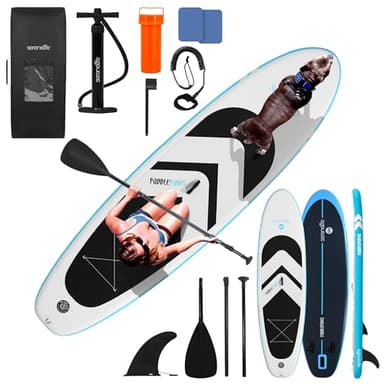
Pick 2 — A heavier paddler, or a board that carries the family
SereneLife XL Extra-Wide Inflatable Paddle Board, 35 in
485 lb of rated capacity is the highest on this site, and for a paddler over 250 lb it is one of very few boards where the usable-capacity arithmetic still works.
What the listing publishes
35.04 in wide, up to 485 lb rated capacity depending on size, double-layer side rails
Usable at the 65 percent rule: 315 lb (range 291–340 lb), which leaves about 295 lb of paddler after a 20 lb day kit. Why 65 percent.
485 lb rated is about 315 lb of loaded paddler at 65 percent. Almost nothing else in the consumer inflatable class gets there.
The listing publishes three capacities -- 350, 440 and 485 lb -- across three sizes. Buy against the specific size you are ordering rather than the highest number in the title, because those are different boards.
Double-layer side rails are the construction detail behind the rating. Rails are where an inflatable board flexes, and doubling them is what allows the load without the middle sagging.
What it does well
- Up to 485 lb rated -- roughly 315 lb of loaded paddler, the most headroom here
- 35 in wide, so it is stable at the loads it is rated for
- Double-layer rails are the right construction for a high-capacity board
What it costs you
- The advertised capacity is size-dependent and the title quotes the largest
- The listing does not publish a board weight or a length
- Big, wide boards are slow and awkward to turn
Skip this if you are an average-sized solo paddler. This is a lot of board to push around for capacity you will never use.
#ad · how this is funded · price as of October 18, 2026
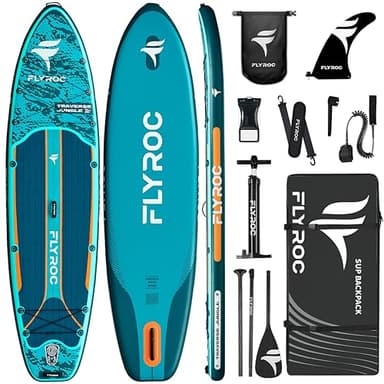
Pick 3 — Distance without giving up width
Flyroc 11 ft 6 in x 35 in Inflatable Paddle Board
A foot more waterline than the all-around boards with no narrowing to pay for it, and the highest rated capacity of any board here bar one. The published 18 lb is the figure to treat with some caution.
What the listing publishes
138 x 35 x 6 in, 18 lb board weight, 450 lb rated capacity, 15 D-rings
Usable at the 65 percent rule: 293 lb (range 270–315 lb), which leaves about 273 lb of paddler after a 20 lb day kit. Why 65 percent.
138 in of length is the reason this tracks. Every extra inch of waterline is distance covered per stroke, and the difference between a 10 ft 6 in and an 11 ft 6 in board over a mile is not subtle.
450 lb rated is about 292 lb of loaded paddler at 65 percent, which is genuine headroom rather than a marketing number. The listing's own 'up to 3 adults' framing is still optimistic — three adults is past 450 lb before anyone brings a bag.
18 lb for 138 x 35 in is light enough to be worth questioning. It is the figure the listing publishes and the only source for it, and the board's own feature text does not repeat it. Treat it as indicative rather than something to plan a long carry around.
Flyroc publish military-grade PVC with drop-stitch construction and a dual-layer sidewall, which is the right spec language for this class. What they do not publish is a maximum pressure, and pressure is what decides how stiff an inflatable actually gets.
What it does well
- 11 ft 6 in tracks straight and covers real distance
- 35 in of width means the extra length costs you no stability
- 450 lb rated, about 292 lb usable — real room for a passenger or gear
- 15 D-rings plus front and rear bungee, so a seat or a cooler both have somewhere to go
What it costs you
- 'Up to 3 adults' is not supported by 450 lb once you do the arithmetic
- The 18 lb board weight appears only in the listing's dimensions block
- No published maximum pressure, so stiffness is not a spec you can check
- 11 ft 6 in is a big object to turn on a small pond
Skip this if your water is a small pond or a tight creek. Length is only an advantage where there is room to use it, and a 10 ft 6 in board turns in half the space.
#ad · how this is funded · price as of October 18, 2026
What you can ignore
- **Rod holder count.** Two is plenty and four is marketing. You cannot fish more than one rod meaningfully from a board.
- **Camera mounts.** Fitted to almost every fishing board and used by almost nobody.
- **Length beyond 11 ft 6 in.** More length is more waterline and more wind-catching hull to hold in position over a spot.
- **Fishing-specific branding on a board that is not wider than a normal one.** The width is the feature; the graphics are not.
The anchor problem
You will want to stay in one place, and the wind will not cooperate. A small folding grapnel anchor on 20 to 25 feet of line, clipped to a D-ring, is the standard solution and is worth more to a board angler than any amount of onboard storage.
Questions people actually ask
Can you actually fish from a paddle board?
What size paddle board is best for fishing?
Do I need a fishing-specific paddle board?
Is a kayak better than a paddle board for fishing?
How do you anchor a paddle board?
Where these numbers came from
Every figure on this page traces to one of these. Where a number could not be sourced, the page says so rather than estimating it.
- Eddyline Kayaks — Maximum weight capacity versus ideal capacity for various styles of kayaks (manufacturer, states the 60-70% ideal-capacity band)
- Retrospec June Inflatable Fishing Paddle Board 11'6" — manufacturer specification as published on the Amazon listing, read 2026-09-02
- SereneLife XL Inflatable Stand Up Paddle Board — manufacturer specification as published on the Amazon listing, read 2026-09-02
Read next
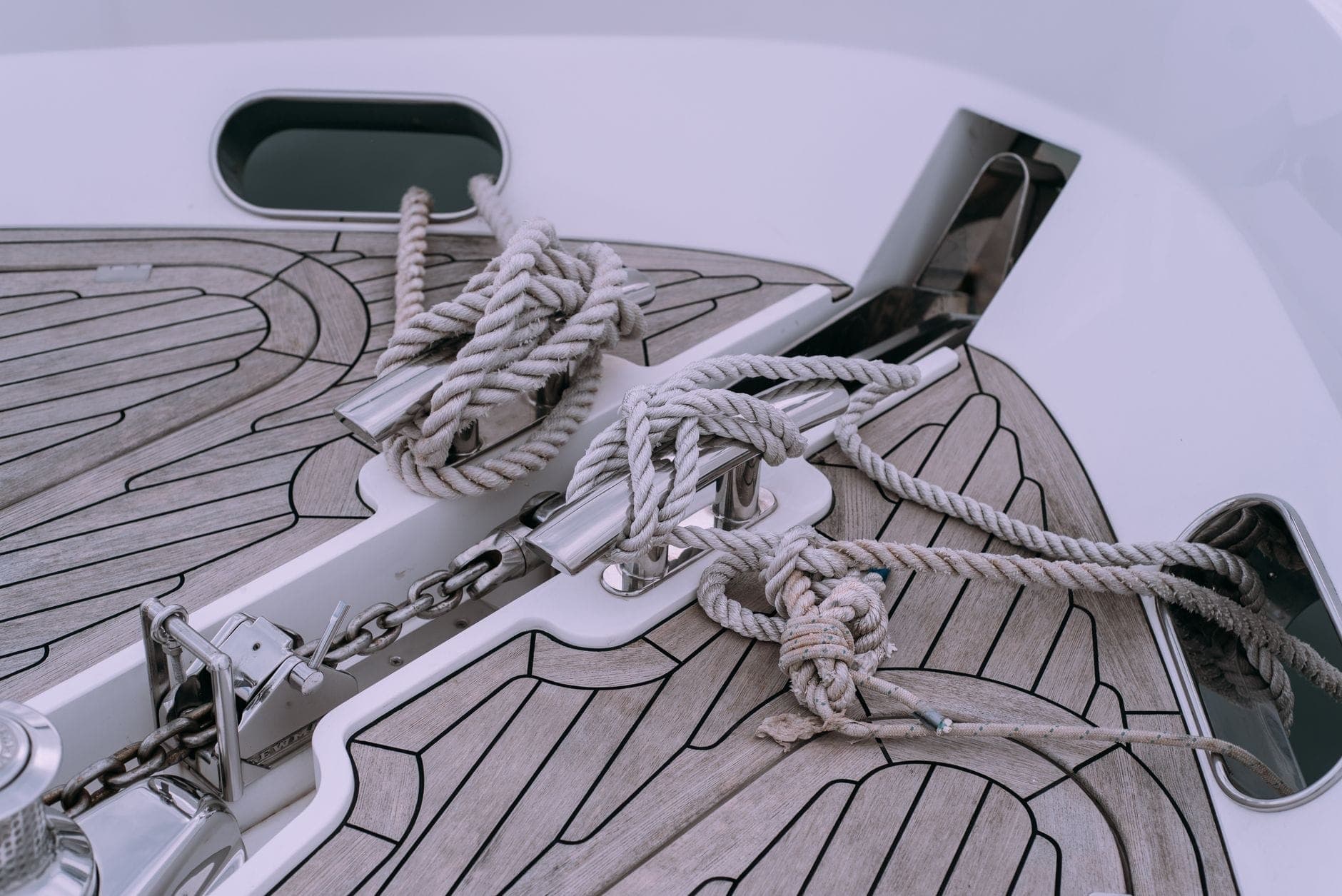
Best Anchor Setup
The Best Anchors for Kayaks and Paddle Boards
A 3.5 lb folding grapnel is the standard answer, 1.5 lb for a board. Which kit, how much rope, and the side-attachment rule that keeps an anchored hull upright.
Top pick
MarineNow 3.5 lb Folding Grapnel Anchor Kit with 25 ft Rope
The complete kit, for most people
#ad · how this is funded · price as of October 18, 2026
Retrospec June 11 ft 6 in Fishing Paddle Board: What the Specs Say
35 in wide, 24.5 lb, rated to 320 lb, with a removable seat — the numbers behind a fishing board that suits nervous beginners just as well.
Top pick
Retrospec June Inflatable Fishing Paddle Board, 11 ft 6 in
Fishing, or paddling seated
#ad · how this is funded · price as of October 18, 2026

Paddle Board Weight Limits, Explained
Rated capacity is not usable capacity. The 65 percent rule, where it comes from, and what happens when you ignore it.
Top pick
SereneLife XL Extra-Wide Inflatable Paddle Board, 35 in
A heavier paddler, or a board that carries the family
#ad · how this is funded · price as of October 18, 2026
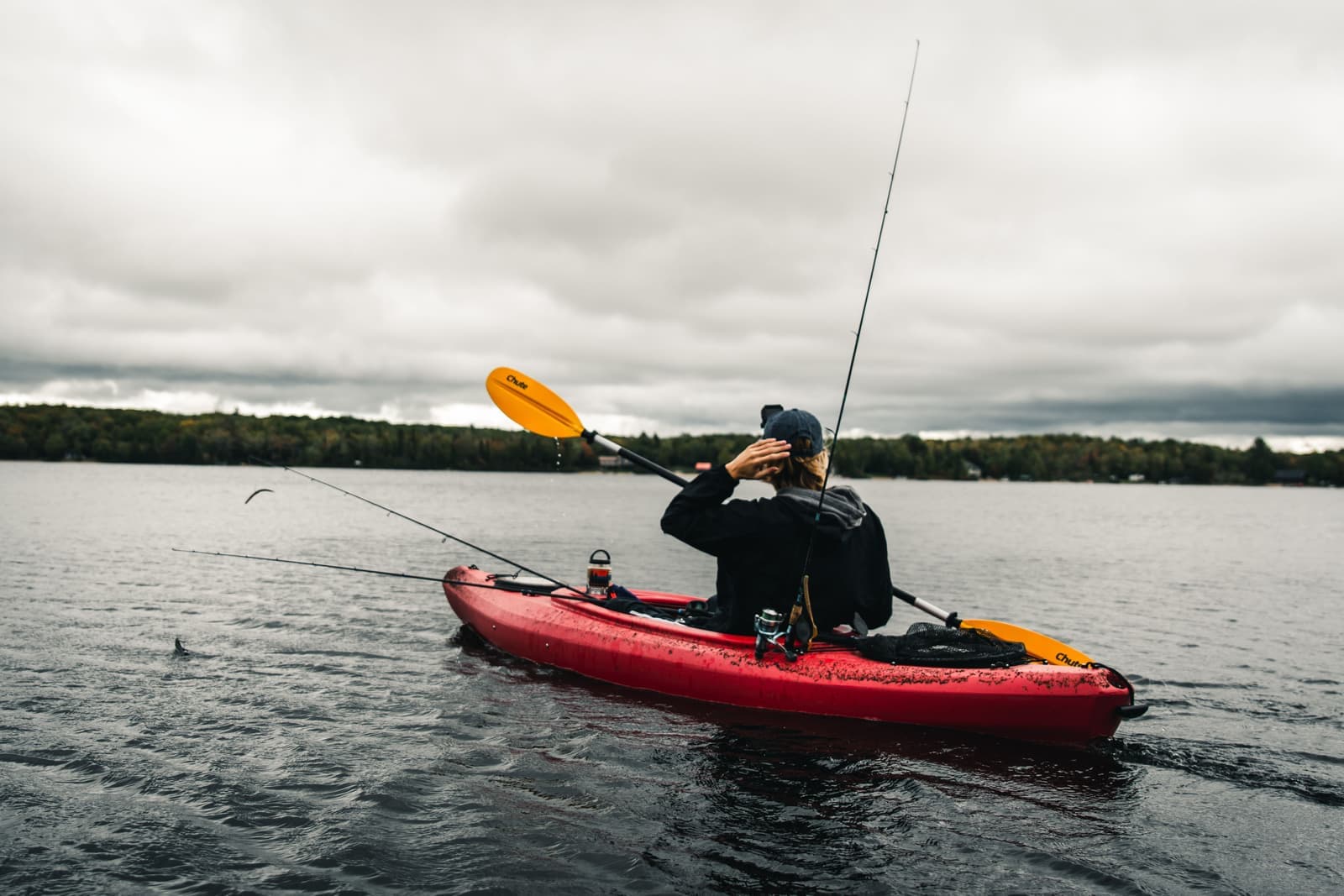
Best Fishing Kayak
The Best Kayaks for Fishing
Tackle is heavier than anyone plans for. The capacity, beam and deck specs that actually decide a first fishing kayak — and why the angler badge is not one of them.
Top pick
Perception Tribe 11.5 Sit-on-Top Kayak
The all-round first sit-on-top
#ad · how this is funded · price as of October 18, 2026
Best Inflatable
The Best Inflatable Paddle Boards
Inflatable SUPs ranked on width, thickness, capacity and packed weight, with every figure read off the listing.
Top pick
Roc Inflatable Stand Up Paddle Board, 10 ft 6 in x 33 in
The default first inflatable board
#ad · how this is funded · price as of October 18, 2026
Paddle Board or Kayak?
The honest board-versus-boat comparison, from a site that earns identically either way.
Top pick
Roc Inflatable Stand Up Paddle Board, 10 ft 6 in x 33 in
The default first inflatable board
#ad · how this is funded · price as of October 18, 2026