Paddle Boards
Roc vs FunWater Paddle Board
Same length, same thickness, same construction, same price band. The whole comparison is two inches of width and twenty pounds of rating, and those decide it completely.

We have not paddled these, and we are not going to pretend we have. Here is what we did instead. Links to Amazon earn us a commission at no extra cost to you, and commission never decides a pick — how this site is funded.
| # | Product | Best for | The spec it turns on | Price |
|---|---|---|---|---|
| 1 | 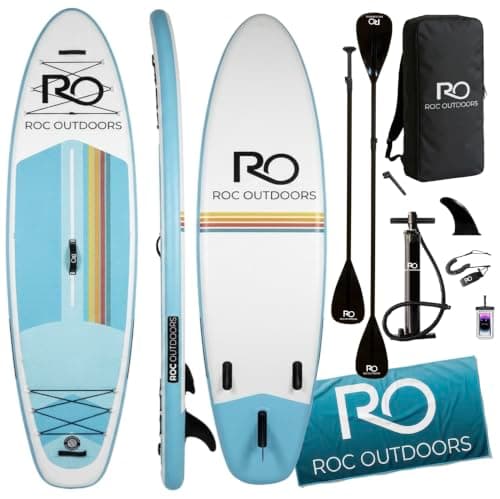 Roc Inflatable Stand Up Paddle Board, 10 ft 6 in x 33 inTop pick10 ft 6 in by 33 in is the shape the whole beginner category converged on, and this is the cheapest version of it that publishes a 350 lb rating. | The default first inflatable board | 126 x 33 x 6 in, 350 lb rated capacity, PVC drop-stitch, full accessory kit | |
| 2 | 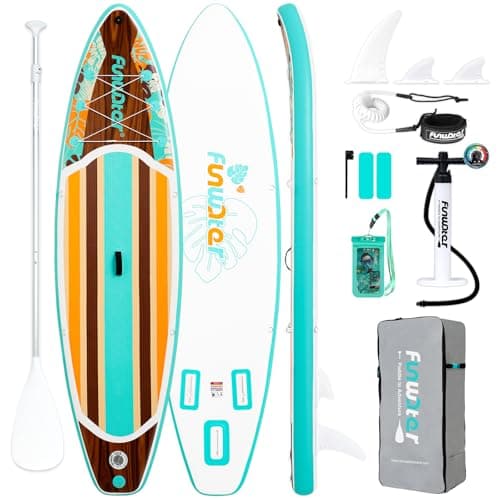 FunWater Inflatable Stand Up Paddle Board, 10 ft 6 in x 35 inThirty-five inches of width in a 10 ft 6 in board is the closest thing to a raft that still paddles like a board, and for a genuinely nervous beginner that is the right trade. | Maximum stability in a standard length | 126 x 35.1 x 6 in, 330 lb rated capacity, PVC drop-stitch |
These two get compared more than any other pair in the entry tier, and the reason is that they are nearly the same board. Same 126 in length, same 6 in thickness, same PVC drop-stitch construction, same complete kit, same price band. Strip out everything they share and two numbers remain. This page is about those two numbers.
The comparison, on published specs
| Roc 10 ft 6 in | FunWater 10 ft 6 in | |
|---|---|---|
| Length | 126 in | 126 in |
| Width | 33 in | 35.1 in |
| Thickness | 6 in | 6 in |
| Rated capacity | 350 lb | 330 lb |
| Loaded paddler at 65% | 227 lb | 215 lb |
| Board weight | not published | not published |
| Construction | PVC drop-stitch | PVC drop-stitch |
| Kit | Paddle, pump, leash, fin, bag | Paddle, pump, leash, fin, bag |
Everything that is the same is the same. Two rows differ, and they pull in opposite directions: the wider board is rated lower. That is unusual — width normally buys capacity — and it is the whole reason the choice is not obvious.
What two inches of width actually does
Thirty-three inches is the middle of our 32 to 34 in beginner band. Thirty-five is above it. The difference is not subtle on the water, and it cuts both ways.
- **Standing up on day one.** The FunWater is easier. Meaningfully. A nervous adult who has never stood on water will get upright sooner and stay upright with less effort on 35 in than on 33.
- **Every stroke after that.** The Roc is easier. On a wider board the paddle enters further from the centerline, the stroke is less efficient, and you rotate your shoulders more for the same distance. Over an hour this is the difference between a pleasant paddle and a tiring one.
- **In wind.** The Roc. More board above the water is more surface for a crosswind to push, and 35 in is a lot of board.
- **Sitting down with a passenger.** The FunWater. If you plan to paddle kneeling or seated with a child or a dog aboard, the extra width is where that stability comes from.
What twenty pounds of rating actually does
This is the counterintuitive part. The board that looks bigger and more stable is the one with less headroom. A 210 lb paddler with a day kit is comfortable on the Roc and is at the limit on the FunWater — and the FunWater's width will not fix a board that is sitting low. Width is stability at a given load; it is not more load.
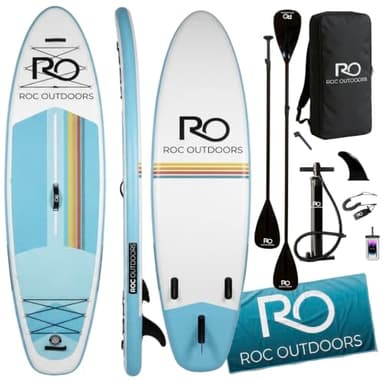
Top pick — The default first inflatable board
Roc Inflatable Stand Up Paddle Board, 10 ft 6 in x 33 in
10 ft 6 in by 33 in is the shape the whole beginner category converged on, and this is the cheapest version of it that publishes a 350 lb rating.
What the listing publishes
126 x 33 x 6 in, 350 lb rated capacity, PVC drop-stitch, full accessory kit
Usable at the 65 percent rule: 228 lb (range 210–245 lb), which leaves about 208 lb of paddler after a 20 lb day kit. Why 65 percent.
33 in of width is the number that decides whether you stand up on day one. Our width guidance puts 32 to 33 in as the beginner band for an adult between 150 and 200 lb, and this sits in it.
350 lb rated capacity means about 227 lb of loaded paddler at 65 percent. Applying the displacement arithmetic instead, a 195 lb loaded paddler wants roughly 195 L of volume -- this hull's 126 x 33 x 6 in envelope is comfortably past that.
Six inches of thickness is what makes a modern inflatable stiff. Four-inch boards flex under an adult in the middle and that flex is what people mistake for the board being unstable.
What it does well
- 33 in wide -- the width that gets a first-timer standing rather than kneeling
- 350 lb rating covers an adult with a child or a dog on board
- Ships with pump, paddle, leash and bag, so the listing price is close to the total
What it costs you
- The included paddle and pump are starter parts you will eventually replace
- 10 ft 6 in is a compromise length -- not fast, not especially maneuverable
- The listing does not publish a board weight
Skip this if you already know you want to cover distance. A 10 ft 6 in all-around board is a cruiser and an 11 ft 6 in touring shape is the honest answer for mileage.
#ad · how this is funded · price as of October 9, 2026
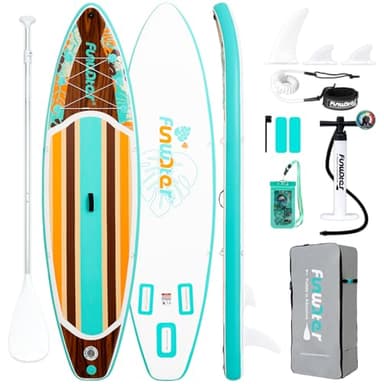
Pick 2 — Maximum stability in a standard length
FunWater Inflatable Stand Up Paddle Board, 10 ft 6 in x 35 in
Thirty-five inches of width in a 10 ft 6 in board is the closest thing to a raft that still paddles like a board, and for a genuinely nervous beginner that is the right trade.
What the listing publishes
126 x 35.1 x 6 in, 330 lb rated capacity, PVC drop-stitch
Usable at the 65 percent rule: 215 lb (range 198–231 lb), which leaves about 195 lb of paddler after a 20 lb day kit. Why 65 percent.
35.1 in is above our beginner recommendation for every weight band on the site. Extra width is slower and it is not a mistake -- speed is not the thing standing between a first-timer and a good afternoon.
330 lb rated is about 215 lb of loaded paddler at 65 percent, the same as the FEATH-R-LITE, in a board three and a half inches wider.
Wide boards are harder to reach past when you paddle, so a wide board pushes you toward a slightly longer paddle. Our formula puts a 5 ft 8 in paddler on a 77 in SUP paddle regardless of board, but the reach penalty is real and worth knowing about.
What it does well
- 35.1 in wide -- as stable as an inflatable board gets at this length
- 330 lb rating with room for a child or a dog on the nose
- Full accessory kit included
What it costs you
- Wide is slow, and you will notice against a 31 in board
- Harder to reach the water past the rail, which tires your shoulders
- The listing does not publish a board weight
Skip this if you are reasonably confident on your feet already. Width you do not need is drag you pay for on every stroke.
#ad · how this is funded · price as of October 9, 2026
Day one against month three
The two boards trade places over a season, and knowing that in advance is most of choosing well.
| Roc, 33 in | FunWater, 35 in | |
|---|---|---|
| First stand | Takes concentration | Easier, noticeably |
| First hour | Tiring while you learn balance | Relaxed |
| Third outing | Balance is automatic; the board feels right | Balance was never the problem; the board feels big |
| First windy day | Manageable | Pushed around |
| Month three, an hour out | Efficient stroke, comfortable pace | Shoulders tired from the wide reach |
| Seated with a passenger | Adequate | Better |
If you expect to be nervous for a long time, or you will mostly kneel or sit, the FunWater's advantages persist. If you expect to be standing confidently by the third outing, which describes most adults under 200 lb, the Roc's advantages are the ones that last.
The passenger question
A lot of people cross-shopping these two are planning to bring a dog or a small child, and it changes the answer in a specific way. Width helps a passenger: a dog moving around on the deck is a load that shifts, and 35 in absorbs that better than 33. But a passenger is also weight, and the FunWater has less of it to give.
So the honest passenger answer is: a light paddler with a light passenger, FunWater; anyone else, the Roc, and consider the 35 in Flyroc at 11 ft 6 in if you want both the width and more length to put a passenger on.
If you are between the two
The gap between 33 and 35 inches is where a lot of paddlers actually sit, and there are two ways to resolve it that are better than guessing.
- **Rent once, on anything.** An afternoon on any rental board tells you whether balance is going to be your problem. If you were standing comfortably within twenty minutes, the Roc. If you spent the afternoon kneeling, the FunWater.
- **Look at the Flyroc.** Thirty-five inches wide and 11 ft 6 in long, rated to 450 lb. It has the FunWater's width with a foot more waterline for tracking, and it is the board that resolves the trade rather than picking a side of it. Our full look at it.
What they share, honestly
- **Neither publishes a board weight.** That is the entry tier's most consistent omission and both boards make it. If carry weight decides it for you, the FEATH-R-LITE publishes 18.9 lb and neither of these publishes anything.
- **Both kit paddles are starter parts.** Heavy adjustable aluminum in both boxes. The paddle is the first upgrade on either board.
- **Both are 10 ft 6 in.** The compromise length: not fast, not especially maneuverable, adequate at both. Neither is a touring board and neither is a river board.
- **Both are 6 in.** The standard adult thickness. At pressure, neither sags underfoot for an adult inside its rating.
Storage, transport and setup, which are identical
It is worth saying explicitly, because people look for differences that are not there: both boards roll into the same size of bag, weigh roughly the same packed, take the same hand pump the same number of minutes to reach pressure, and dry at the same rate. Neither has a storage or transport advantage over the other. If logistics is your constraint, it does not decide this comparison; whether an inflatable is right for you at all does.
The same is true of durability. Same PVC drop-stitch construction, same 6 in thickness, same seam method. Both will last as long as they are rinsed, dried and kept out of the sun, and both will fail the same way if they are not.
The verdict, by paddler
| You | Board | Why |
|---|---|---|
| Under 190 lb, nervous, mostly kneeling | FunWater | Width is the whole advantage and speed does not matter |
| Under 190 lb, reasonably confident | Roc | Standard shape, higher rating, better stroke |
| Over 200 lb | Roc | The 350 lb rating decides it before width gets a say |
| Paddling with a dog or child | Depends on total weight | Run the usable-load arithmetic; FunWater only if it clears |
| Wants to cover distance | Neither; the Bigfly | Both are 10 ft 6 in cruisers |
The wrong reasons to choose either
- **Because wider must be better.** It is better for standing up on day one and worse for everything after. Take the width your weight and nerve need, not the maximum.
- **Because of the star rating.** Both listings carry pooled ratings across sizes and colorways. The published specs are the checkable claims.
- **Because of brand.** Neither is a heritage brand. Both are labels on well-specified factory boards, which is what the entry tier is. How to read a board listing.
- **Because of the kit.** They are the same kit.
Both boards are reviewed in full — the Roc and the FunWater — and the beginner roundup places them against the rest of the tier.
Questions people actually ask
Is the Roc or the FunWater paddle board better?
Which is more stable, Roc or FunWater?
Which holds more weight, Roc or FunWater?
Is the Roc paddle board good for beginners?
Is the FunWater paddle board good for beginners?
Do the Roc and FunWater come with a paddle?
Where these numbers came from
Every figure on this page traces to one of these. Where a number could not be sourced, the page says so rather than estimating it.
- Thurso Surf — What Size Paddle Board Is Right for You (manufacturer, states the weight-in-kg x 2 volume rule and the 32 in beginner width band)
- Eddyline Kayaks — Maximum weight capacity versus ideal capacity for various styles of kayaks (manufacturer, states the 60-70% ideal-capacity band)
- Roc Inflatable Stand Up Paddle Board 10 ft 6 in — manufacturer specification as published on the Amazon listing, read 2026-09-02
- FunWater Inflatable Stand Up Paddle Board 10 ft 6 in — manufacturer specification as published on the Amazon listing, read 2026-09-02
Read next
Roc 10'6" Inflatable Paddle Board: What the Specs Say
33 inches wide, 6 inches thick, rated to 350 lb — the numbers behind the most-recommended first board there is.
Top pick
Roc Inflatable Stand Up Paddle Board, 10 ft 6 in x 33 in
The default first inflatable board
#ad · how this is funded · price as of October 9, 2026
FunWater 10'6" Paddle Board: What 35 Inches Buys You
35.1 inches wide in a standard 10 ft 6 in length — the most forgiving shape here, and what that width costs.
Top pick
FunWater Inflatable Stand Up Paddle Board, 10 ft 6 in x 35 in
Maximum stability in a standard length
#ad · how this is funded · price as of October 9, 2026
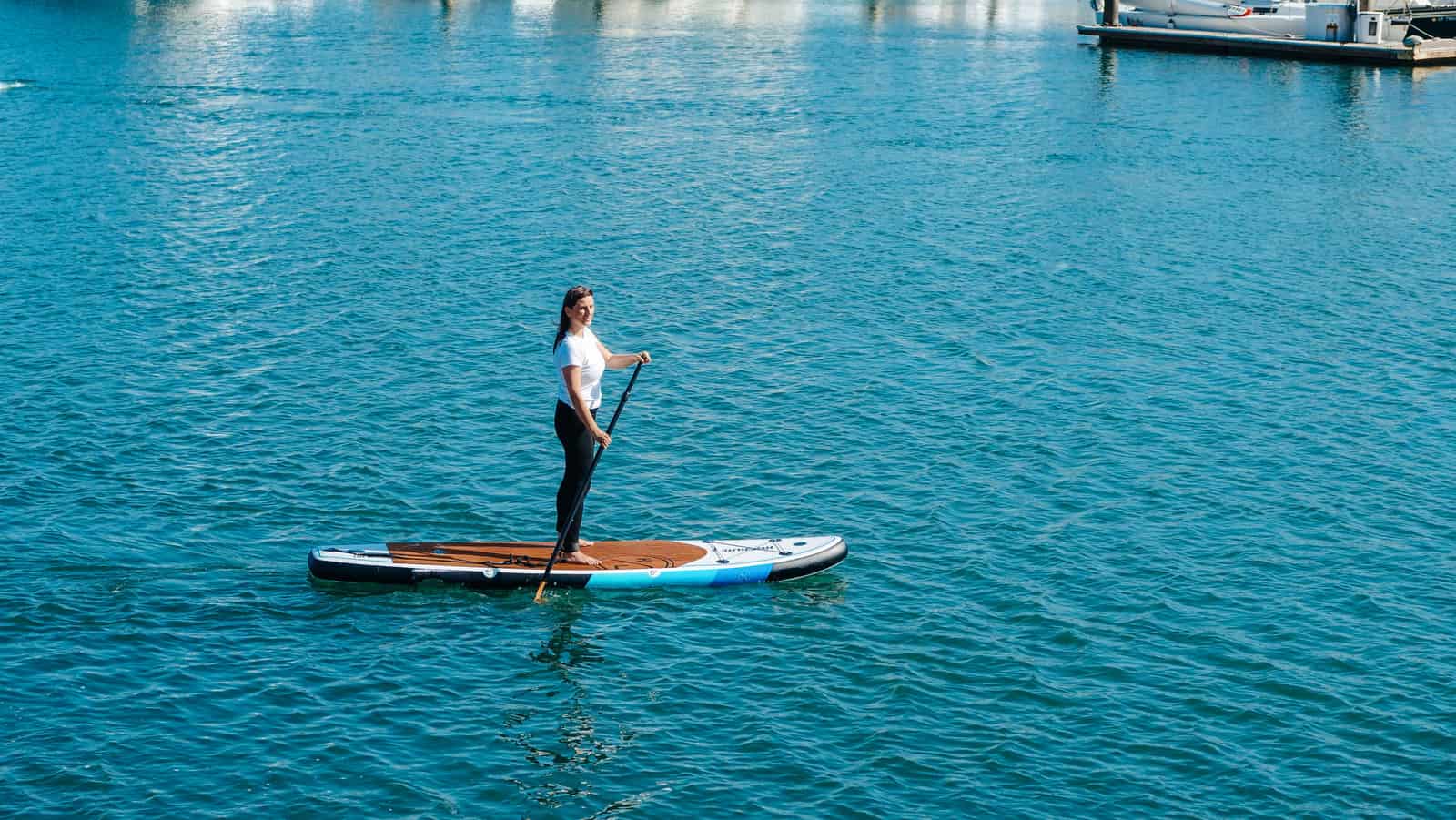
Best First Board
The Best Paddle Boards for Beginners
Five beginner boards ranked on published width and usable capacity, with the displacement arithmetic run on each one.
Top pick
Roc Inflatable Stand Up Paddle Board, 10 ft 6 in x 33 in
The default first inflatable board
#ad · how this is funded · price as of October 9, 2026

What Size Paddle Board Do I Need?
A volume and width calculator that shows its working, and ends in an actual board rather than a chart.
Top pick
Roc Inflatable Stand Up Paddle Board, 10 ft 6 in x 33 in
The default first inflatable board
#ad · how this is funded · price as of October 9, 2026

Best Budget Board
The Best Budget Paddle Boards
The entry-tier boards where the compromise is one you can live with — a missing spec, a narrower deck, a starter paddle — named per board so you choose the right one.
Top pick
Roc Inflatable Stand Up Paddle Board, 10 ft 6 in x 33 in
The default first inflatable board
#ad · how this is funded · price as of October 9, 2026