Gear & Getting There
Kayak Accessories: What Actually Earns a Place
The accessory aisle is enormous and the list that changes your paddling is short. Here it is in spending order, with the honest note on where each one stops mattering.
We have not paddled these, and we are not going to pretend we have. Here is what we did instead. Links to Amazon earn us a commission at no extra cost to you, and commission never decides a pick — how this site is funded.
| # | Product | Best for | The spec it turns on | Price |
|---|---|---|---|---|
| 1 | 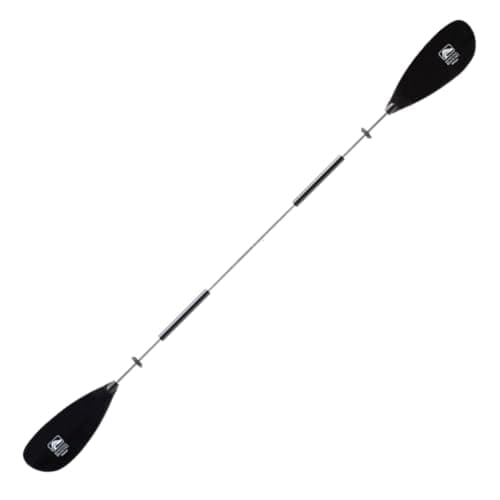 Bending Branches Whisper Kayak Paddle, 230 cmTop pick230 cm is the length our formula puts most adults in a 28 to 32 in recreational kayak on, and this is the least expensive paddle at that length made by a company that only makes paddles. | The first paddle worth keeping | 230 cm, two-piece aluminum shaft, polypropylene blades, 0 and 60 degree feathering | |
| 2 | 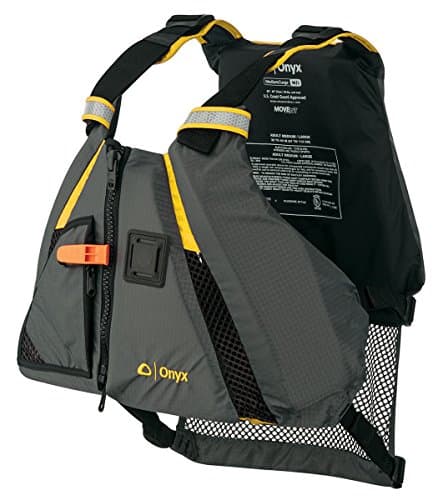 Onyx MoveVent Dynamic Paddle VestA paddling-cut vest with a mesh lower back, which is the design difference that stops a PFD from being pushed up your neck every time you sit against a seat back. | The PFD you will actually keep on | USCG and Transport Canada approved, 90 to 300 lb range, 1.7 lb, ventilated back panel | |
| 3 | 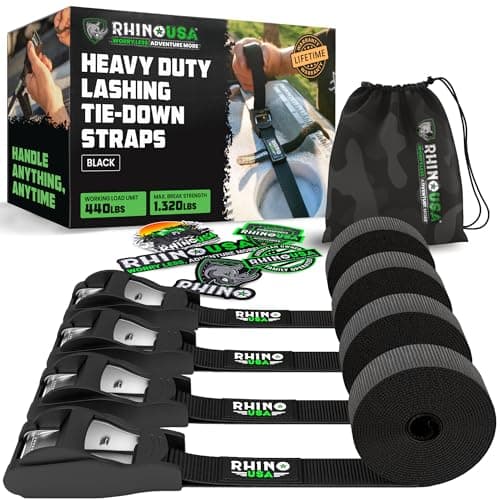 Rhino USA Lashing Straps, 1 in x 12 ft, 4-pack cam buckleCam buckles rather than ratchets, which is exactly what you want against a plastic hull: tight enough to hold and impossible to crush the boat with. | Replacing whatever straps came with your rack | 1 in x 12 ft, four-pack, cam buckle, 1,320 lb break strength | |
| 4 | 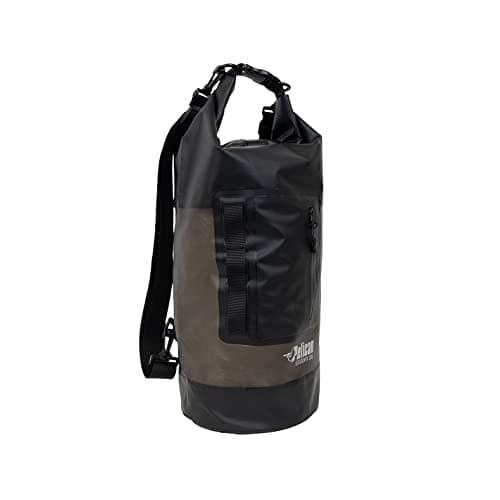 Pelican ExoDry 20L Dry BagTwenty liters is the size that takes a dry layer, a towel, a phone and a lunch -- which is the actual list, rather than the 5 L that only takes a phone. | Keeping the phone, keys and a dry layer dry | 20 L, roll-top closure, shoulder straps, 1.2 lb | |
| 5 | 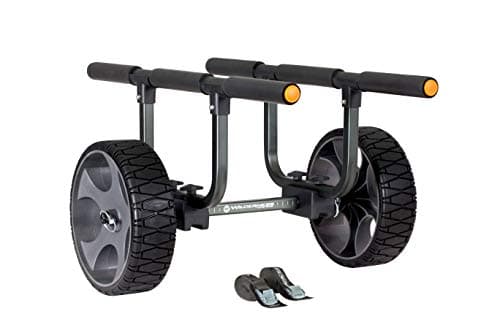 Wilderness Systems Heavy Duty Kayak CartThe purchase that decides how often a 52 lb boat gets used, because the distance from the car to the water is what people actually give up on. | A long walk from the parking lot to the water | 13 lb, 32 x 26 x 16 in, for kayaks and canoes |
Most kayaks arrive with either nothing or with the cheapest possible version of two things. The gap between what is in the box and what makes a day on the water pleasant is small, well-defined and mostly not expensive — but the accessory market is enormous and almost none of it belongs in a first purchase.
This page is the short list, ranked by how much each item changes an outing per dollar spent, plus an honest account of where each one stops earning its place.
1. The paddle, which is not really an accessory
It is listed first because it is the item most often treated as an afterthought and the one your hands are on for every second of the outing. A boat is a thing you sit in; a paddle is a thing you operate, several thousand times per trip.
- **Weight compounds.** A paddle stroke happens roughly 1,000 times an hour. Half a pound of difference is not half a pound, it is half a pound lifted a thousand times.
- **Length is a sizing question, not a preference.** It comes from your height and the boat's beam, and getting it wrong makes every stroke either a reach or a knuckle-scrape. The paddle length calculator does the arithmetic.
- **The paddle in an inflatable kit is usually an oar.** Flat blades on a straight shaft, meant for a dinghy. Replacing it is the single biggest improvement available on a cheap boat.
2. The life jacket, which is not optional
Federal rules require a wearable, correctly sized life jacket aboard for every person on a kayak, and several states require it be worn in cold months or under a certain age. That is the legal floor. The practical point is different: the jacket that saves you is the one you did not take off.
3. Straps, if the boat rides on a car
This is the least glamorous item here and the one with the worst failure mode. The straps bundled with cheap racks are frequently unrated, and a strap that lets go at highway speed is not an inconvenience.
- **Cam buckles, not ratchets.** A ratchet can generate enough force to deform a plastic hull. A cam buckle tightens to hand tension, which is what a kayak wants.
- **Look for a published break strength.** An unrated strap is a strap nobody was willing to put a number on.
- **Twelve feet is the useful length** for a boat on a roof, and two straps is the minimum. Bow and stern lines are separate and matter more on a long hull.
Getting a boat to the water covers the whole rack question, including the case where the car has no roof bars at all.
4. A dry bag, sized smaller than you think
Everything in an open cockpit or a tank well gets wet eventually. A dry bag is what stops that from mattering, and 20 liters is the size that covers a phone, keys, a wallet and a dry layer without becoming a duffel you then have to strap down.
- **Roll it three times, then clip.** Two folds is a bag with a hole in it. This is the entire mechanism and it is where most dry-bag failures come from.
- **Strap it in.** An unsecured dry bag floats away in a capsize, which is worse than a wet one. Bungee webbing holds a jacket, not a bag you would miss.
- **One good bag beats three cheap ones** for a first season. The phone and a dry layer are the things that ruin an afternoon when they get soaked.
5. A cart, but only if the walk is real
This is the most conditional item on the list. A cart is genuinely transformative if there is distance between where the car stops and where the water starts, and it is dead weight in a garage if there is not.
The honest test is whether you have already skipped a trip because of the carry. If you have, buy the cart. If your launch is a car park beside a ramp, skip it — this is the one item on this list we would happily talk you out of.
Top pick — The first paddle worth keeping
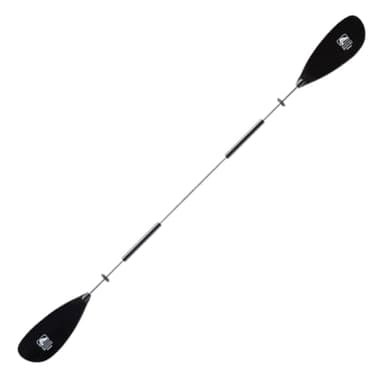
Bending Branches Whisper Kayak Paddle, 230 cm
230 cm is the length our formula puts most adults in a 28 to 32 in recreational kayak on, and this is the least expensive paddle at that length made by a company that only makes paddles.
What the listing publishes
230 cm, two-piece aluminum shaft, polypropylene blades, 0 and 60 degree feathering
230 cm is what 104 + 1.333 x (boat width + your height in inches) returns for a 5 ft 8 in paddler in a 30 in boat. If you are much taller or your boat is much wider, check the chart before you buy this length rather than the paddle.
The 0 and 60 degree feather settings are the useful part. Feathering angles the second blade so it slices through wind instead of catching it, and being able to turn it off while you learn matters more than the setting itself.
An aluminum shaft is cold in the hands in spring and fall, and it is the reason people upgrade. It is not a reason to avoid this paddle as a first one.
What it does well
- 230 cm suits the great majority of recreational kayaks and adult paddlers
- Two feather settings, including flat, which is what a beginner should start with
- Made by a dedicated paddle manufacturer rather than bundled with a boat
What it costs you
- Aluminum shaft is genuinely cold to hold in cool weather
- Polypropylene blades flex more than fiberglass under a hard stroke
- Only two lengths of adjustment -- it is a fixed size, so get the size right
Skip this if our chart puts you at 240 or 250 cm. A wide inflatable kayak or a tall paddler needs more paddle, and the right length in a cheaper paddle beats the wrong length in a better one.
#ad · how this is funded · price as of October 9, 2026
Pick 2 — The PFD you will actually keep on
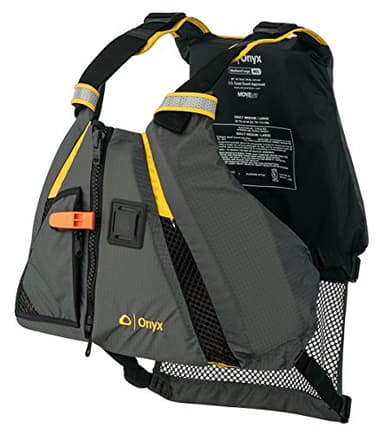
Onyx MoveVent Dynamic Paddle Vest
A paddling-cut vest with a mesh lower back, which is the design difference that stops a PFD from being pushed up your neck every time you sit against a seat back.
What the listing publishes
USCG and Transport Canada approved, 90 to 300 lb range, 1.7 lb, ventilated back panel
The U.S. Coast Guard requires a wearable approved PFD for every person aboard a recreational vessel, and requires children under 13 to wear one while under way. Kayaks, canoes and paddle boards count as vessels. Carrying it satisfies the law for adults; wearing it is what actually works.
The 90 to 300 lb rating on the listing is a chest-size and buoyancy fit range, not a capacity. Get the size right -- a PFD that rides up when you lift your arms is one you will take off.
The ventilated back panel exists because kayak seats have backrests. A flat-backed general-purpose vest and a seat back fight each other for the same space, and the vest loses.
What it does well
- Cut for paddling, so the lower back clears a kayak seat
- Ventilated panel makes it bearable in real summer heat
- USCG and Transport Canada approved, which is the only certification that counts
What it costs you
- Costs several times a general-purpose orange vest
- Sized ranges mean you must check the fit chart, not just buy a Medium
- Mesh back panels snag on rough gear
Skip this if this is a once-a-year rental-style outing. A cheap approved vest is legally identical and the comfort argument only pays off with hours in it.
#ad · how this is funded · price as of October 9, 2026
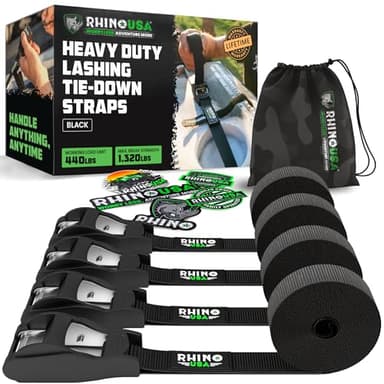
Pick 3 — Replacing whatever straps came with your rack
Rhino USA Lashing Straps, 1 in x 12 ft, 4-pack cam buckle
Cam buckles rather than ratchets, which is exactly what you want against a plastic hull: tight enough to hold and impossible to crush the boat with.
What the listing publishes
1 in x 12 ft, four-pack, cam buckle, 1,320 lb break strength
A cam buckle tightens only as hard as you can pull the tail. A ratchet multiplies your force several times over, and on a rotomolded kayak that is how a permanent dent happens.
12 ft is the length that goes over a boat and around a crossbar with enough tail to tie off. Eight-foot straps are the common frustration.
1,320 lb break strength is far past anything a kayak needs. The failure mode on a roof is never the webbing, it is the buckle slipping or the boat lifting -- which is why bow and stern lines exist.
What it does well
- Cam buckles cannot over-tighten a plastic hull the way ratchets can
- 12 ft covers a hull plus a crossbar with tail left to tie
- Four in a pack, which is two straps per boat
What it costs you
- Cam buckles need a firm pull and a second check after ten minutes of driving
- Metal buckles will mark paint if you let them rest on it
- Not a substitute for bow and stern lines
Skip this if your rack came with good straps. This is a replacement part, not an upgrade with a payoff.
#ad · how this is funded · price as of October 9, 2026
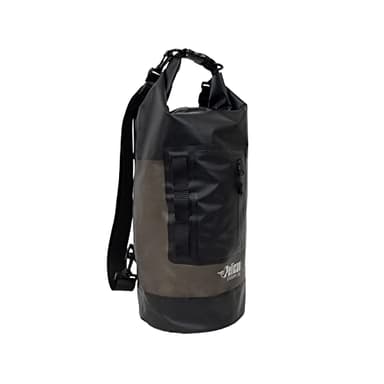
Pick 4 — Keeping the phone, keys and a dry layer dry
Pelican ExoDry 20L Dry Bag
Twenty liters is the size that takes a dry layer, a towel, a phone and a lunch -- which is the actual list, rather than the 5 L that only takes a phone.
What the listing publishes
20 L, roll-top closure, shoulder straps, 1.2 lb
Roll-top closure is the whole mechanism. Three folds and a clip, and it is watertight; two folds and it is a bag with a hole in it. Roll it properly.
20 L is the useful size for a day. 5 L bags are for a phone and a wallet, and 30 L bags do not fit through a kayak hatch.
It floats when it is sealed and mostly full of soft goods, which is a genuine safety feature the day something goes over the side.
What it does well
- 20 L is the size that actually holds a day's kit
- Roll-top and clip, so there is no zip to fail
- Shoulder straps for the walk from the car
What it costs you
- Roll-tops are only waterproof if you roll them three times
- Wide bags can be awkward through a small kayak hatch
- No structure, so hard objects poke through against your back
Skip this if you only need to keep a phone dry. A 5 L bag or a phone case is a fraction of the price and easier to stow.
#ad · how this is funded · price as of October 9, 2026
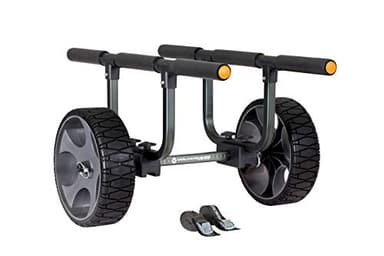
Pick 5 — A long walk from the parking lot to the water
Wilderness Systems Heavy Duty Kayak Cart
The purchase that decides how often a 52 lb boat gets used, because the distance from the car to the water is what people actually give up on.
What the listing publishes
13 lb, 32 x 26 x 16 in, for kayaks and canoes
Carry weight and carry distance multiply. A 52 lb boat over 30 yards is nothing; the same boat over 300 yards is the reason it stays on the roof.
13 lb of cart is 13 lb you also have to carry back to the car, or leave at the launch. Neither is a problem and both are worth knowing in advance.
This is the cost line most first-time buyers leave out, and it is the one that most changes how many times a year the boat gets wet.
What it does well
- Turns a long portage from a decision into a non-event
- Fits kayaks and canoes, so it survives your next boat
- Folds down enough to stow in a hatch or a boot
What it costs you
- 13 lb to carry back to the car or to leave unattended
- Small wheels struggle in soft sand
- Another thing to store
Skip this if you launch from a boat ramp you can park beside. A cart solves a distance problem and buys nothing if you do not have one.
#ad · how this is funded · price as of October 9, 2026
What you can skip for a first season
None of the following are bad products. They are simply things a first-season paddler does not yet know they want, and buying them early is how the accessory budget gets spent before the paddle does.
- **Anchors and anchor trolleys.** Useful for fishing, irrelevant otherwise, and a genuine hazard rigged wrong in current.
- **Fishing rod holders**, unless you fish. Cheap to add later, and the fishing roundup explains why they are not a reason to pick a hull.
- **Gear tracks and mounting rails.** Rails with nothing on them are decoration.
- **Spray skirts.** A cold-water and rough-water item. On a warm flat lake they add complexity and a wet-exit skill you do not have yet.
- **Electric bilge pumps.** A sponge and a hand pump cover what a recreational sit-inside actually collects.
- **Deck-mounted phone cradles.** A phone on a deck ends up in the water. It belongs in the dry bag.
Clothing, which is the accessory nobody counts
It never appears on an accessory list because it is not sold in the kayak aisle, and it changes an outing more than most of what is. Two rules cover almost all of it.
- **Dress for the water, not the air.** A warm day over cold water is a cold-water day. Cold shock — the involuntary gasp on sudden immersion — is what turns an ordinary capsize into an emergency, and it happens at water temperatures that feel pleasant to a hand.
- **No cotton.** Wet cotton stays wet, pulls heat out of you and takes hours to dry. A synthetic shirt costs nothing extra and is the single most useful thing to change about what you wear.
- **Shoes that can get wet.** Launches are mud, gravel and submerged rock. Something with a closed toe and a heel strap stays on when you step into silt.
- **A hat and sunscreen.** Water reflects, so you get the sun twice. This is the most reliably underestimated part of a first full day out.
The order to buy in
If the budget is finite — and for a first setup it always is — this is where each dollar does the most work.
| Priority | Item | Why here |
|---|---|---|
| 1 | Life jacket | Legally required and the only item that is ever load-bearing |
| 2 | Paddle | Operated thousands of times per trip. Nothing else compounds like this |
| 3 | Whistle | Legally required, costs almost nothing, universally forgotten |
| 4 | Straps | Only if the boat rides on a car, and then non-negotiable |
| 5 | Dry bag | Turns a soaked phone from a disaster into a non-event |
| 6 | Cart | Only if the carry is long. Otherwise skip it entirely |
Anything below that line can wait a season, and waiting is genuinely the better call — after ten outings you will know which problem you actually have, and you will buy the right solution to it rather than a plausible one.
The two cheap things nobody lists
- **A whistle.** Federally required as a sound-producing device on most paddlecraft, costs almost nothing, and clips to the life jacket. It is the most commonly missing legally required item on a beginner's boat.
- **A sponge and a bailer.** A sit-inside collects water from paddle drips alone. A cut-open plastic bottle does the job for nothing.
The first-trip checklist is the packing list version of this page, including the things that are free.
Questions people actually ask
What accessories do I need for a kayak?
What is the first kayak accessory to upgrade?
Do I need a kayak cart?
What size dry bag do I need for kayaking?
Are ratchet straps safe for a kayak?
What kayak accessories are a waste of money for beginners?
What should I wear kayaking?
Where these numbers came from
Every figure on this page traces to one of these. Where a number could not be sourced, the page says so rather than estimating it.
- U.S. Coast Guard — Life Jacket Wear / Wearing Your Life Jacket (federal carriage and under-13 wear requirements)
- U.S. Coast Guard — Recreational Boaters (federal equipment requirements for vessels, paddlecraft included)
- Aqua-Bound — Kayak Paddle Sizing Guide (manufacturer, the size-longer and size-shorter adjustment rules)
- Bending Branches Whisper Kayak Paddle 230 cm — manufacturer specification as published on the Amazon listing, read 2026-09-02
- Onyx MoveVent Dynamic Paddle Vest — manufacturer specification as published on the Amazon listing, read 2026-09-02
- Rhino USA Lashing Straps, 1 in x 12 ft — manufacturer specification as published on the Amazon listing, read 2026-09-02
- Pelican ExoDry 20L Dry Bag — manufacturer specification as published on the Amazon listing, read 2026-09-02
- Wilderness Systems Heavy Duty Kayak Cart — manufacturer specification as published on the Amazon listing, read 2026-09-02
Read next
Pelican ExoDry 20L: The Size That Actually Holds a Day
20 L of 500D PVC with a roll-top, a translucent panel and removable shoulder straps. Pelican state it is not intended for submersion, which changes how you pack it.
Top pick
Pelican ExoDry 20L Dry Bag
Keeping the phone, keys and a dry layer dry
#ad · how this is funded · price as of October 9, 2026
Best Anchor Setup
The Best Anchors for Kayaks and Paddle Boards
A 3.5 lb folding grapnel is the standard answer, 1.5 lb for a board. Which kit, how much rope, and the side-attachment rule that keeps an anchored hull upright.
Top pick
MarineNow 3.5 lb Folding Grapnel Anchor Kit with 25 ft Rope
The complete kit, for most people
#ad · how this is funded · price as of October 9, 2026
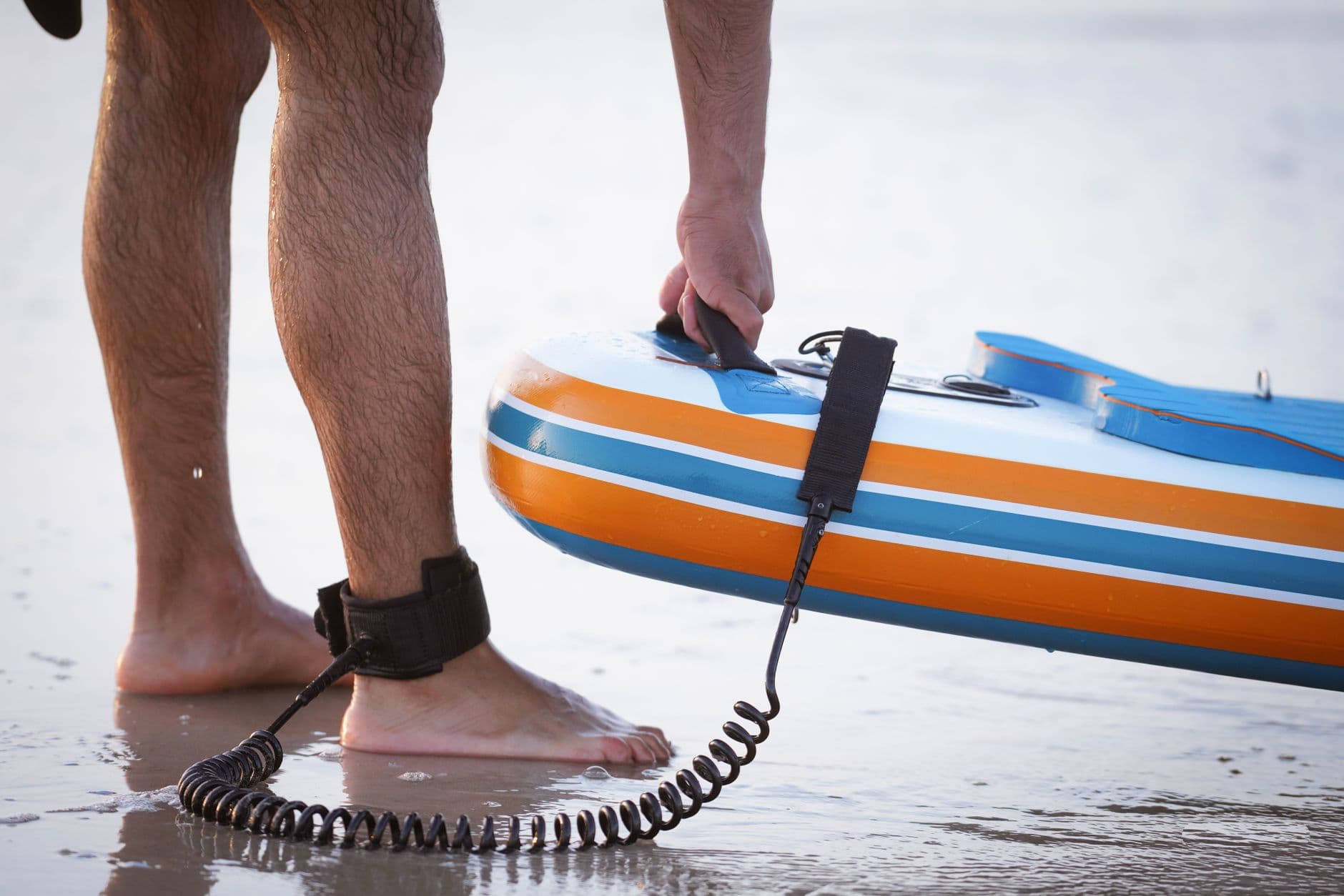
Best SUP Leash
The Best Paddle Board Leashes
The water decides the leash: coiled for flat, straight for surf, quick-release for anything moving. Six picks, and the river rule that makes the choice a safety one.
Top pick
Dakine SUP Coiled Ankle Leash, 10 ft x 3/16 in
Flat water, and the default if you buy one leash
#ad · how this is funded · price as of October 9, 2026
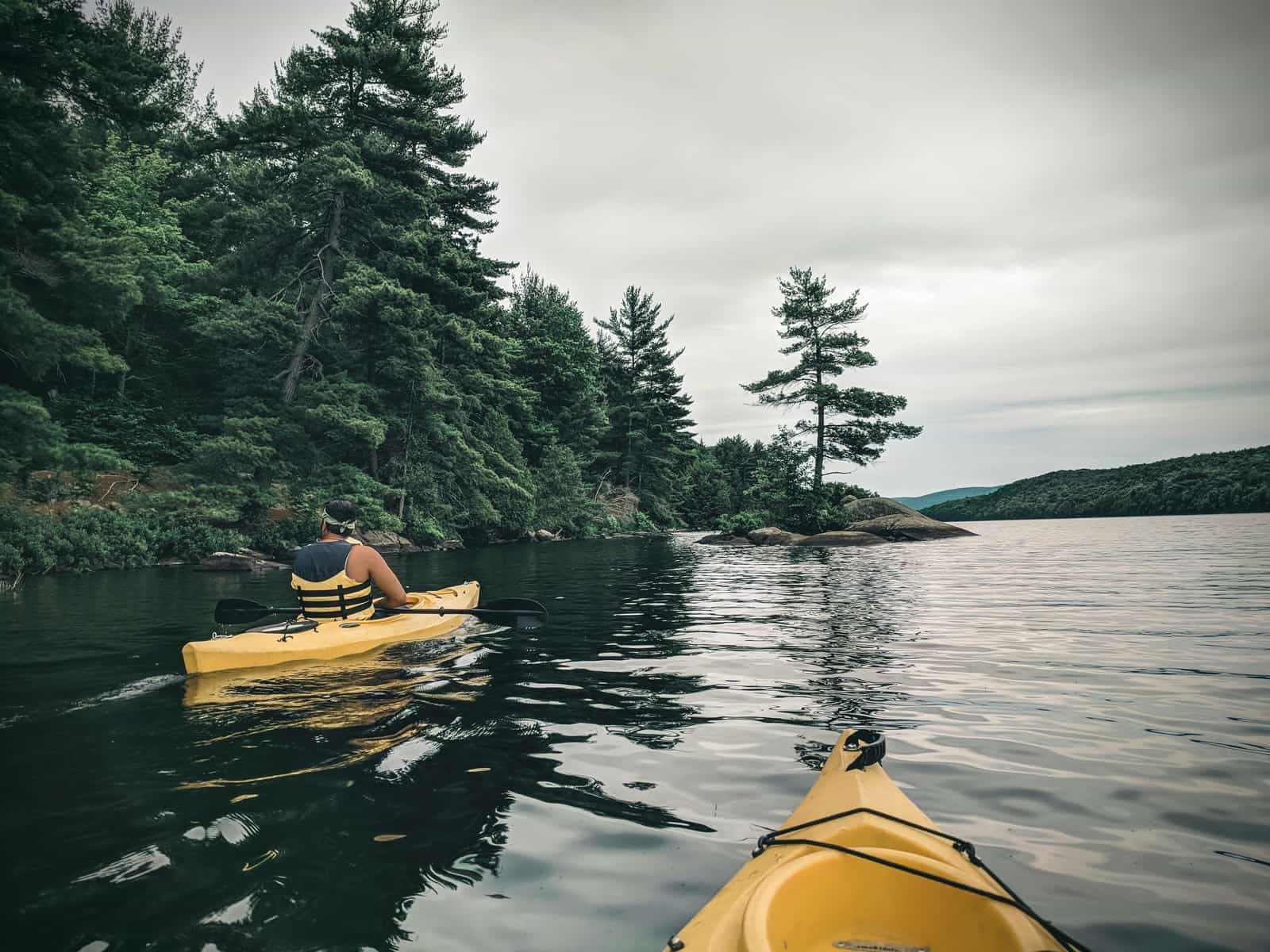
Best Seat Upgrade
The Best Kayak Seat Upgrades
The seat is the weakest part of a budget kayak and the cheapest to fix. Which kind fits your hull, what back height actually helps, and five honest picks.
Top pick
BKC UH-PS223 Memory Foam Kayak Seat
A tall back on a sit-on-top, for the least money
#ad · how this is funded · price as of October 9, 2026

The First Trip Checklist
A deliberately short packing list for a first outing, plus the two-minute check before you launch.
Top pick
Onyx MoveVent Dynamic Paddle Vest
The PFD you will actually keep on
#ad · how this is funded · price as of October 9, 2026
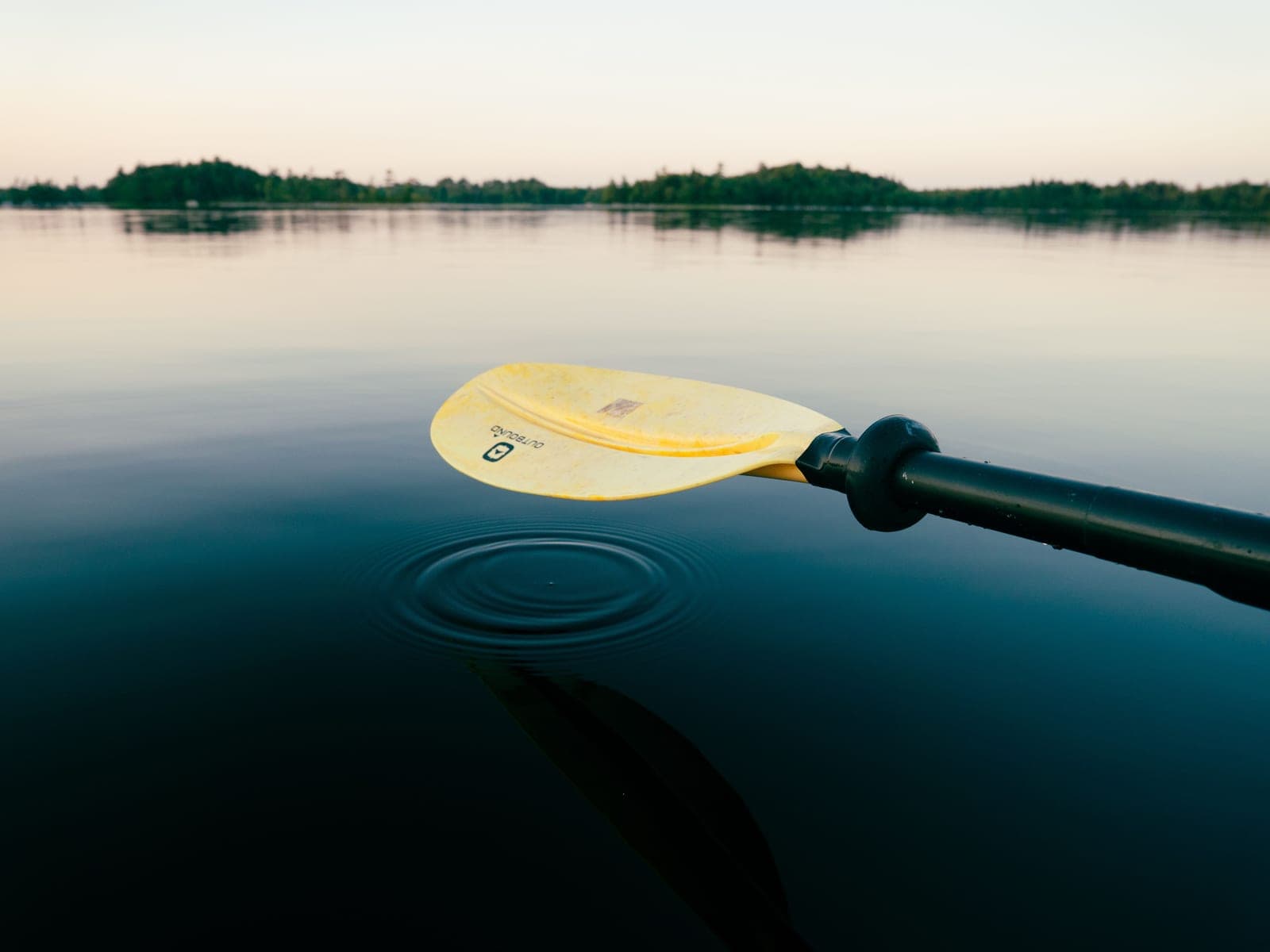
Best First Paddle
The Best Kayak Paddles for Beginners
Paddles at each common length, chosen by the size you actually need rather than by price bracket.
Top pick
Bending Branches Whisper Kayak Paddle, 230 cm
The first paddle worth keeping
#ad · how this is funded · price as of October 9, 2026