Kayaks
The Best Sit-On-Top Kayaks (November 2026)
An open deck is not a cheaper kind of kayak. It is a different answer to one specific question -- what happens when you end up in the water -- and these are the hulls that answer it best.
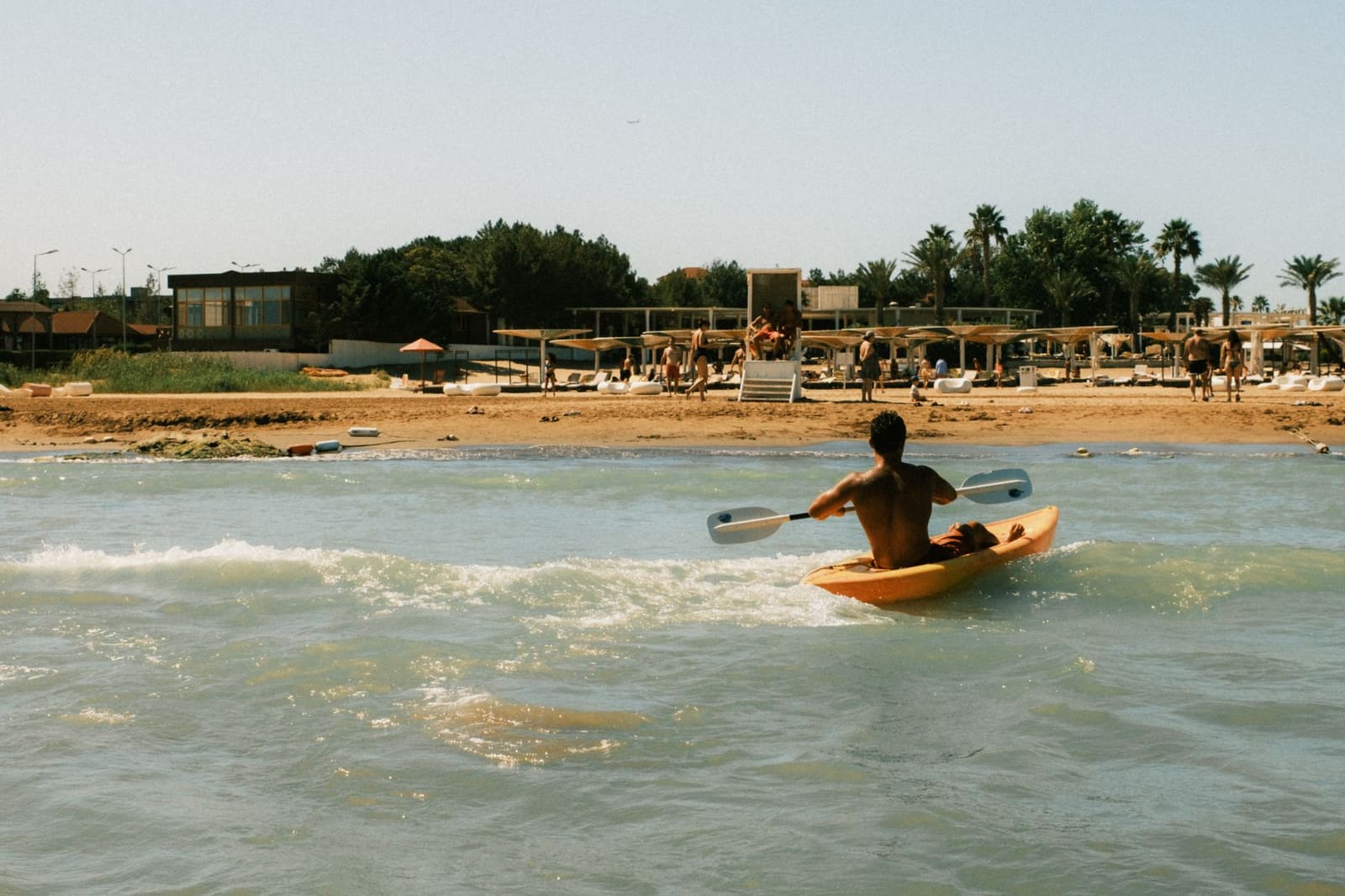
We have not paddled these, and we are not going to pretend we have. Here is what we did instead. Links to Amazon earn us a commission at no extra cost to you, and commission never decides a pick — how this site is funded.
| # | Product | Best for | The spec it turns on | Price |
|---|---|---|---|---|
| 1 | 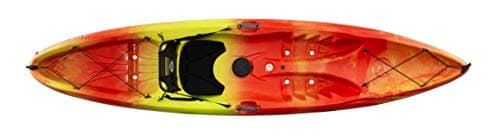 Perception Tribe 11.5 Sit-on-Top KayakTop pickThe combination almost nothing else manages: 350 lb of rating, a 30 in beam and enough waterline to hold a line, in a hull a first-timer can climb back onto from the water. | The all-round first sit-on-top | 137 in long, 30.25 in beam, 52 lb hull, 350 lb rated capacity | |
| 2 | 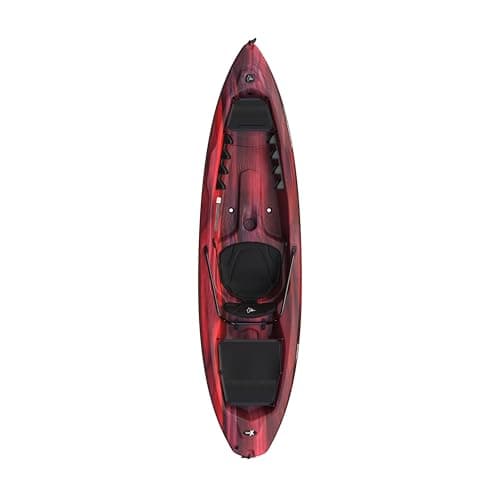 Pelican Seek 100X Sit-on-Top Kayak, 10 ftNine pounds lighter and seventeen inches shorter than the Tribe, for eight pounds less usable capacity. That trade is the whole reason to pick this one. | A sit-on-top that still fits a small car | 120 in long, 30 in beam, 43.1 lb hull, 300 lb rated capacity | |
| 3 | 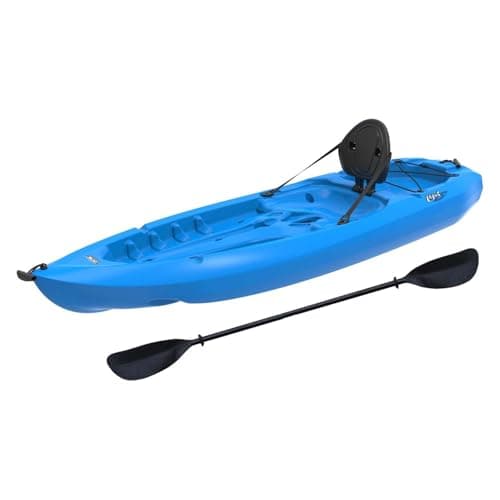 Lifetime Lotus Sit-on-Top Kayak, 8 ft (paddle included)Eight feet, thirty inches wide, a paddle in the box. It is not a good boat and it is an honest one -- this is a pond and a cabin dock, not a lake crossing. | The cheapest complete way onto flat water | 96 in long, 30 in beam, 39 lb hull, 250 lb rated capacity, paddle included | |
| 4 | 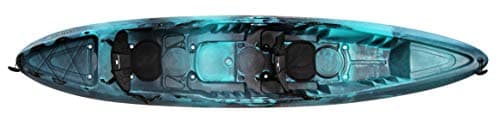 Perception Rambler 13.5 Tandem Sit-on-Top Kayak550 lb rated is the highest here, and it is the only figure on this page that genuinely covers two adults and a passenger once the 65 percent rule is applied. | Two adults plus a child or a dog | 162 in long, 34 in beam, 78 lb hull, 550 lb rated capacity | |
| 5 | 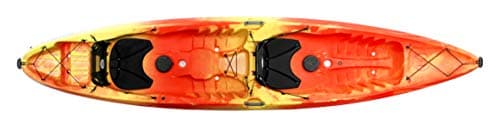 Perception Tribe 13.5 Tandem Sit-on-Top KayakThe center seat position is the reason to pay attention: it is the difference between a tandem that sits in the garage on the days your partner is busy and one that does not. | A tandem that also works solo | 162 in long, 34 in beam, 79 lb hull, 500 lb rated capacity | |
| 6 | 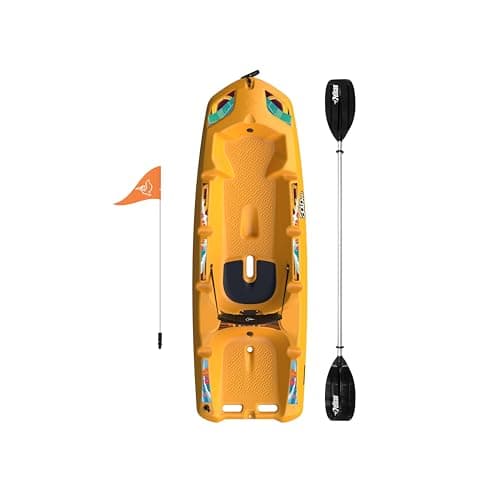 Pelican Solo EVO DLX Kids Sit-on-Top Kayak (paddle included)The same six feet as every kids' boat, with a twin-tunnel hull underneath so it leans and recovers instead of simply tipping, and a stern platform a child can climb back onto unaided. | A child's boat with a real hull under it | 72 in long, 24.5 in beam, 20.8 lb hull, paddle and seat cushion included | Check price#ad |
This site has a page comparing sit-on-top against sit-inside and a page explaining what each hull shape does. What it has not had until now is the obvious next page: if you have already decided on an open deck, which open deck? That is this one, and it ranks every sit-on-top we cover against the other sit-on-tops rather than against a cockpit boat.
The form factor is worth stating plainly before any ranking, because the marketing around it is vague. A sit-on-top is a sealed hull with a moulded depression on the deck that you sit in rather than inside. Water that lands on the deck leaves through holes called scuppers. You are never enclosed, you cannot be trapped, and if you come off you can climb back on from the water without any technique you have to be taught. That last sentence is the whole reason the category exists.
How we judged these
- **Rated capacity first, then the 65 percent rule.** A sit-on-top sits the paddler higher than a cockpit boat, so load matters more here, not less. Every pick is stated with its usable load so you can check it against your own weight before you look at anything else.
- **Beam second.** Width is what buys the standing-still stability a nervous first-timer actually notices. All six of these are 24.5 to 34 in, and the difference between the narrow end and the wide end of that range is enormous in the first hour.
- **Hull weight third.** A sit-on-top is a sealed double hull, so it weighs more than a cockpit boat of the same length. The lightest adult boat here is 39 lb and the heaviest is 79 lb, and that figure decides how often the boat gets used.
- **Then length, which decides where it is happy.** Eight feet turns on the spot and wanders in wind. Thirteen and a half feet holds a line and will not turn in a creek.
- **No pick is here on price alone.** Where a cheaper boat is the right answer the page says so, and where a cheap boat's capacity rules out most adults the page says that too.
The remount argument, which is the whole category
Here is the thing nobody tells a first-time buyer. Getting back into a sit-inside kayak in deep water is a learned skill. It needs a paddle float or a second boat, it needs practice, and the first time you try it cold and surprised in open water you will probably fail. Getting back onto a sit-on-top needs you to kick, pull your chest across the deck, and roll over. People who have never paddled manage it on the first attempt.
That asymmetry is worth more than any specification on this page. If you paddle alone, if you paddle in summer, if you have any doubt about your swimming, or if you simply want the option of sliding off to cool down, the open deck is the correct form factor and the rest of this page is about which one.
The cost of it is warmth and dryness. Scuppers drain the deck by letting a little water in and out, which means your legs and backside are wet. On an 85 degree afternoon that is the feature. On a 55 degree morning in October it is the reason the other form factor exists, and our sit-inside roundup covers that case properly.
The six, side by side
| Boat | Length | Beam | Hull weight | Rated | Usable at 65% |
|---|---|---|---|---|---|
| Perception Tribe 11.5 | 11 ft 5 in | 30.25 in | 52 lb | 350 lb | 228 lb |
| Pelican Seek 100X | 10 ft | 30 in | 43.1 lb | 300 lb | 195 lb |
| Lifetime Lotus | 8 ft | 30 in | 39 lb | 250 lb | 163 lb |
| Perception Rambler 13.5 | 13 ft 6 in | 34 in | 78 lb | 550 lb | 358 lb |
| Perception Tribe 13.5 | 13 ft 6 in | 34 in | 79 lb | 500 lb | 325 lb |
| Pelican Solo EVO DLX (child) | 6 ft | 24.5 in | 20.8 lb | Not published | -- |
Two things fall out of that table that no marketing copy will tell you. The first is that the usable-load column, not the rated column, is what rules boats in and out: the Lotus is rated 250 lb, which sounds like plenty until the 65 percent rule turns it into 163 lb of paddler, gear and clothing. The second is that the two 13 ft 6 in tandems weigh roughly twice what the solo boats weigh, and a 78 lb hull is a two-person lift whatever the brochure photograph shows.
Check the capacity against yourself first
| Rated capacity | Usable (60-70%) | Usable at 65% | Left for the paddler |
|---|---|---|---|
| 250 lb | 150-175 lb | 163 lb | 143 lb |
| 275 lb | 165-193 lb | 179 lb | 159 lb |
| 300 lb | 180-210 lb | 195 lb | 175 lb |
| 325 lb | 195-227 lb | 211 lb | 191 lb |
| 350 lb | 210-245 lb | 228 lb | 208 lb |
| 400 lb | 240-280 lb | 260 lb | 240 lb |
| 450 lb | 270-315 lb | 293 lb | 273 lb |
| 500 lb | 300-350 lb | 325 lb | 305 lb |
Scuppers: the detail that confuses everyone
Every sit-on-top here has holes through the deck. New owners find them, assume the boat is faulty, and look for plugs. They are not a defect. They are what stops a wave or a rainstorm from leaving three inches of water sloshing around your feet with nowhere to go.
What they also do, with a light paddler aboard, is let a little water up through the deck and sit in the footwell. That is harmless and it is the reason scupper plugs exist and the reason the honest answer on plugs is 'sometimes'. Plug them on a cold day with a light load, pull them in warm water or anywhere a wave might land on the deck.
Where each of these actually belongs
Length is the specification that decides the water, and it is worth matching before you look at price. Eight feet is a pond and a slow creek boat: it turns inside its own length and it will blow sideways in any real wind. Ten to eleven and a half feet is the useful range for a mixed first season, holding a line well enough on a lake and still turning in a river bend. Thirteen and a half feet tracks beautifully across open water and is genuinely awkward in anything tight.
If your water is a lake, read our lake roundup alongside this one, because there the length argument beats the width argument. If it is a slow river, the river page explains why the shorter end of this table wins. If it is salt water, the ocean page is the one to read first, and it will mostly talk you out of it for a first season.
The tandem question, answered honestly
Two of the six here are 13 ft 6 in tandems, and they are the only boats on this page whose usable load genuinely covers two adults: 358 lb for the Rambler and 325 lb for the Tribe 13.5. Nothing else here is close, and a solo boat rated 350 lb is not a two-person boat no matter how the second person sits.
The catch is 78 lb of hull and 13 ft 6 in of length, which together decide whether the boat leaves the garage. We have a whole page on whether a tandem or two singles is the better buy, and the short version is that a tandem is right when the two paddlers want to be together and wrong when either of them might want to go out alone.
What you still have to buy
None of these is a complete setup, and two of them are closer than the rest. The Lotus and the Solo EVO DLX are published as including a paddle; the other four are a hull only. Either way the list is the same: a paddle you chose rather than inherited, a life jacket you will actually keep on, straps rated for the job if the boat rides on a car, and a cart if the walk from the parking lot is long. Our first setup costs page puts real numbers on all of it.
One upgrade is worth naming here specifically, because it is particular to this form factor. A sit-on-top seat is a moulded depression with a thin pad, and after two hours it is the part of the boat you will complain about. A proper sit-on-top seat with a tall back is the single change that most extends how long you stay out.
What you can ignore while you shop
- **Rod holder count.** Moulded holders are cheap to add and cheap to retrofit. If you want to fish, the fishing roundup explains why capacity and beam decide that purchase and the badge does not.
- **Hull color and graphics.** Entirely cosmetic, and bright is marginally safer because it is easier to see.
- **Claimed speed.** Nothing on this page is fast. Length sets the ceiling and none of these hulls is a touring shape.
- **Number of moulded cup holders, bungee runs and gear tracks.** Useful, never a reason to pick one hull over another, and all retrofittable.
- **'Beginner-friendly' as a phrase.** It means nothing. Beam and rated capacity mean something, and they are both printed on the listing.
Boats we left off, and why
Pedal-drive sit-on-tops are the obvious absence. They are genuinely good boats and they are wrong for this site: they start at several times the price of everything here, they weigh 90 lb and up, and they are bought by people on their third boat rather than their first. Fishing-specific angler hulls are mostly the same story with a badge on. And we have left off the very cheap big-box sit-on-tops that publish no capacity figure at all, because a rating you cannot read is a rating we cannot check.
Questions people actually ask
What is the best sit-on-top kayak for beginners?
Do you get wet in a sit-on-top kayak?
Are sit-on-top kayaks more stable than sit-in kayaks?
What size sit-on-top kayak do I need?
Do I need scupper plugs for a sit-on-top kayak?
How much does a sit-on-top kayak weigh?
Can two adults use a solo sit-on-top kayak?
Is a sit-on-top kayak good in the ocean?
Where these numbers came from
Every figure on this page traces to one of these. Where a number could not be sourced, the page says so rather than estimating it.
- Eddyline Kayaks — Maximum weight capacity versus ideal capacity for various styles of kayaks (manufacturer, states the 60-70% ideal-capacity band)
- U.S. Coast Guard — Life Jacket Wear / Wearing Your Life Jacket (federal carriage and under-13 wear requirements)
- Perception Tribe 11.5 Sit-on-Top Kayak — manufacturer specification as published on the Amazon listing, read 2026-09-02
- Pelican Seek 100X Sit-on-Top Kayak — manufacturer specification as published on the Amazon listing, read 2026-09-02
- Lifetime Lotus Sit-on-Top Kayak — manufacturer specification as published on the Amazon listing, read 2026-09-02
- Perception Rambler 13.5 Tandem Sit-on-Top Kayak — manufacturer specification as published on the Amazon listing, read 2026-09-02
- Perception Tribe 13.5 Tandem Sit-on-Top Kayak — manufacturer specification as published on the Amazon listing, read 2026-09-02
- Pelican Solo EVO DLX Kids Sit-on-Top Kayak — manufacturer specification as published on the Amazon listing, read 2026-09-02
Read next

Sit-On-Top vs Sit-In Kayak
Water temperature and remounting decide this, not preference. The honest comparison, with picks for each.
Top pick
Perception Tribe 11.5 Sit-on-Top Kayak
The all-round first sit-on-top
#ad · how this is funded · price as of November 25, 2026
Best Sit-Inside
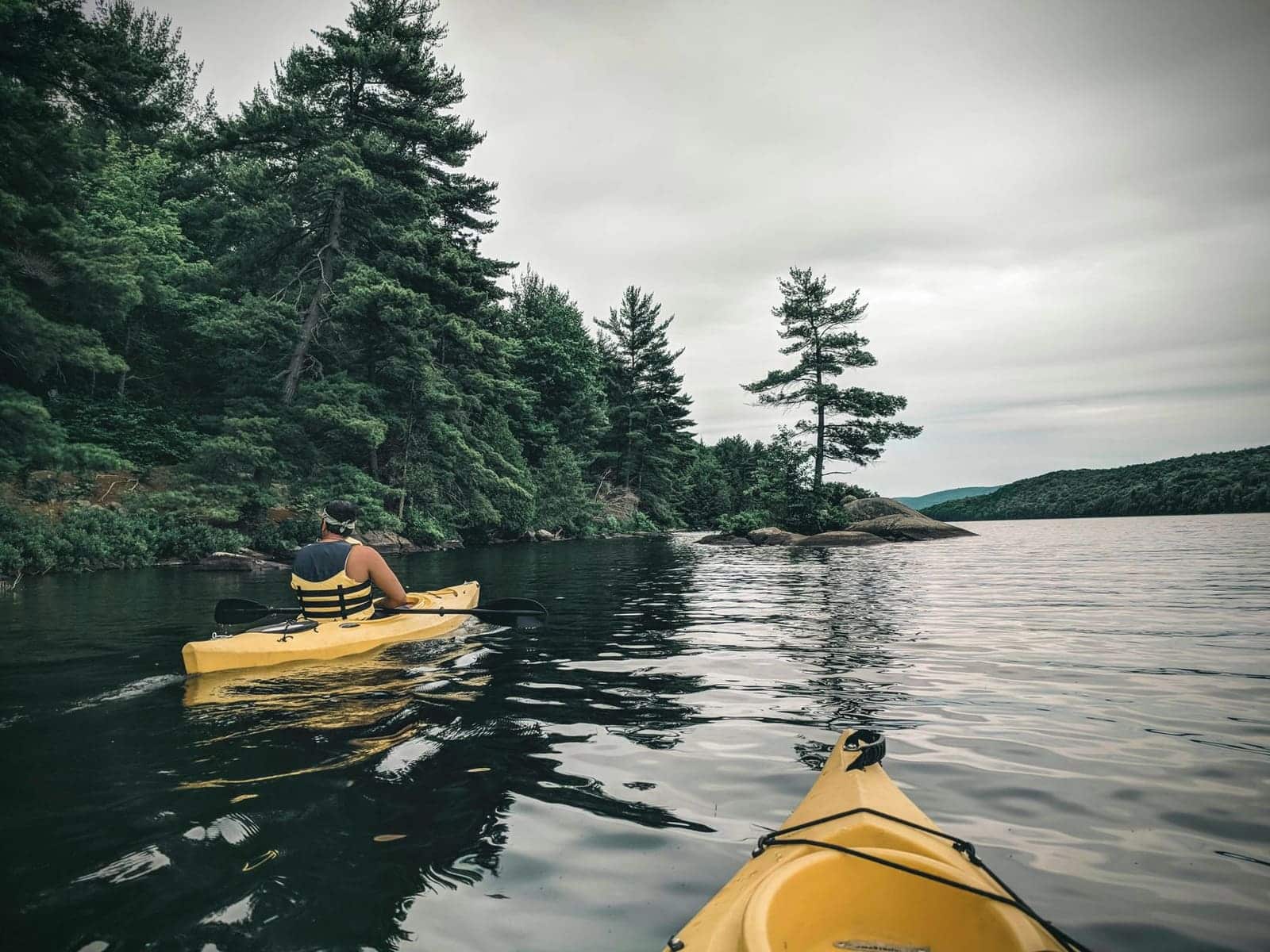
The Best Sit-In Kayaks (November 2026)
Every sit-inside we cover, ranked on beam, hull weight and rated capacity. What a cockpit is actually for, and which boat suits which paddler and season.
Top pick
Pelican Argo 100X Sit-In Kayak, 10 ft
The lightest sit-inside to carry alone
#ad · how this is funded · price as of November 25, 2026
Kayak Hull Types: What Each Shape Does on the Water
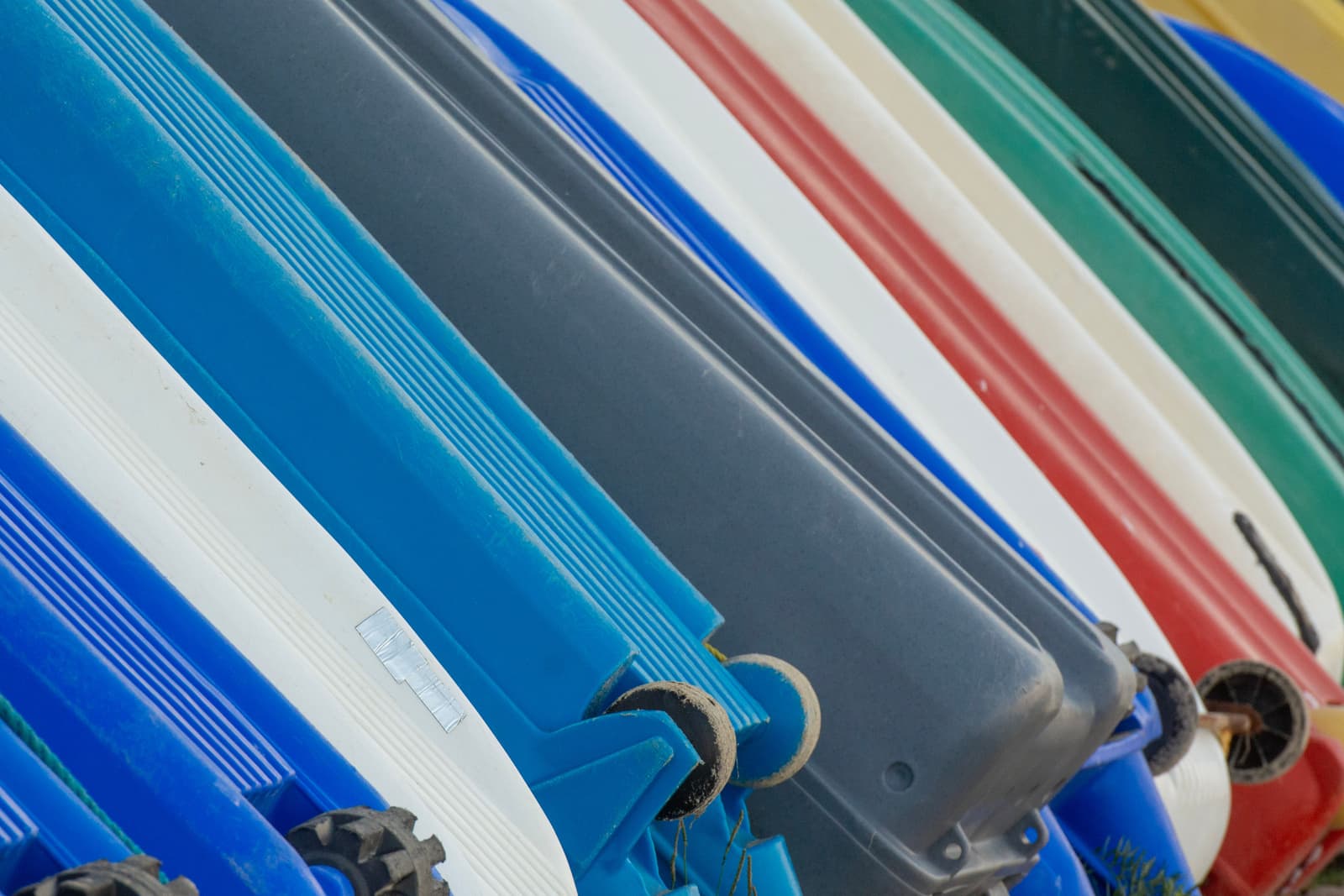
Flat, shallow-V, rounded and pontoon hulls — what each shape actually does, and which one belongs under a beginner.
Top pick
Perception Tribe 11.5 Sit-on-Top Kayak
The all-round first sit-on-top
#ad · how this is funded · price as of November 25, 2026
Best First Kayak
The Best Kayaks for Beginners
Beginner kayaks ranked on width, carry weight and usable capacity — with the 65 percent arithmetic run on every one.
Top pick
Perception Tribe 11.5 Sit-on-Top Kayak
The all-round first sit-on-top
#ad · how this is funded · price as of November 25, 2026
Do You Need Scupper Plugs?
Plugs keep you dry in flat water and must come out in chop. The hole measurement that decides which set to buy, and four sets by size.
Top pick
CANALHOUT Kayak Scupper Plugs Kit, 8 Pieces, fits 0.75 to 1.25 in
Small scupper holes, which most recreational hulls have
#ad · how this is funded · price as of November 25, 2026
Tandem Kayak or Two Single Kayaks?
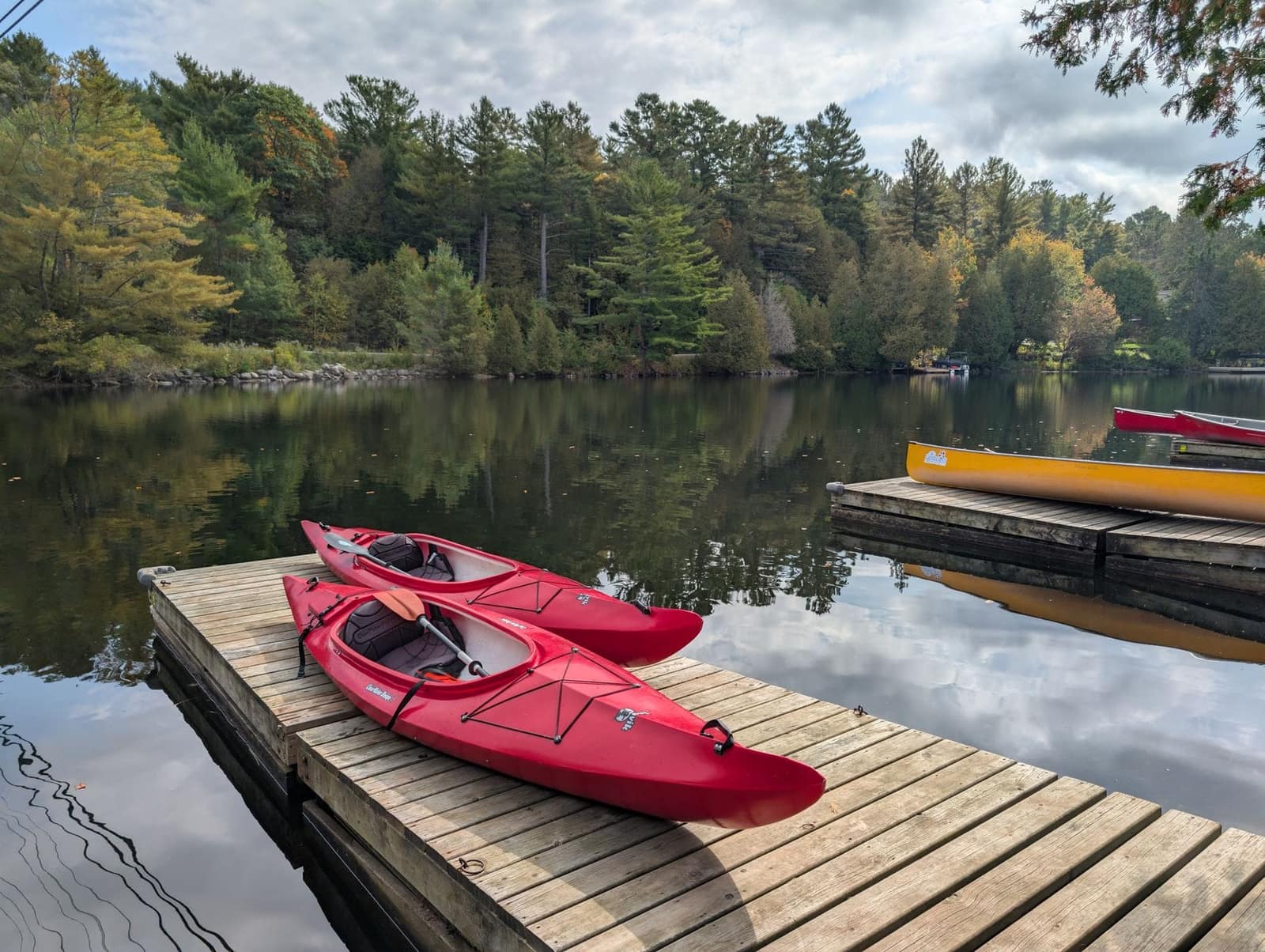
One boat or two? Decided on carry weight, storage length and whether you will ever paddle alone — with the capacity arithmetic that tandem listings leave out.
Top pick
Perception Rambler 13.5 Tandem Sit-on-Top Kayak
Two adults plus a child or a dog
#ad · how this is funded · price as of November 25, 2026