Kayaks
Tandem Kayak or Two Single Kayaks?
A tandem is one hull to buy, store and load, which sounds like the efficient answer. Then you try to move seventy-eight pounds on your own, and the arithmetic changes.
We have not paddled these, and we are not going to pretend we have. Here is what we did instead. Links to Amazon earn us a commission at no extra cost to you, and commission never decides a pick — how this site is funded.
| # | Product | Best for | The spec it turns on | Price |
|---|---|---|---|---|
| 1 | 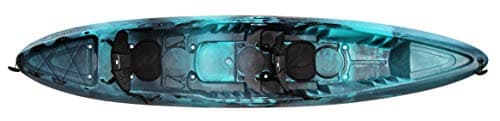 Perception Rambler 13.5 Tandem Sit-on-Top KayakTop pick550 lb rated is the highest here, and it is the only figure on this page that genuinely covers two adults and a passenger once the 65 percent rule is applied. | Two adults plus a child or a dog | 162 in long, 34 in beam, 78 lb hull, 550 lb rated capacity | |
| 2 | 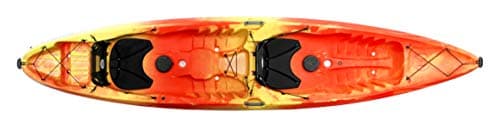 Perception Tribe 13.5 Tandem Sit-on-Top KayakThe center seat position is the reason to pay attention: it is the difference between a tandem that sits in the garage on the days your partner is busy and one that does not. | A tandem that also works solo | 162 in long, 34 in beam, 79 lb hull, 500 lb rated capacity | |
| 3 | 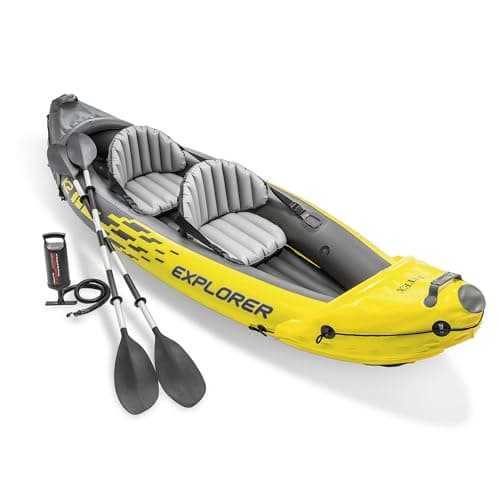 Intex Explorer K2 Inflatable Kayak, 2-person (oars and pump included)Bought as a tandem it disappoints; bought as a very roomy solo boat with 400 lb of rating and no rack requirement, it is the most useful inflatable here. | Two people, no roof rack, small budget | 123 in long, 36 in beam, 35 lb packed, 400 lb rated capacity, two oars and a pump included | |
| 4 | 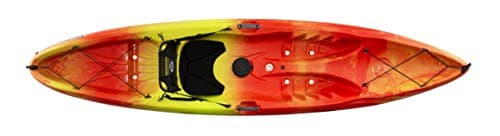 Perception Tribe 11.5 Sit-on-Top KayakThe combination almost nothing else manages: 350 lb of rating, a 30 in beam and enough waterline to hold a line, in a hull a first-timer can climb back onto from the water. | The all-round first sit-on-top | 137 in long, 30.25 in beam, 52 lb hull, 350 lb rated capacity | |
| 5 | 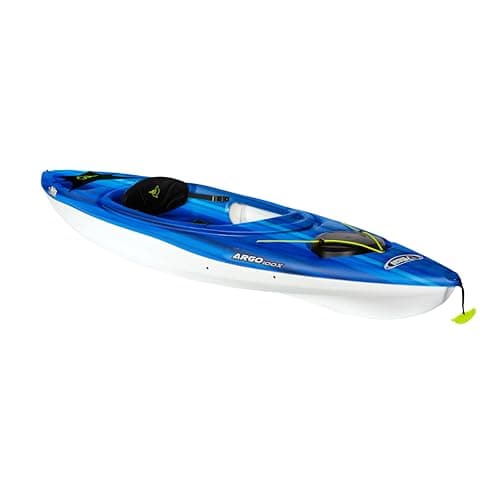 Pelican Argo 100X Sit-In Kayak, 10 ftThirty-six pounds is the number that matters here: it is the only 10-footer on this page one average adult can get off a car roof without a second person or a bad decision. | The lightest sit-inside to carry alone | 120 in long, 28 in beam, 36 lb hull, 275 lb rated capacity |
This is the decision behind half the kayak shopping that couples and families do, and it usually gets made on price and storage space alone. Those are the two least reliable inputs. The things that actually determine whether a tandem was the right call are how heavy it is, whether you will ever want to paddle without the other person, and whether you paddle at the same speed.
The case for one tandem
- **One hull to buy, store, insure and maintain.** Half the objects, half the clutter, one thing to rinse.
- **A stronger paddler can carry a weaker one.** This is the real reason tandems work for couples with mismatched fitness, and for a parent with a child who tires. Nobody gets stranded.
- **Higher total capacity than either single.** The Perception Rambler 13.5 is rated 550 lb, which is about 358 lb of usable load — more than any solo hull on this site.
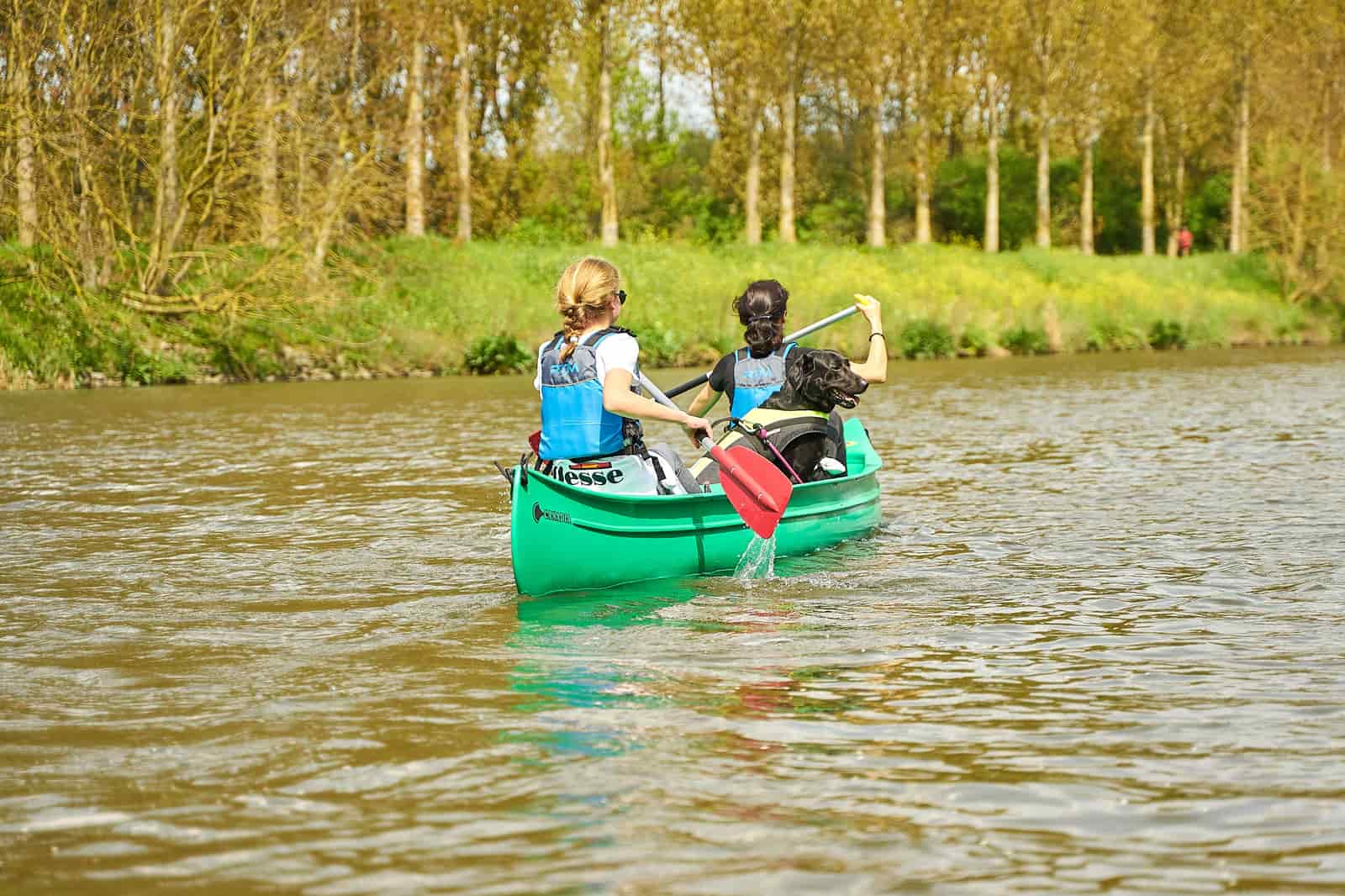
- **A third seat, sometimes.** The Rambler and its sibling the Tribe 13.5 both have a molded center position for a child or a dog. Two singles cannot do that at all.
- **Conversation.** Not a specification, and the most common reason people say they are glad they chose one.
The case for two singles
- **Either of you can go alone.** This is the big one, and it is the complaint we hear most from tandem owners. A tandem needs a partner who is free, willing and awake.
- **Each paddles at their own pace.** In a tandem, the pace is a negotiation on every stroke, and the steering is one person's job whether they wanted it or not.
- **Half the weight per lift.** A 52 lb single is a one-person carry. A 78 lb tandem is not, and never becomes one.
- **Shorter hulls store more easily.** Two 10 ft boats fit places one 13 ft 6 in boat does not, including most single garages and nearly every apartment situation.
- **A failure of one boat is not the end of the trip.** Two hulls is redundancy.
The number that usually decides it
Hull weight. A real rotomolded tandem is 78 to 79 lb, and unlike a difficult paddle stroke it does not get easier with practice. It is a two-person carry from the garage to the car, onto the roof, off the roof and down to the water, in both directions, forever.
That single fact changes the rhythm of ownership more than anything else on this page. Solo boats get used on impulse, because one person can decide to go. A heavy tandem gets used when a trip is arranged. Households that paddle every weekend together barely notice; households where one person is the enthusiast notice immediately.
| Setup | Hull weight | Length to store | Rated capacity |
|---|---|---|---|
| Perception Rambler 13.5 (tandem) | 78 lb | 13 ft 6 in | 550 lb |
| Perception Tribe 13.5 (tandem) | 79 lb | 13 ft 6 in | 500 lb |
| Intex Explorer K2 (inflatable tandem) | 35 lb packed | A bag | 400 lb |
| Two × Perception Tribe 11.5 | 52 lb each | 11 ft 5 in × 2 | 350 lb each |
| Two × Pelican Argo 100X | 36 lb each | 10 ft × 2 | 275 lb each |
Top pick — Two adults plus a child or a dog
Perception Rambler 13.5 Tandem Sit-on-Top Kayak
550 lb rated is the highest here, and it is the only figure on this page that genuinely covers two adults and a passenger once the 65 percent rule is applied.
What the listing publishes
162 in long, 34 in beam, 78 lb hull, 550 lb rated capacity
Usable at the 65 percent rule: 358 lb (range 330–385 lb), which leaves about 338 lb of paddler after a 20 lb day kit. Why 65 percent.
550 lb rated is about 358 lb usable at 65 percent. Two 150 lb adults plus gear fits with room; two 200 lb adults plus gear does not, and no tandem's marketing copy will tell you that.
78 lb is a two-person carry, permanently. That is not a criticism, it is a planning fact: a tandem needs two people to move it and two people to paddle it well.
34 in of beam across 13 ft 6 in is why a dog can stand up on the back of this without it becoming an incident.
What it does well
- 550 lb rated capacity, the only figure here with room for three bodies
- 34 in beam is stable enough for a dog or a fidgeting child
- 13 ft 6 in tracks properly, so two paddlers out of sync still make progress
What it costs you
- 78 lb is a two-person lift every single time
- Needs roof bars and a real plan -- this does not go inside a car
- A tandem paddled solo from the back seat is genuinely awkward
Skip this if you will mostly paddle alone. A tandem solo is unbalanced and unpleasant, and two cheap solo boats often cost less than one good tandem.
#ad · how this is funded · price as of October 8, 2026
Pick 2 — A tandem that also works solo
Perception Tribe 13.5 Tandem Sit-on-Top Kayak
The center seat position is the reason to pay attention: it is the difference between a tandem that sits in the garage on the days your partner is busy and one that does not.
What the listing publishes
162 in long, 34 in beam, 79 lb hull, 500 lb rated capacity
Usable at the 65 percent rule: 325 lb (range 300–350 lb), which leaves about 305 lb of paddler after a 20 lb day kit. Why 65 percent.
500 lb rated is about 325 lb usable at 65 percent -- 33 lb less than the Rambler, which is one small child's worth of difference at the top of the range.
A middle seat position lets one paddler sit near the hull's center of buoyancy instead of hanging off the stern. Solo, that turns an unbalanced boat into a merely large one.
79 lb and 13 ft 6 in carries the same two-person, roof-bars-required reality as any tandem.
What it does well
- Center seat position makes solo paddling actually workable
- 34 in beam and 13 ft 6 in of hull is a settled, predictable platform
- 500 lb rated covers two adults and a day kit comfortably
What it costs you
- 79 lb -- the heaviest hull on this site
- 50 lb less rated capacity than the Rambler
- Still a tandem: two people to carry, roof bars to buy
Skip this if you already know both seats will always be full. The Rambler's extra 50 lb of rating is worth more to you than a center seat you will never use.
#ad · how this is funded · price as of October 8, 2026
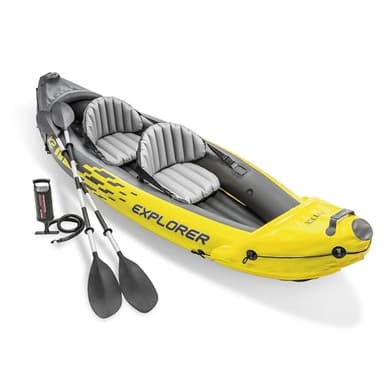
Pick 3 — Two people, no roof rack, small budget
Intex Explorer K2 Inflatable Kayak, 2-person (oars and pump included)
Bought as a tandem it disappoints; bought as a very roomy solo boat with 400 lb of rating and no rack requirement, it is the most useful inflatable here.
What the listing publishes
123 in long, 36 in beam, 35 lb packed, 400 lb rated capacity, two oars and a pump included
Usable at the 65 percent rule: 260 lb (range 240–280 lb), which leaves about 240 lb of paddler after a 20 lb day kit. Why 65 percent.
400 lb rated is about 260 lb usable at 65 percent. Two adults and gear will exceed that more often than not, which is why we recommend it as a spacious single rather than a genuine two-seater.
As a solo it is transformative: 260 lb of usable capacity against the Challenger K1's 143 lb, for nine extra pounds in the bag.
36 in of beam is wider than every hard-shell on this site. Inflatables are wide because air is what makes them stiff, and the side effect is a very forgiving platform.
What it does well
- 400 lb rated capacity -- 260 lb usable, which covers almost any solo adult with gear
- 36 in beam is the most stable platform on this site
- 35 lb in a bag: no rack, no straps, no garage
What it costs you
- Genuinely tight as a two-adult tandem once you apply the usable-capacity rule
- The included oars are oars, not proper kayak paddles -- budget to replace them
- Vinyl construction wallows in wind like every boat in this class
Skip this if you want a true two-adult tandem. Buy a hard-shell tandem with 500 lb or more of rating, or accept this as the roomiest solo inflatable in the price class.
#ad · how this is funded · price as of October 8, 2026
Pick 4 — The all-round first sit-on-top
Perception Tribe 11.5 Sit-on-Top Kayak
The combination almost nothing else manages: 350 lb of rating, a 30 in beam and enough waterline to hold a line, in a hull a first-timer can climb back onto from the water.
What the listing publishes
137 in long, 30.25 in beam, 52 lb hull, 350 lb rated capacity
Usable at the 65 percent rule: 228 lb (range 210–245 lb), which leaves about 208 lb of paddler after a 20 lb day kit. Why 65 percent.
350 lb rated is about 228 lb usable at 65 percent and 208 lb of paddler after a day kit -- the most headroom of any single boat here, and enough that a 200 lb adult is inside the comfortable band rather than at the edge of it.
Sit-on-top means the deck is open and self-draining. The reason that matters to a beginner is not comfort, it is that remounting from deep water is a maneuver you can actually perform, where a flooded sit-inside cockpit is not.
52 lb is the price. This is at the top of what one person carries any distance, and the reason a cart appears in our cost totals for this boat and not for the Argo.
What it does well
- 350 lb rated capacity gives real headroom for larger adults or a child up front
- Open self-draining deck is the forgiving choice for a first summer
- 137 in of hull tracks far better than the 9 and 10 ft boats here
What it costs you
- 52 lb is a two-person lift onto a roof for most people
- You will get wet. Sit-on-tops always do, and that is a season decision not a design flaw
- 11 ft 5 in needs more storage length than the 10 ft boats
Skip this if you paddle in cold water or a cold shoulder season. An open deck in 55-degree water is a different and less pleasant sport, and a sit-inside is the right answer there.
#ad · how this is funded · price as of October 8, 2026
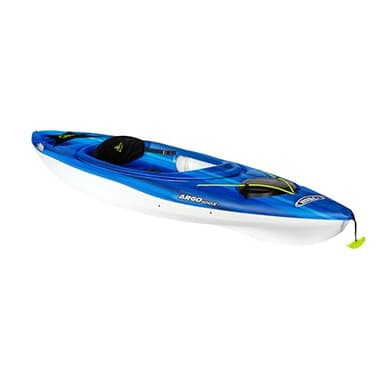
Pick 5 — The lightest sit-inside to carry alone
Pelican Argo 100X Sit-In Kayak, 10 ft
Thirty-six pounds is the number that matters here: it is the only 10-footer on this page one average adult can get off a car roof without a second person or a bad decision.
What the listing publishes
120 in long, 28 in beam, 36 lb hull, 275 lb rated capacity
Usable at the 65 percent rule: 179 lb (range 165–193 lb), which leaves about 159 lb of paddler after a 20 lb day kit. Why 65 percent.
A 275 lb rating sounds generous until you apply the 60 to 70 percent band Eddyline publishes for usable capacity. At 65 percent that is 179 lb of paddler, gear, clothing and PFD -- so a 160 lb paddler is comfortable and a 200 lb paddler is at the rating's edge before they pack anything.
The 28 in beam is the narrowest here, and narrow is the trade you make for a hull this light. It is stable enough for flat water and it will feel twitchier than a 30 in boat for the first hour.
Sit-inside means your legs are in a cockpit and out of the wind, which is why this is the shoulder-season pick rather than the July one.
What it does well
- 36 lb is genuinely one-person liftable, which decides how often the boat actually gets used
- Sit-inside cockpit keeps your legs dry and out of the wind on cool mornings
- 10 ft turns easily on a small lake and fits diagonally in most garages
What it costs you
- 28 in is the narrowest beam here and feels it on day one
- 275 lb rating is the lowest of the adult sit-insides on this page
- A cockpit is harder to get back into after a capsize than a sit-on-top deck
Skip this if you weigh over about 200 lb, or you expect to swim off the boat on hot days -- a sit-on-top is easier to remount and this hull's usable capacity runs out early.
#ad · how this is funded · price as of October 8, 2026
Capacity: the comparison tandem listings avoid
A tandem's rated capacity looks enormous next to a single's and the comparison is misleading, because the tandem number has to carry two people rather than one. Run both through the same arithmetic and the picture is different.
So for a heavier pair, two singles is not merely the more flexible choice — it is frequently the only choice that works on paper. That is the opposite of what the seat count suggests. Capacity-first picks for larger paddlers.
Cost, honestly
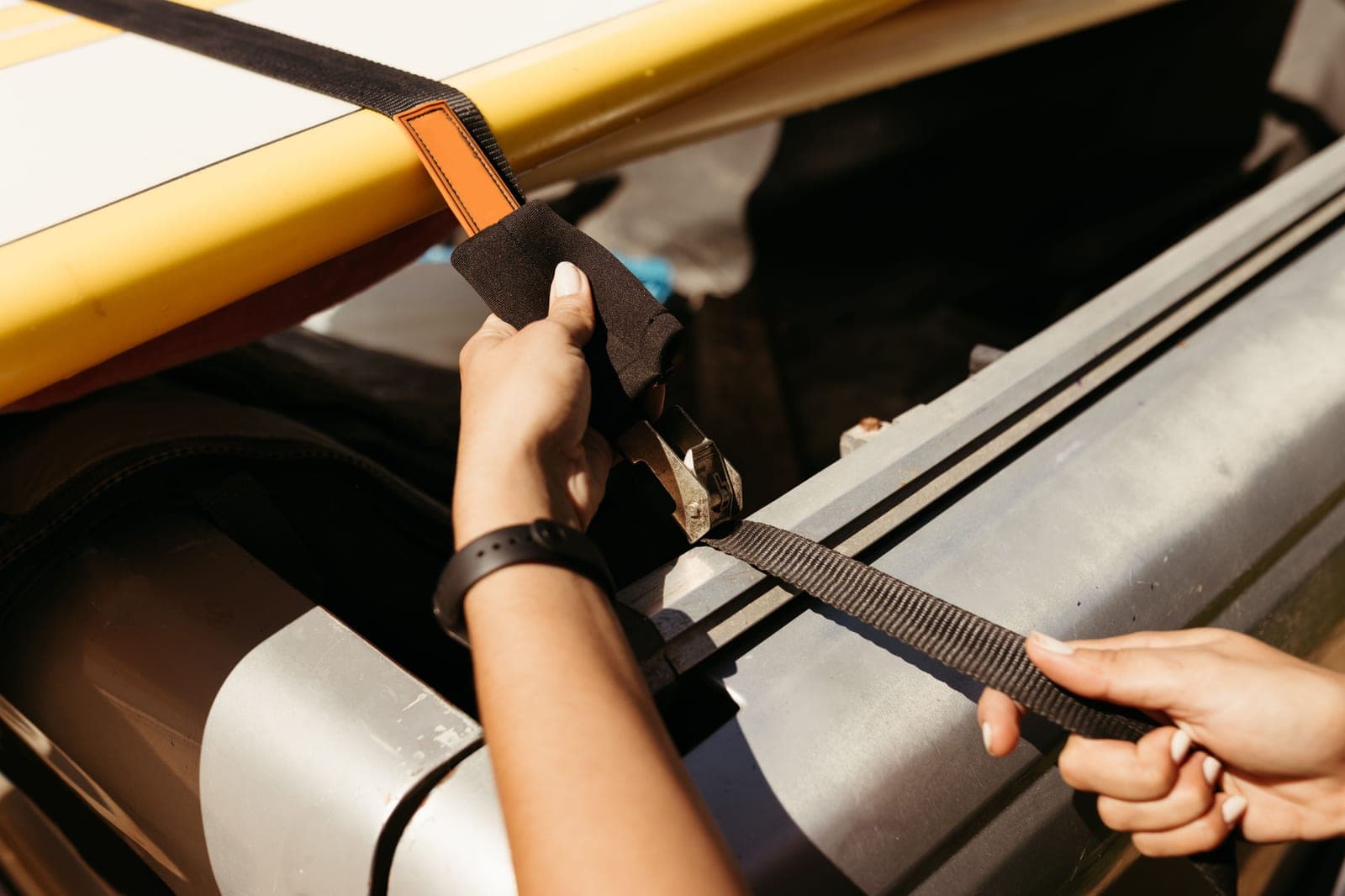
Two boats cost more than one boat, and that is where most people stop. Two things are usually left out. The first is the rack: a 13 ft 6 in tandem needs a proper crossbar spread and is a genuine two-person load, while two short singles can often go on a simpler setup or stack. The second is the paddles — two boats need two paddles, and a tandem needs two as well, so that column cancels out.
We do not print prices in our prose because they move; the live figure on each buy button is the current one. What is stable is the shape of the comparison: one good tandem sits near the price of two budget singles, and the question is whether two budget hulls or one better hull suits you. What a first setup really adds up to.
The inflatable middle path
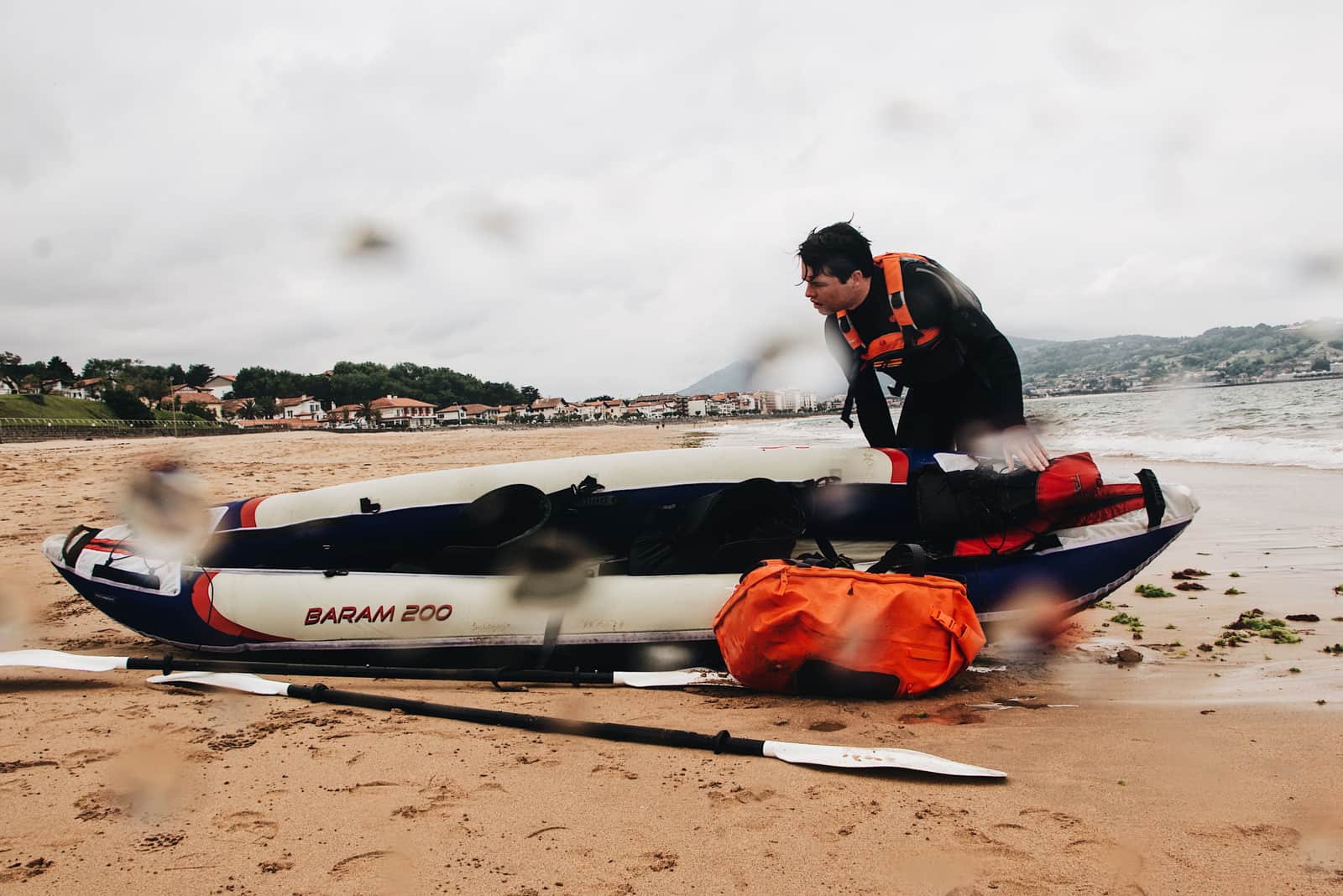
There is a third answer that resolves most of the objections above, and it is worth taking seriously rather than treating as a compromise. An inflatable tandem — the Intex Explorer K2 is the one we cover — is a two-seat boat that packs to 35 lb and needs no roof rack at all.
That removes the carry problem and the storage problem in one move, and because the seats are not molded in place, it also paddles acceptably solo in a way a rigid tandem does not. What you give up is the boat being ready the moment you arrive: budget fifteen to twenty minutes of pumping at each end of every trip. The full Intex comparison.
A short decision list
- **Will either of you ever want to paddle alone?** If yes, two singles, or an inflatable tandem. This question decides more purchases than all the others combined.
- **Who loads the car?** If the honest answer is one person, do not buy a 78 lb hull.
- **Measure your storage before you shop.** Thirteen feet six inches is a lot of object and it does not shrink.
- **Add both your weights plus gear, then compare to 65 percent of the rating.** If a heavier pair is over it, the decision is already made.
- **Ask whether you paddle at the same pace.** Mismatched pace is what a tandem fixes, and mismatched preference is what it ruins.
Questions people actually ask
Is a tandem kayak worth it?
Can one person paddle a tandem kayak?
Is it better to buy two kayaks or one tandem?
How much does a tandem kayak weigh?
Are tandem kayaks harder to paddle?
Why are tandem kayaks called divorce boats?
What size tandem kayak do I need?
Where these numbers came from
Every figure on this page traces to one of these. Where a number could not be sourced, the page says so rather than estimating it.
- Eddyline Kayaks — Maximum weight capacity versus ideal capacity for various styles of kayaks (manufacturer, states the 60-70% ideal-capacity band)
- Perception Rambler 13.5 Tandem Sit-on-Top Kayak — manufacturer specification as published on the Amazon listing, read 2026-09-20
- Perception Tribe 13.5 Tandem Sit-on-Top Kayak — manufacturer specification as published on the Amazon listing, read 2026-09-20
- Intex Explorer K2 Inflatable Kayak, 2-person — manufacturer specification as published on the Amazon listing, read 2026-09-20
Read next
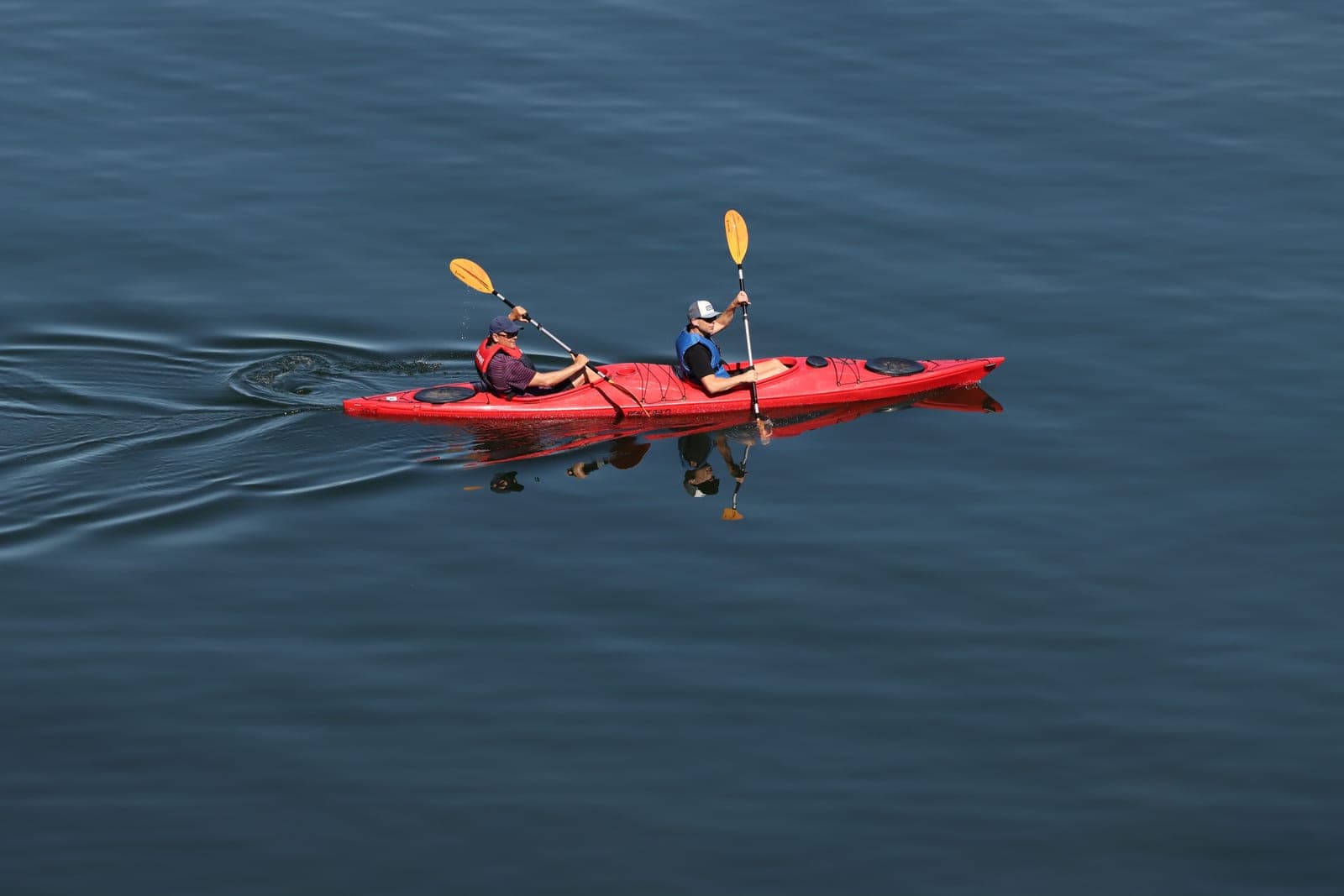
Best Tandem
The Best Tandem Kayaks
Tandem kayaks with the usable-capacity arithmetic done — a 500 lb tandem covers less than most buyers assume.
Top pick
Perception Rambler 13.5 Tandem Sit-on-Top Kayak
Two adults plus a child or a dog
#ad · how this is funded · price as of October 8, 2026
Perception Rambler 13.5: The Tandem That Actually Fits Three
550 lb rated — about 358 lb usable — is the only tandem figure here with room for two adults and a child or a dog. The 78 lb hull is a permanent two-person carry.
Top pick
Perception Rambler 13.5 Tandem Sit-on-Top Kayak
Two adults plus a child or a dog
#ad · how this is funded · price as of October 8, 2026
Kayak Weight Capacity, Explained
The 65 percent rule, where it comes from, what happens when you ignore it, and how to size around it.
Top pick
Perception Tribe 11.5 Sit-on-Top Kayak
The all-round first sit-on-top
#ad · how this is funded · price as of October 8, 2026
Getting Your Kayak to the Water
Four ways to move a kayak, including one that needs no roof bars and one that removes the problem entirely.
Top pick
Attwood Universal Rack-Free Car-Top Kayak Carrier Kit
A car with no roof bars at all
#ad · how this is funded · price as of October 8, 2026

What a First Setup Actually Costs
Every line item in a first setup, including the ones that surprise people — with live prices rather than stale numbers.
Top pick
Perception Tribe 11.5 Sit-on-Top Kayak
The all-round first sit-on-top
#ad · how this is funded · price as of October 8, 2026
Best with a Dog
The Best Kayaks for Dogs
Deck space, grip and capacity headroom — the three things a dog needs from a kayak, and the boats that have them.
Top pick
Perception Rambler 13.5 Tandem Sit-on-Top Kayak
Two adults plus a child or a dog
#ad · how this is funded · price as of October 8, 2026