Gear & Getting There
The Best Kayak Carts (November 2026)
A cart is not an accessory. It is the purchase that decides how often a 50 lb boat actually gets wet, because the walk from the parking lot is what people quietly give up on.
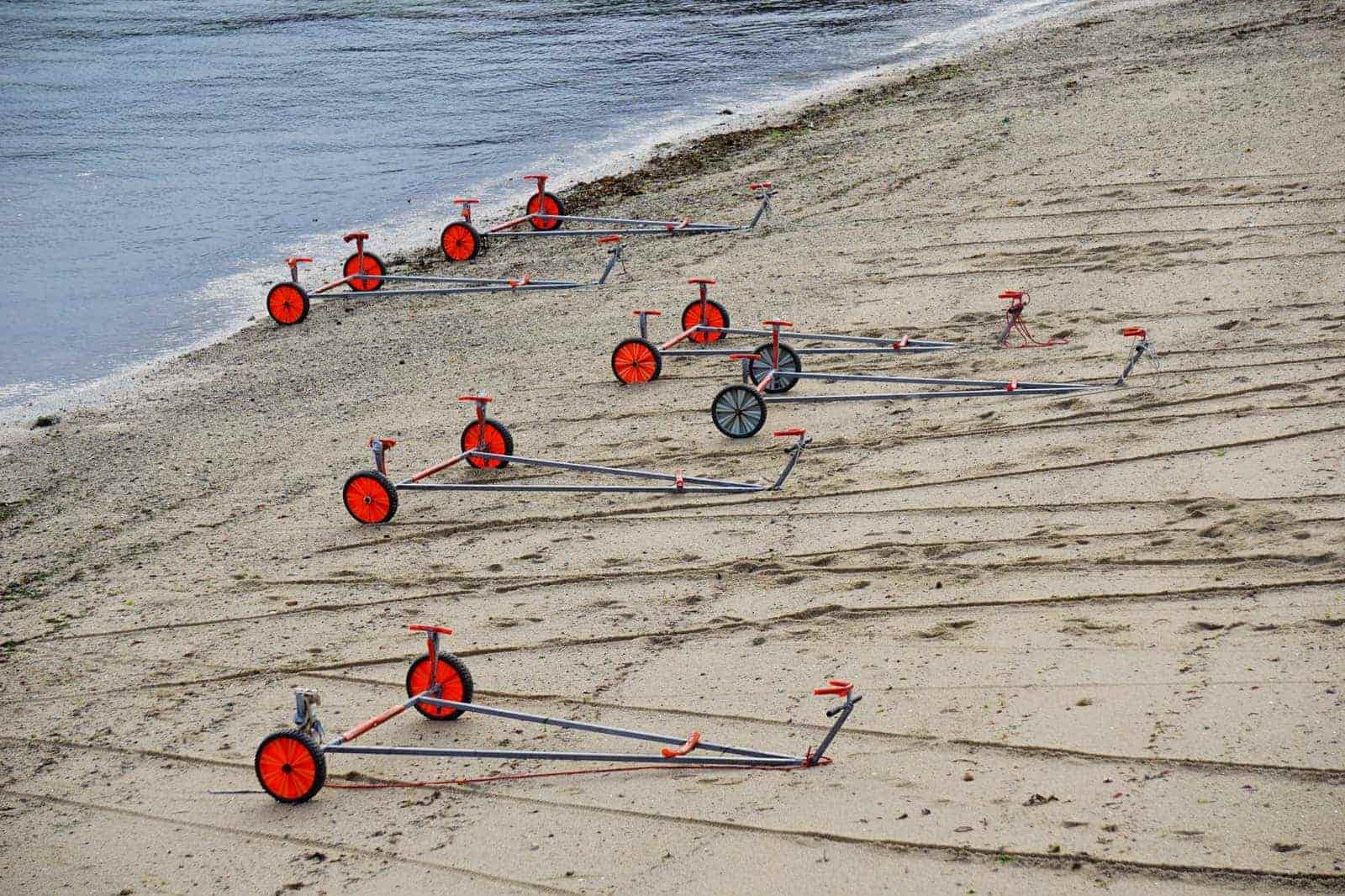
We have not paddled these, and we are not going to pretend we have. Here is what we did instead. Links to Amazon earn us a commission at no extra cost to you, and commission never decides a pick — how this site is funded.
| # | Product | Best for | The spec it turns on | Price |
|---|---|---|---|---|
| 1 | 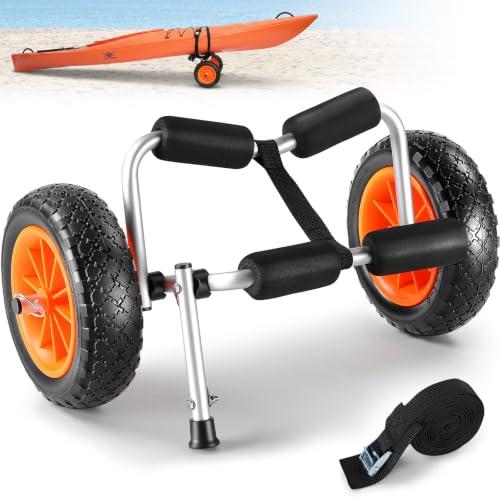 VEVOR Kayak Cart, foldable aluminum, 10 in solid tiresTop pickThe one cart here under fifty dollars that publishes both a load rating and a wheel size, which is the whole reason to pick it over the dozens that publish neither. | The cheapest cart that still publishes a capacity | 250 lb published load capacity, foldable aluminum frame, 10 in solid tires | |
| 2 | 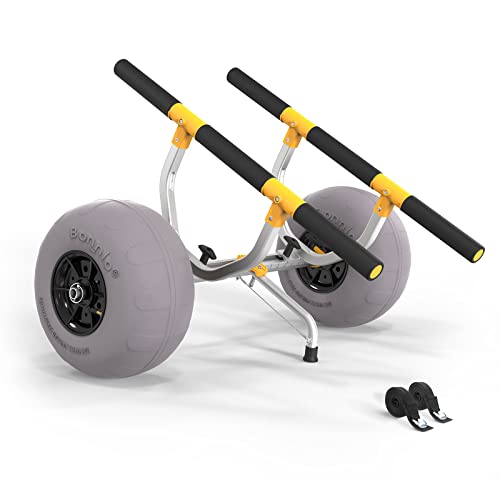 Bonnlo Kayak Cart Beach Wheels, 12 in balloon tiresBalloon tires are the single feature that decides whether a cart works on a beach, and this is the one here that has them with a published rating behind it. | A soft sand or soft mud launch | 330 lb published capacity, 12 in balloon tires, frame width adjustable 6.3 to 18.7 in, kickstand and air pump included | |
| 3 | 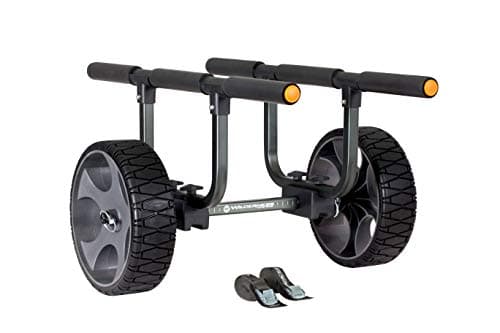 Wilderness Systems Heavy Duty Kayak CartThe purchase that decides how often a 52 lb boat gets used, because the distance from the car to the water is what people actually give up on. | A long walk from the parking lot to the water | 13 lb, 32 x 26 x 16 in, for kayaks and canoes | |
| 4 | 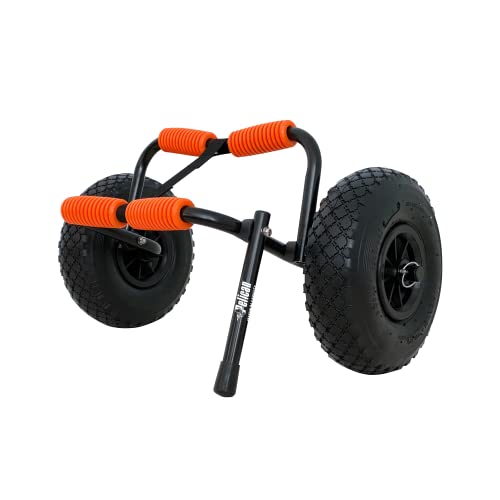 Pelican Universal Canoe, Kayak & SUP Cart Carrier, mediumThe only cart here whose published compatibility names paddle boards first, and the wide inflatable tires are why -- an inflated board on a narrow hard wheel is a board being pressed into a point. | A paddle board rather than a kayak | Fold-together trolley with wide removable inflatable tires, medium size, published for canoes, kayaks and stand up paddle boards. No load capacity published on the listing | |
| 5 | 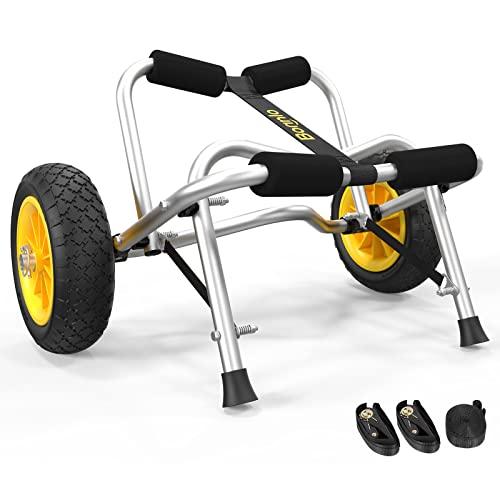 Bonnlo Universal Kayak Carrier Trolley Cart Dolly, no-flat tiresThe broadest published compatibility of any cart here -- and the reason to buy it is that second or third hull, not the first one. | One cart that also takes a canoe or a jon boat | No-flat airless tires, two ratchet straps included, published for kayaks, canoes, paddleboards, float mats and jon boats. No load capacity published on the listing |
This site already has a page on car-top carriers, straps and carts, and one of its four picks is a cart. That page is about getting a boat from your house to the water's edge. This one is about the last hundred yards, which is a completely different problem with a completely different answer, and it is the part of a first season that most often goes wrong.
The failure mode is specific and predictable. Somebody buys a 52 lb kayak, discovers that the launch they want to use is a three-minute walk from the nearest parking space, carries it twice, and then stops going. The boat is fine. The paddler is fine. The distance is what beat them, and a cart is a forty-dollar fix for it.
How we judged these
- **Tire type first, because it is the whole decision.** Solid or airless wheels on pavement, gravel and packed dirt; balloon tires in sand or soft mud. Get this wrong and nothing else about the cart matters -- a solid wheel in dry sand digs a trench and stops.
- **Then published load capacity, where there is one.** Three of these five publish a figure and two do not. We say which, rather than filling the gap, and an unpublished rating is a mark against a cart that is meant to carry something heavy.
- **Then frame width or adjustment range.** A cart cradle that is too narrow pinches a hull and one that is too wide lets it roll. Only one cart here publishes an adjustment range, and it is the most useful specification on the page.
- **Then what it weighs and whether it folds,** because a cart you have to make a second trip for is a cart you stop using, and 13 lb of cart is 13 lb you also carry back to the car.
- **Price last.** The spread here is nearly five to one and the cheapest cart is the first pick, which tells you how little of this problem is solved with money.
The wheel is the whole decision
Everything else on a kayak cart is a frame, two straps and a kickstand. The wheel is the part that either works at your launch or does not, and it is worth understanding properly before you spend anything.
A solid or airless wheel is a disc of moulded plastic or foam. It cannot puncture, it cannot deflate, it needs no pump, and it will still be round in five years in a shed. On concrete, asphalt, gravel, boardwalk and packed dirt it is the better wheel in every respect. In dry sand, soft mud or deep grass, the narrow contact patch sinks, the wheel stops turning, and you end up dragging a cart with a boat on it.
A balloon tire is a wide, low-pressure bag -- typically 12 in across on a kayak cart. It has several times the contact patch, so instead of cutting into sand it rides over it. That is not a marginal improvement; it is the difference between a cart working and not working on a beach. The cost is that it needs inflating, it can puncture, and it is bulky enough that it will not stow in a kayak hatch.
So the first question is not which cart is best. It is what surface is between your car and the water, and the honest answer for most people is pavement and a short stretch of grass, which is why the solid-tire cart is the first pick on this page.
The five, side by side
| Cart | Published capacity | Tire | Frame width | Folds |
|---|---|---|---|---|
| VEVOR kayak cart | 250 lb | 10 in solid | Not published | Yes |
| Bonnlo beach cart | 330 lb | 12 in balloon | 6.3-18.7 in adjustable | Not published |
| Wilderness Systems | 450 lb | Flat-free | Not published | Yes |
| Pelican universal cart | Not published | Wide inflatable, removable | Not published | Yes |
| Bonnlo universal cart | Not published | No-flat airless | Not published | Not published |
That table is mostly a lesson in how little this category publishes. Two of five carts give no load rating at all, and four of five give no cradle width, which is the dimension you would most want to check against your own hull. The Bonnlo beach cart's 6.3 to 18.7 inch adjustment range is the only published width figure on the page and it is the main reason it is ranked second rather than fourth.
What capacity you actually need
Less than you think, and this is the one place where the numbers are reassuring rather than restrictive. Add up the heaviest thing you will put on a cart and it is usually not close to any of these ratings.
Which means a published rating is useful less as a limit and more as evidence. A maker who prints 250 lb has measured something. A maker who prints nothing has told you nothing, and on a product whose entire job is to hold weight, that silence is the reason two carts here are ranked fourth and fifth.
Scupper carts, and why none is on this page
There is a second style of cart worth knowing about even though we are not ranking one. A scupper cart has two upright posts that push up into the scupper holes of a sit-on-top kayak, so the boat sits on the cart without straps at all. They are quick, they are tidy, and they only fit sit-on-tops with scuppers in the right place -- which is to say they are a second cart for a specific boat rather than a first cart for any boat.
If you own a sit-on-top and you have measured your scupper spacing, it is a style worth looking at. Everything on this page is a cradle cart, which works with any hull including sit-insides, inflatables and paddle boards, and that generality is why we rank them first.
Loading a cart without damaging the boat
- **Put the cart about a third of the way back from the stern,** not in the middle. The boat should balance with the bow slightly nose-down so you carry a little weight at the handle rather than fighting a see-saw.
- **Strap it snug, not tight.** The same rule as a roof rack: a cam buckle pulled firmly is correct, and a ratchet cranked down on a rotomolded hull in summer sun is how a permanent dent happens.
- **Pull from the bow handle, do not push from the stern.** Pulling keeps the cart tracking behind you; pushing makes it wander and jackknife.
- **Check the straps after the first fifty yards.** Webbing settles, and a cart that shifts on a slope drops a boat.
- **Take the cart with you or stash it above the waterline.** A cart left at the water's edge on a tidal launch is a cart you buy twice.
When you do not need a cart at all
Worth saying plainly, because this is an affiliate site and the easy thing to do would be to tell everyone to buy one. If you launch from a boat ramp you can reverse a car up to, a cart buys you nothing. If your boat is an inflatable you carry to the water in a bag, a cart buys you nothing. And if your kayak is under about 40 lb and your walk is under about fifty yards, you will carry it and be glad you did not have one more thing to store.
The rule of thumb we use on the accessories page still holds: a cart earns its place when the hull is over about 45 lb or the walk is over about fifty yards. Below both, skip it and spend the money on a better paddle, which you will feel every single stroke.
What you can ignore while you shop
- **Stainless steel versus aluminum frame claims.** Both are fine. Rinse either one after salt water and neither will be your cart's failure point -- the tires and the straps will be.
- **'Universal' as a word.** It describes an adjustable cradle, not a measured fit. Only one cart here publishes an actual adjustment range.
- **Included straps.** Treat every cart's straps as a bonus rather than a feature. Good cam straps cost very little and you probably want a spare set anyway.
- **Kickstands,** unless you load alone. Then they are genuinely useful, which is why we mention it on the one cart that has one.
- **Weight ratings over about 300 lb,** for a solo recreational boat. You will never approach them.
Questions people actually ask
Is a kayak cart worth buying?
What is the best kayak cart?
Do kayak carts work on sand?
How much weight can a kayak cart hold?
Where should the cart sit under the kayak?
What is a scupper cart and do I need one?
Can I use a kayak cart for a paddle board?
Will a kayak cart fit in my kayak?
Where these numbers came from
Every figure on this page traces to one of these. Where a number could not be sourced, the page says so rather than estimating it.
- Eddyline Kayaks — Maximum weight capacity versus ideal capacity for various styles of kayaks (manufacturer, states the 60-70% ideal-capacity band)
- VEVOR Kayak Cart, 250 lb capacity — manufacturer specification as published on the Amazon listing, read 2026-11-21
- Bonnlo Kayak Cart Beach Wheels, 12 in balloon tires — manufacturer specification as published on the Amazon listing, read 2026-11-21
- Wilderness Systems Heavy Duty Kayak Cart — manufacturer specification as published on the Amazon listing, read 2026-09-02
- Pelican Universal Canoe, Kayak & SUP Cart Carrier — manufacturer specification as published on the Amazon listing, read 2026-11-21
- Bonnlo Universal Kayak Carrier Trolley Cart Dolly — manufacturer specification as published on the Amazon listing, read 2026-11-21
Read next

Best Car-Top Carrier
Car-Top Carriers, Straps and Carts
Foam kits, J-cradles, cam straps and carts — which you need depends on your car and your parking lot.
Top pick
Attwood Universal Rack-Free Car-Top Kayak Carrier Kit
A car with no roof bars at all
#ad · how this is funded · price as of November 25, 2026
Wilderness Systems Heavy Duty Kayak Cart: The Purchase That Decides How Often You Go
450 lb rated, flat-free wheels, adjustable bunker bars and no scupper posts needed — so it works with sit-insides and canoes too. It is 13 lb you also have to deal with.
Top pick
Wilderness Systems Heavy Duty Kayak Cart
A long walk from the parking lot to the water
#ad · how this is funded · price as of November 25, 2026
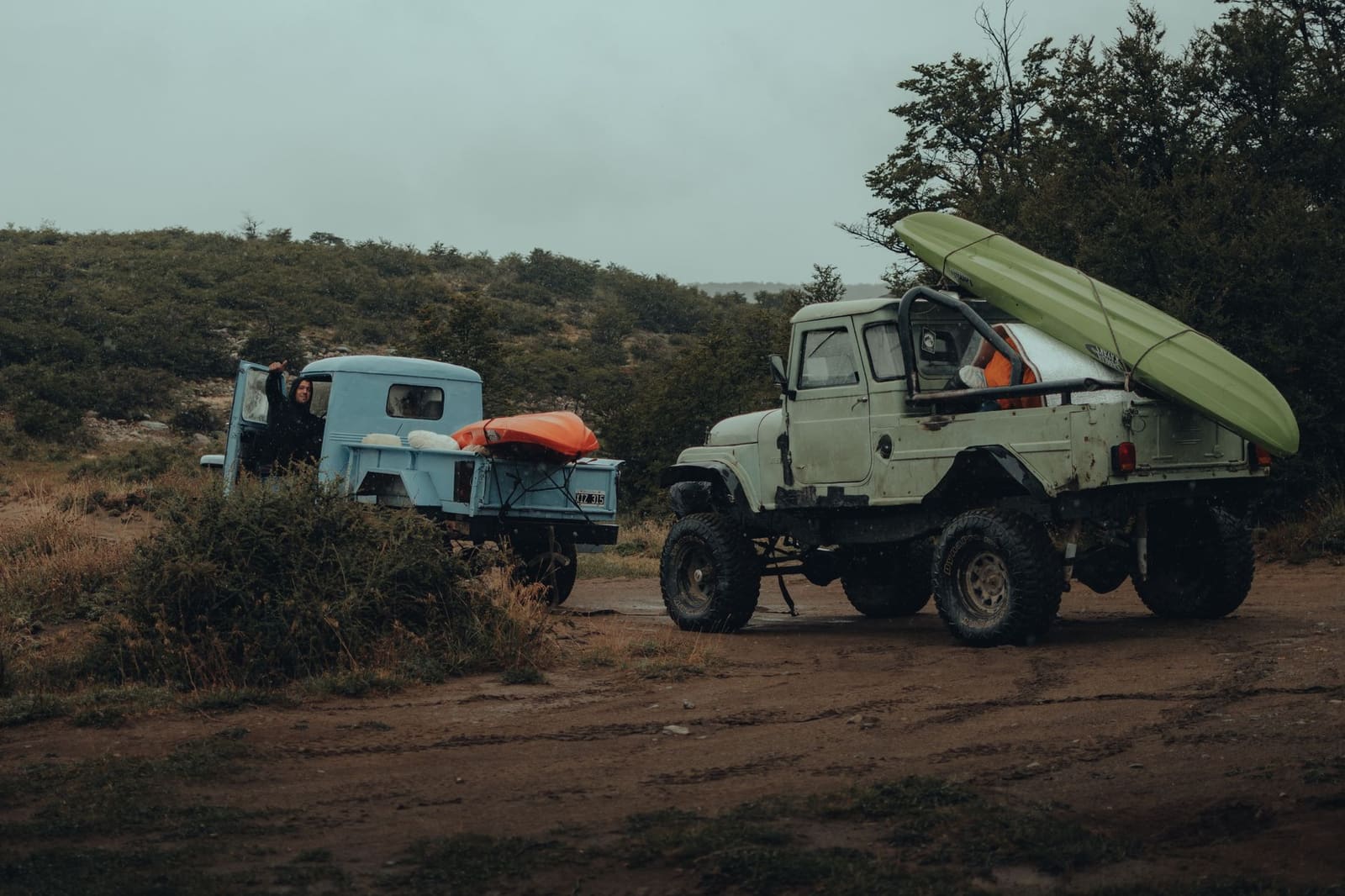
Best Roof Rack
The Best Kayak Roof Racks (November 2026)
Five ways to carry a kayak on a car, ranked on published load capacity and crossbar fit. J-cradles against saddles against foam blocks, and which your car can actually take.
Top pick
ERKUL WaveRack J-Style Kayak Roof Rack Kit
A J-cradle set that publishes which crossbars it fits
#ad · how this is funded · price as of November 25, 2026
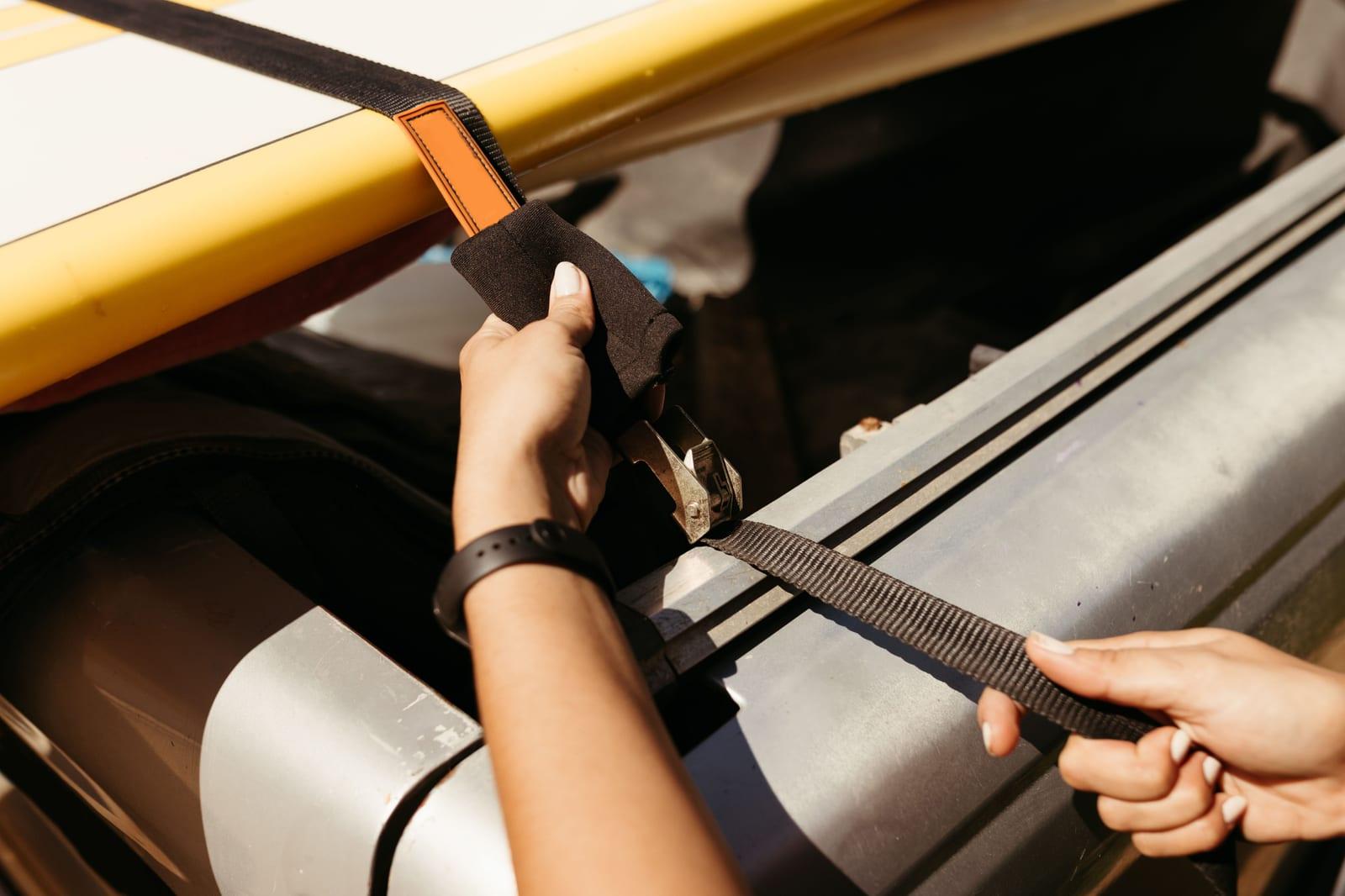
Getting Your Kayak to the Water
Four ways to move a kayak, including one that needs no roof bars and one that removes the problem entirely.
Top pick
Attwood Universal Rack-Free Car-Top Kayak Carrier Kit
A car with no roof bars at all
#ad · how this is funded · price as of November 25, 2026
Best First Accessory
Kayak Accessories: What Actually Earns a Place
Five accessories that change every outing, ranked by how much they improve it per dollar — and the ones you can safely skip for a season.
Top pick
Bending Branches Whisper Kayak Paddle, 230 cm
The first paddle worth keeping
#ad · how this is funded · price as of November 25, 2026
Lightest to Carry
The Best Lightweight Kayaks
Ranked on published hull weight, because the carry is what decides whether a kayak leaves the garage. What each pound saved costs in capacity.
Top pick
Pelican Argo 100X Sit-In Kayak, 10 ft
The lightest sit-inside to carry alone
#ad · how this is funded · price as of November 25, 2026