Gear & Getting There
Do You Need Scupper Plugs?
Only sometimes, and the decision changes during the trip. Plugs keep your seat dry on flat water and have to come out the moment water starts coming over the deck.
We have not paddled these, and we are not going to pretend we have. Here is what we did instead. Links to Amazon earn us a commission at no extra cost to you, and commission never decides a pick — how this site is funded.
| # | Product | Best for | The spec it turns on | Price |
|---|---|---|---|---|
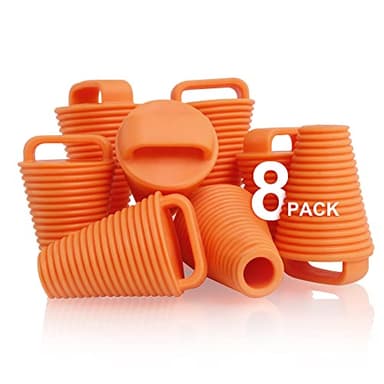
| 1 | 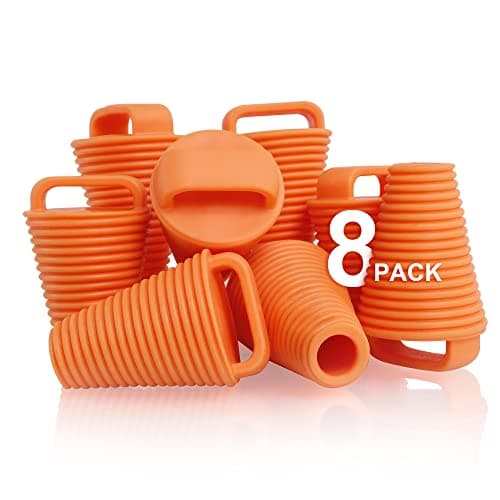 CANALHOUT Kayak Scupper Plugs Kit, 8 Pieces, fits 0.75 to 1.25 inTop pickThe small-hole set, and the one most recreational sit-on-tops actually need. Measure first: 0.75 to 1.25 in is a published range and it is the only spec in this category that decides anything. | Small scupper holes, which most recreational hulls have | 8 TPE plugs with pull handles, published fit 0.75 to 1.25 in scupper holes | |
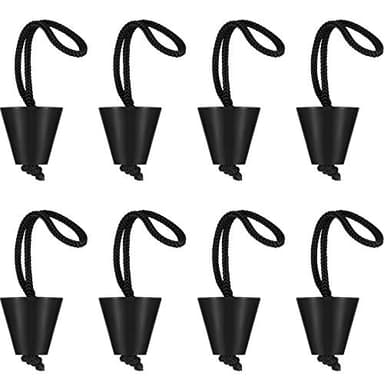
| 2 | 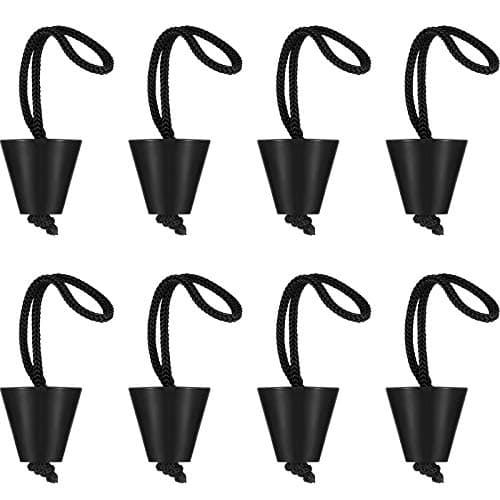 Sumind Kayak Scupper Plugs, 8 Pcs, 1.57 in BungThe large set. 1.57 in is the published bung size, which covers the wider drains on bigger sit-on-tops and fishing decks that the small kits simply fall through. | Large scupper holes on a fishing or tandem deck | 8 silicone plugs with lanyards, published as a 1.57 in bung for sit-on-top kayaks | |
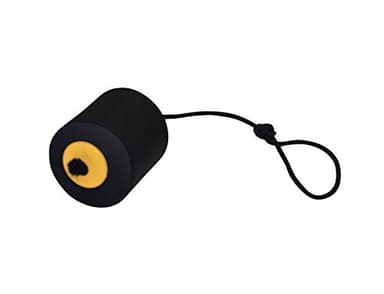
| 3 | 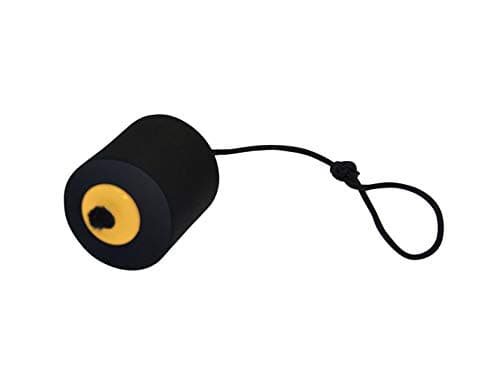 Pelican Sit-on-Top Kayak Scupper Plugs, 4 PackPlugs from the brand that made four of the boats this site recommends. Buying the hull maker's own part is the shortest route past the measuring problem, if the hull is theirs. | A Pelican hull, bought from the people who made it | 4 EVA plugs, published as fitting most kayaks, from the hull manufacturer | |
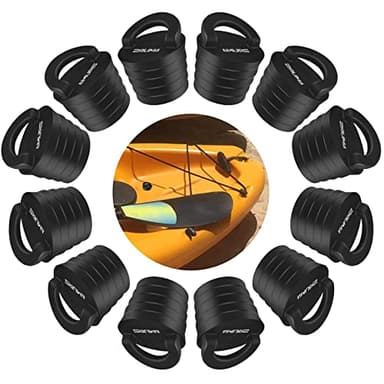
| 4 | 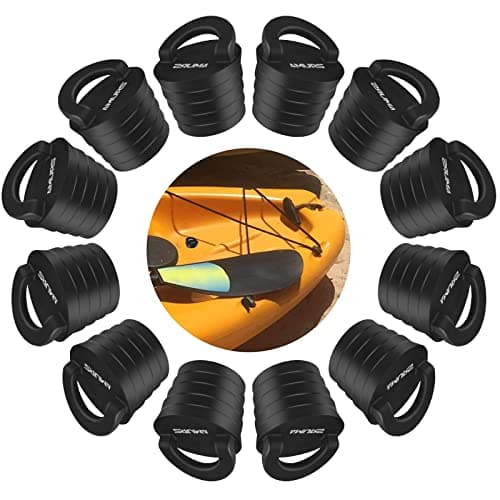 AMURS Kayak Scupper Plug Kit, 12 PiecesTwelve plugs, which covers a tandem deck or two solo boats from one pack. The catch is that the listing publishes no diameter, so this is the set to buy second rather than first. | A tandem, or two boats out of one pack | 12 plugs with silicone pull handles, published as universal for sit-on-top kayaks, canoes and boats. No fit diameter published |
If you own a sit-on-top kayak you have holes through the deck, and sooner or later you will wonder whether they are a design feature or a defect. They are a feature, they are called scuppers, and whether you should plug them is a decision that changes with the conditions rather than a thing you settle once.
What the holes are for
A sit-on-top kayak has no cockpit, so water that lands on the deck — spray, rain, drips off your paddle, a wave over the bow — has nowhere to go. The scuppers are drains through the hull that let it out again, and they work because the deck sits above the waterline.
That is also why they sometimes let water in. The deck is only an inch or two above the water, so a loaded boat sits lower and the holes end up below the waterline. Water comes up through them until the level inside matches the level outside, then it stops. The boat is not sinking and nothing is broken — you are simply sitting in a puddle.
When to plug, and when to pull
| Situation | Plugs | Why |
|---|---|---|
| Flat calm lake, light paddler, day trip | In | Nothing is coming over the deck, so the holes are only letting water up |
| Cold water or cold air | In | A wet seat is a cold seat, and this is the strongest case for plugs |
| Chop, wind, boat wake | Out | Water will come aboard and has to leave again on its own |
| Heavily loaded, or a heavier paddler | Out | The deck is near the waterline anyway and plugs achieve little |
| Moving water, or anywhere you might swamp | Out | A self-draining deck is a safety feature, not a comfort one |
| Surf or salt-water bay | Out | See the coastal page — you want the deck draining |
| Fishing, seated, anchored, calm | In | Hours in one position is when a wet seat stops being tolerable |
The practical answer most people land on: carry them, fit them at the launch if the water is flat, and keep them somewhere you can reach without getting out of the boat.
The only spec that matters: hole diameter
Scupper holes are not standardized. Across the hulls this site covers they run from roughly three-quarters of an inch to over an inch and a half, which is why no single set of plugs fits every boat and why the published fit range is the whole specification.
- **Take a tape measure to your own deck.** Measure across the opening at its widest point, not the molded recess around it.
- **Measure more than one hole.** Some hulls use a larger drain at the seat and smaller ones at the tank well.
- **Buy the set whose published range brackets your number**, with your measurement nearer the middle of the range than either end.
- **Fit one before you order a second set.** A plug that needs force to seat is the wrong size and will take a permanent set.
| Set | Published fit | Pieces | Material |
|---|---|---|---|
| CANALHOUT 8 Pieces | 0.75 to 1.25 in | 8 | TPE |
| Sumind 8 Pcs | 1.57 in bung | 8 | Silicone |
| Pelican 4 Pack | 'Fits most kayaks' — no diameter published | 4 | EVA foam |
| AMURS 12 Pieces | 'Universal' — no diameter published | 12 | Not stated, silicone handles |
Top pick — Small scupper holes, which most recreational hulls have
CANALHOUT Kayak Scupper Plugs Kit, 8 Pieces, fits 0.75 to 1.25 in
The small-hole set, and the one most recreational sit-on-tops actually need. Measure first: 0.75 to 1.25 in is a published range and it is the only spec in this category that decides anything.
What the listing publishes
8 TPE plugs with pull handles, published fit 0.75 to 1.25 in scupper holes
Scupper holes are not a standard size. They run from roughly three-quarters of an inch to over an inch and a half depending on the hull, which is why one set of plugs cannot cover every boat and why the fit range is the headline spec.
Measure the hole, not the plug. Put a tape across the opening on your own deck before ordering and buy the set whose published range brackets that number.
TPE is a soft thermoplastic. It compresses into an undersized hole and seals; it also takes a set over time and a plug that has been squeezed into a hole a season too small will stop sealing.
Eight plugs is more than most hulls have holes, which is deliberate -- these get dropped in the water and lost, and a spare in the dry bag is the point.
What it does well
- Publishes a specific fit range, 0.75 to 1.25 in
- Eight plugs, so losing one over the side is not a problem
- Pull handles, so they come out wet and cold-handed
- Costs less than a tank of gas to find out whether you want them
What it costs you
- Wrong set entirely if your holes are over 1.25 in
- TPE takes a set and stops sealing eventually
- Handles catch on gear and on bare feet
- No published hardness or temperature rating
Skip this if your scupper holes measure over 1.25 in. Buy the large set instead -- a plug that does not seat is worse than no plug, because you will think the deck is dry when it is not.
#ad · how this is funded · price as of October 18, 2026
Pick 2 — Large scupper holes on a fishing or tandem deck
Sumind Kayak Scupper Plugs, 8 Pcs, 1.57 in Bung
The large set. 1.57 in is the published bung size, which covers the wider drains on bigger sit-on-tops and fishing decks that the small kits simply fall through.
What the listing publishes
8 silicone plugs with lanyards, published as a 1.57 in bung for sit-on-top kayaks
1.57 in is 40 mm. It is the top of the common range and it is the size the small 0.75 to 1.25 in sets cannot do anything about.
Silicone rather than TPE or EVA. It stays flexible in cold water and resists taking a permanent set better than the softer thermoplastics, which is the material argument for paying slightly more.
Lanyards instead of bare handles. A lanyard can be tied to a deck fitting, and a plug tied to the boat is a plug you still own at the end of the season.
Eight plugs on a hull with four holes means four spares. That is the right ratio for a part whose main failure mode is being dropped in deep water.
What it does well
- 1.57 in, which the small kits cannot cover
- Silicone, so it stays flexible in cold water
- Lanyards, so a plug can be tied to the boat
- Eight in the pack
What it costs you
- Too large for the 0.75 to 1.25 in holes on many recreational hulls
- One published size only, so it is right or it is useless
- Lanyards are another thing to snag
- No published hardness figure
Skip this if you have not measured your holes. This is a single-size part and buying the wrong one is the whole risk in this category.
#ad · how this is funded · price as of October 18, 2026
Pick 3 — A Pelican hull, bought from the people who made it
Pelican Sit-on-Top Kayak Scupper Plugs, 4 Pack
Plugs from the brand that made four of the boats this site recommends. Buying the hull maker's own part is the shortest route past the measuring problem, if the hull is theirs.
What the listing publishes
4 EVA plugs, published as fitting most kayaks, from the hull manufacturer
The reason to buy these specifically is that Pelican built the deck. If your boat is an Argo, a Seek or a Sentinel, the maker's own plug is the one least likely to be the wrong diameter.
EVA is a closed-cell foam rather than a rubber. It is light, it floats, and it is softer than silicone -- which means it seats easily and compresses permanently sooner.
Four plugs, not eight. That matches the number of holes on a typical deck and leaves no spares, so order accordingly if you paddle somewhere you would lose one.
'Fits most kayaks' is the listing's wording. It is a manufacturer saying it, which is worth more than a generic seller saying it, and it is still not a measured diameter.
What it does well
- From the manufacturer of four of the hulls this site recommends
- EVA floats, so a dropped plug can be retrieved
- The cheapest set here
What it costs you
- Four plugs, so no spares
- No published diameter at all, only 'fits most kayaks'
- EVA foam compresses permanently sooner than silicone
- Nothing to tie it to the boat with
Skip this if your kayak is not a Pelican. The whole advantage here is buying the part from the firm that molded your deck, and without that you are better off measuring and buying by published diameter.
#ad · how this is funded · price as of October 18, 2026
Pick 4 — A tandem, or two boats out of one pack
AMURS Kayak Scupper Plug Kit, 12 Pieces
Twelve plugs, which covers a tandem deck or two solo boats from one pack. The catch is that the listing publishes no diameter, so this is the set to buy second rather than first.
What the listing publishes
12 plugs with silicone pull handles, published as universal for sit-on-top kayaks, canoes and boats. No fit diameter published
Twelve is the useful number if you own two boats or a tandem. A Rambler 13.5 deck has more holes than a solo hull and losing one mid-season should not mean another order.
No published fit range. 'Universal' is a claim about adjustment and softness, not a diameter, and in a category where diameter is the only thing that matters, that is a real gap.
Buy this once you already know your hole size and have confirmed a plug of this style seats in it. As a blind first purchase it carries the same size risk as everything else here, with less information to go on.
Silicone handles on the plugs rather than lanyards: easier to pull, nothing to tie off.
What it does well
- Twelve plugs, enough for a tandem or two boats
- Silicone handles, easy to pull with cold wet hands
- Lowest cost per plug on this page
What it costs you
- No published fit diameter anywhere on the listing
- 'Universal' is a claim, not a measurement
- No lanyards, so nothing ties them to the deck
- More plugs than any single solo hull needs
Skip this if this is your first set and you have not measured. Buy a set that publishes a fit range, confirm it seats, and come back here when you need a dozen.
#ad · how this is funded · price as of October 18, 2026
Material, which matters less than fit but is not nothing
- **Silicone** stays flexible in cold water and resists taking a permanent set. It is the material to want and it costs slightly more.
- **TPE** is a soft thermoplastic that seals well straight away and hardens or deforms over seasons. Perfectly serviceable as a consumable.
- **EVA foam** is light, soft and floats — which means a dropped plug can be retrieved, and also that it compresses permanently sooner than the rubbers.
- **Handles or lanyards.** A handle is easier to pull with cold wet hands; a lanyard can be tied to a deck fitting, which is the only reliable way to still own all your plugs in September.
What plugs do not fix
A fair number of people buy plugs to solve a problem plugs have nothing to do with, so it is worth naming those.
- **A boat that sits too low.** That is a capacity problem. Plugging the holes stops water coming up through them and does not raise the deck. Run the capacity arithmetic — if the boat is loaded past about 65 percent of its rating, you need a different boat, not plugs.
- **A wet seat from spray and drips.** Plugs stop the water coming up and do nothing about the water coming down. A seat that lifts you off the deck is the fix for that. The seat upgrades.
- **A leak into the hull.** Water inside the sealed hull rather than on the deck is a crack or a failed fitting, and it is a repair rather than a plug.
- **Feeling unstable.** Nothing to do with scuppers. That is width.
Which holes to plug, which to leave
Most people treat this as all or nothing and it is not. A sit-on-top typically has drains in two different places doing two different jobs, and the useful move is usually to plug one group and leave the other open.
- **The seat scuppers**, directly under where you sit, are the ones that make you wet. These are the ones worth plugging on a calm day, and they are usually the larger pair.
- **The tank-well or footwell drains**, at the stern and in the forward footwell, drain the parts of the deck that water lands on. Leaving these open costs you nothing in comfort and keeps the deck self-draining.
- **That split is the best of both.** A dry seat and a deck that still empties itself. It is the configuration we would run in anything other than glassy conditions.
- **On a tandem there are more of both.** A Rambler 13.5 deck has drains for two seating positions, which is why a twelve-piece set is the right size for a tandem owner rather than an eight.
Work out which is which by sitting in the boat on dry land and looking at where your weight is. Anything inside the molded seat recess is a seat scupper; anything in the open deck fore and aft is a deck drain.
Improvised plugs, and why we would not
Tennis balls, pool noodles, wine corks and cut-down dish sponges all appear in forum threads, and all of them have the same two problems rather than one.
- **They are not sized to the hole**, so they either sit loose and leak or go in hard and will not come out when conditions change. The second failure is the dangerous one, because the whole point of a plug is that you can pull it.
- **They have nothing to pull on.** A purpose-made plug has a handle or a lanyard precisely because you need to remove it from a seated position with wet cold hands.
- **A tennis ball floats away** the moment it is out, and a cork is a hard object loose in a boat.
- **The cost argument does not hold.** An eight-piece set is one of the cheapest items on this entire site. There is nothing to save here.
Fitting and keeping them
- **Fit them from above, on dry land**, pushing straight down rather than at an angle.
- **Leave the handle or lanyard where you can reach it seated.** A plug you have to get out of the boat to pull is a plug you will not pull.
- **Tie the lanyards to a deck fitting if the set has them.** These get dropped in deep water, and that is their main failure mode rather than wear.
- **Buy more than your boat has holes.** Eight plugs on a four-hole deck is four spares, which is the right ratio.
- **Pull them before you put the boat away.** A plug left in all winter takes a set and a deck left sealed holds water.
What you can ignore
- **Plugs as a safety upgrade.** The opposite is true in rough water: an open scupper is what empties your deck.
- **Color and shark graphics.** It is a rubber bung.
- **'Universal' without a diameter.** In a category where diameter is the only specification, universal is a claim rather than a measurement.
- **Threaded or screw-in plugs for a recreational hull.** They are for different fittings and they will not seat in a molded scupper.
If your boat is a Pelican — an Argo, a Seek or a Sentinel — the maker's own four-pack is the shortest route past the measuring problem, because Pelican molded the deck. For every other hull, measure first. It is two minutes and it is the whole risk in this category.
Questions people actually ask
Do I need scupper plugs for my kayak?
What is the point of scupper plugs?
What size scupper plugs do I need?
Can you use a kayak without scupper plugs?
Will scupper plugs stop my kayak taking on water?
Should I use scupper plugs in cold water?
How many scupper plugs do I need?
Where these numbers came from
Every figure on this page traces to one of these. Where a number could not be sourced, the page says so rather than estimating it.
- Eddyline Kayaks — Maximum weight capacity versus ideal capacity for various styles of kayaks (manufacturer, states the 60-70% ideal-capacity band)
- CANALHOUT Kayak Scupper Plugs Kit, 8 pieces, 0.75-1.25 in — manufacturer specification as published on the Amazon listing, read 2026-10-17
- Sumind Kayak Scupper Plugs, 8 pcs, 1.57 in — manufacturer specification as published on the Amazon listing, read 2026-10-17
- Pelican Sit-on-Top Kayak Scupper Plugs, 4 pack — manufacturer specification as published on the Amazon listing, read 2026-10-17
- AMURS Kayak Scupper Plug Kit, 12 pieces — manufacturer specification as published on the Amazon listing, read 2026-10-17
Read next

Sit-On-Top vs Sit-In Kayak
Water temperature and remounting decide this, not preference. The honest comparison, with picks for each.
Top pick
Perception Tribe 11.5 Sit-on-Top Kayak
The all-round first sit-on-top
#ad · how this is funded · price as of October 18, 2026

Best Seat Upgrade
The Best Kayak Seat Upgrades
The seat is the weakest part of a budget kayak and the cheapest to fix. Which kind fits your hull, what back height actually helps, and five honest picks.
Top pick
BKC UH-PS223 Memory Foam Kayak Seat
A tall back on a sit-on-top, for the least money
#ad · how this is funded · price as of October 18, 2026
Best First Accessory
Kayak Accessories: What Actually Earns a Place
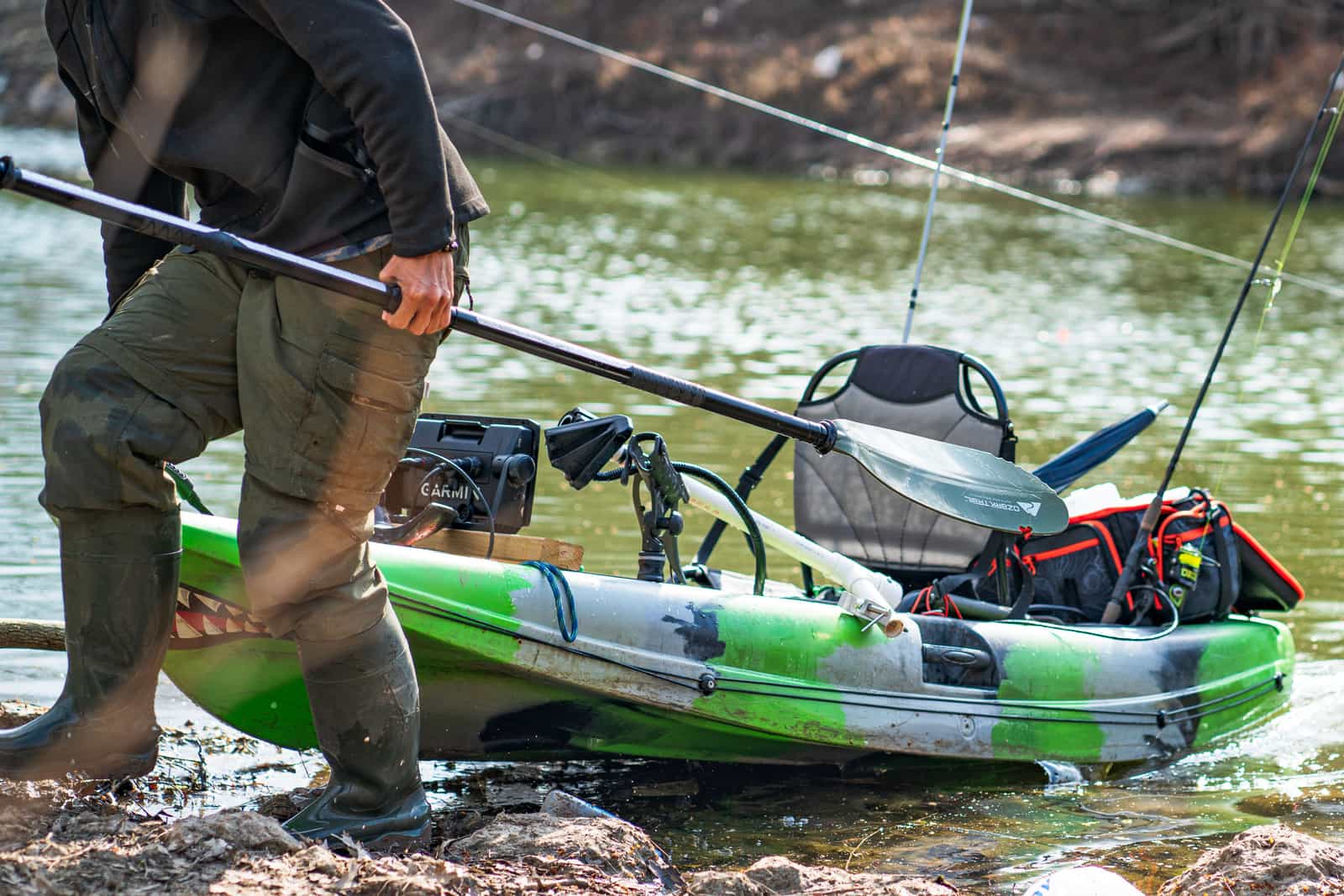
Five accessories that change every outing, ranked by how much they improve it per dollar — and the ones you can safely skip for a season.
Top pick
Bending Branches Whisper Kayak Paddle, 230 cm
The first paddle worth keeping
#ad · how this is funded · price as of October 18, 2026
Kayak Weight Capacity, Explained
The 65 percent rule, where it comes from, what happens when you ignore it, and how to size around it.
Top pick
Perception Tribe 11.5 Sit-on-Top Kayak
The all-round first sit-on-top
#ad · how this is funded · price as of October 18, 2026

Can You Take a Beginner Kayak on the Ocean?
Bays and estuaries on a calm morning: yes, with the right length. Open coast and surf: no. The conditions that decide it, and the picks that handle a bay.
Top pick
Perception Tribe 11.5 Sit-on-Top Kayak
The all-round first sit-on-top
#ad · how this is funded · price as of October 18, 2026
Best Fishing Kayak
The Best Kayaks for Fishing
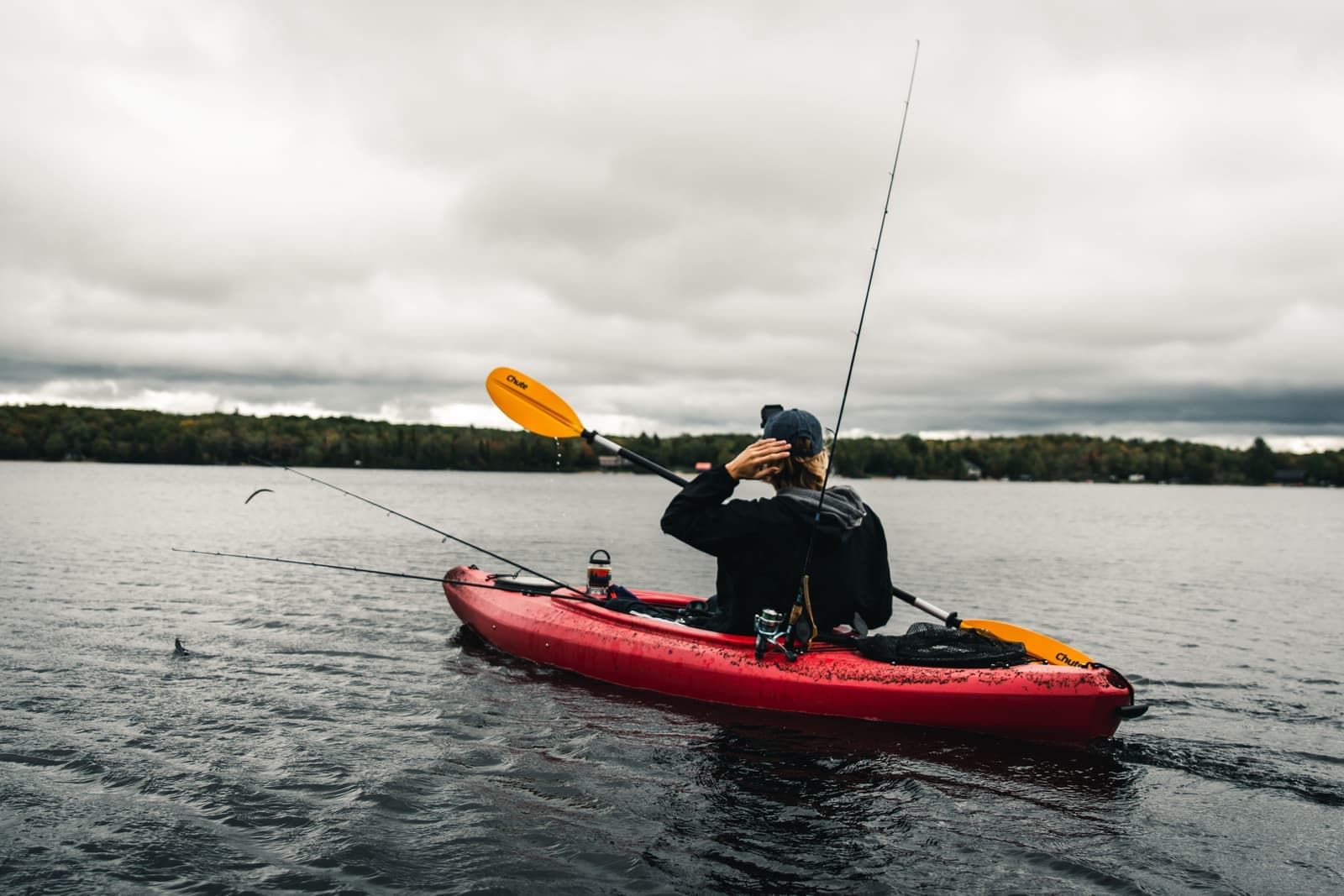
Tackle is heavier than anyone plans for. The capacity, beam and deck specs that actually decide a first fishing kayak — and why the angler badge is not one of them.
Top pick
Perception Tribe 11.5 Sit-on-Top Kayak
The all-round first sit-on-top
#ad · how this is funded · price as of October 18, 2026