Kayaks
The Best Lightweight Kayaks
Nobody skips a paddle because the boat was slow. They skip it because the boat was heavy. This page ranks on one published number and is honest about what going light costs you.
We have not paddled these, and we are not going to pretend we have. Here is what we did instead. Links to Amazon earn us a commission at no extra cost to you, and commission never decides a pick — how this site is funded.
| # | Product | Best for | The spec it turns on | Price |
|---|---|---|---|---|
| 1 | 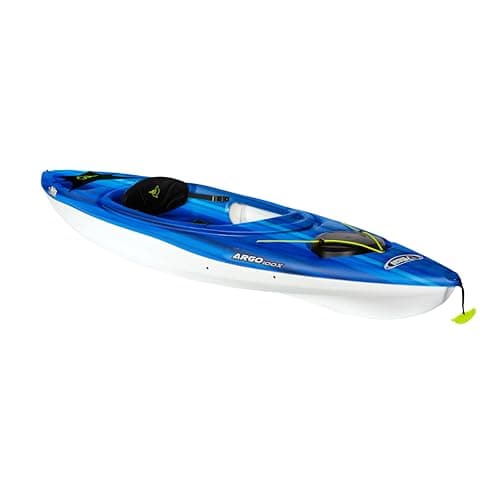 Pelican Argo 100X Sit-In Kayak, 10 ftTop pickThirty-six pounds is the number that matters here: it is the only 10-footer on this page one average adult can get off a car roof without a second person or a bad decision. | The lightest sit-inside to carry alone | 120 in long, 28 in beam, 36 lb hull, 275 lb rated capacity | |
| 2 | 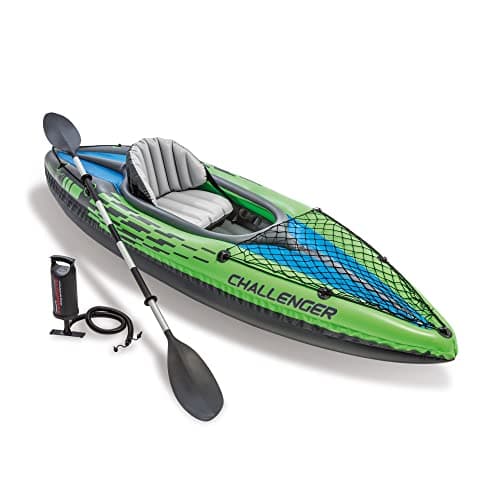 Intex Challenger K1 Inflatable Kayak (paddle and pump included)The honest answer to 'I have an apartment and a sedan'. It is a real boat on flat water and it is not a hard-shell substitute, and it is worth being clear about which of those you are buying. | No car rack, no garage, no storage | 108 in long, 30 in beam, 26 lb packed, 220 lb rated capacity, paddle and pump in the box | |
| 3 | 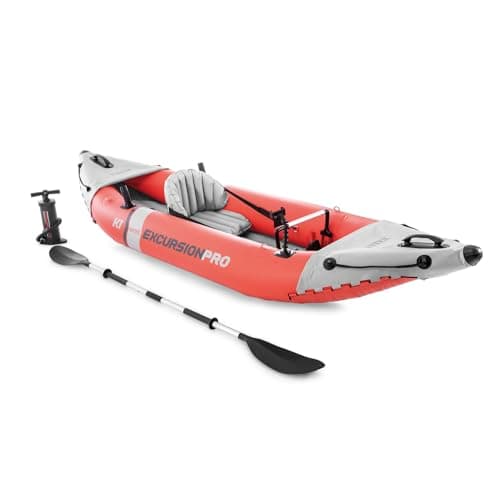 Intex Excursion Pro K1 Inflatable Kayak (paddle and pump included)A laminate hull and a high-pressure floor rather than plain vinyl, which is the difference between an inflatable that tracks and one that argues with you. | The stiffest inflatable in the entry price class | 120 in long, 36 in beam, 31.2 lb packed, 220 lb rated capacity | |
| 4 | 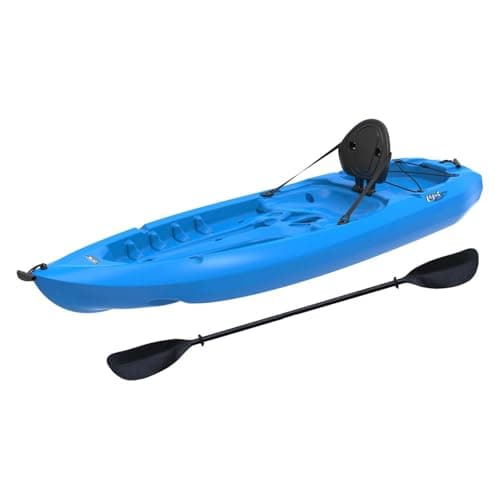 Lifetime Lotus Sit-on-Top Kayak, 8 ft (paddle included)Eight feet, thirty inches wide, a paddle in the box. It is not a good boat and it is an honest one -- this is a pond and a cabin dock, not a lake crossing. | The cheapest complete way onto flat water | 96 in long, 30 in beam, 39 lb hull, 250 lb rated capacity, paddle included | |
| 5 | 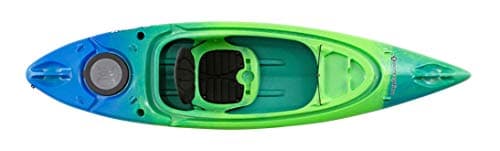 Perception Flash 9.5 Sit-Inside KayakA 325 lb rating in a hull under ten feet is unusual, and it is what makes this the short-boat answer for a larger paddler who still has to store it in an apartment. | The most capacity in the shortest hull | 113 in long, 28.5 in beam, 41 lb hull, 325 lb rated capacity |
Hull weight is the spec that quietly decides everything. It decides whether the boat goes on the car without a second person, whether it comes off again at the end of a tiring day, and whether the walk from the parking lot is a walk or an ordeal. It is also the spec most kayak buying guides mention last, after color.
How we ranked these
- **Published hull weight, lowest first.** Not estimated, not measured by us — the number the maker prints. A boat that does not publish a weight is not on this page, however light it may be.
- **Then rated capacity, because it is the cost.** Light hulls are usually small hulls, and small hulls have low ratings. Every pound saved is stated alongside what it costs in usable load.
- **Then the type of weight.** A 36 lb hard-shell and a 35 lb inflatable are not the same 35 lb. One goes on a roof; the other goes in a trunk and needs fifteen minutes of pumping. We say which is which.
The ranking, by the number
| Boat | Weight | Type | Rated | Paddler at 65%, after gear |
|---|---|---|---|---|
| Intex Challenger K1 | 26 lb packed | Inflatable | 220 lb | about 123 lb |
| Intex Excursion Pro K1 | 31.2 lb packed | Inflatable | 220 lb | about 123 lb |
| Pelican Argo 100X | 36 lb | Sit-inside hard-shell | 275 lb | about 159 lb |
| Lifetime Lotus | 39 lb | Sit-on-top hard-shell, 8 ft | 250 lb | about 143 lb |
| Perception Flash 9.5 | 41 lb | Sit-inside hard-shell | 325 lb | about 191 lb |
Read the right-hand column before the left one. The two lightest boats fit a 120 lb paddler. The heaviest boat on the page is the only one that fits a 190 lb adult. That is not a coincidence; it is the trade this whole category is built on.
Why light hulls have low ratings
Buoyancy is volume, and volume is material. A 10 ft hull rated 350 lb is a bigger, thicker object than a 10 ft hull rated 275 lb, and it weighs more. Makers can shave weight with better construction — Pelican's thermoformed Argo is the clearest example, ten pounds under a conventionally rotomolded hull of the same size — but they cannot make a high-capacity boat out of nothing.
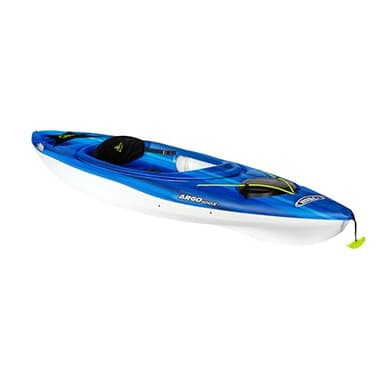
Top pick — The lightest sit-inside to carry alone
Pelican Argo 100X Sit-In Kayak, 10 ft
Thirty-six pounds is the number that matters here: it is the only 10-footer on this page one average adult can get off a car roof without a second person or a bad decision.
What the listing publishes
120 in long, 28 in beam, 36 lb hull, 275 lb rated capacity
Usable at the 65 percent rule: 179 lb (range 165–193 lb), which leaves about 159 lb of paddler after a 20 lb day kit. Why 65 percent.
A 275 lb rating sounds generous until you apply the 60 to 70 percent band Eddyline publishes for usable capacity. At 65 percent that is 179 lb of paddler, gear, clothing and PFD -- so a 160 lb paddler is comfortable and a 200 lb paddler is at the rating's edge before they pack anything.
The 28 in beam is the narrowest here, and narrow is the trade you make for a hull this light. It is stable enough for flat water and it will feel twitchier than a 30 in boat for the first hour.
Sit-inside means your legs are in a cockpit and out of the wind, which is why this is the shoulder-season pick rather than the July one.
What it does well
- 36 lb is genuinely one-person liftable, which decides how often the boat actually gets used
- Sit-inside cockpit keeps your legs dry and out of the wind on cool mornings
- 10 ft turns easily on a small lake and fits diagonally in most garages
What it costs you
- 28 in is the narrowest beam here and feels it on day one
- 275 lb rating is the lowest of the adult sit-insides on this page
- A cockpit is harder to get back into after a capsize than a sit-on-top deck
Skip this if you weigh over about 200 lb, or you expect to swim off the boat on hot days -- a sit-on-top is easier to remount and this hull's usable capacity runs out early.
#ad · how this is funded · price as of October 9, 2026
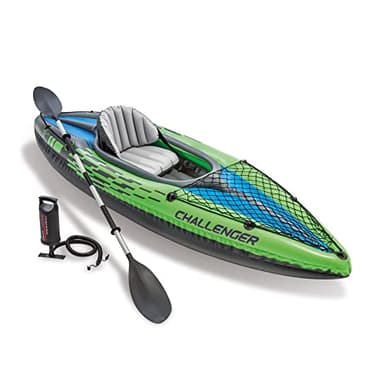
Pick 2 — No car rack, no garage, no storage
Intex Challenger K1 Inflatable Kayak (paddle and pump included)
The honest answer to 'I have an apartment and a sedan'. It is a real boat on flat water and it is not a hard-shell substitute, and it is worth being clear about which of those you are buying.
What the listing publishes
108 in long, 30 in beam, 26 lb packed, 220 lb rated capacity, paddle and pump in the box
Usable at the 65 percent rule: 143 lb (range 132–154 lb), which leaves about 123 lb of paddler after a 20 lb day kit. Why 65 percent.
220 lb rated is about 143 lb usable at 65 percent and roughly 123 lb of paddler once a PFD, paddle and water are subtracted. That is the single most important number on this listing and it rules out most adult men.
26 lb packed into a bag is what you are actually paying for. No roof bars, no straps, no cart, no garage wall -- the entire transport problem this site spends a page on simply does not exist.
Vinyl over a drop-stitch floor is not the same construction as a drop-stitch inflatable board. Expect fifteen minutes of setup, expect it to be soft, and do not expect it to hold a line in wind.
What it does well
- 26 lb in a bag removes the roof rack, the straps and the storage problem in one purchase
- Paddle and pump are included, so the number on the listing is close to the total
- 30 in beam and a wide flat floor is very stable at rest
What it costs you
- 220 lb rated is about 123 lb of paddler after gear -- read that before anything else
- Fifteen minutes of pumping at each end of every trip
- Soft hull, so it wallows in wind and tracks poorly
Skip this if you weigh over about 125 lb dressed and carrying gear. The capacity arithmetic is unambiguous and the Excursion Pro or the Explorer K2 are the honest upgrades.
#ad · how this is funded · price as of October 9, 2026
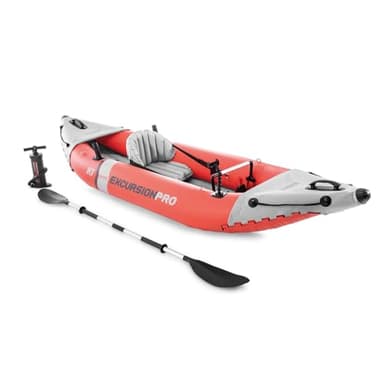
Pick 3 — The stiffest inflatable in the entry price class
Intex Excursion Pro K1 Inflatable Kayak (paddle and pump included)
A laminate hull and a high-pressure floor rather than plain vinyl, which is the difference between an inflatable that tracks and one that argues with you.
What the listing publishes
120 in long, 36 in beam, 31.2 lb packed, 220 lb rated capacity
Usable at the 65 percent rule: 143 lb (range 132–154 lb), which leaves about 123 lb of paddler after a 20 lb day kit. Why 65 percent.
220 lb rated is about 143 lb usable and 123 lb of paddler after gear -- the same limiting number as the Challenger K1, despite the better construction. Construction quality and capacity are separate specs and this is the clearest case of it on the site.
Stiffness is the whole story with inflatables. A high-pressure floor makes the hull behave like a shape instead of a bag, and it is the single upgrade that most changes how one paddles.
36 in of beam plus a stiff floor is an unusually settled platform for standing to fish or to take a photo.
What it does well
- Laminate hull and high-pressure floor track far better than plain vinyl
- 36 in beam plus a stiff floor is stable enough to stand on carefully
- 31 lb in a bag, still no rack required
What it costs you
- 220 lb rated -- roughly 123 lb of paddler after gear, same as the cheapest Intex
- Higher pressure means more pumping, and a gauge you should actually read
- Costs meaningfully more than the Challenger K1 for no extra capacity
Skip this if capacity is your constraint rather than feel. The Explorer K2 has 180 lb more rating for less money, and it is the better answer for a heavier paddler.
#ad · how this is funded · price as of October 9, 2026
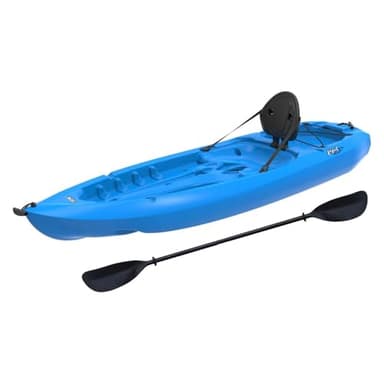
Pick 4 — The cheapest complete way onto flat water
Lifetime Lotus Sit-on-Top Kayak, 8 ft (paddle included)
Eight feet, thirty inches wide, a paddle in the box. It is not a good boat and it is an honest one -- this is a pond and a cabin dock, not a lake crossing.
What the listing publishes
96 in long, 30 in beam, 39 lb hull, 250 lb rated capacity, paddle included
Usable at the 65 percent rule: 163 lb (range 150–175 lb), which leaves about 143 lb of paddler after a 20 lb day kit. Why 65 percent.
250 lb rated is about 163 lb usable at 65 percent and 143 lb of paddler after gear. Read that number twice before you buy: a 180 lb adult is over it before they pick up the paddle.
The included paddle is the reason this is the cheapest genuine way onto the water, and it is also a paddle you will replace. Budget for that in year two, not year one.
Eight feet with a 30 in beam is very stable at rest and effectively unsteerable in wind. On a pond that is fine. On anything with fetch it is not.
What it does well
- Cheapest complete package here -- hull and paddle in one box
- 30 in beam on an 8 ft hull is extremely stable sitting still
- 39 lb and 8 ft: one person, one trip, fits in a lot of car interiors
What it costs you
- 250 lb rating means about 143 lb of paddler once gear is subtracted
- 8 ft is slow and blows around in any real wind
- The included paddle is a starter part, not a keeper
Skip this if you weigh more than about 145 lb dressed and carrying gear, or your water is anything larger than a small pond. Both are hard limits here, not preferences.
#ad · how this is funded · price as of October 9, 2026
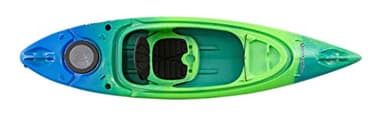
Pick 5 — The most capacity in the shortest hull
Perception Flash 9.5 Sit-Inside Kayak
A 325 lb rating in a hull under ten feet is unusual, and it is what makes this the short-boat answer for a larger paddler who still has to store it in an apartment.
What the listing publishes
113 in long, 28.5 in beam, 41 lb hull, 325 lb rated capacity
Usable at the 65 percent rule: 211 lb (range 195–227 lb), which leaves about 191 lb of paddler after a 20 lb day kit. Why 65 percent.
325 lb rated works out to about 211 lb usable at 65 percent, and roughly 191 lb of that is paddler once a paddle, PFD, water and a dry bag are subtracted. That is 30 lb more headroom than the Argo in a boat that is seven inches shorter.
Under 10 ft is the length that stops being a two-person carry and starts fitting on a balcony or standing on end in a closet. It is also the length that wanders on open water, because there is not enough waterline to hold a straight line in a crosswind.
The flat-bottom section is why the numbers work: a flatter hull carries more load for its length and feels solid at rest, at the cost of speed you were not going to use.
What it does well
- 325 lb rating is the highest of the sub-10-ft boats here
- Short enough to store somewhere a 12 ft boat will never fit
- Flat-bottom section feels settled the moment you sit down
What it costs you
- 9 ft 5 in wanders in wind -- you will correct your course constantly
- 41 lb is manageable but noticeably heavier than the Argo
- Slow. This is a hull for pottering, not for covering distance
Skip this if your water is a large lake or an open bay. Short hulls are hard work in wind, and that is a length problem no amount of technique fixes.
#ad · how this is funded · price as of October 9, 2026
Hard-shell weight and inflatable weight are different weights
The table ranks them together because the number is the number, but the two kinds of weight are carried differently and it matters which you are buying.
- **A 36 lb hard-shell** is a lift over your head onto a roof, then straps, then the reverse. The weight is concentrated in one awkward, rigid object. Thirty-six pounds is genuinely manageable; forty-six is where it starts to be a decision.
- **A 30 lb inflatable** is a backpack. No roof, no straps, no lift. The cost is not weight at all — it is fifteen minutes of pumping and drying at each end, and a hull that tracks worse. Whether that trade is worth it for you.
- **The walk is where they differ most.** Across a parking lot, a backpack wins by a mile. Across ten yards of beach, the hard-shell's ready-to-go advantage wins.
Where the weight actually goes
Two questions decide whether a light boat is worth paying for, and neither is about the boat.
- **How far from car to water?** Ten yards and any boat works. A quarter mile and hull weight is the single most important spec you will buy, or a cart is.
- **Who is lifting?** One person, alone, at the end of a tiring afternoon, in a parking lot. That is the lift to design for, not the fresh morning one with help.
A kayak cart changes the arithmetic entirely for the walk and does nothing for the roof. A foam-block kit changes the roof for a car with no bars. Getting a boat to the water covers both, and for most people the honest answer is a slightly heavier boat plus the right accessory, not the lightest hull that does not fit them.
By paddler weight, which is the honest way to read this page
| Your weight, dressed with gear | Lightest boat that fits | Its weight |
|---|---|---|
| Up to about 120 lb | Intex Challenger K1 | 26 lb packed |
| Up to about 140 lb | Lifetime Lotus | 39 lb |
| Up to about 160 lb | Pelican Argo 100X | 36 lb |
| Up to about 190 lb | Perception Flash 9.5 | 41 lb |
| Up to about 240 lb | Intex Explorer K2, paddled solo | 35 lb packed |
| Above that | A 350 lb hard-shell, none under 47 lb | 47 lb and up |
Read your row and the page is one boat long. The rest is context. Note that the Argo outranks the Lotus for a heavier paddler despite the Lotus being close to it on the scale: the Lotus's 250 lb rating runs out first.
Lifting technique, because the number is only half of it
A 36 lb kayak lifted badly is harder than a 46 lb one lifted well, and almost nobody is shown how.
- **Never lift the whole boat at once onto a roof.** Stand the bow up against the rear of the car, lift the stern, and slide the hull forward onto the rack. You are lifting half the weight at any moment.
- **Carry on the hip, not overhead.** Grab the cockpit rim or a center handle, tilt the hull against your body, and walk. Overhead carries are for two people.
- **Use a towel on the rear of the car.** It stops the slide-on from scratching paint and it is the only accessory the technique needs.
- **Or use a cart for the walk and the slide for the roof.** Together they turn any boat on this page into a solo operation.
Why the site does not rank on shipping weight
Retail listings frequently show two numbers, and the larger one is the one people remember. Shipping weight includes the carton, the packing and sometimes a bundled paddle. It is not the boat. Every weight on this page is the hull weight the maker publishes for the boat alone, and where a listing only gives a shipping figure we have treated the hull weight as unpublished rather than guessed at it.
The other trap is dry weight against wet weight. A sit-on-top with scupper holes and a sit-inside that took water both weigh more coming out than going in, sometimes by a surprising amount. Tip the boat to drain before the carry back. It is the cheapest weight saving on this page.
What you can ignore
- **Unpublished weights.** A listing without a hull weight is telling you something. The Old Town Vapor 10 is a good boat and it is not on this page for exactly that reason.
- **Shipping weight.** It includes the box and the packaging and it is not the number you will lift.
- **Carbon and composite hulls.** They exist, they are very light, and they cost several times what anything here does. That is a second-kayak decision.
- **Marketing weight claims without a figure.** Lightweight, easy-carry, portable — none of those are numbers.
Questions people actually ask
What is the lightest kayak for one person to carry?
How heavy is too heavy for a kayak?
Why are lightweight kayaks rated for less weight?
Is an inflatable kayak lighter than a hard-shell?
What is the best lightweight kayak for a heavier paddler?
Does a kayak cart make hull weight matter less?
Where these numbers came from
Every figure on this page traces to one of these. Where a number could not be sourced, the page says so rather than estimating it.
- Eddyline Kayaks — Maximum weight capacity versus ideal capacity for various styles of kayaks (manufacturer, states the 60-70% ideal-capacity band)
- Pelican Argo 100X Sit-In Kayak — manufacturer specification as published on the Amazon listing, read 2026-09-02
- Intex Challenger K1 Inflatable Kayak — manufacturer specification as published on the Amazon listing, read 2026-09-02
- Intex Excursion Pro K1 Inflatable Kayak — manufacturer specification as published on the Amazon listing, read 2026-09-02
- Lifetime Lotus Sit-on-Top Kayak 8 ft — manufacturer specification as published on the Amazon listing, read 2026-09-02
- Perception Flash 9.5 Sit-Inside Kayak — manufacturer specification as published on the Amazon listing, read 2026-09-02
Read next
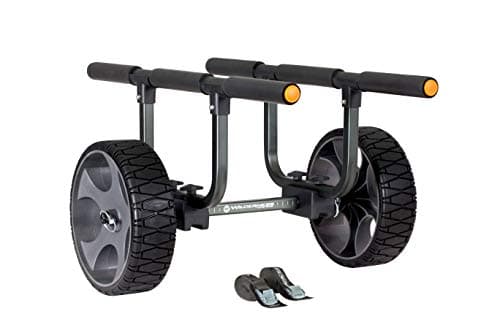
Wilderness Systems Heavy Duty Kayak Cart: The Purchase That Decides How Often You Go
450 lb rated, flat-free wheels, adjustable bunker bars and no scupper posts needed — so it works with sit-insides and canoes too. It is 13 lb you also have to deal with.
Top pick
Wilderness Systems Heavy Duty Kayak Cart
A long walk from the parking lot to the water
#ad · how this is funded · price as of October 9, 2026
Perception Flash 9.5: The Most Capacity in the Shortest Hull
325 lb rated in a hull under 10 ft, at 41 lb. The best short-boat capacity we cover — and a waterline too short to hold a line in wind.
Top pick
Perception Flash 9.5 Sit-Inside Kayak
The most capacity in the shortest hull
#ad · how this is funded · price as of October 9, 2026
Intex Excursion Pro K1: Stiffness You Can Feel, Capacity You Cannot Ignore
The best-constructed inflatable we cover — laminate hull, high-pressure floor, two removable skegs. Rated 220 lb, the same limit as boats built far worse.
Top pick
Intex Excursion Pro K1 Inflatable Kayak (paddle and pump included)
The stiffest inflatable in the entry price class
#ad · how this is funded · price as of October 9, 2026
Lightest to Carry
The Lightest Paddle Boards, and What a Board Really Weighs
Published board weights run 12.2 to 24.5 lb across the boards we cover — and three of seven publish nothing at all. The lightest boards, and what light costs you.
Top pick
FEATH-R-LITE Inflatable Stand Up Paddle Board, 10 ft 6 in x 31.5 in
The lightest board to carry to the water
#ad · how this is funded · price as of October 9, 2026
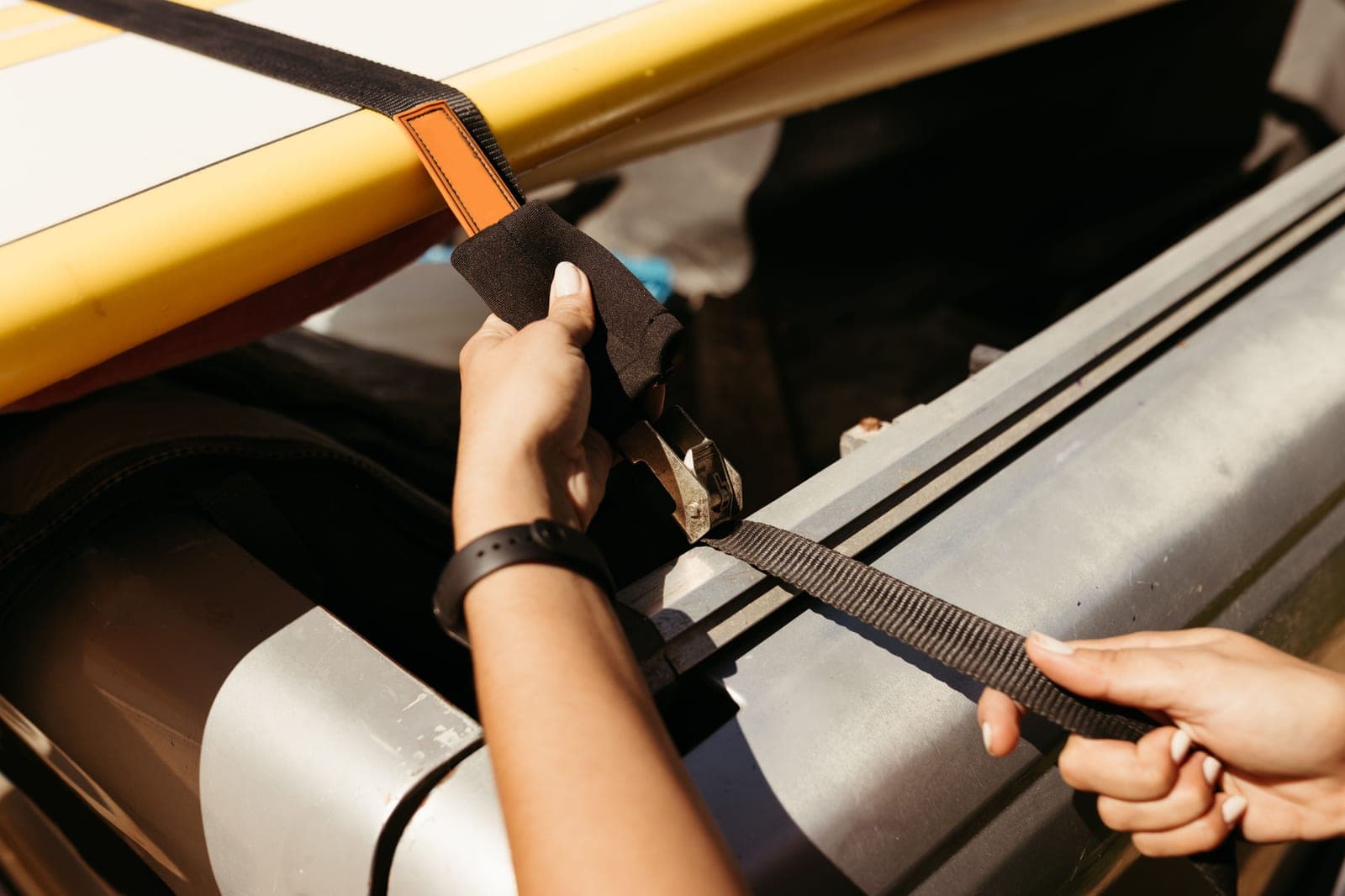
Getting Your Kayak to the Water
Four ways to move a kayak, including one that needs no roof bars and one that removes the problem entirely.
Top pick
Attwood Universal Rack-Free Car-Top Kayak Carrier Kit
A car with no roof bars at all
#ad · how this is funded · price as of October 9, 2026

Best for Seniors
The Best Kayaks for Seniors
Cockpit size, hull weight and remount ease are the specs that matter for an older paddler. Which boats publish good numbers on all three.
Top pick
Old Town Vapor 10 Solo Sit-Inside Kayak, 10 ft
A first boat with a large, easy-entry cockpit
#ad · how this is funded · price as of October 9, 2026