Gear & Getting There
Wilderness Systems Heavy Duty Kayak Cart: The Purchase That Decides How Often You Go
Carry weight and carry distance multiply, and the product of those two numbers is what actually determines how many times a year a boat gets wet. This is the thing that changes the second number.
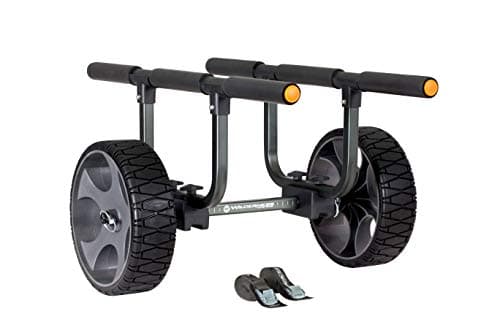
We have not paddled these, and we are not going to pretend we have. Here is what we did instead. Links to Amazon earn us a commission at no extra cost to you, and commission never decides a pick — how this site is funded.
| # | Product | Best for | The spec it turns on | Price |
|---|---|---|---|---|
| 1 | Wilderness Systems Heavy Duty Kayak CartTop pickThe purchase that decides how often a 52 lb boat gets used, because the distance from the car to the water is what people actually give up on. | A long walk from the parking lot to the water | 13 lb, 32 x 26 x 16 in, for kayaks and canoes |
We have not used this cart. What follows is what its published specification means, plus a direct account of who it does not suit.
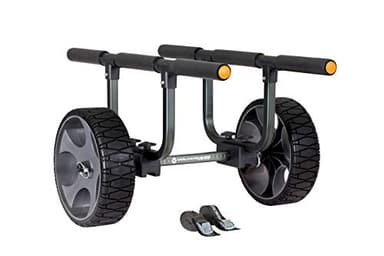
Top pick — A long walk from the parking lot to the water
Wilderness Systems Heavy Duty Kayak Cart
The purchase that decides how often a 52 lb boat gets used, because the distance from the car to the water is what people actually give up on.
What the listing publishes
13 lb, 32 x 26 x 16 in, for kayaks and canoes
Carry weight and carry distance multiply. A 52 lb boat over 30 yards is nothing; the same boat over 300 yards is the reason it stays on the roof.
13 lb of cart is 13 lb you also have to carry back to the car, or leave at the launch. Neither is a problem and both are worth knowing in advance.
This is the cost line most first-time buyers leave out, and it is the one that most changes how many times a year the boat gets wet.
What it does well
- Turns a long portage from a decision into a non-event
- Fits kayaks and canoes, so it survives your next boat
- Folds down enough to stow in a hatch or a boot
What it costs you
- 13 lb to carry back to the car or to leave unattended
- Small wheels struggle in soft sand
- Another thing to store
Skip this if you launch from a boat ramp you can park beside. A cart solves a distance problem and buys nothing if you do not have one.
#ad · how this is funded · price as of October 9, 2026
The arithmetic nobody runs before buying a boat
Across this site the single best predictor of whether a kayak gets used is not its price, its hull shape or its capacity. It is carry weight multiplied by carry distance. A 52 lb boat over thirty yards is nothing. The same boat over three hundred yards, twice, is the reason it stays on the roof and the afternoon becomes a walk instead.
You can change the first number by buying a lighter boat, which costs a lot and usually costs capacity too. A cart changes the second number for far less, and it works with the boat you already own. That is the entire case, and it is a strong one. Carry weight across every boat we cover.
| Spec | Published | What it means |
|---|---|---|
| Load rating | 450 lb | Far beyond any boat on this site, loaded |
| Wheels | Flat-free | Nothing to puncture and nothing to inflate |
| Frame | Bunker bar, adjustable width | Grips the hull so it cannot twist sideways |
| Mounting | No kickstand or scupper posts required | Works with sit-insides and canoes, not just sit-on-tops |
| Height | Two options | High clears odd hulls; low lowers the center of gravity |
| Storage | Completely collapsible | Stows in most kayak dry wells |
| Cart weight | 13 lb | The honest cost — see below |
| Size | 32 × 25.5 × 16 in | Assembled. It folds down from this |
No scupper posts is the specification to notice
Most inexpensive kayak carts are scupper carts: two upright posts that push up through the drain holes in a sit-on-top's floor. They are cheap, they are stable, and they only work on a sit-on-top with scupper holes in the right places.
This one uses a bunker bar frame that cradles the hull from underneath instead, with a width you adjust to grip the shape. That means it works with a sit-inside kayak, a canoe, or a sit-on-top whose scupper spacing does not match anything — and it survives your next boat, which a scupper cart may not. If you own or might own a sit-inside like the Pelican Argo 100X or the Lifetime Cruze 100, this is the relevant distinction.
Wilderness Systems make a point that the adjustable bunker bars prevent the kayak twisting and slipping sideways, which is the failure mode of a badly matched cart: the boat rotates on the frame halfway to the water and you spend the rest of the walk holding it straight.
Flat-free wheels, and what they are not
Flat-free means solid or foam-filled rather than pneumatic. Nothing to puncture on a gravel launch, nothing to find flat in the garage in May, and no pump to own. For a piece of equipment that lives in a hatch and gets used a dozen times a year, that is the right trade.
What you give up is cushioning and float. A pneumatic tire at low pressure spreads its load and rides over soft ground; a solid wheel of the same diameter sinks into it. On tarmac, a boat ramp, packed dirt or grass this cart will be fine. In dry soft sand, expect to drag rather than roll, which is true of nearly every small-wheeled cart and is the main reason beach paddlers buy balloon-wheel carts instead.
Two height settings, and why the low one matters
The frame offers a high and a low position. Wilderness Systems describe the high setting as being for odd-shaped hulls that would otherwise rub on the cart wheels, and the low setting as giving a lower center of gravity to prevent tip-overs.
Use the low setting unless your hull forces you not to. A loaded kayak sitting high on a narrow cart wants to roll off the moment you cross a camber, and a tipped boat on a slope is how deck fittings get broken. Height is something to add only when the hull shape demands it.
Thirteen pounds, and where they go
This is the honest cost and it is worth planning for rather than discovering. Once you and the boat are at the water, the cart is 13 lb of metal that has to go somewhere. There are three options and all of them are fine as long as you chose one in advance.
- **Carry it back to the car.** Thirteen pounds over the distance you just avoided carrying fifty. Usually the right answer.
- **Collapse it and take it with you.** Wilderness Systems publish that it folds down to stow in most kayak dry wells. That is 13 lb of payload against your rated capacity, which matters on a boat already near its limit. How to run that number.
- **Leave it at the launch.** Fine at a quiet put-in, a gamble at a busy one, and it is a visible and portable object.
The award, in proportion
The listing leads with a Paddling Magazine award in a transport and launching category. We mention it because it is a published claim rather than because it should decide anything — an award from one publication in one year is a signal, not a specification. The 450 lb rating, the bunker bars and the absence of scupper posts are what you are actually buying.
Who should buy it
- **Anyone whose launch involves a real walk.** This is the case, and nothing else on the site addresses it.
- **Owners of a heavy boat.** A tandem at 78 lb or a loaded fishing kayak is a two-person carry without a cart and a one-person job with one. The tandem weight problem.
- **Sit-inside and canoe owners**, for whom a cheap scupper cart simply does not work.
- **Anyone who owns more than one craft**, since the adjustable bunker bars are not tied to one hull shape.
Who should not
- **Anyone who parks next to the water.** No walk, no case. Spend the money on a paddle.
- **Beach paddlers on soft dry sand.** Small solid wheels dig in; balloon wheels are the tool for that.
- **Anyone with a light boat and a short carry.** A 36 lb hull over fifty yards does not need mechanical help.
- **Anyone already at their capacity limit** who plans to carry the cart aboard. Thirteen pounds is real. The 65 percent method.
Questions people actually ask
Do I need a kayak cart?
Does the Wilderness Systems cart work with a sit-inside kayak?
What weight can the Wilderness Systems kayak cart hold?
Are flat-free kayak cart wheels better than inflatable ones?
What do you do with the cart once you launch?
Which height setting should I use on a kayak cart?
Where these numbers came from
Every figure on this page traces to one of these. Where a number could not be sourced, the page says so rather than estimating it.
Read next

Best Car-Top Carrier
Car-Top Carriers, Straps and Carts
Foam kits, J-cradles, cam straps and carts — which you need depends on your car and your parking lot.
Top pick
Attwood Universal Rack-Free Car-Top Kayak Carrier Kit
A car with no roof bars at all
#ad · how this is funded · price as of October 9, 2026
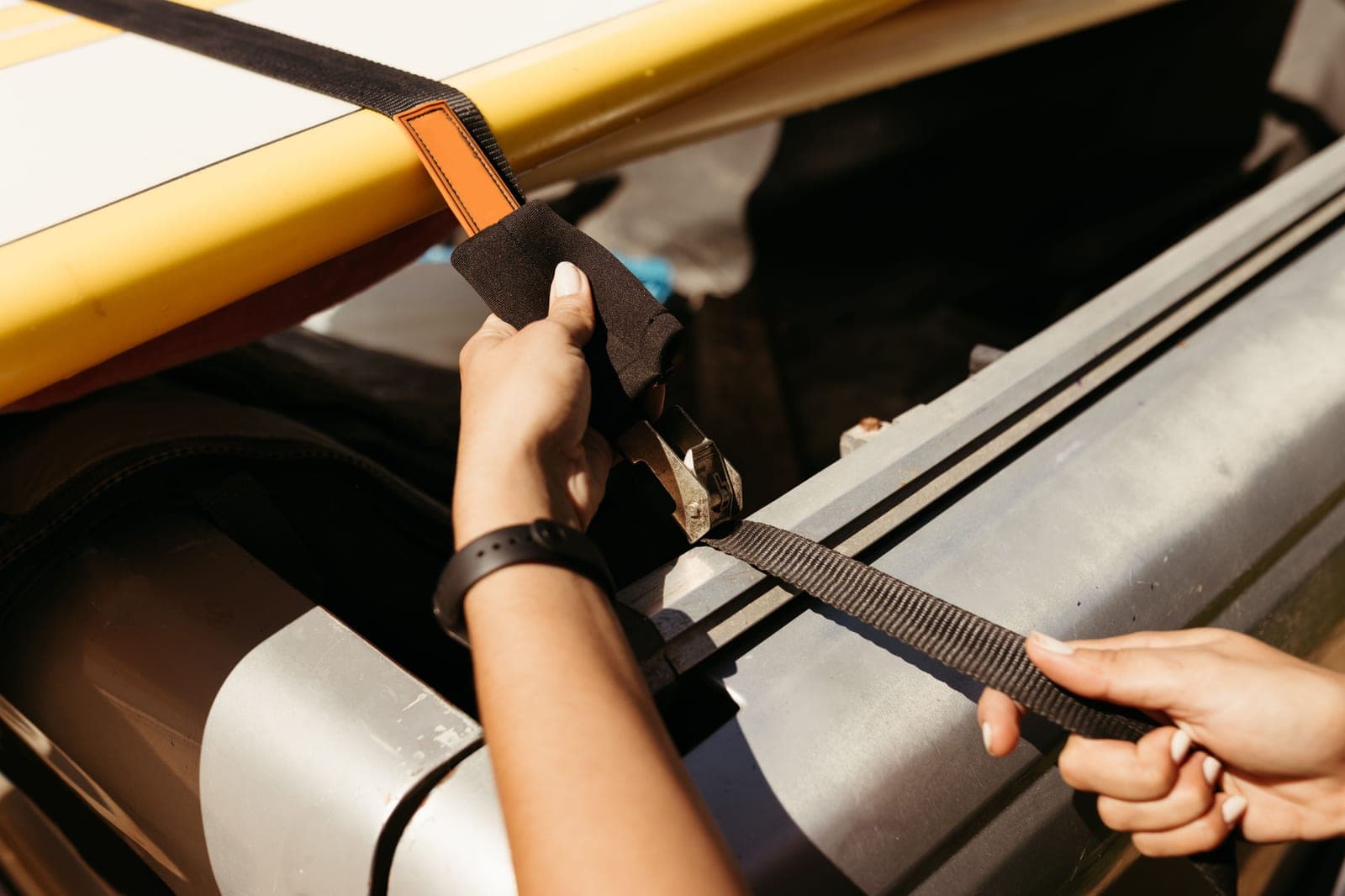
Getting Your Kayak to the Water
Four ways to move a kayak, including one that needs no roof bars and one that removes the problem entirely.
Top pick
Attwood Universal Rack-Free Car-Top Kayak Carrier Kit
A car with no roof bars at all
#ad · how this is funded · price as of October 9, 2026
Lightest to Carry
The Best Lightweight Kayaks
Ranked on published hull weight, because the carry is what decides whether a kayak leaves the garage. What each pound saved costs in capacity.
Top pick
Pelican Argo 100X Sit-In Kayak, 10 ft
The lightest sit-inside to carry alone
#ad · how this is funded · price as of October 9, 2026
Best First Accessory
Kayak Accessories: What Actually Earns a Place
Five accessories that change every outing, ranked by how much they improve it per dollar — and the ones you can safely skip for a season.
Top pick
Bending Branches Whisper Kayak Paddle, 230 cm
The first paddle worth keeping
#ad · how this is funded · price as of October 9, 2026

What a First Setup Actually Costs
Every line item in a first setup, including the ones that surprise people — with live prices rather than stale numbers.
Top pick
Perception Tribe 11.5 Sit-on-Top Kayak
The all-round first sit-on-top
#ad · how this is funded · price as of October 9, 2026