Choosing Your First
Kayak or Paddle Board for Fishing?
A kayak, for almost every angler — it carries more, stays drier and holds position better. A board wins in one specific case: shallow, clear, warm water where seeing the fish is the whole game.
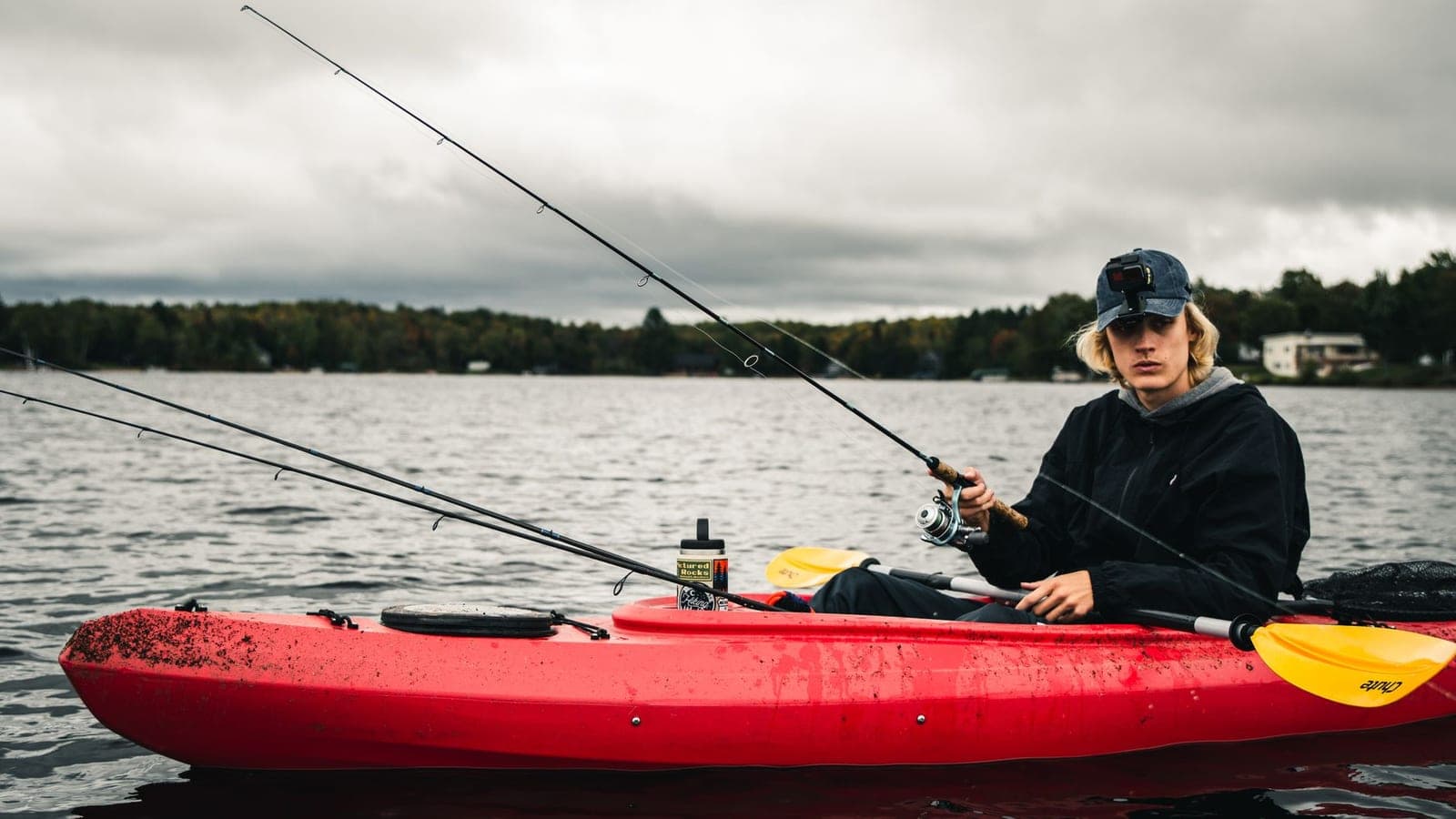
We have not paddled these, and we are not going to pretend we have. Here is what we did instead. Links to Amazon earn us a commission at no extra cost to you, and commission never decides a pick — how this site is funded.
| # | Product | Best for | The spec it turns on | Price |
|---|---|---|---|---|
| 1 | 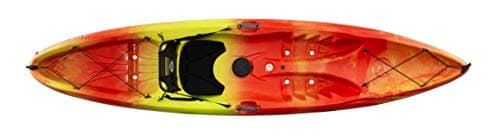 Perception Tribe 11.5 Sit-on-Top KayakTop pickThe combination almost nothing else manages: 350 lb of rating, a 30 in beam and enough waterline to hold a line, in a hull a first-timer can climb back onto from the water. | The all-round first sit-on-top | 137 in long, 30.25 in beam, 52 lb hull, 350 lb rated capacity | |
| 2 | 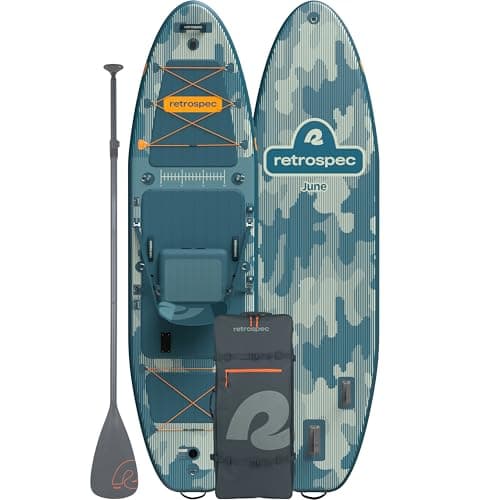 Retrospec June Inflatable Fishing Paddle Board, 11 ft 6 inThe removable seat is what makes this useful to a beginner who is not a fisherman: a board you can sit on is a board you keep using when your legs give out or the wind gets up. | Fishing, or paddling seated | 138 x 35 x 6 in, 24.5 lb board weight, 320 lb rated capacity, removable seat and rod holders | |
| 3 | 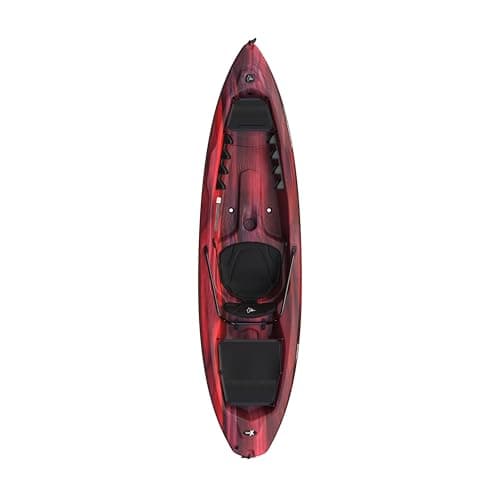 Pelican Seek 100X Sit-on-Top Kayak, 10 ftNine pounds lighter and seventeen inches shorter than the Tribe, for eight pounds less usable capacity. That trade is the whole reason to pick this one. | A sit-on-top that still fits a small car | 120 in long, 30 in beam, 43.1 lb hull, 300 lb rated capacity | |
| 4 | 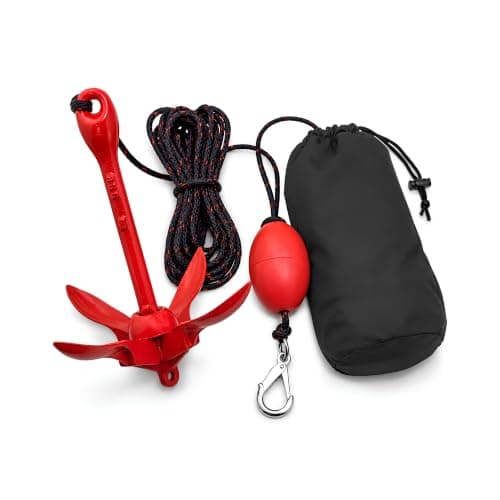 MarineNow 3.5 lb Folding Grapnel Anchor Kit with 25 ft RopeEverything you need in one box, including the two parts people forget: a buoy so you can find and release the anchor, and a padded bag so 3.5 lb of galvanized steel does not live loose against your hull. | The complete kit, for most people | 3.5 lb galvanized steel folding grapnel, 25 ft marine-grade rope, PVC buoy, stainless steel snap hook, padded storage bag; folds to 12 x 3 in |
We have a page on choosing between a board and a kayak generally, and a roundup of the best of each for fishing. What neither of those does is judge the two craft against each other on the things an angler specifically cares about, which is the question people actually ask. So: six criteria, a winner on each, and a pick on both sides.
How we judged this
Fishing from a paddlecraft is not paddling with a rod in the boat. It is a set of hands-off-the-paddle activities — rigging, casting, landing, unhooking, re-rigging — done while staying in one place. That reframes which specifications matter, and it is not the same list as for recreational paddling.
- **Capacity**, because tackle, a cooler and water add up faster than paddlers expect.
- **Hands-free stability**, because every minute you spend fishing is a minute not bracing with the paddle.
- **Holding position**, because a drifting craft is a craft that is not fishing.
- **Staying dry and warm**, because fishing means sitting still for hours rather than working.
- **Shallow-water access and visibility**, because that is where a lot of warm-water fishing happens.
- **What it costs to get fishing**, counting the craft and the minimum gear to fish from it.
The head-to-head
| Criterion | Kayak | Paddle board | Winner |
|---|---|---|---|
| Capacity for tackle | 350 lb rated on the Tribe 11.5, about 227 lb usable | 320 lb on the June 11'6", about 208 lb usable | Kayak |
| Hands-free stability | Seated low in a 30 in hull; settled with no input | Seated on a 35 in deck; settled, standing takes attention | Kayak |
| Holding position | Anchor trolley and a 3.5 lb grapnel; low windage seated | Anchors well; a standing angler is a sail | Kayak |
| Staying dry and warm | Open deck drains; a sit-inside keeps legs dry | You are wet from the waist down, every trip | Kayak |
| Shallow access and sight-fishing | Draws a few inches; you sit at deck level | Draws almost nothing; standing, you see into the water | Board |
| Cost to get fishing | Boat, paddle, PFD, anchor, rod holder | Board kit, PFD, anchor; often the cheaper start | Board |
Four to two for the kayak, and the two the board wins are the two that matter enormously if they are what you are doing. That is the whole shape of this decision.
Why capacity decides it for most anglers
This is the criterion people skip and then regret. A recreational paddler carries a PFD, a paddle, water and a phone — call it fifteen pounds. An angler carries all of that plus a tackle box, two or three rods, a net, pliers, a stringer or a cooler, and sometimes a battery and a fish finder.
At those numbers a 200 lb angler with a full kit is over the usable limit of both craft, and the kayak at least has somewhere for the weight to go that is not under your feet. If you are a larger angler, this stops being a preference and becomes the decision: read the bigger-paddler roundup before anything else.
Top pick — The all-round first sit-on-top
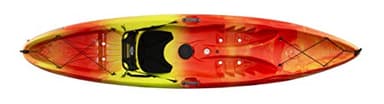
Perception Tribe 11.5 Sit-on-Top Kayak
The combination almost nothing else manages: 350 lb of rating, a 30 in beam and enough waterline to hold a line, in a hull a first-timer can climb back onto from the water.
What the listing publishes
137 in long, 30.25 in beam, 52 lb hull, 350 lb rated capacity
Usable at the 65 percent rule: 228 lb (range 210–245 lb), which leaves about 208 lb of paddler after a 20 lb day kit. Why 65 percent.
350 lb rated is about 228 lb usable at 65 percent and 208 lb of paddler after a day kit -- the most headroom of any single boat here, and enough that a 200 lb adult is inside the comfortable band rather than at the edge of it.
Sit-on-top means the deck is open and self-draining. The reason that matters to a beginner is not comfort, it is that remounting from deep water is a maneuver you can actually perform, where a flooded sit-inside cockpit is not.
52 lb is the price. This is at the top of what one person carries any distance, and the reason a cart appears in our cost totals for this boat and not for the Argo.
What it does well
- 350 lb rated capacity gives real headroom for larger adults or a child up front
- Open self-draining deck is the forgiving choice for a first summer
- 137 in of hull tracks far better than the 9 and 10 ft boats here
What it costs you
- 52 lb is a two-person lift onto a roof for most people
- You will get wet. Sit-on-tops always do, and that is a season decision not a design flaw
- 11 ft 5 in needs more storage length than the 10 ft boats
Skip this if you paddle in cold water or a cold shoulder season. An open deck in 55-degree water is a different and less pleasant sport, and a sit-inside is the right answer there.
#ad · how this is funded · price as of October 18, 2026
Pick 2 — Fishing, or paddling seated
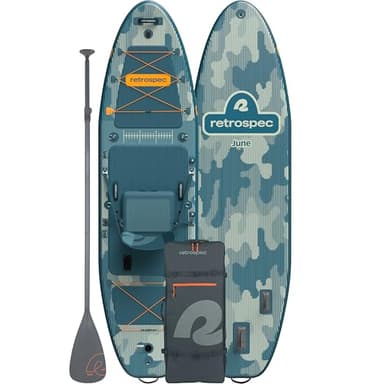
Retrospec June Inflatable Fishing Paddle Board, 11 ft 6 in
The removable seat is what makes this useful to a beginner who is not a fisherman: a board you can sit on is a board you keep using when your legs give out or the wind gets up.
What the listing publishes
138 x 35 x 6 in, 24.5 lb board weight, 320 lb rated capacity, removable seat and rod holders
Usable at the 65 percent rule: 208 lb (range 192–224 lb), which leaves about 188 lb of paddler after a 20 lb day kit. Why 65 percent.
320 lb rated is about 208 lb of loaded paddler at 65 percent, which is enough for an adult plus tackle but not an adult plus a passenger.
Sitting down on a board converts it into a slow, very stable kayak. For a nervous first-timer that is a genuinely useful fallback rather than a gimmick, and most all-around boards do not offer it.
24.5 lb is heavy for an inflatable board and light for what it does. Rod holders, mounting points and a seat all cost weight.
What it does well
- Removable seat turns it into a stable sit-down craft when standing stops being fun
- 35 in wide and 11 ft 6 in long, so it is settled enough to fish from
- 320 lb rating covers an adult and a reasonable amount of tackle
What it costs you
- 24.5 lb is the heaviest board here
- Rod holders and mounts are clutter if you never fish
- Costs more than a plain all-around board of the same dimensions
Skip this if you only want to stand up and paddle. You are paying for hardware you will not use and carrying five extra pounds of it.
#ad · how this is funded · price as of October 18, 2026
Pick 3 — A sit-on-top that still fits a small car
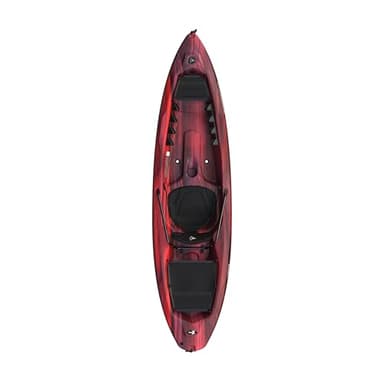
Pelican Seek 100X Sit-on-Top Kayak, 10 ft
Nine pounds lighter and seventeen inches shorter than the Tribe, for eight pounds less usable capacity. That trade is the whole reason to pick this one.
What the listing publishes
120 in long, 30 in beam, 43.1 lb hull, 300 lb rated capacity
Usable at the 65 percent rule: 195 lb (range 180–210 lb), which leaves about 175 lb of paddler after a 20 lb day kit. Why 65 percent.
300 lb rated is about 195 lb usable and 175 lb of paddler after gear -- enough for most adults, and 33 lb less headroom than the Tribe.
43 lb and 10 ft is the point where a sit-on-top becomes a one-person, one-trip job. Ten feet also fits inside a lot of vehicles that 11 ft 5 in does not.
The twin-arch hull section trades a little flat-water stillness for a hull that leans predictably rather than suddenly, which is a genuinely nicer feel once you are past the first hour.
What it does well
- 43 lb keeps this a one-person carry, unusual for a sit-on-top
- 30 in beam at only 10 ft means stability without the storage problem
- Self-draining deck with the same easy remount as any sit-on-top
What it costs you
- 300 lb rating is 50 lb short of the Tribe's
- 10 ft of hull wanders more than 11 ft 5 in on open water
- Same cold-water objection as every sit-on-top
Skip this if you and a child will regularly be on it together. The usable capacity does not cover two people once you subtract gear, and the Tribe or a tandem does.
#ad · how this is funded · price as of October 18, 2026
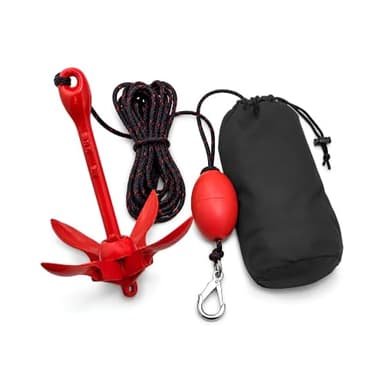
Pick 4 — The complete kit, for most people
MarineNow 3.5 lb Folding Grapnel Anchor Kit with 25 ft Rope
Everything you need in one box, including the two parts people forget: a buoy so you can find and release the anchor, and a padded bag so 3.5 lb of galvanized steel does not live loose against your hull.
What the listing publishes
3.5 lb galvanized steel folding grapnel, 25 ft marine-grade rope, PVC buoy, stainless steel snap hook, padded storage bag; folds to 12 x 3 in
3.5 lb is the standard weight for this job and it is enough on a lake. An anchor holds by lying flat and dragging its flukes into the bottom, not by being heavy, which is why a folding grapnel this size stops a kayak that a 3.5 lb rock would not.
Twenty-five feet of rope is fine for most inland water and short for deep water. The rope has to run out at a shallow angle for the flukes to bite, so it needs to be several times the depth you anchor in, not just longer than it.
The padded bag sounds like packaging and is not. Four steel flukes loose in a kayak will find your hull, your dry bag or your shin.
What it does well
- Genuinely complete: anchor, rope, buoy, snap hook and padded bag
- Folds to 12 x 3 in, so it stows in a hatch or tank well
- Stainless hardware and marine-grade rope rather than hardware-store parts
What it costs you
- 25 ft of rope limits how deep you can usefully anchor
- 3.5 lb is dead weight against your rated capacity on every trip
- Galvanized steel will eventually rust where the coating chips
Skip this if you already own rope and a carabiner. The bare SEACHOICE anchor does the same job for less, and you will not use two buoys.
#ad · how this is funded · price as of October 18, 2026
The case for the board, made properly
The board's win is not a consolation prize and it is not about being cheap. There is a specific kind of fishing it is simply better at, and if that is your fishing then the four criteria above do not matter much.
- **You can see.** Standing on a board puts your eyes six feet above the water instead of three. In clear shallow water that is the difference between fishing where you think they are and fishing where you can see they are.
- **It draws almost nothing.** A board floats in a few inches. Flats, backwaters, grass beds and the skinny water at the back of a creek are board country and a kayak grounds out in them.
- **It is quiet.** No hull slap, no rudder, no seat creak. On spooky fish in a foot of water that is real.
- **You can get off it and wade.** A board is a platform you step off and tow. A kayak you have to land.
- **It stores and transports in a backpack.** For an angler without a garage this is sometimes the whole argument.
What that costs you is the four criteria in the table, and the biggest of them is the wet. Sight-fishing a warm flat in July is a pleasure on a board and the same board in 55-degree water in October is miserable.
The thing both craft need, which people buy last
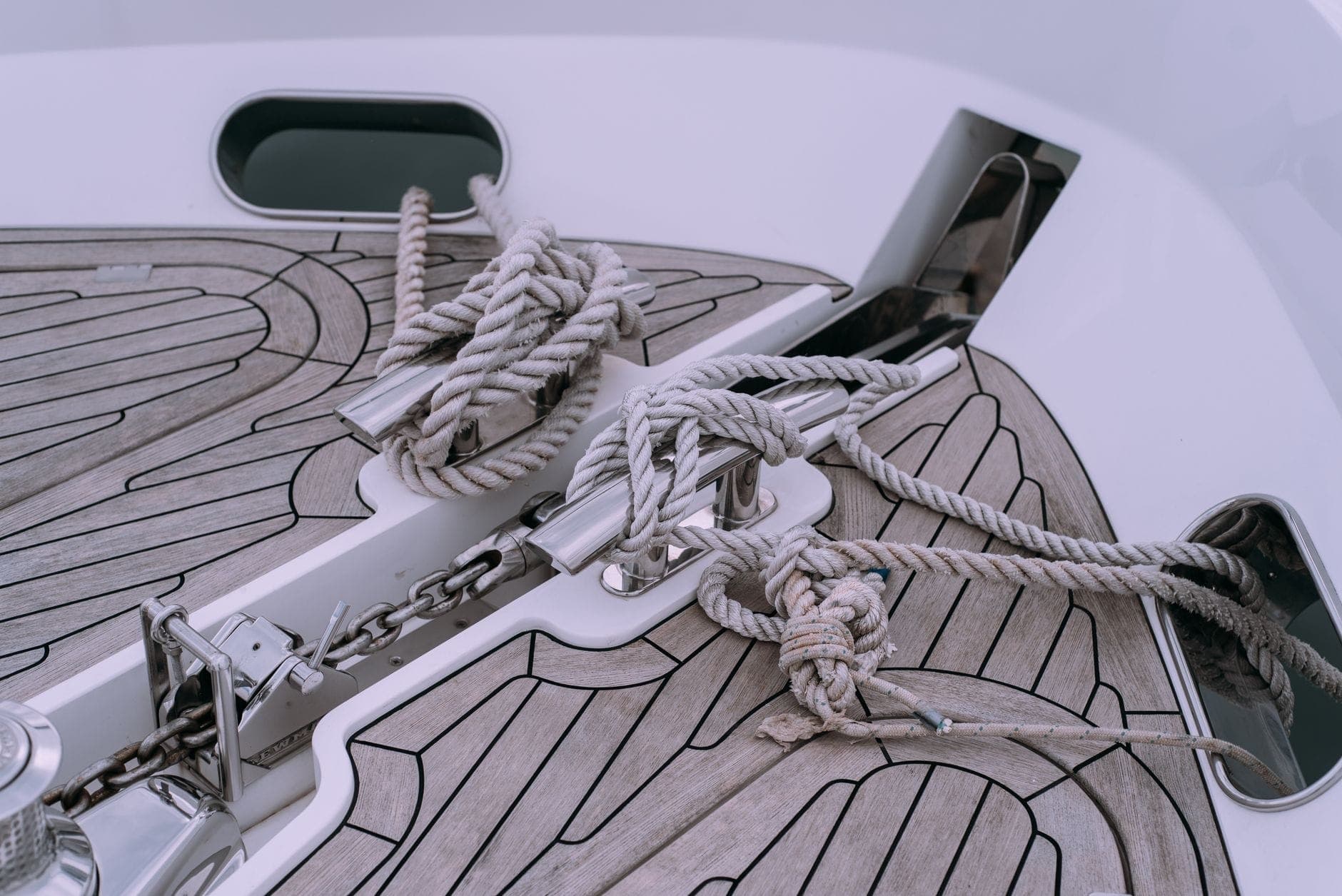
Neither craft holds position on its own, and a drifting craft is not fishing. An anchor is the cheapest thing on this page and it changes the activity more than any upgrade to the craft.
A 3.5 lb folding grapnel with 25 feet of line covers a loaded kayak on a lake. A board in still air can get away with lighter, because a board has far less windage than a seated angler — until the angler stands up, at which point they are the sail. The anchors, with the weight arithmetic, and an anchor trolley if you want to choose which way the craft lies.
Standing up to cast, on each craft
This is the single capability people most want and most often misjudge, so it is worth separating from general stability.
- **On a board, standing is the default.** A 35 inch board with a 320 lb rating is a standing platform by design, and the whole visibility argument depends on it. You will still be standing on something that moves, and a fish on the line moves it more.
- **On a recreational kayak, standing is marginal at best.** A 30 inch hull puts your center of gravity roughly two feet above a narrow base. Some anglers manage it on glassy water; most do not, and the boats this site covers are not designed for it.
- **Outriggers are the only thing that genuinely changes that**, and only the rigid, track-mounted kind — which needs a boat with a factory gear track and costs more than most of the gear on this site. What outriggers do and do not do.
- **If standing is non-negotiable, that argues for the board**, not for a kayak plus hardware. That is the honest version, and it is the clearest case the board has.
What you need beyond the craft
The craft is not the whole cost on either side, and the add-on lists are not the same. Worth seeing both before deciding which is the cheaper start, because the usual comparison leaves out whichever list favors the answer the writer already picked.
| Item | Kayak | Paddle board |
|---|---|---|
| Paddle | Separate purchase on a hard-shell | Usually in the kit |
| Pump | Not needed | Usually in the kit |
| Life jacket | Required, one per person | Required, one per person |
| Anchor | Yes — a 3.5 lb grapnel with 25 ft of line | Yes, and a lighter one is defensible |
| Leash | No | Yes, and it is not optional on a board |
| Rod holder | Clamp-on, unless the hull has molded ones | Often fitted on fishing boards |
| Transport | Foam blocks or a rack, and often a cart | A backpack |
| Seat | Built in, upgradeable | Removable seat, often included on fishing boards |
| Somewhere to store it | A garage, a wall or a yard | A closet |
Add the rows up and the board's apparent price advantage is real but smaller than the sticker difference, because the board kit bundles things the kayak buyer purchases separately. The full first-setup cost arithmetic runs the same exercise for a non-angler.
The decision, by angler
| Your fishing | Buy | Why |
|---|---|---|
| Lake bass, year round, from a seat | Kayak | Capacity, dryness and low windage all point one way |
| Shallow clear flats in warm months | Board | Standing visibility and almost no draft |
| Slow rivers and creeks | Kayak | A short hull turns in current; a board is hard to hold a line in moving water |
| Cold or shoulder-season water | Kayak, sit-inside | A wet platform in cold water is the fastest way to stop going |
| Carrying a cooler and three rods | Kayak | Nothing on a board deck is dry storage |
| No garage, no roof rack, no truck | Board | It goes in a trunk, and a kayak does not |
| You also want to paddle for fun | Kayak | Faster, drier, and covers distance |
What you can ignore on both sides
- **The word ANGLER on a hull.** It usually buys two molded rod holders and a paint scheme. A clamp-on rod holder costs a fraction of what the badge adds to the price, and the specs that matter are capacity and beam.
- **Pedal drives and motors.** Both exist and both are a different budget and a different sport from a first fishing craft.
- **Fish finders, as a first purchase.** A battery, a transducer and a mount is weight and complication on a craft whose capacity is already the constraint.
- **Camouflage.** Fish do not look up and see your hull color. Be visible to boats instead.
If you are still undecided after the table, the tiebreak is water temperature. Fishing is sitting still, sitting still gets cold, and only one of these two craft keeps you out of the water. For a year-round angler that is usually the end of the argument.
Questions people actually ask
Is a kayak or a paddle board better for fishing?
Can you really fish from a paddle board?
What size kayak is best for fishing?
Do I need an anchor to fish from a kayak or a board?
Is a paddle board or kayak more stable for fishing?
Which is cheaper to start fishing from?
Can you fish from a paddle board in cold water?
Where these numbers came from
Every figure on this page traces to one of these. Where a number could not be sourced, the page says so rather than estimating it.
- Eddyline Kayaks — Maximum weight capacity versus ideal capacity for various styles of kayaks (manufacturer, states the 60-70% ideal-capacity band)
- Confluence Outdoor / Perception — Pescador 10.0 fishing kayak (manufacturer, published specification table: 126 in, 32 in beam, 52 lb, 325 lb capacity, 2 molded-in rod holders), read 2026-09-04
- Confluence Outdoor / Pelican — Sentinel 100X Angler fishing kayak (manufacturer, published specification table: 114 in, 30 in beam, 44 lb, 275 lb capacity), read 2026-09-04
- ISLE Paddle Boards — Paddle Board Size & Weight Chart (manufacturer, published per-model capacities)
- Perception Tribe 11.5 Sit-on-Top Kayak — manufacturer specification as published on the Amazon listing, read 2026-09-02
- Retrospec June Inflatable Fishing Paddle Board, 11 ft 6 in — manufacturer specification as published on the Amazon listing, read 2026-09-02
- Pelican Seek 100X Sit-on-Top Kayak — manufacturer specification as published on the Amazon listing, read 2026-09-02
- MarineNow 3.5 lb Folding Grapnel Anchor Kit — manufacturer specification as published on the Amazon listing, read 2026-09-02
Read next
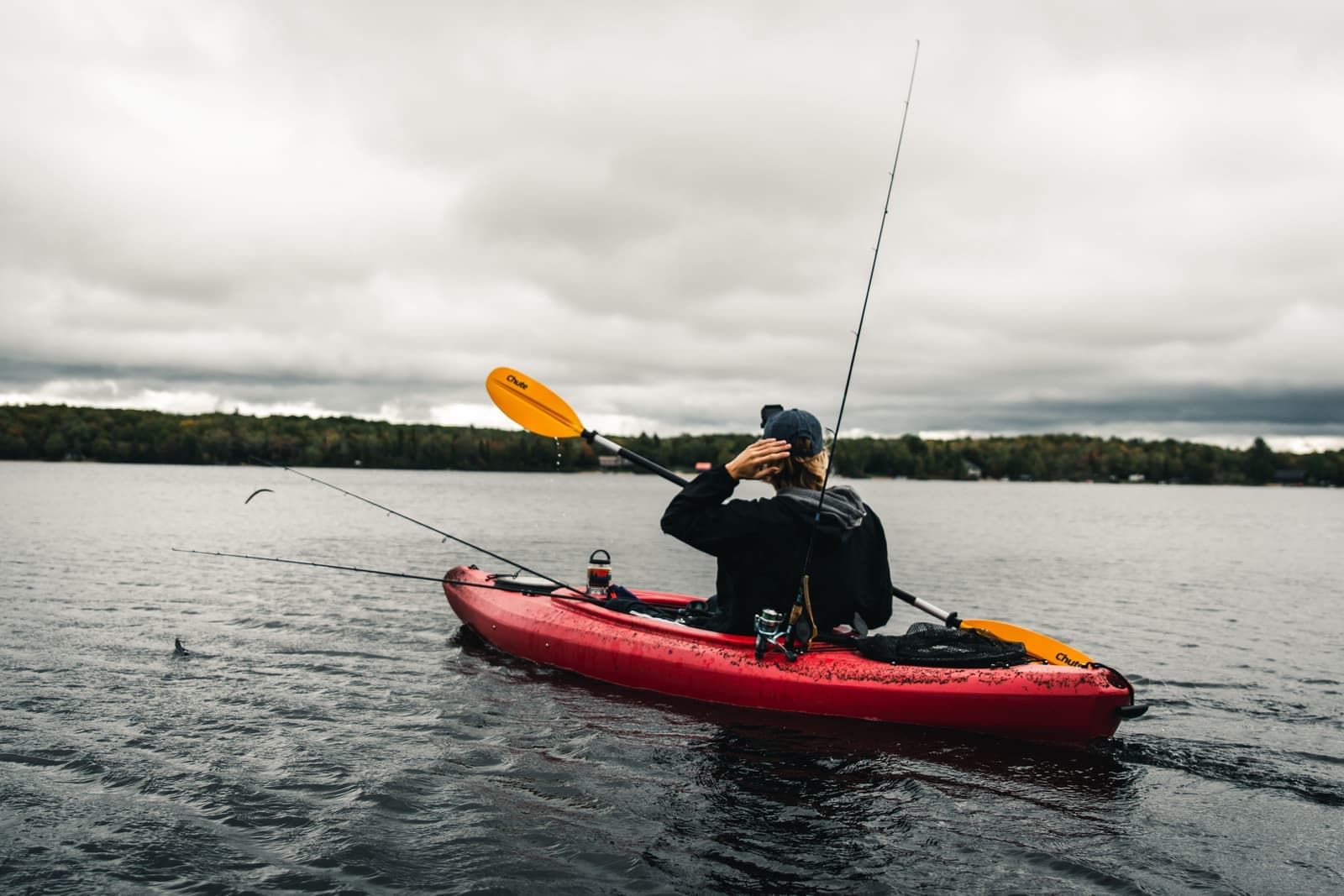
Best Fishing Kayak
The Best Kayaks for Fishing
Tackle is heavier than anyone plans for. The capacity, beam and deck specs that actually decide a first fishing kayak — and why the angler badge is not one of them.
Top pick
Perception Tribe 11.5 Sit-on-Top Kayak
The all-round first sit-on-top
#ad · how this is funded · price as of October 18, 2026
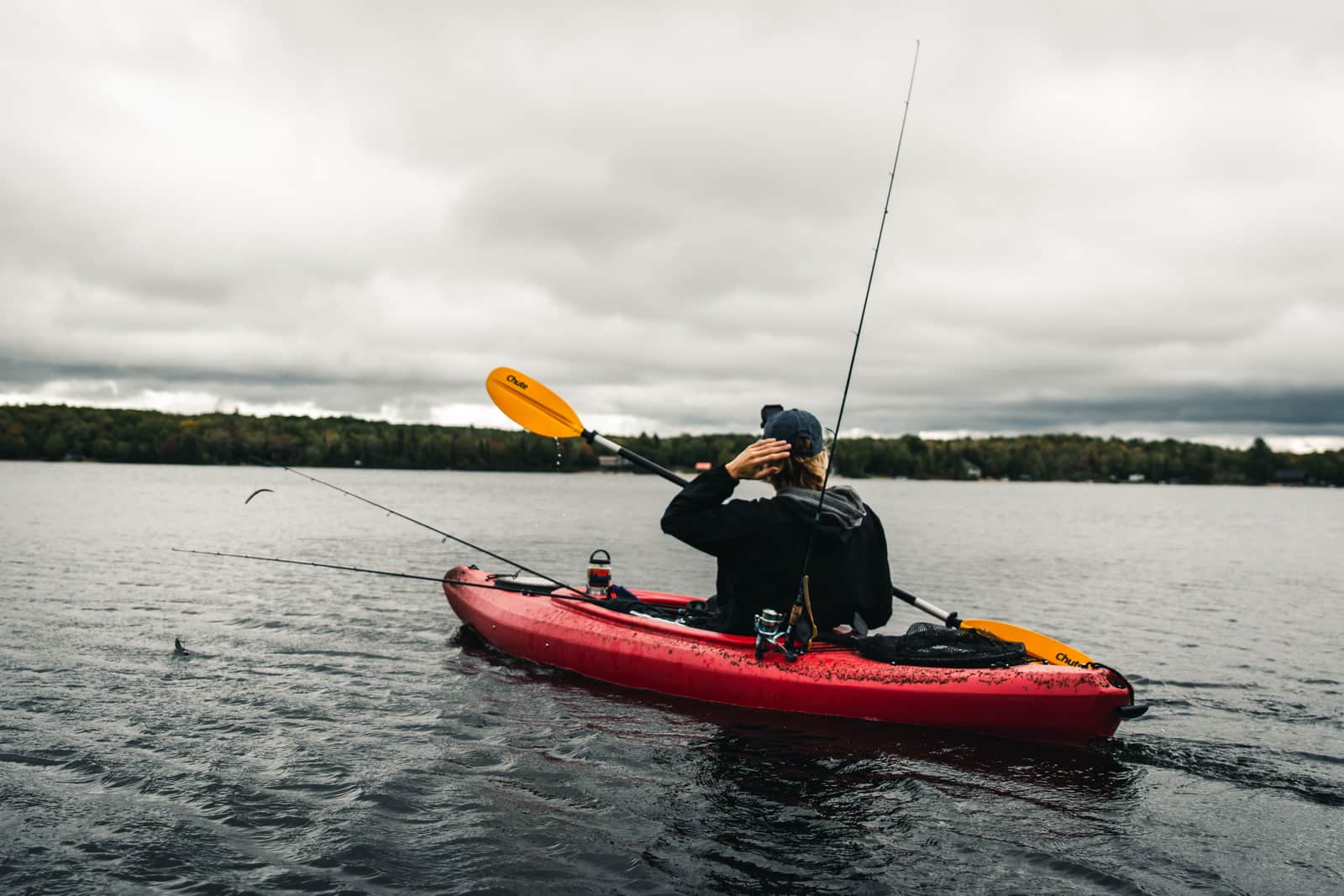
Best for Fishing
The Best Paddle Boards for Fishing
Fishing boards need width, capacity for tackle, and a seat. Here is what actually changes versus a normal board.
Top pick
Retrospec June Inflatable Fishing Paddle Board, 11 ft 6 in
Fishing, or paddling seated
#ad · how this is funded · price as of October 18, 2026
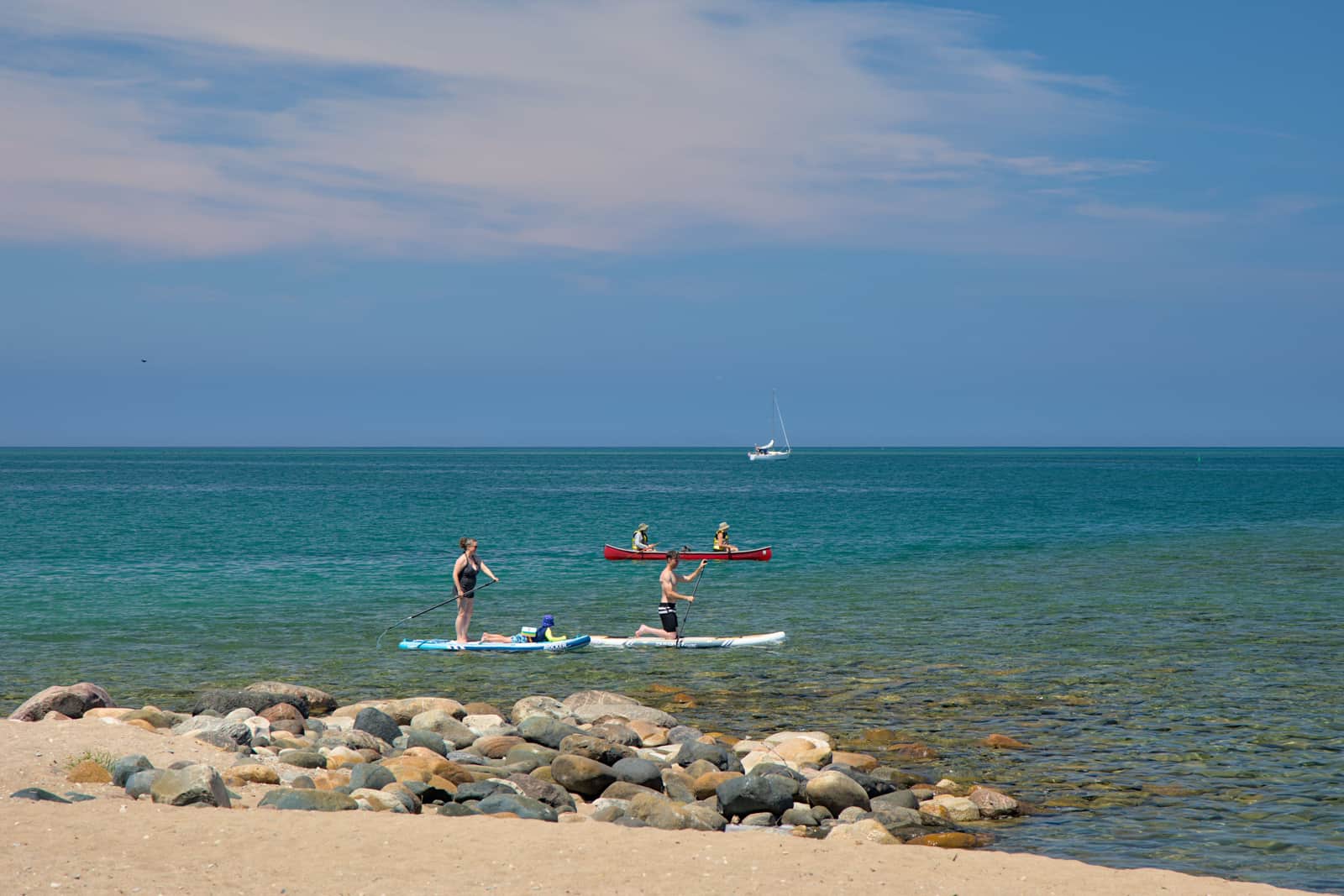
Paddle Board or Kayak?
The honest board-versus-boat comparison, from a site that earns identically either way.
Top pick
Roc Inflatable Stand Up Paddle Board, 10 ft 6 in x 33 in
The default first inflatable board
#ad · how this is funded · price as of October 18, 2026
Best Anchor Setup
The Best Anchors for Kayaks and Paddle Boards
A 3.5 lb folding grapnel is the standard answer, 1.5 lb for a board. Which kit, how much rope, and the side-attachment rule that keeps an anchored hull upright.
Top pick
MarineNow 3.5 lb Folding Grapnel Anchor Kit with 25 ft Rope
The complete kit, for most people
#ad · how this is funded · price as of October 18, 2026
Best for Larger Paddlers
The Best Kayaks for Bigger Paddlers
Kayaks with real capacity headroom for paddlers over 220 lb — the arithmetic done properly, not the rated number.
Top pick
Perception Rambler 13.5 Tandem Sit-on-Top Kayak
Two adults plus a child or a dog
#ad · how this is funded · price as of October 18, 2026
Retrospec June 11 ft 6 in Fishing Paddle Board: What the Specs Say
35 in wide, 24.5 lb, rated to 320 lb, with a removable seat — the numbers behind a fishing board that suits nervous beginners just as well.
Top pick
Retrospec June Inflatable Fishing Paddle Board, 11 ft 6 in
Fishing, or paddling seated
#ad · how this is funded · price as of October 18, 2026