Gear & Getting There
Do You Need Kayak Stabilizers?
Almost certainly not, if the boat is already 30 inches wide. They earn their place in two situations — standing up to fish, and a hull that is genuinely too narrow — and the VEVOR kit is where to start.
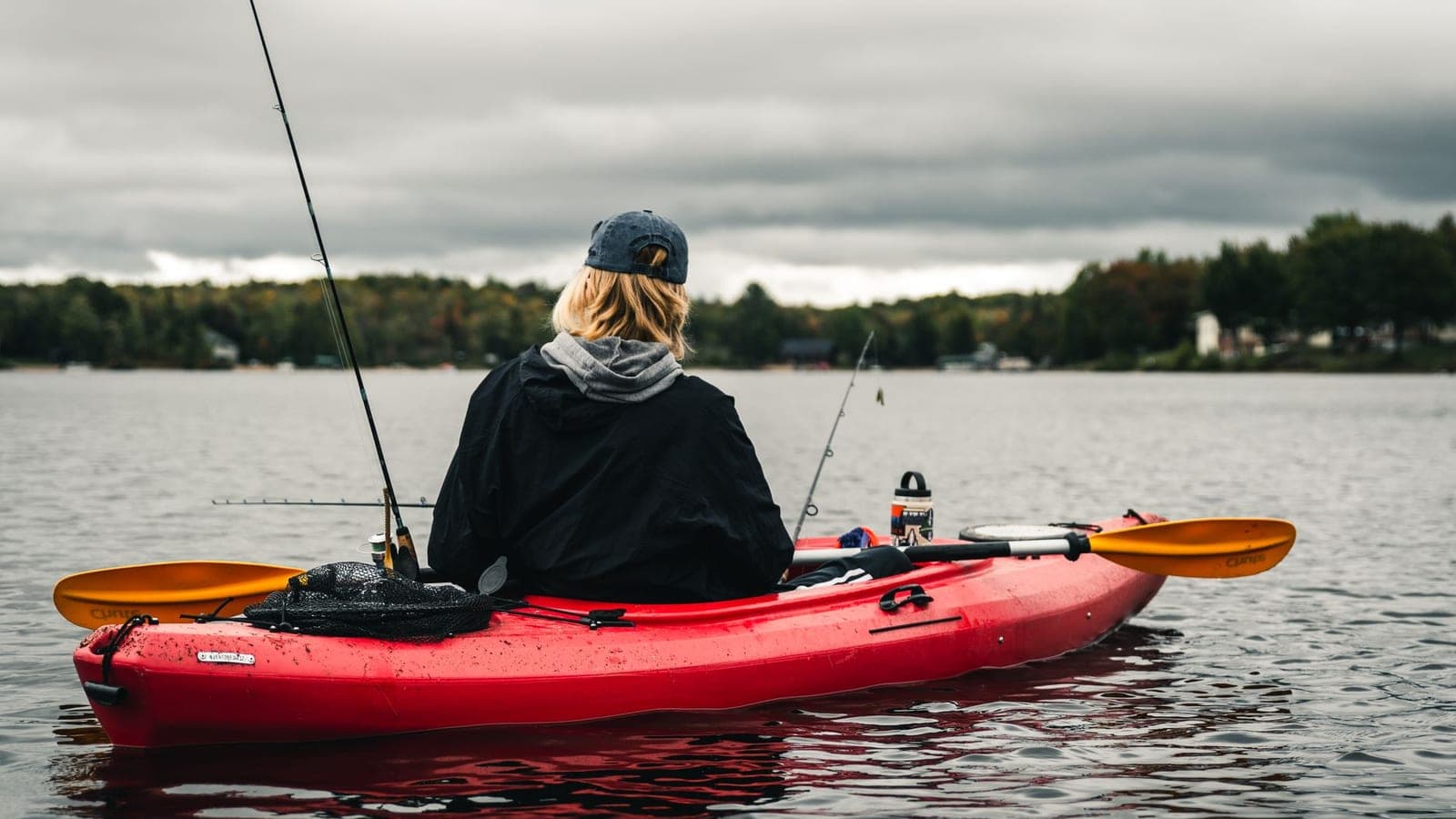
We have not paddled these, and we are not going to pretend we have. Here is what we did instead. Links to Amazon earn us a commission at no extra cost to you, and commission never decides a pick — how this site is funded.
| # | Product | Best for | The spec it turns on | Price |
|---|---|---|---|---|
| 1 | 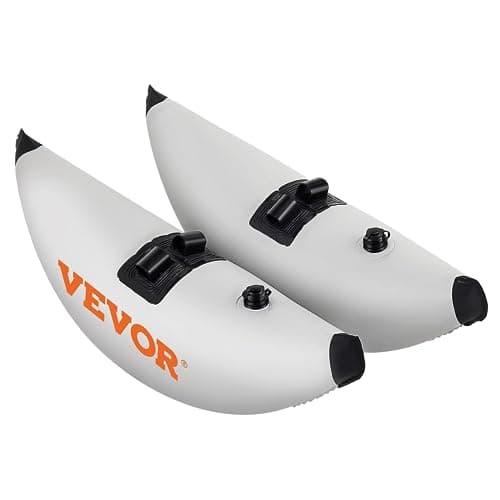 VEVOR Kayak Stabilizers, 2 PCS Inflatable Outrigger Float KitTop pickA complete kit -- floats, arms and a drilled crossbar -- at the cheapest end of the category. Inflatable floats mean it packs down to nothing, which is the whole reason to buy this rather than an aluminum system. | A first outrigger set, complete and cheap | 2 PVC inflatable floats with sealed seams, 2 sidekick arms and 1 pre-drilled connecting rod; 35.4 in / 90 cm item length, adjustable 81.5 to 94 in across, dual inflation valves, carry bag. No buoyancy figure published | |
| 2 | 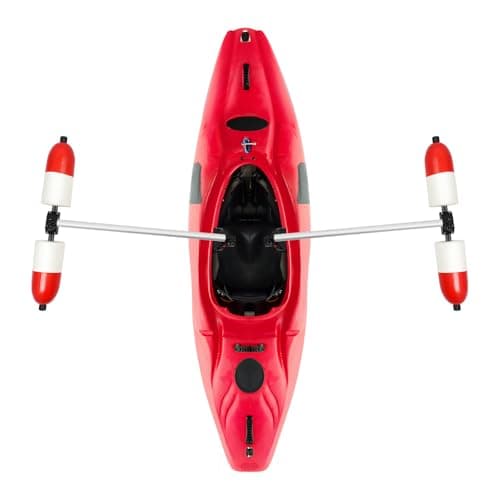 Deroanke Marine Kayak Outriggers System, Quick-ReleaseThe middle of the category: quick-release buttons instead of bolts, so the outriggers come off for the paddle home and go back on for the fishing. The 8.8 lb kit weight is the honest cost. | Taking them off without tools | 2-piece PVC outrigger arm and stabilizer system with quick-release buttons, 8.8 lb kit weight, stated to fit most kayaks. No buoyancy figure published | |
| 3 | 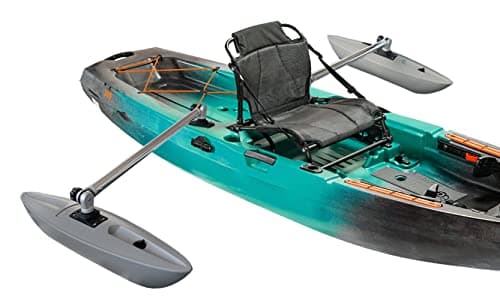 Brocraft Kayak Outrigger / Stabilizer System, Generation 2The rigid, track-mounted end of the category and the only kind of outrigger we would trust to be stood up on. It also costs roughly four times the inflatable kits and needs a boat with a factory track to bolt to. | Standing up on a boat that has a gear track | Generation 2 kayak and canoe stabilizer system designed to mount to a kayak track system. No buoyancy, arm length or kit weight published on the listing | |
| 4 | 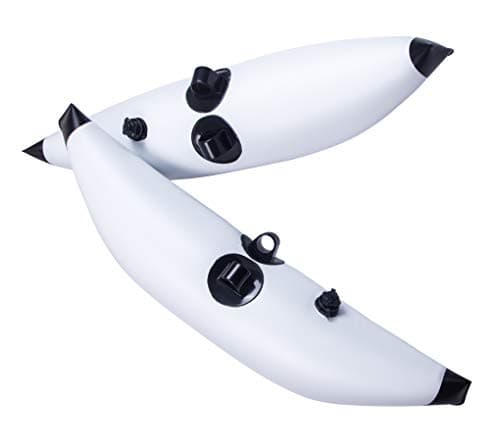 METER STAR Kayak Inflatable Outrigger Stabilizer Floats, 2 PcsFloats on their own. Useful as spares for a kit whose vinyl has given out, and a trap as a first purchase, because two floats with nothing to attach them to is not a stabilizer system. | Replacing a punctured float, not starting from nothing | 2 PVC inflatable outrigger floats. The listing publishes material and quantity only -- no buoyancy, no dimensions, and no mounting arms are described |
Outriggers — the pontoons on arms that stick out either side of a kayak, also sold as stabilizers or sidekicks — look like the obvious answer to feeling tippy. For most people asking the question they are not, and the reason is worth two minutes before you spend anything.
What they actually do
A kayak's stability comes from the width of the hull where it meets the water. An outrigger adds a second, much narrower contact point a long way out to the side. That gives you an enormous amount of what paddlers call secondary stability — resistance to going all the way over once you have started to lean — and it does not make the boat feel any less twitchy in the first few degrees.
- **They stop a capsize you have already started.** That is the real function, and it is a genuine one.
- **They do not make a narrow boat feel settled.** The initial wobble is the hull, and the floats are not in the water until you lean.
- **They let you stand up, if they are rigid.** This is the one capability nothing else gives you, and it needs aluminum arms rather than strapped inflatables.
- **They slow the boat down and catch everything.** Two floats dragging either side is real drag, and they snag reeds, docks and other people's lines.
The two situations where they genuinely earn it
- **You want to stand up and fish.** Standing in a kayak moves your center of gravity about two feet up, and no recreational hull is wide enough to make that comfortable. A rigid, track-mounted outrigger system is the only thing on this page that makes it reasonable, and it needs a boat with a factory gear track to bolt to.
- **The hull is genuinely too narrow.** A 22 to 26 inch touring or older hull you already own, that you are not going to replace, and that you want to be able to relax in. Outriggers are a sensible retrofit there.
- **A third, narrower case: a passenger who cannot be trusted not to lean.** A child, a dog that stands up, somebody with limited mobility. Floats on arms buy you margin for someone else's movement, which is the one thing a wider hull does not fully solve.
The three product classes, and the one to avoid
Everything sold under this name falls into three groups, and the listings do a poor job of telling you which you are looking at. This is the distinction that matters most on this page.
| Class | What you get | Can you stand on it? | Typical bracket |
|---|---|---|---|
| Floats only | Two inflatable PVC floats, no arms, no crossbar | No | Cheapest |
| Complete inflatable kit | Two floats, two arms, one drilled crossbar, bag | No | Low |
| Rigid arm, clamp-on | Aluminum or PVC arms with quick-release, floats | Marginal | Mid |
| Rigid, track-mounted | Aluminum arms bolted to a factory gear track | Yes | Highest |
The floats-only listings are the trap. They look like the complete kits, they cost a third as much, and the parts that transmit the float's support to your hull are not in the box. That is the commonest disappointment in this entire category and it is a reading problem rather than a product problem.
What nobody in this category publishes
We looked for it on every listing and on the maker sites, and it is not there: not one product in this class publishes a buoyancy figure or a float volume. That means there is no number on which to compare how much support any of these actually gives, from the $40 pair to the $220 system.
So we are not going to rank them on stability, because the data to do that honestly does not exist. What the listings do publish is material, arm length, kit weight and mounting method, and those are the four things the ranking below turns on. If you see a stabilizer roundup that confidently tells you which floats give the most lift, ask where the number came from.
Top pick — A first outrigger set, complete and cheap
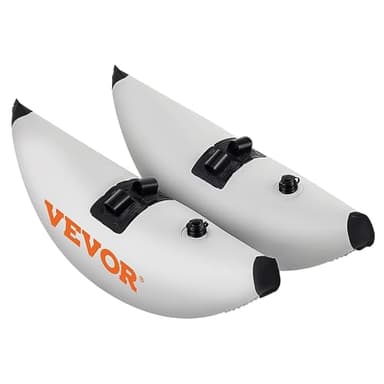
VEVOR Kayak Stabilizers, 2 PCS Inflatable Outrigger Float Kit
A complete kit -- floats, arms and a drilled crossbar -- at the cheapest end of the category. Inflatable floats mean it packs down to nothing, which is the whole reason to buy this rather than an aluminum system.
What the listing publishes
2 PVC inflatable floats with sealed seams, 2 sidekick arms and 1 pre-drilled connecting rod; 35.4 in / 90 cm item length, adjustable 81.5 to 94 in across, dual inflation valves, carry bag. No buoyancy figure published
The adjustable 81.5 to 94 in figure is the total width across both floats, and it is the number that decides whether the kit fits your boat. Wider is more stable and also more awkward to get off a dock and through a gap in the reeds.
Inflatable floats are the trade at this price: they pack flat, and they are the part that punctures. Two of them on a rocky launch is two more vinyl chambers to look after.
A pre-drilled connecting rod is doing more than it sounds. The cheap end of this category sells you two floats and leaves the mounting to you; this kit publishes the hardware.
No maker in this class publishes buoyancy, so you cannot compare float volume on paper -- not for this kit and not for its competitors. Judge it on arm length, mounting method and material, which are published.
What it does well
- Floats, arms and a drilled crossbar in one kit, not floats alone
- 81.5 to 94 in of adjustment, so it fits a range of hulls
- Sealed-seam PVC and dual valves, and it packs into a bag
- The cheapest complete system here by a wide margin
What it costs you
- No published buoyancy, so no way to compare support on paper
- Inflatable floats puncture, and there are two of them
- Inflating and fitting both floats adds time to every launch
- Fitting depends on your deck -- there is no universal mount that suits every hull
Skip this if you want to stand up and fish. Inflatable floats on adjustable arms damp a wobble; they do not give you a platform you can stand on with confidence.
#ad · how this is funded · price as of October 18, 2026
Pick 2 — Taking them off without tools
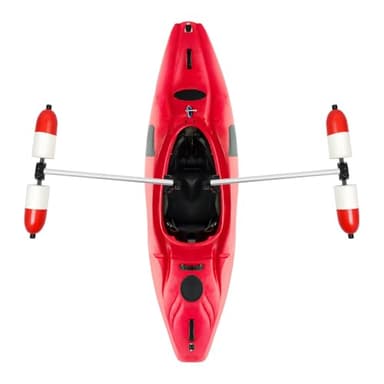
Deroanke Marine Kayak Outriggers System, Quick-Release
The middle of the category: quick-release buttons instead of bolts, so the outriggers come off for the paddle home and go back on for the fishing. The 8.8 lb kit weight is the honest cost.
What the listing publishes
2-piece PVC outrigger arm and stabilizer system with quick-release buttons, 8.8 lb kit weight, stated to fit most kayaks. No buoyancy figure published
Quick-release is the feature worth paying for in this class. Outriggers slow a boat down and catch every reed; being able to pull them in thirty seconds is what stops them being left in the garage.
8.8 lb is the published kit weight, and it is not trivial. On a 36 lb hull that is a quarter again on the carry, and it comes out of your usable capacity before you have loaded anything else.
'Fits most kayaks' is the listing's claim rather than a specification. Check your own deck, the gunwale shape and whether there is anywhere solid to clamp to before ordering -- this is the single most common reason an outrigger kit gets returned.
Like everything else in the category, no buoyancy figure is published, so there is no paper comparison to be made against the cheaper inflatable kits.
What it does well
- Quick-release buttons, so the arms come off without tools
- Published kit weight, which most of this category does not state
- A rigid arm transmits support better than a strapped inflatable
What it costs you
- 8.8 lb out of your carry and your usable capacity
- No published buoyancy figure
- 'Fits most kayaks' is a claim, not a measurement -- check your deck
- Twice the price of a complete inflatable kit
Skip this if your boat has a factory gear track. A track-mounted system bolts to a fitting designed to take load, and clamping to a gunwale never feels as solid as that.
#ad · how this is funded · price as of October 18, 2026
Pick 3 — Standing up on a boat that has a gear track
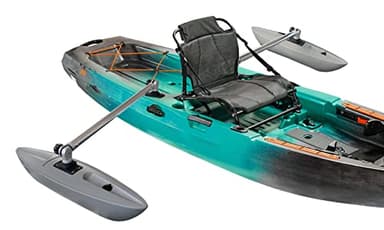
Brocraft Kayak Outrigger / Stabilizer System, Generation 2
The rigid, track-mounted end of the category and the only kind of outrigger we would trust to be stood up on. It also costs roughly four times the inflatable kits and needs a boat with a factory track to bolt to.
What the listing publishes
Generation 2 kayak and canoe stabilizer system designed to mount to a kayak track system. No buoyancy, arm length or kit weight published on the listing
The mounting is the whole product. A track-mounted system attaches to a rail the manufacturer installed and engineered to take load, rather than clamping to a gunwale that was never designed for a lever arm.
That is also its hard limit: most of the beginner boats on this site have no gear track at all. Check your own hull for a factory rail before this is even a candidate.
Brocraft publishes almost nothing numeric on this listing -- no buoyancy, no arm length, no kit weight. We are not going to fill those gaps in. What is published is the mounting system and the generation, and the mounting system is the reason to consider it.
At this price the comparison stops being 'which outrigger' and becomes 'outriggers or a wider boat'. A 34 in sit-on-top costs less than this kit plus a narrow hull, and it is stable all the time rather than when rigged.
What it does well
- Mounts to a factory gear track rather than clamping to a gunwale
- Rigid aluminum construction, the only class here worth standing on
- A specialist brand in this exact category rather than a generic kit
What it costs you
- Needs a boat with a factory kayak track -- most beginner hulls have none
- No published buoyancy, arm length or weight anywhere on the listing
- Roughly four times the price of a complete inflatable kit
- At this money a wider boat is often the better purchase
Skip this if your kayak has no gear track, or you are buying stability for a nervous first season. A wider hull solves that permanently and this does not.
#ad · how this is funded · price as of October 18, 2026
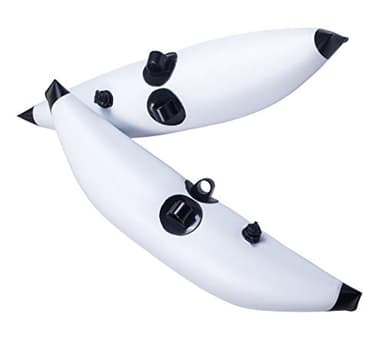
Pick 4 — Replacing a punctured float, not starting from nothing
METER STAR Kayak Inflatable Outrigger Stabilizer Floats, 2 Pcs
Floats on their own. Useful as spares for a kit whose vinyl has given out, and a trap as a first purchase, because two floats with nothing to attach them to is not a stabilizer system.
What the listing publishes
2 PVC inflatable outrigger floats. The listing publishes material and quantity only -- no buoyancy, no dimensions, and no mounting arms are described
This is the product class people buy by mistake. The listings in this bracket look like the complete kits and cost a third as much, and the reason is that the arms and the crossbar -- the parts that actually transmit the float's support to the hull -- are not in the box.
As spares they are genuinely useful. Vinyl floats are the consumable part of any inflatable outrigger kit, and a replacement pair costs far less than a new system.
The listing publishes material and quantity and nothing else. No buoyancy, no dimensions, no mount. We have not invented any of those.
If you have a kit and one float has gone soft, this is the cheap fix. If you have nothing, buy a kit.
What it does well
- Cheapest entry in the category
- The right purchase for replacing a punctured float
- PVC, the same material as the floats in the complete kits
What it costs you
- No arms or crossbar -- this is not a complete stabilizer system
- The listing publishes no dimensions and no buoyancy at all
- Easy to buy by mistake expecting a full kit
- No published fitting method for any particular hull
Skip this if this is your first outrigger purchase. You will receive two inflatable floats and nothing to mount them with, which is the most common disappointment in this entire category.
#ad · how this is funded · price as of October 18, 2026
What they cost you, beyond the price
- **Capacity.** Eight to ten pounds of kit is eight to ten pounds of you or your gear, gone.
- **Carry weight.** The same pounds, again, on the walk from the car.
- **Width through gaps.** 81 to 94 inches across is wider than many launch ramps, dock gaps and the space between two moored boats.
- **Launch time.** Two floats to inflate and two arms to fit, every trip, unless you leave them rigged and accept the width in transit.
- **Speed.** Measurable, and you will notice it inside the first mile.
Fitting, which is where most of these go wrong
There is no universal mount. Every listing in this category says it fits most kayaks, and what that means in practice is that there is a crossbar and you will work out how to attach it to your particular deck.
- **Look for a factory gear track** — the T-slot rail molded or bolted into the deck of fishing-oriented boats. If you have one, buy a track-mounted system and nothing else.
- **If there is no track, find two solid points** behind your seat where a crossbar can sit across the hull without flexing a hatch lid or crushing a molded seat.
- **Check the crossbar reaches.** The bar has to span your boat's full width at that point, plus the mounting hardware.
- **Measure the finished width.** Add both arms and both floats and make sure the result still gets off your dock and through your launch.
- **Test it on dry land loaded.** Sit in the boat on grass with the kit fitted and lean on each side. Anything that flexes, creaks or shifts will do it worse on the water.
If you work through that list and cannot find two solid points behind the seat, your boat is not a candidate and no kit in this category will change that.
Why some kayaks come with a pontoon already
A fair number of inexpensive sit-on-tops have a cross-section with two flattened sponsons either side of a shallow center, and people reasonably ask why. That is a pontoon or tunnel hull, and it is a molded-in version of the same idea: the buoyancy is pushed out to the edges so the boat resists leaning. It is not an outrigger and it does not come off.
If you want that kind of stability permanently and without rigging, you want that hull shape rather than a bolt-on. Hull types, in plain language is the page for that, and it is the one this site was built around.
What you can ignore
- **Load ratings quoted on the floats.** A number printed on a vinyl tube is not a measured buoyancy figure and there is no standard behind it.
- **Color options.** Three colors to choose from is the most prominent feature in several of these listings, which tells you what the sellers think they are competing on.
- **'Fits all kayaks and canoes'.** Nothing fits all kayaks. Check your deck.
- **Rudder claims.** Several of these listings include the word rudder in the title. None of them is a rudder.
If what you actually want is to feel settled in the boat from the first minute, the honest answer is width and length rather than hardware: the beginner roundup for the former and the lake roundup for the latter. Outriggers are a fix for a specific problem, not a confidence purchase.
Questions people actually ask
Are kayak stabilizers worth it?
Do kayak outriggers actually work?
How much buoyancy do kayak stabilizers have?
Can you stand up in a kayak with outriggers?
Will outriggers fit my kayak?
Why do some kayaks have a side pontoon built in?
How much do outriggers slow a kayak down?
Where these numbers came from
Every figure on this page traces to one of these. Where a number could not be sourced, the page says so rather than estimating it.
- Eddyline Kayaks — Maximum weight capacity versus ideal capacity for various styles of kayaks (manufacturer, states the 60-70% ideal-capacity band)
- VEVOR Kayak Stabilizers, 2 PCS inflatable outrigger kit — manufacturer specification as published on the Amazon listing, read 2026-10-17
- Deroanke Marine Kayak Outriggers System — manufacturer specification as published on the Amazon listing, read 2026-10-17
- Brocraft Kayak Outrigger / Stabilizer System, Generation 2 — manufacturer specification as published on the Amazon listing, read 2026-10-17
- METER STAR Kayak Inflatable Outrigger Stabilizer Floats — manufacturer specification as published on the Amazon listing, read 2026-10-17
Read next
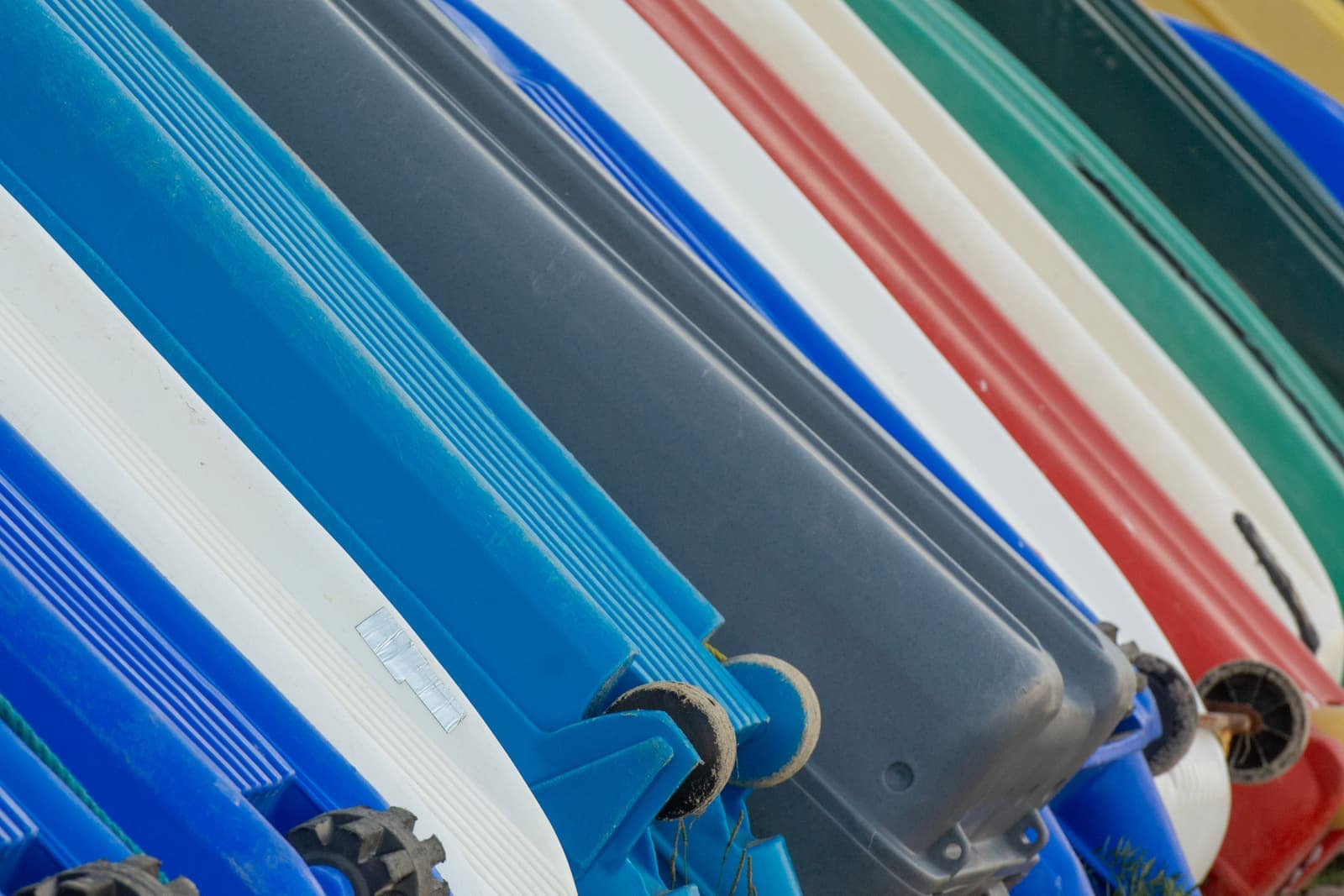
Kayak Hull Types: What Each Shape Does on the Water
Flat, shallow-V, rounded and pontoon hulls — what each shape actually does, and which one belongs under a beginner.
Top pick
Perception Tribe 11.5 Sit-on-Top Kayak
The all-round first sit-on-top
#ad · how this is funded · price as of October 18, 2026
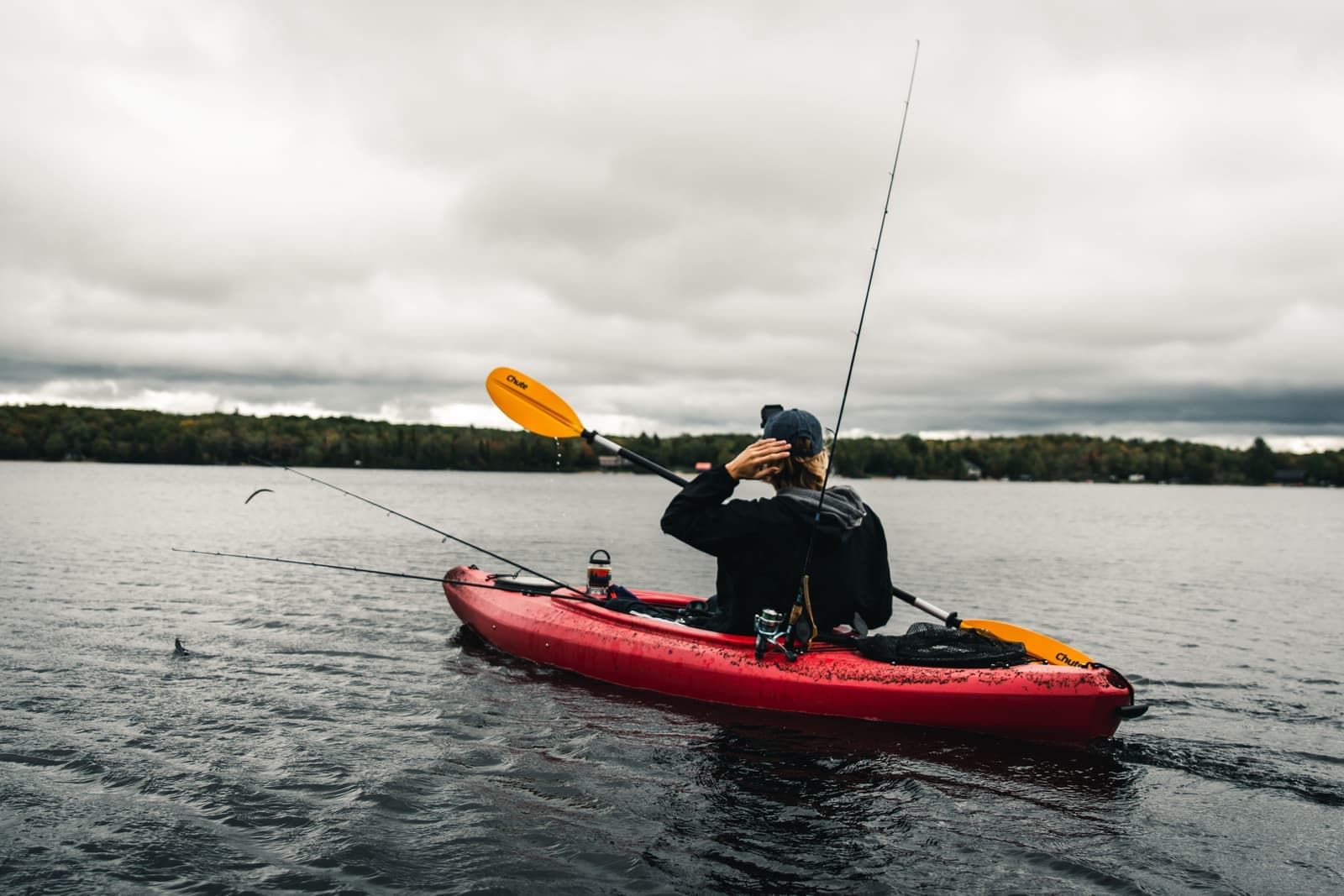
Best Fishing Kayak
The Best Kayaks for Fishing
Tackle is heavier than anyone plans for. The capacity, beam and deck specs that actually decide a first fishing kayak — and why the angler badge is not one of them.
Top pick
Perception Tribe 11.5 Sit-on-Top Kayak
The all-round first sit-on-top
#ad · how this is funded · price as of October 18, 2026

Best for Seniors
The Best Kayaks for Seniors
Cockpit size, hull weight and remount ease are the specs that matter for an older paddler. Which boats publish good numbers on all three.
Top pick
Old Town Vapor 10 Solo Sit-Inside Kayak, 10 ft
A first boat with a large, easy-entry cockpit
#ad · how this is funded · price as of October 18, 2026
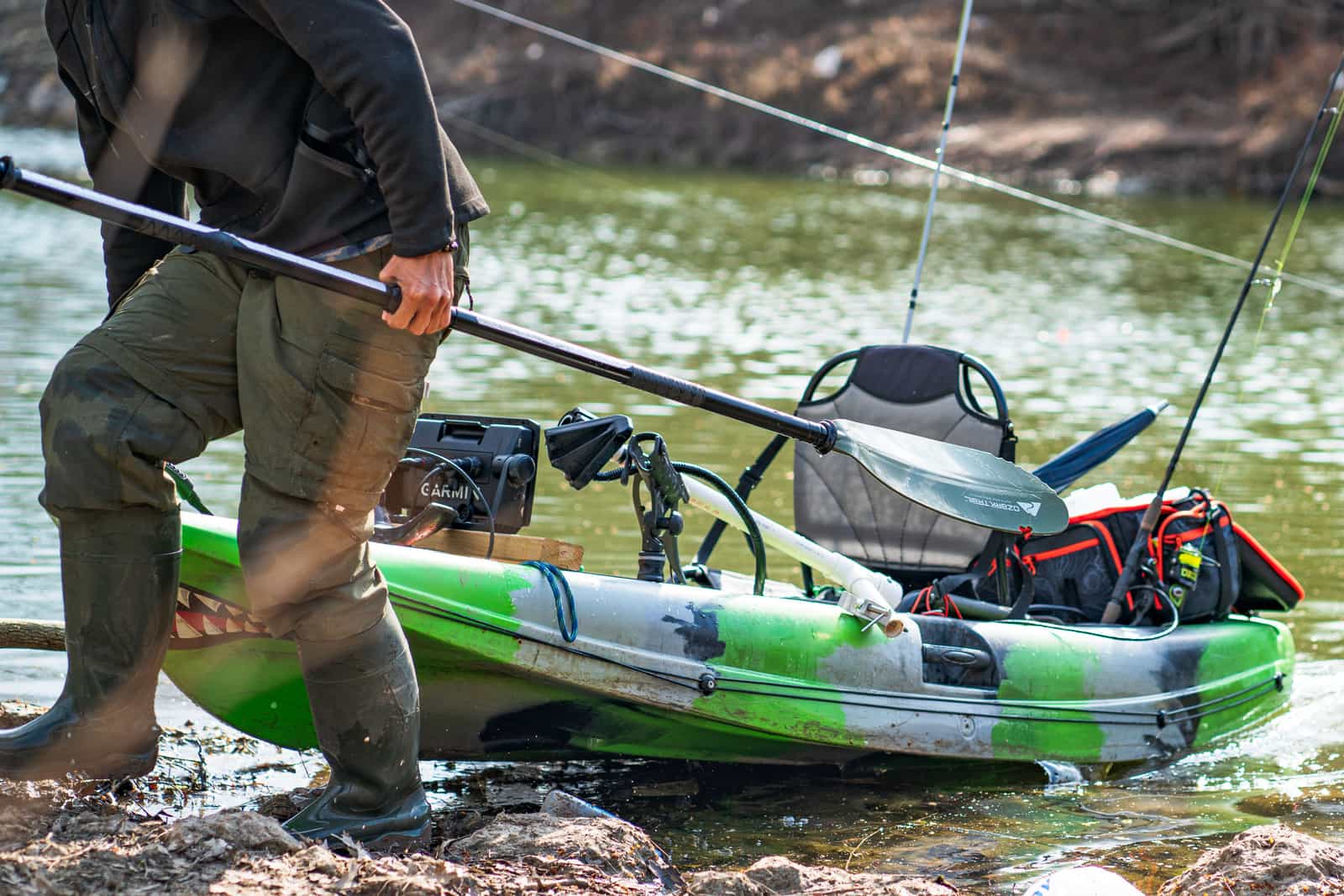
Best First Accessory
Kayak Accessories: What Actually Earns a Place
Five accessories that change every outing, ranked by how much they improve it per dollar — and the ones you can safely skip for a season.
Top pick
Bending Branches Whisper Kayak Paddle, 230 cm
The first paddle worth keeping
#ad · how this is funded · price as of October 18, 2026
Kayak Weight Capacity, Explained
The 65 percent rule, where it comes from, what happens when you ignore it, and how to size around it.
Top pick
Perception Tribe 11.5 Sit-on-Top Kayak
The all-round first sit-on-top
#ad · how this is funded · price as of October 18, 2026
Best Anchor Setup
The Best Anchors for Kayaks and Paddle Boards
A 3.5 lb folding grapnel is the standard answer, 1.5 lb for a board. Which kit, how much rope, and the side-attachment rule that keeps an anchored hull upright.
Top pick
MarineNow 3.5 lb Folding Grapnel Anchor Kit with 25 ft Rope
The complete kit, for most people
#ad · how this is funded · price as of October 18, 2026