Kayaks
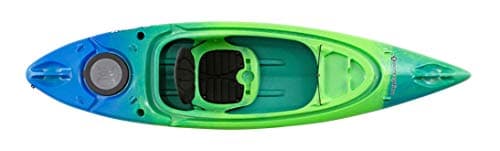
Lifetime Cruze 100: The Cheap Sit-Inside That Is Actually Wide Enough
Most inexpensive sit-insides get cheap by getting narrow. This one stayed thirty inches wide and got heavy instead, which is the better of the two ways to save money.
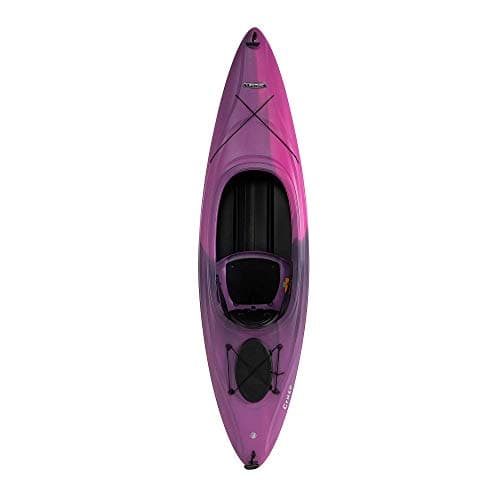
We have not paddled these, and we are not going to pretend we have. Here is what we did instead. Links to Amazon earn us a commission at no extra cost to you, and commission never decides a pick — how this site is funded.
| # | Product | Best for | The spec it turns on | Price |
|---|---|---|---|---|
| 1 | Lifetime Cruze 100 Sit-In Kayak, 10 ftTop pickA 30 in beam on a budget hull is the trade worth having: you give up ten pounds of carry weight against the Argo and get back the width that keeps a nervous paddler upright. | The cheapest hard-shell sit-inside worth owning | 120 in long, 30 in beam, 46 lb hull, 275 lb rated capacity |
We have not paddled this boat. What follows is what its published specification means, run through the same arithmetic we apply to everything on this site, plus a direct account of who it does not suit.
Top pick — The cheapest hard-shell sit-inside worth owning
Lifetime Cruze 100 Sit-In Kayak, 10 ft
A 30 in beam on a budget hull is the trade worth having: you give up ten pounds of carry weight against the Argo and get back the width that keeps a nervous paddler upright.
What the listing publishes
120 in long, 30 in beam, 46 lb hull, 275 lb rated capacity
Usable at the 65 percent rule: 179 lb (range 165–193 lb), which leaves about 159 lb of paddler after a 20 lb day kit. Why 65 percent.
275 lb rated is about 179 lb usable at 65 percent and roughly 159 lb of paddler after gear. That is the tightest headroom of the adult boats here and it is the honest reason this one is cheap.
46 lb in a budget rotomolded hull is normal. Cheap plastic is thick plastic, and thickness is weight -- there is no version of this boat that is both inexpensive and light.
The 30 in beam does the work a beginner actually needs. Width is stability, and it is the one spec on a first boat that is worth more than any brand name.
What it does well
- 30 in beam is genuinely stable, which is the spec that decides a first outing
- Reliably the least expensive hard-shell sit-inside on this list
- 10 ft stores and turns like the more expensive 10-footers
What it costs you
- 275 lb rating leaves the least headroom of the adult boats here
- 46 lb for a budget boat -- you pay the weight rather than the money
- Flat-bottom hull wanders more than the Pungo's keel line
Skip this if you weigh much over 160 lb once dressed and carrying gear. The usable-capacity arithmetic is against you and a 325 lb boat costs very little more.
#ad · how this is funded · price as of October 8, 2026
Cheap boats usually get cheap by getting narrow
There are two ways to bring the price of a rotomolded kayak down: use less plastic, or use cheaper plastic and more of it. The first route makes a lighter, narrower boat. The second makes a heavier, wider one. Almost every budget sit-inside takes the first route, which is why the cheap end of the category is full of 28 inch hulls.
The Cruze 100 took the second route. It is 30 inches wide and 46 pounds, against the Pelican Argo 100X's 28 inches and 36 pounds at a similar sort of money. Those are the same decision seen from two sides, and for a beginner it is the more useful one.
| Spec | Published | What it means |
|---|---|---|
| Length | 120 in (10 ft) | The recreational default. Stores diagonally in a garage |
| Beam | 30 in | Middle of our 29 to 31 in beginner band |
| Depth | 12.3 in | Shallow deck, so less to be pushed by wind |
| Hull weight | 46 lb | One-person carry, but you will know about it |
| Rated capacity | 275 lb | About 179 lb usable, or 159 lb of paddler after a 20 lb kit |
| Hull form | Flat bottom with deep channels and chine rails | Steady at rest, with some tracking help molded in |
| Storage | Oval hatch below deck | A real enclosed space, unlike a fabric tank cover |
| Seat | Quick-release adjustable seat back, cushioned pad | Adjustable, which is not a given at this price |
Two inches of width is not a small thing
Beam is the specification a first-timer feels in the first thirty seconds, before they have any frame of reference for tracking or glide. Our recommendation for a first kayak is 29 to 31 inches, and the difference between 28 and 30 inches is the difference between a boat that feels alert and one that feels settled.
That matters disproportionately because the failure mode of a first kayak purchase is not usually dissatisfaction, it is disuse. A boat that made someone tense for an hour gets sold. Why width is the first spec to check.
What Lifetime added to help it track
A flat-bottom hull is stable and does not hold a line, which is the standard budget-boat compromise. Lifetime publish two features aimed at the second half of that: deep hull channels and chine rails.
Channels are grooves molded along the bottom that give the water something to follow, and chine rails are the harder edges at the sides that bite when the boat leans. Neither turns a flat-bottom 10 footer into a touring boat, and together they are the difference between a hull that slides sideways in a gust and one that mostly does not. It is a sensible amount of engineering for the money. What hull shape actually does.
The 275 lb rating is the tightest here
This is the honest reason the boat is inexpensive, and it is the number to check against yourself before anything else on this page. One hundred and fifty-nine pounds of paddler leaves out a lot of adults. If you are above it, the boat that solves the same problem with more headroom is the Perception Flash 9.5 at 325 lb rated, which is shorter and costs more.
Forty-six pounds, and what that means at the car
Cheap plastic is thick plastic, and thickness is weight. There is no version of this boat that is both inexpensive and light, and pretending otherwise would be the review writing itself.
Forty-six pounds is still a one-person carry for most adults — it is ten pounds under the point where a hull realistically needs two people — but it is ten pounds more than the lightest 10 footer, and that gap is felt at shoulder height rather than in the abstract. If you park close to the water it does not matter. If you have a long walk or a high roof, it is the reason to look at the Argo instead. Carry weight, compared across the site.
The hatch is a genuine advantage
Lifetime publish an oval hatch giving storage below the deck. That is a real enclosed space, and it is worth more than the fabric tank-well covers that budget sit-on-tops use, because it keeps things out of sight and mostly out of the weather.
It is not a dry hatch and should not be treated as one. A phone, a wallet or a car key goes in a dry bag inside the hatch, not loose in it. Which dry bag, and what size.
Who should buy it
- **Nervous beginners on a budget.** This is the case. Thirty inches at this price is the thing that is hard to find.
- **Paddlers under about 159 lb** who want an enclosed cockpit rather than an open deck.
- **Cool-weather paddlers.** A sit-inside keeps your legs out of the wind, which extends the season at both ends.
- **Anyone who parks near the water**, where 46 lb is a non-issue and the width is pure gain.
Who should not
- **Paddlers over about 159 lb.** The Perception Flash 9.5 is rated 325 lb and is the boat for you.
- **Anyone with a long carry or a tall vehicle.** Ten pounds is the whole difference between this and the Pelican Argo 100X.
- **Anyone likely to swim and remount alone.** A sit-inside is the harder hull to get back into. The comparison.
- **Anyone crossing open water.** Ten feet of flat-bottom hull wanders, channels and chine rails notwithstanding.
Questions people actually ask
What is the weight limit of the Lifetime Cruze 100?
How much does the Lifetime Cruze 100 weigh?
Is the Lifetime Cruze 100 good for beginners?
Lifetime Cruze 100 or Pelican Argo 100X?
Does the Lifetime Cruze 100 come with a paddle?
Is the Lifetime Cruze 100 hatch waterproof?
Where these numbers came from
Every figure on this page traces to one of these. Where a number could not be sourced, the page says so rather than estimating it.
Read next

Best Budget Kayak
The Best Budget Kayaks
Budget kayaks with the specific compromise each one makes, named. Capacity is usually the one that catches people.
Top pick
Intex Explorer K2 Inflatable Kayak, 2-person (oars and pump included)
Two people, no roof rack, small budget
#ad · how this is funded · price as of October 8, 2026
Pelican vs Lifetime Kayaks
The two big-box kayak brands, hull against hull on published weight, beam and capacity. Which wins for a light paddler, a heavy one, and someone who lifts alone.
Top pick
Pelican Argo 100X Sit-In Kayak, 10 ft
The lightest sit-inside to carry alone
#ad · how this is funded · price as of October 8, 2026
Pelican Argo 100X: The Lightest Way Into a Sit-Inside
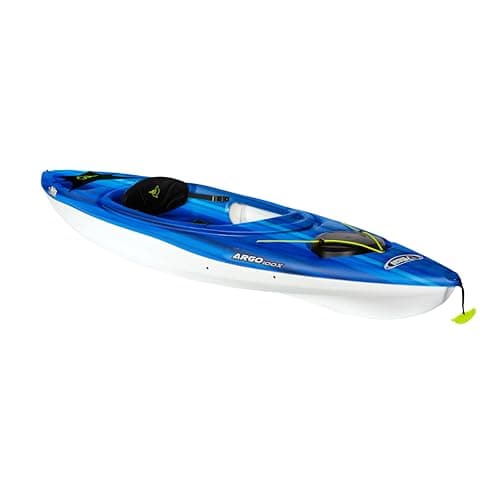
36 lb makes it the only 10-footer one adult carries easily. The 275 lb rating is the catch, and it is a real one.
Top pick
Pelican Argo 100X Sit-In Kayak, 10 ft
The lightest sit-inside to carry alone
#ad · how this is funded · price as of October 8, 2026
Perception Flash 9.5: The Most Capacity in the Shortest Hull
325 lb rated in a hull under 10 ft, at 41 lb. The best short-boat capacity we cover — and a waterline too short to hold a line in wind.
Top pick
Perception Flash 9.5 Sit-Inside Kayak
The most capacity in the shortest hull
#ad · how this is funded · price as of October 8, 2026

Sit-On-Top vs Sit-In Kayak
Water temperature and remounting decide this, not preference. The honest comparison, with picks for each.
Top pick
Perception Tribe 11.5 Sit-on-Top Kayak
The all-round first sit-on-top
#ad · how this is funded · price as of October 8, 2026

Best Under $500
The Best Kayaks Under $500
Under $500 is where a real hard-shell hull just becomes possible. What the bracket buys, which boats sit either side of the line, and the one to avoid.
Top pick
Pelican Seek 100X Sit-on-Top Kayak, 10 ft
A sit-on-top that still fits a small car
#ad · how this is funded · price as of October 8, 2026