Gear & Getting There
The First Trip Checklist
Short on purpose. A long checklist is a list nobody follows, and the things that actually matter on a first outing fit on one screen.
We have not paddled these, and we are not going to pretend we have. Here is what we did instead. Links to Amazon earn us a commission at no extra cost to you, and commission never decides a pick — how this site is funded.
| # | Product | Best for | The spec it turns on | Price |
|---|---|---|---|---|
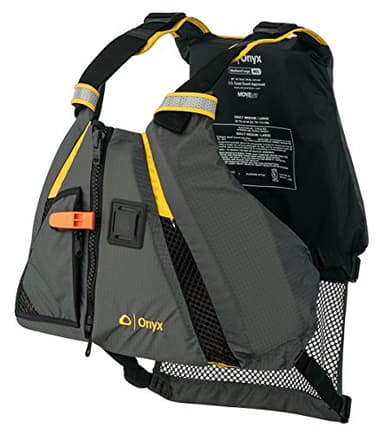
| 1 | 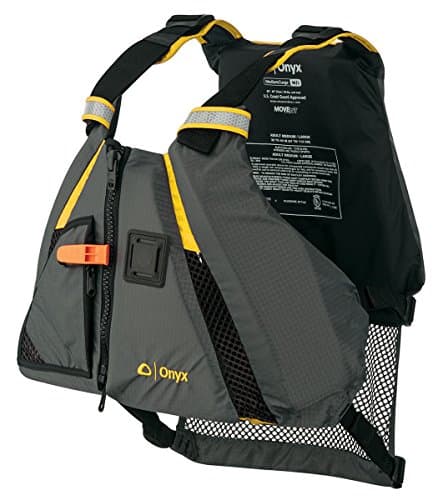 Onyx MoveVent Dynamic Paddle VestTop pickA paddling-cut vest with a mesh lower back, which is the design difference that stops a PFD from being pushed up your neck every time you sit against a seat back. | The PFD you will actually keep on | USCG and Transport Canada approved, 90 to 300 lb range, 1.7 lb, ventilated back panel | |
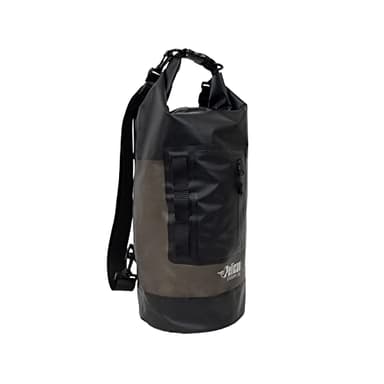
| 2 | 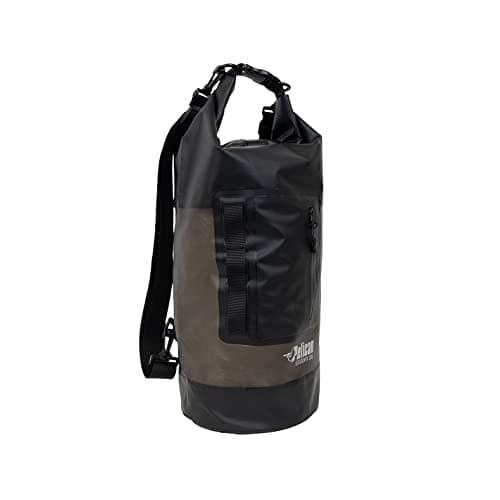 Pelican ExoDry 20L Dry BagTwenty liters is the size that takes a dry layer, a towel, a phone and a lunch -- which is the actual list, rather than the 5 L that only takes a phone. | Keeping the phone, keys and a dry layer dry | 20 L, roll-top closure, shoulder straps, 1.2 lb | |
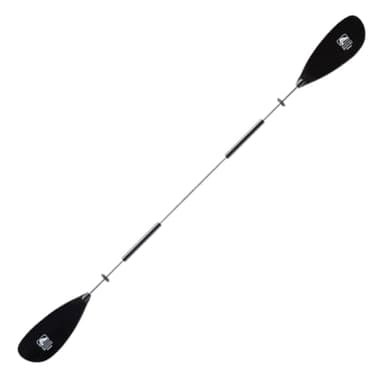
| 3 | 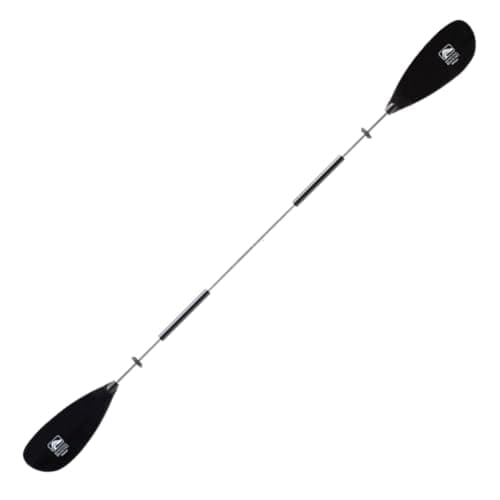 Bending Branches Whisper Kayak Paddle, 230 cm230 cm is the length our formula puts most adults in a 28 to 32 in recreational kayak on, and this is the least expensive paddle at that length made by a company that only makes paddles. | The first paddle worth keeping | 230 cm, two-piece aluminum shaft, polypropylene blades, 0 and 60 degree feathering |
Most paddling checklists run to forty items and get skimmed. This one is short because a first trip on sheltered flat water in warm weather genuinely does not need much, and a list you actually follow beats a comprehensive one you do not.
Required
- **An approved life jacket, worn.** Not carried. Federal law requires one aboard per person; wearing it is what makes it work. The rules.
- **A whistle**, clipped to the PFD. It covers the federal sound-signal requirement on a paddlecraft and it carries across water far better than shouting.
- **Water.** More than you think. Paddling in sun dehydrates you without feeling like effort.
- **Shoes that stay on your feet.** Not flip-flops, which come off in water. Not bare feet on a launch whose bottom you cannot see.
- **Someone who knows where you are** and roughly when you will be back. Thirty seconds, and it is the entire rescue plan.
Worth having
- **A 20 liter dry bag.** The size that holds a real day's kit.
- **A warm layer**, in the dry bag, even in summer. Wind on wet skin is colder than the forecast suggests.
- **Sun protection.** Water reflects, so you burn from above and below. A long-sleeved layer beats sunscreen for a whole afternoon.
- **Your phone in a waterproof case or the dry bag.** It is the map, the camera and the emergency call.
- **A hat with a strap**, because a hat without one is a hat you watch float away.
- **A small first aid kit.** Blisters and small cuts, realistically.
Leave at home
- **Anything you would be upset to lose in the water.** That is the entire filter. Sunglasses without a retainer, loose keys, anything with a battery that is not in a bag.
- **Cotton clothing.** It holds water, gets heavy and stays cold. Anything quick-drying is better.
- **A full-size backpack.** It will not fit in the boat and will not stay dry on the deck.
- **Speakers.** Everyone else came for the quiet.
The two-minute check before you launch
- **Check the wind, not the weather.** Under 10 mph is comfortable. Over 12, a beginner spends the session steering.
- **Check the water temperature, not the air temperature.** Warm air over cold water is the combination that catches people out in spring.
- **Check the drain plug** on a hard-shell. It is at the stern and it is the classic first-trip-of-the-season mistake.
- **Check the board's pressure** on an inflatable, against the figure printed near the valve. Soft is what gets mistaken for unstable.
- **Put the PFD on before you get in**, not after. It is harder to fit correctly while seated and much harder while swimming.
- **Note where you launched from.** Shorelines look identical from the water in a way they do not from the land.
The three things to have before the first trip
Top pick — The PFD you will actually keep on
Onyx MoveVent Dynamic Paddle Vest
A paddling-cut vest with a mesh lower back, which is the design difference that stops a PFD from being pushed up your neck every time you sit against a seat back.
What the listing publishes
USCG and Transport Canada approved, 90 to 300 lb range, 1.7 lb, ventilated back panel
The U.S. Coast Guard requires a wearable approved PFD for every person aboard a recreational vessel, and requires children under 13 to wear one while under way. Kayaks, canoes and paddle boards count as vessels. Carrying it satisfies the law for adults; wearing it is what actually works.
The 90 to 300 lb rating on the listing is a chest-size and buoyancy fit range, not a capacity. Get the size right -- a PFD that rides up when you lift your arms is one you will take off.
The ventilated back panel exists because kayak seats have backrests. A flat-backed general-purpose vest and a seat back fight each other for the same space, and the vest loses.
What it does well
- Cut for paddling, so the lower back clears a kayak seat
- Ventilated panel makes it bearable in real summer heat
- USCG and Transport Canada approved, which is the only certification that counts
What it costs you
- Costs several times a general-purpose orange vest
- Sized ranges mean you must check the fit chart, not just buy a Medium
- Mesh back panels snag on rough gear
Skip this if this is a once-a-year rental-style outing. A cheap approved vest is legally identical and the comfort argument only pays off with hours in it.
#ad · how this is funded · price as of October 18, 2026
Pick 2 — Keeping the phone, keys and a dry layer dry
Pelican ExoDry 20L Dry Bag
Twenty liters is the size that takes a dry layer, a towel, a phone and a lunch -- which is the actual list, rather than the 5 L that only takes a phone.
What the listing publishes
20 L, roll-top closure, shoulder straps, 1.2 lb
Roll-top closure is the whole mechanism. Three folds and a clip, and it is watertight; two folds and it is a bag with a hole in it. Roll it properly.
20 L is the useful size for a day. 5 L bags are for a phone and a wallet, and 30 L bags do not fit through a kayak hatch.
It floats when it is sealed and mostly full of soft goods, which is a genuine safety feature the day something goes over the side.
What it does well
- 20 L is the size that actually holds a day's kit
- Roll-top and clip, so there is no zip to fail
- Shoulder straps for the walk from the car
What it costs you
- Roll-tops are only waterproof if you roll them three times
- Wide bags can be awkward through a small kayak hatch
- No structure, so hard objects poke through against your back
Skip this if you only need to keep a phone dry. A 5 L bag or a phone case is a fraction of the price and easier to stow.
#ad · how this is funded · price as of October 18, 2026
Pick 3 — The first paddle worth keeping
Bending Branches Whisper Kayak Paddle, 230 cm
230 cm is the length our formula puts most adults in a 28 to 32 in recreational kayak on, and this is the least expensive paddle at that length made by a company that only makes paddles.
What the listing publishes
230 cm, two-piece aluminum shaft, polypropylene blades, 0 and 60 degree feathering
230 cm is what 104 + 1.333 x (boat width + your height in inches) returns for a 5 ft 8 in paddler in a 30 in boat. If you are much taller or your boat is much wider, check the chart before you buy this length rather than the paddle.
The 0 and 60 degree feather settings are the useful part. Feathering angles the second blade so it slices through wind instead of catching it, and being able to turn it off while you learn matters more than the setting itself.
An aluminum shaft is cold in the hands in spring and fall, and it is the reason people upgrade. It is not a reason to avoid this paddle as a first one.
What it does well
- 230 cm suits the great majority of recreational kayaks and adult paddlers
- Two feather settings, including flat, which is what a beginner should start with
- Made by a dedicated paddle manufacturer rather than bundled with a boat
What it costs you
- Aluminum shaft is genuinely cold to hold in cool weather
- Polypropylene blades flex more than fiberglass under a hard stroke
- Only two lengths of adjustment -- it is a fixed size, so get the size right
Skip this if our chart puts you at 240 or 250 cm. A wide inflatable kayak or a tall paddler needs more paddle, and the right length in a cheaper paddle beats the wrong length in a better one.
#ad · how this is funded · price as of October 18, 2026
Questions people actually ask
What should I bring on my first kayaking trip?
What should you not bring kayaking?
What should I wear paddle boarding for the first time?
Do I need a whistle for kayaking?
How do I know if it is too windy to paddle?
Where these numbers came from
Every figure on this page traces to one of these. Where a number could not be sourced, the page says so rather than estimating it.
- U.S. Coast Guard — Life Jacket Wear / Wearing Your Life Jacket (federal carriage and under-13 wear requirements)
- U.S. Coast Guard — Recreational Boaters (federal equipment requirements for vessels, paddlecraft included)
- Onyx MoveVent Dynamic Paddle Vest — manufacturer specification as published on the Amazon listing, read 2026-09-02
- Pelican ExoDry 20L Dry Bag — manufacturer specification as published on the Amazon listing, read 2026-09-02
Read next
Bending Branches Whisper: The First Paddle Worth Keeping
230 cm, dihedral polypropylene blades, 0/60 feathering, made in Wisconsin. The honest entry paddle — and the two specs that make people upgrade later.
Top pick
Bending Branches Whisper Kayak Paddle, 230 cm
The first paddle worth keeping
#ad · how this is funded · price as of October 18, 2026
Onyx MoveVent Dynamic: The Life Jacket You Will Actually Keep On
USCG and Transport Canada approved, with a mesh lower back that clears a kayak seat and large armholes that leave the stroke alone. The fit chart is the catch.
Top pick
Onyx MoveVent Dynamic Paddle Vest
The PFD you will actually keep on
#ad · how this is funded · price as of October 18, 2026
Best First Accessory
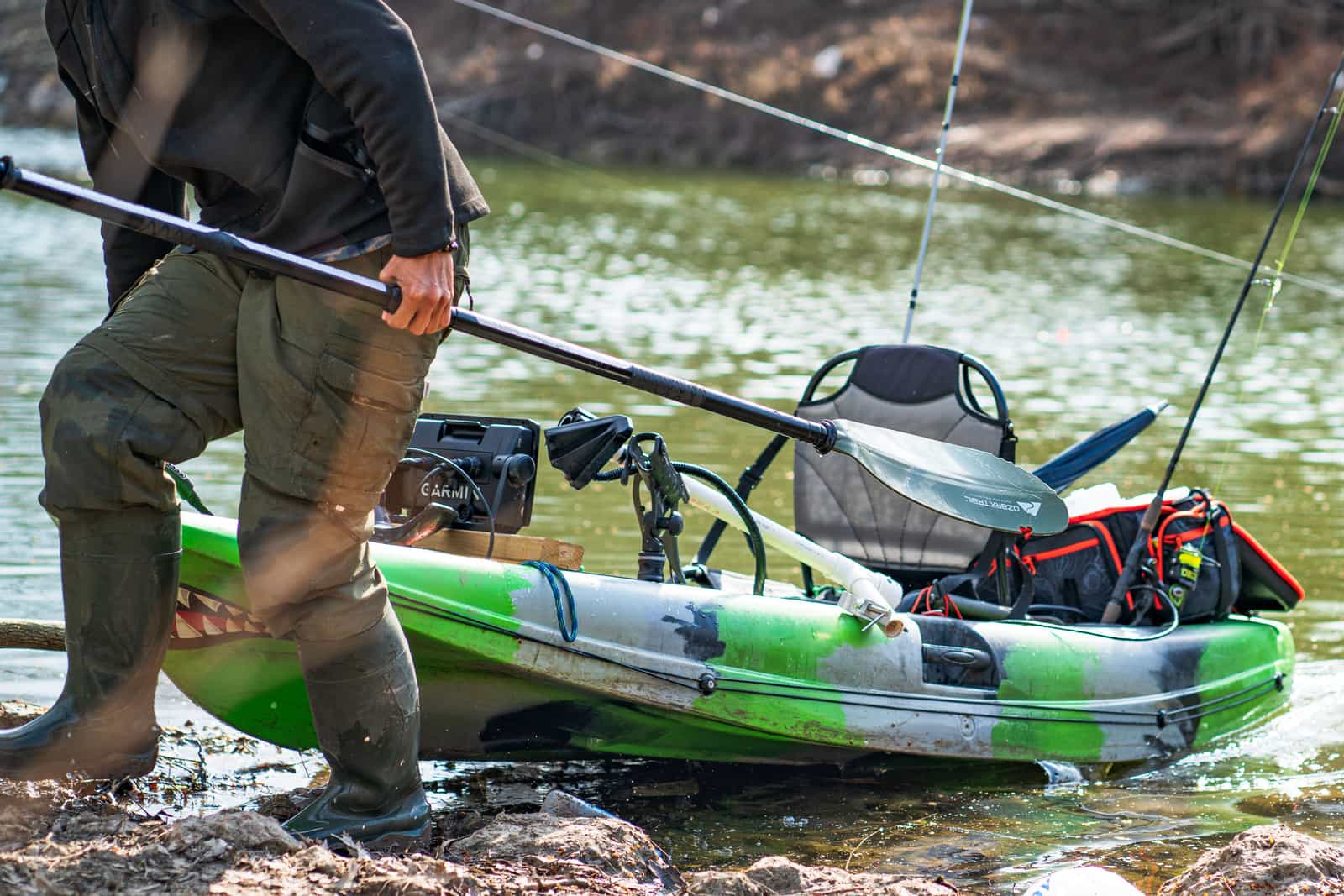
Kayak Accessories: What Actually Earns a Place
Five accessories that change every outing, ranked by how much they improve it per dollar — and the ones you can safely skip for a season.
Top pick
Bending Branches Whisper Kayak Paddle, 230 cm
The first paddle worth keeping
#ad · how this is funded · price as of October 18, 2026

Your First Time on the Water
What a first outing is actually like, the checklist that matters, and the three mistakes beginners reliably make.
Top pick
Onyx MoveVent Dynamic Paddle Vest
The PFD you will actually keep on
#ad · how this is funded · price as of October 18, 2026
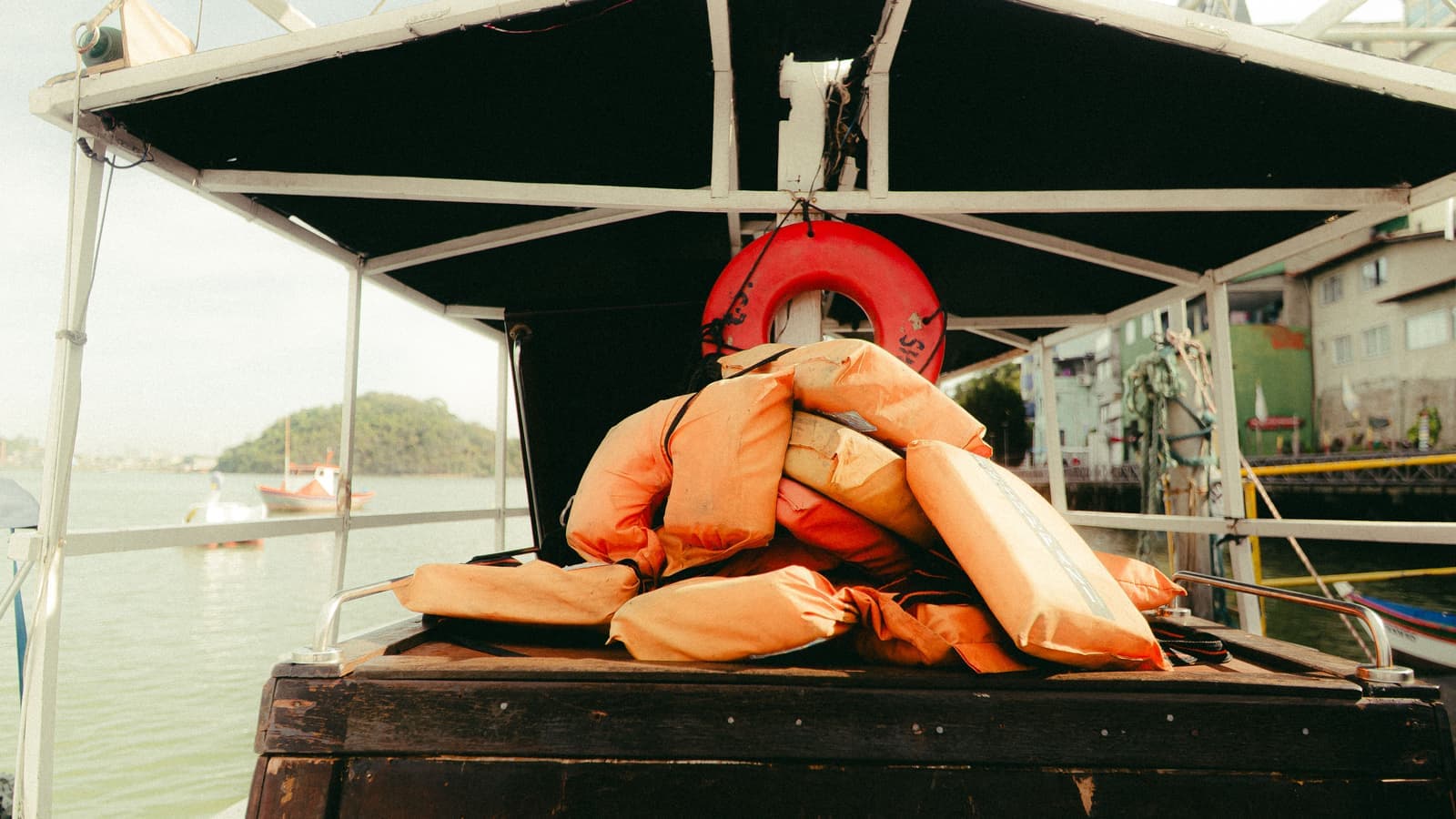
Best Life Jacket
The Best Life Jackets for Paddling
Approved vests compared on cut and comfort — the variables that decide whether it stays on.
Top pick
Onyx MoveVent Dynamic Paddle Vest
The PFD you will actually keep on
#ad · how this is funded · price as of October 18, 2026

Best Dry Bag
Dry Bags and Keeping Things Dry
20 liters, roll-top, done. Why the size matters and why the number of folds does too.
Top pick
Pelican ExoDry 20L Dry Bag
Keeping the phone, keys and a dry layer dry
#ad · how this is funded · price as of October 18, 2026