Gear & Getting There
Dry Bags and Keeping Things Dry
The cheapest genuinely useful thing you can add to a first setup, and one of the few pieces of gear where there is nothing to pay extra for.

We have not paddled these, and we are not going to pretend we have. Here is what we did instead. Links to Amazon earn us a commission at no extra cost to you, and commission never decides a pick — how this site is funded.
| # | Product | Best for | The spec it turns on | Price |
|---|---|---|---|---|
| 1 | 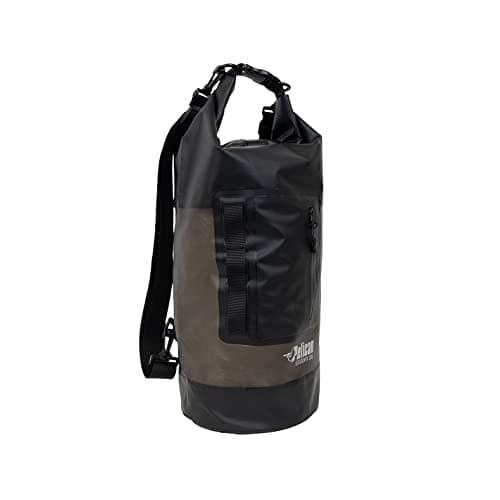 Pelican ExoDry 20L Dry BagTop pickTwenty liters is the size that takes a dry layer, a towel, a phone and a lunch -- which is the actual list, rather than the 5 L that only takes a phone. | Keeping the phone, keys and a dry layer dry | 20 L, roll-top closure, shoulder straps, 1.2 lb |
This is a short page because it is a simple product, and the main thing worth saying is that most people buy the wrong size and then roll it wrong.
Top pick — Keeping the phone, keys and a dry layer dry
Pelican ExoDry 20L Dry Bag
Twenty liters is the size that takes a dry layer, a towel, a phone and a lunch -- which is the actual list, rather than the 5 L that only takes a phone.
What the listing publishes
20 L, roll-top closure, shoulder straps, 1.2 lb
Roll-top closure is the whole mechanism. Three folds and a clip, and it is watertight; two folds and it is a bag with a hole in it. Roll it properly.
20 L is the useful size for a day. 5 L bags are for a phone and a wallet, and 30 L bags do not fit through a kayak hatch.
It floats when it is sealed and mostly full of soft goods, which is a genuine safety feature the day something goes over the side.
What it does well
- 20 L is the size that actually holds a day's kit
- Roll-top and clip, so there is no zip to fail
- Shoulder straps for the walk from the car
What it costs you
- Roll-tops are only waterproof if you roll them three times
- Wide bags can be awkward through a small kayak hatch
- No structure, so hard objects poke through against your back
Skip this if you only need to keep a phone dry. A 5 L bag or a phone case is a fraction of the price and easier to stow.
#ad · how this is funded · price as of October 18, 2026
Why 20 liters
Dry bags are sold from 2 to 40 liters and the useful range for a day on the water is narrow.
| Size | Holds | Verdict |
|---|---|---|
| 2 to 5 L | A phone, keys, a wallet | Useful as a second bag. Not a day bag |
| 10 L | A phone, a snack, one layer | Tight for a full day, fine for two hours |
| 20 L | A dry layer, a towel, lunch, phone, first aid | The size that matches a day on the water |
| 30 L+ | Camping kit | Will not fit through most kayak hatches |
The 30 liter point is worth noting because it catches people. Kayak hatch openings are small, and a wide 30 liter bag that is full will not go through one — which turns your dry storage into deck storage, which is exposed.
How a roll-top actually works
The closure is a fold, not a seal. You fold the open top over on itself and the pressure of the folded material against itself is what keeps water out. That means the number of folds is the mechanism.
- **Push the air out** before you start rolling, but leave a little in — a bag with some air floats.
- **Line the two sides of the opening up flat** against each other. A twisted opening does not seal.
- **Fold it over three times.** Not once, not twice. Three is where roll-tops become genuinely waterproof.
- **Clip the buckle across.** The clip holds the roll in place; it is not itself the seal.
What not to spend money on
- **Submersible-rated bags.** A day bag needs to survive rain, splash and being dropped in the water for a minute. Full submersion rating is for diving and costs several times as much.
- **Clear window panels.** Useful in a shop, and one more thing to fail.
- **Dry bags with zips.** The whole point of a roll-top is that there is no zip to fail. A zip is a mechanism; a fold is not.
- **Branded kayak-specific bags at a premium.** A dry bag is a dry bag.
What is worth having
- **Shoulder straps.** For the walk from the car, which is the part of the day the bag actually gets carried.
- **A light color or a reflective panel.** A black bag in the bottom of a black hull is genuinely hard to find.
- **A D-ring or attachment point.** So the bag can be clipped to the boat, which matters the day the boat goes over.
It floats, which is a real safety feature
A properly rolled dry bag with some air in it and soft goods inside floats. That is not marketing — the day something goes over the side, a floating bag is one you can recover and a sinking one is not.
It is also worth clipping to the boat rather than leaving it loose. A bag that floats away is a bag that floats away from you.
Questions people actually ask
What size dry bag do I need for kayaking?
How do you close a dry bag properly?
Are dry bags actually waterproof?
Do dry bags float?
Can I use a dry bag instead of a hatch?
Where these numbers came from
Every figure on this page traces to one of these. Where a number could not be sourced, the page says so rather than estimating it.
Read next
Pelican ExoDry 20L: The Size That Actually Holds a Day
20 L of 500D PVC with a roll-top, a translucent panel and removable shoulder straps. Pelican state it is not intended for submersion, which changes how you pack it.
Top pick
Pelican ExoDry 20L Dry Bag
Keeping the phone, keys and a dry layer dry
#ad · how this is funded · price as of October 18, 2026

Best for Camping
The Best Kayaks for Camping
A camping load is 40 to 70 lb on top of your own weight. Which published capacities genuinely cover it, and where the gear actually goes.
Top pick
Perception Rambler 13.5 Tandem Sit-on-Top Kayak
Two adults plus a child or a dog
#ad · how this is funded · price as of October 18, 2026
The First Trip Checklist
A deliberately short packing list for a first outing, plus the two-minute check before you launch.
Top pick
Onyx MoveVent Dynamic Paddle Vest
The PFD you will actually keep on
#ad · how this is funded · price as of October 18, 2026

Your First Time on the Water
What a first outing is actually like, the checklist that matters, and the three mistakes beginners reliably make.
Top pick
Onyx MoveVent Dynamic Paddle Vest
The PFD you will actually keep on
#ad · how this is funded · price as of October 18, 2026

What a First Setup Actually Costs
Every line item in a first setup, including the ones that surprise people — with live prices rather than stale numbers.
Top pick
Perception Tribe 11.5 Sit-on-Top Kayak
The all-round first sit-on-top
#ad · how this is funded · price as of October 18, 2026
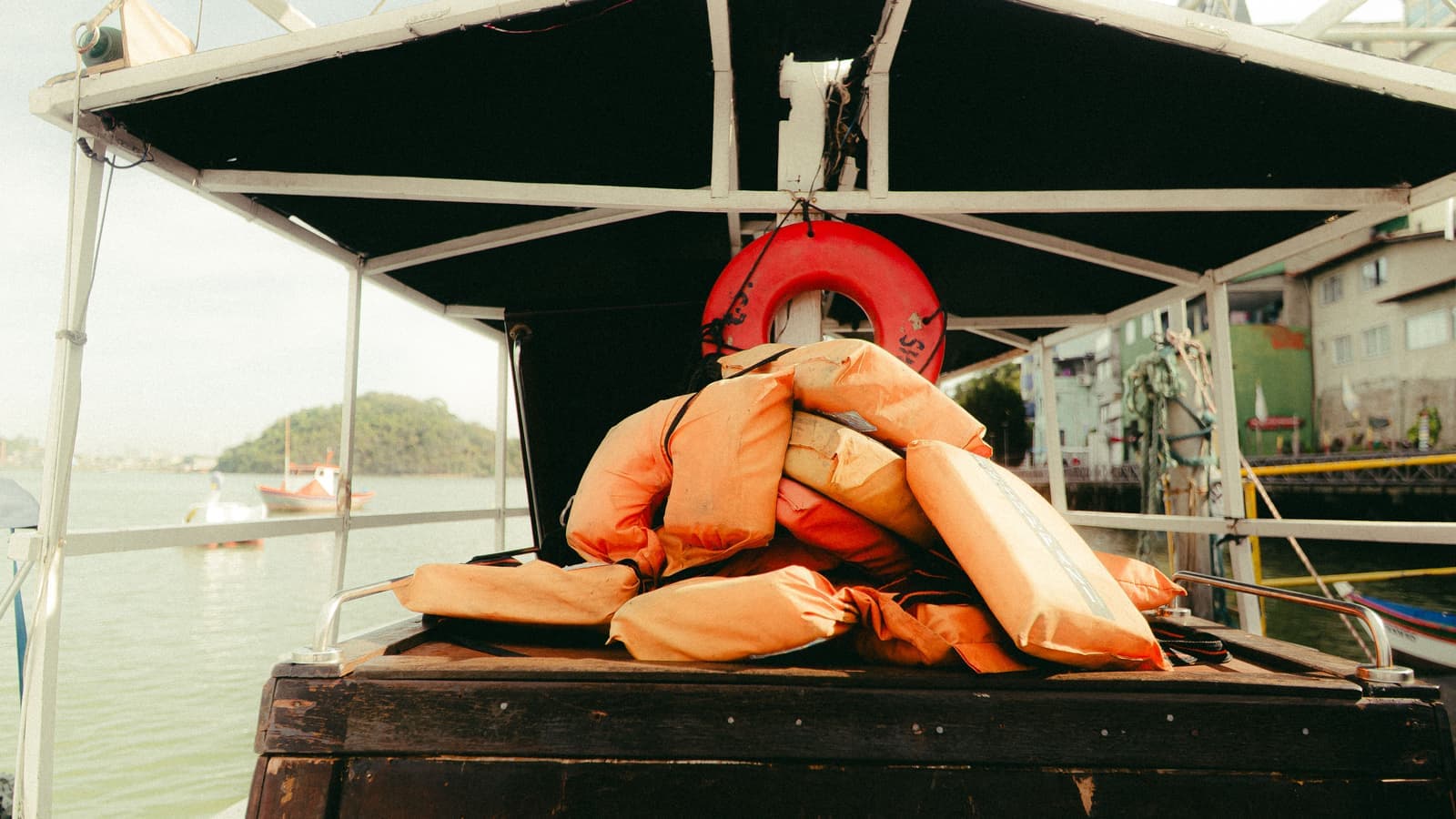
Best Life Jacket
The Best Life Jackets for Paddling
Approved vests compared on cut and comfort — the variables that decide whether it stays on.
Top pick
Onyx MoveVent Dynamic Paddle Vest
The PFD you will actually keep on
#ad · how this is funded · price as of October 18, 2026