Gear & Getting There
Bending Branches Whisper: The First Paddle Worth Keeping
The paddle is the part of a first setup that changes every single stroke, and it is the part nobody researches. This is the cheapest one we would actually recommend, and the reasons are specific.
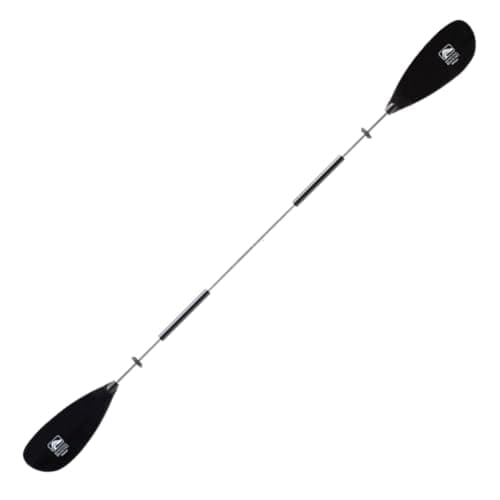
We have not paddled these, and we are not going to pretend we have. Here is what we did instead. Links to Amazon earn us a commission at no extra cost to you, and commission never decides a pick — how this site is funded.
| # | Product | Best for | The spec it turns on | Price |
|---|---|---|---|---|
| 1 | Bending Branches Whisper Kayak Paddle, 230 cmTop pick230 cm is the length our formula puts most adults in a 28 to 32 in recreational kayak on, and this is the least expensive paddle at that length made by a company that only makes paddles. | The first paddle worth keeping | 230 cm, two-piece aluminum shaft, polypropylene blades, 0 and 60 degree feathering |
We have not paddled this paddle. What follows is what its published specification means, plus a direct account of who it does not suit.
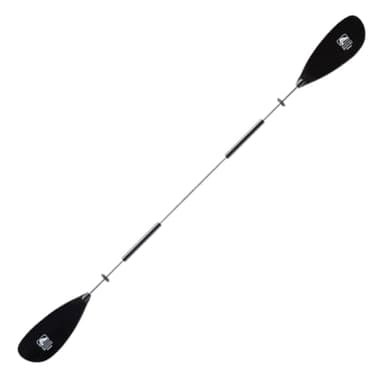
Top pick — The first paddle worth keeping
Bending Branches Whisper Kayak Paddle, 230 cm
230 cm is the length our formula puts most adults in a 28 to 32 in recreational kayak on, and this is the least expensive paddle at that length made by a company that only makes paddles.
What the listing publishes
230 cm, two-piece aluminum shaft, polypropylene blades, 0 and 60 degree feathering
230 cm is what 104 + 1.333 x (boat width + your height in inches) returns for a 5 ft 8 in paddler in a 30 in boat. If you are much taller or your boat is much wider, check the chart before you buy this length rather than the paddle.
The 0 and 60 degree feather settings are the useful part. Feathering angles the second blade so it slices through wind instead of catching it, and being able to turn it off while you learn matters more than the setting itself.
An aluminum shaft is cold in the hands in spring and fall, and it is the reason people upgrade. It is not a reason to avoid this paddle as a first one.
What it does well
- 230 cm suits the great majority of recreational kayaks and adult paddlers
- Two feather settings, including flat, which is what a beginner should start with
- Made by a dedicated paddle manufacturer rather than bundled with a boat
What it costs you
- Aluminum shaft is genuinely cold to hold in cool weather
- Polypropylene blades flex more than fiberglass under a hard stroke
- Only two lengths of adjustment -- it is a fixed size, so get the size right
Skip this if our chart puts you at 240 or 250 cm. A wide inflatable kayak or a tall paddler needs more paddle, and the right length in a cheaper paddle beats the wrong length in a better one.
#ad · how this is funded · price as of October 9, 2026
Why the paddle matters more than the boat's price tag
A kayak is a hull you sit in. The paddle is the only thing connecting you to the water, and you will make something like a thousand strokes an hour with it. Across this site we keep making the same point: somebody will spend three weeks comparing hulls and ten minutes on the paddle, and the paddle has more effect on how the afternoon feels.
The reason we point at this one specifically is that it is made by a dedicated paddle manufacturer rather than being the part thrown in the box with a boat. Bending Branches publish it as handcrafted in Osceola, Wisconsin, and a company whose entire product line is paddles tends to get the blade shape right.
| Spec | Published | What it means |
|---|---|---|
| Length | 230 cm | Suits most adults in a 28 to 32 in recreational kayak |
| Shaft | Two-piece aluminum, snap button | Strong and cheap. Also cold, which is the trade |
| Blades | Polypropylene, dihedral | The shape that stops the blade fluttering mid-stroke |
| Ferrule | 3-hole snap button | Sets the two halves at a fixed relative angle |
| Feathering | 0 or 60 degrees, left or right | Flat to learn on, angled for wind |
| Grips | Black comfort grips | Reduces hand fatigue against a bare metal shaft |
| Origin | Made in Osceola, Wisconsin | A paddle specialist, not a boat brand's accessory |
Dihedral is the specification worth understanding
This is the one piece of paddle jargon that earns its place. A dihedral blade has a shallow ridge down the middle, so the face is two gently angled planes rather than one flat sheet.
A flat blade pushed hard through water does not know which way to shed it, so it wanders — you feel it as a flutter or a wobble partway through a strong stroke, and you unconsciously stop pulling hard to avoid it. A dihedral face splits the flow deliberately to either side of the ridge, which keeps the blade tracking straight and lets you put power in without the paddle arguing back.
It is the difference between a paddle and a piece of plastic on a stick, and it is why a bundled boat paddle feels vague even when the length is right.
Feathering, and why 0 degrees is the right start
Feathering means setting the two blades at an angle to each other rather than in the same plane. The point is wind: with the blades offset, the one in the air slices edge-on into a headwind instead of catching it like a sail.
The Whisper's three-hole ferrule gives 0 degrees or 60 degrees, offset to the left or the right for whichever hand you prefer to control the twist with. The useful part for a beginner is the zero.
230 cm: get the length right before anything else
Length is the specification that actually determines whether a paddle works for you, and it depends on two things in equal measure — your height and the width of your boat. A wide hull needs a longer shaft simply because the blade has to clear the side before it reaches water.
230 cm is the length that suits the majority of adults in the 28 to 32 inch recreational kayaks this site covers. It is not universal: a tall paddler in a 36 inch inflatable needs more, and a short paddler in a narrow sit-inside needs less. This paddle is sold at a fixed length, so this is a decision to make before you order rather than after. Run your own numbers on the calculator.
A correctly sized cheap paddle beats an incorrectly sized expensive one every time, which is the single most useful thing we can tell you about this purchase.
The aluminum shaft, honestly
This is the specification that gets the paddle replaced, and it is worth being precise about why. Aluminum is not weak and it is not slow. It is cold. On a spring or autumn morning a bare metal shaft pulls heat out of your hands continuously, and the comfort grips only cover the two places your hands are supposed to sit.
The second-order cost is weight. Aluminum with polypropylene blades is heavier than fiberglass, and paddle weight is one of those numbers that is irrelevant for twenty minutes and very relevant after two hours, because you lift it on every stroke. Bending Branches do not publish a weight for this paddle — the only weight figure on the listing is clearly packaging data — so we cannot give you the number to compare.
Neither of these is a reason to avoid it as a first paddle. Both are reasons you may want a fiberglass shaft in year three, and knowing that in advance is better than being surprised by it.
Polypropylene blades: the other upgrade path
Polypropylene is tough, cheap and slightly flexible. The flex is the point of interest: under a hard, fast stroke the blade gives a little, which bleeds off some of the power you just applied. A stiffer fiberglass or carbon blade returns more of it.
For recreational paddling on flat water this is a genuinely small effect, and the toughness is worth something real — polypropylene shrugs off being dragged over gravel at a launch in a way a thin composite blade does not. It matters if you paddle hard for distance. It does not matter if you paddle a lake for an afternoon.
Two pieces, which is a storage feature
The snap-button shaft separates into two halves. That is how the paddle fits in a car alongside the boat, in a kayak's tank well as a spare, or in a cupboard. It also means one more joint to rinse — grit in a ferrule is what makes a two-piece paddle stiff to separate by the third season, and thirty seconds of fresh water at the end of a trip prevents it.
Who should buy it
- **Anyone whose boat came without a paddle.** Most hard-shell kayaks do, and this is the sensible first purchase. What a full setup costs.
- **Anyone replacing a bundled paddle.** The blade shape alone justifies it over the aluminum-and-flat-plastic part that ships with a budget boat.
- **Paddlers in the 28 to 32 in recreational band** for whom 230 cm is the right length. Check first.
- **Anyone who wants one good thing rather than three mediocre ones.** A paddle specialist's entry paddle is a better buy than a boat brand's mid paddle.
Who should not
- **Anyone whose calculated length is not 230 cm.** It is sold at a fixed size. The right length matters more than the brand.
- **Paddlers in a 36 in inflatable**, who will find 230 cm short and end up knocking the deck on every stroke.
- **Cold-water paddlers.** If your season runs into real cold, a fiberglass shaft is worth the money up front rather than in year three.
- **Paddle boarders.** This is a double-bladed kayak paddle, which is a different tool. SUP paddles are here.
Questions people actually ask
What size Bending Branches Whisper do I need?
What does a dihedral paddle blade do?
Should I use a feathered or unfeathered paddle?
Is an aluminum kayak paddle bad?
Is the Bending Branches Whisper worth it over the paddle that came with my kayak?
How do you take care of a two-piece kayak paddle?
Where these numbers came from
Every figure on this page traces to one of these. Where a number could not be sourced, the page says so rather than estimating it.
- Aqua-Bound — Kayak Paddle Sizing Guide (manufacturer, the size-longer and size-shorter adjustment rules)
- Bending Branches — Kayak Paddle Sizing Guide (manufacturer, low-angle and high-angle adjustments)
- Bending Branches Whisper Kayak Paddle, 230 cm — manufacturer specification as published on the Amazon listing, read 2026-09-27
Read next
Best First Paddle
The Best Kayak Paddles for Beginners
Paddles at each common length, chosen by the size you actually need rather than by price bracket.
Top pick
Bending Branches Whisper Kayak Paddle, 230 cm
The first paddle worth keeping
#ad · how this is funded · price as of October 9, 2026
What Length Paddle Do You Need?
A paddle length calculator fitted to a manufacturer's published chart, with the derivation shown.
Top pick
Bending Branches Whisper Kayak Paddle, 230 cm
The first paddle worth keeping
#ad · how this is funded · price as of October 9, 2026

The First Trip Checklist
A deliberately short packing list for a first outing, plus the two-minute check before you launch.
Top pick
Onyx MoveVent Dynamic Paddle Vest
The PFD you will actually keep on
#ad · how this is funded · price as of October 9, 2026

What a First Setup Actually Costs
Every line item in a first setup, including the ones that surprise people — with live prices rather than stale numbers.
Top pick
Perception Tribe 11.5 Sit-on-Top Kayak
The all-round first sit-on-top
#ad · how this is funded · price as of October 9, 2026

Best SUP Paddle
The Best SUP Paddles for a First Board
The kit paddle is the first upgrade on any board. Length by the height-plus-nine rule, weight that compounds a thousand strokes an hour, and two honest picks.
Top pick
OCEANBROAD Adjustable SUP Paddle, aluminum shaft
Replacing the paddle that came in the box
#ad · how this is funded · price as of October 9, 2026