The Logbook
The End-of-Season Checklist
Neither a kayak nor a board needs winterizing the way an engine does. Two things genuinely matter and both get skipped, because neither of them looks like maintenance.

We have not paddled these, and we are not going to pretend we have. Here is what we did instead. Links to Amazon earn us a commission at no extra cost to you, and commission never decides a pick — how this site is funded.
| # | Product | Best for | The spec it turns on | Price |
|---|---|---|---|---|
| 1 | 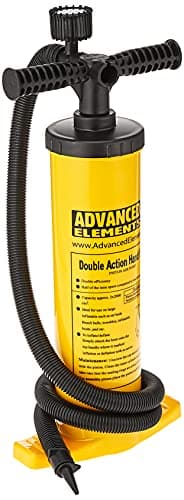 Advanced Elements Double Action Hand Pump with Pressure GaugeTop pickThe gauge is the reason to buy a hand pump rather than the cheapest one: an under-inflated board is soft in the middle and that is what beginners mistake for the board being unstable. | The backup that always works | Double action, integrated pressure gauge, 2.3 lb | |
| 2 | 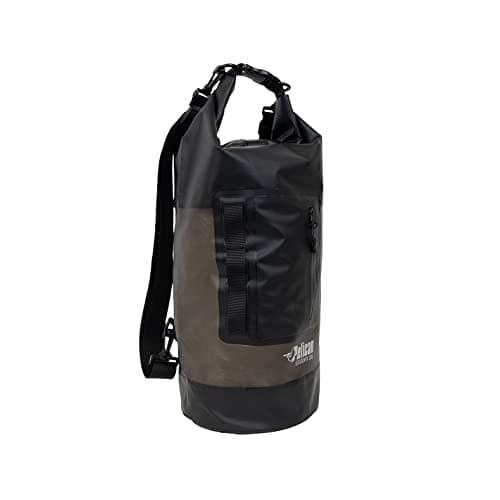 Pelican ExoDry 20L Dry BagTwenty liters is the size that takes a dry layer, a towel, a phone and a lunch -- which is the actual list, rather than the 5 L that only takes a phone. | Keeping the phone, keys and a dry layer dry | 20 L, roll-top closure, shoulder straps, 1.2 lb |
Paddlecraft off-season advice tends to be written by analogy with boats that have engines, and it lists things that do not apply. A rotomolded hull needs no antifreeze, no oil change and no fuel stabilizer, and an inflatable needs less than that.
What does matter comes down to two failure modes, and both of them are slow, invisible, and happen because of something you did not do rather than something you did.
Failure mode one: trapped moisture
This is the one that actually ruins things, and it applies to inflatables most.
A board rolled up damp and left for five months grows mold on the EVA deck pad and inside the valve housing. The deck pad discolors permanently and the valve seat can corrode enough to leak. It is entirely preventable and it is by far the most common way people damage an inflatable.
- **Inflate the board or boat and leave it in the sun or a warm room until it is bone dry**, including underneath. Half a day.
- **Open the valve and let air move through** before rolling. A sealed damp chamber is the problem.
- **Check the deck pad seams**, where water sits longest.
- **On a hard-shell: open every hatch and pull the drain plug.** A sealed hull with condensation inside it for a winter is a smell you will remember.
Failure mode two: things left under tension
Everything elastic or flexible on a boat takes a permanent set if left under load for months, and everything on a boat is under load when you put it away.
- **Bungees and deck rigging.** Loosen or unhook them. Six months stretched is six months of elasticity gone.
- **Hatch straps and buckles.** Same principle, and hatch seals compress permanently if clamped.
- **Roof rack straps.** Take them off and coil them loosely rather than leaving them cinched around a bar.
- **Inflatable rolls.** Roll loosely, and not to the same creases every year. Hard creases in the same place stress the PVC.
- **Hard-shell storage.** Do not cinch a hull hard against a wall for the winter. Support it at two points a third in from each end and leave it slack. The full storage guide.
Twenty minutes of actual work
- Rinse with fresh water if you paddled salt, and let it dry properly. Fresh water needs no rinse.
- Dry everything completely, including the underside and inside any chamber.
- Open every hatch, pull the drain plug, and leave the valve open on an inflatable.
- Loosen or unhook every bungee, strap and buckle.
- Take removable seats and backrests indoors — foam and fabric age faster than plastic.
- Store out of direct sun. UV is the only thing that genuinely degrades polyethylene and PVC over time.
- Put the drain plug somewhere you will find it, ideally taped to the seat.
What we would skip
- **UV protectant sprays.** Storing it out of the sun does the same job for free. If the boat must live outdoors uncovered, a cover is a better purchase than a spray.
- **Deflating an inflatable completely for storage**, if it lives somewhere cool and shaded. Leaving it lightly inflated is fine and avoids the crease problem entirely.
- **Anything sold as kayak winterizing fluid.** There is nothing in a paddlecraft for it to protect.
- **Waxing a plastic hull.** It does nothing measurable to a rotomolded boat.
The spring checks
- **Put the drain plug back.** Before anything else.
- **Inflate an inflatable and leave it overnight**, then check the pressure. A slow leak found in the garage is a repair; found on the water it is a wasted trip.
- **Check the valve core is tight** with the wrench that came with the board. Loose cores are the most common cause of a soft board and are not a puncture.
- **Look at every strap and bungee** for perished elastic and cracked webbing.
- **Check the PFD.** Compressed foam, torn fabric or a broken buckle all mean it no longer meets the requirement. The picks.
Top pick — The backup that always works
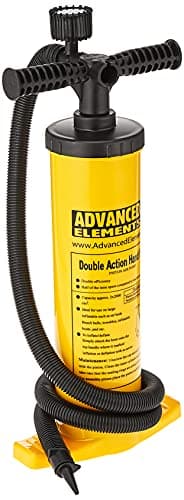
Advanced Elements Double Action Hand Pump with Pressure Gauge
The gauge is the reason to buy a hand pump rather than the cheapest one: an under-inflated board is soft in the middle and that is what beginners mistake for the board being unstable.
What the listing publishes
Double action, integrated pressure gauge, 2.3 lb
Double action means it moves air on both the push and the pull, which roughly halves the strokes. It also means the last few PSI take real effort, and most pumps let you switch to single action for exactly that reason.
The gauge matters more than the pump. Drop-stitch boards are specified at a pressure -- typically 12 to 15 PSI -- and a board two PSI under feels like a different, worse board.
2.3 lb and no battery means it works at the tenth launch of the day, in the rain, in a parking lot with no power. That is why it belongs in the bag even if you own an electric one.
What it does well
- Integrated gauge tells you when the board is actually at pressure
- Double action halves the stroke count for most of the inflation
- No battery to be flat, ever
What it costs you
- The last 3 PSI on a 6 in board is genuinely hard work
- 2.3 lb and bulky in a pack
- Slower than any electric pump, by a lot
Skip this if you have already bought an electric pump and only ever launch from a car. Keep the pump the board came with as the backup and save the money.
#ad · how this is funded · price as of October 18, 2026
Pick 2 — Keeping the phone, keys and a dry layer dry
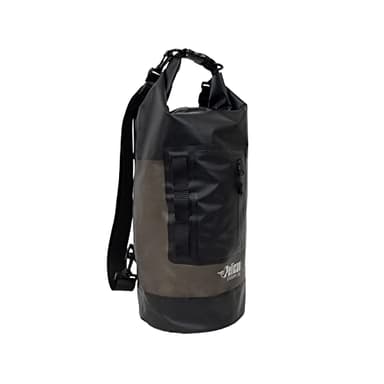
Pelican ExoDry 20L Dry Bag
Twenty liters is the size that takes a dry layer, a towel, a phone and a lunch -- which is the actual list, rather than the 5 L that only takes a phone.
What the listing publishes
20 L, roll-top closure, shoulder straps, 1.2 lb
Roll-top closure is the whole mechanism. Three folds and a clip, and it is watertight; two folds and it is a bag with a hole in it. Roll it properly.
20 L is the useful size for a day. 5 L bags are for a phone and a wallet, and 30 L bags do not fit through a kayak hatch.
It floats when it is sealed and mostly full of soft goods, which is a genuine safety feature the day something goes over the side.
What it does well
- 20 L is the size that actually holds a day's kit
- Roll-top and clip, so there is no zip to fail
- Shoulder straps for the walk from the car
What it costs you
- Roll-tops are only waterproof if you roll them three times
- Wide bags can be awkward through a small kayak hatch
- No structure, so hard objects poke through against your back
Skip this if you only need to keep a phone dry. A 5 L bag or a phone case is a fraction of the price and easier to stow.
#ad · how this is funded · price as of October 18, 2026
Questions people actually ask
Do kayaks need winterizing?
How do you store an inflatable paddle board for winter?
Can you leave a kayak outside over winter?
Should I deflate my paddle board for storage?
What should I check on a kayak in spring?
Where these numbers came from
Every figure on this page traces to one of these. Where a number could not be sourced, the page says so rather than estimating it.
- Thurso Surf — What Size Paddle Board Is Right for You (manufacturer, states the weight-in-kg x 2 volume rule and the 32 in beginner width band)
- U.S. Coast Guard — Life Jacket Wear / Wearing Your Life Jacket (federal carriage and under-13 wear requirements)
- Advanced Elements Double Action Hand Pump with Pressure Gauge — manufacturer specification as published on the Amazon listing, read 2026-09-02
- Pelican ExoDry 20L Dry Bag — manufacturer specification as published on the Amazon listing, read 2026-09-02
Read next
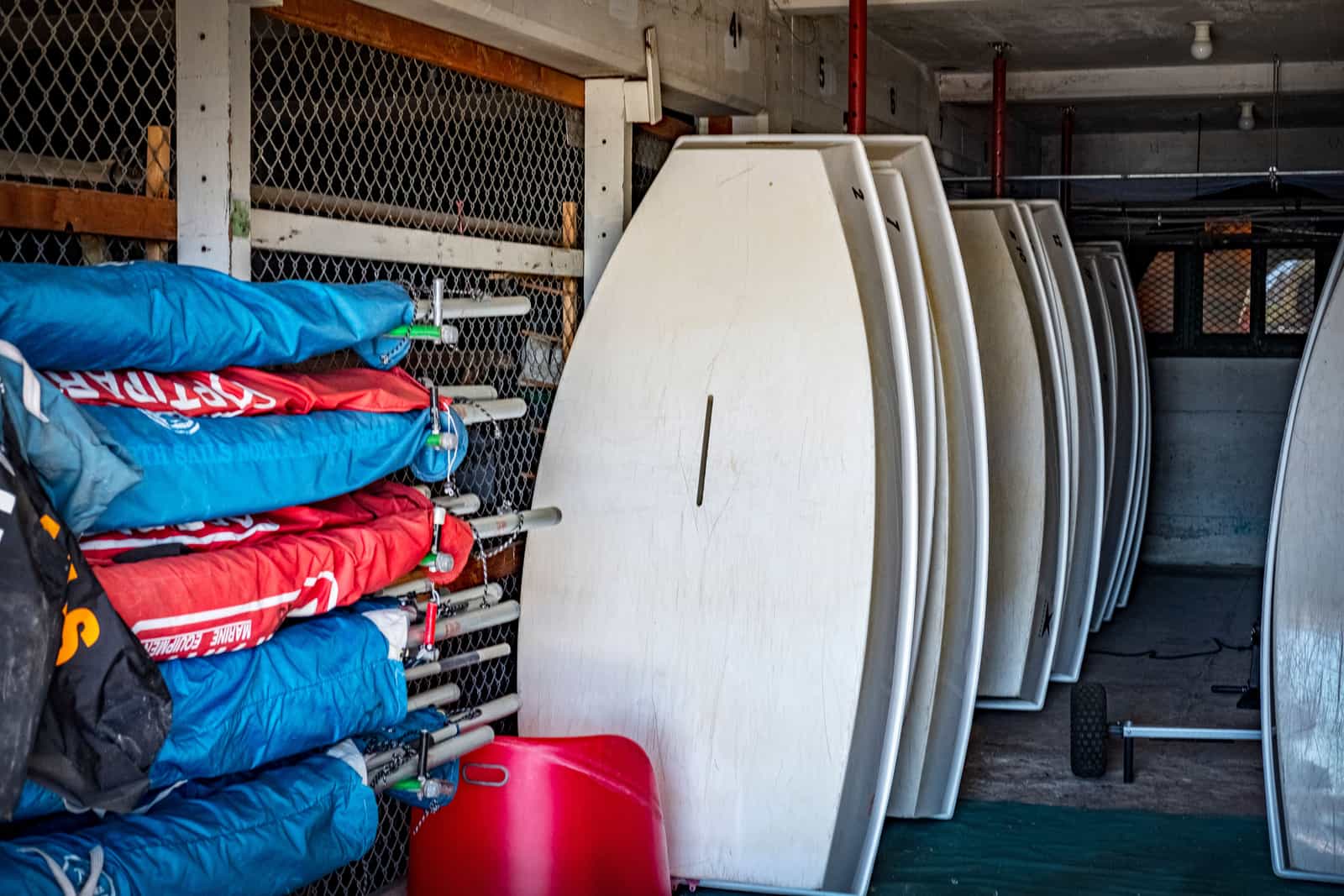
Where to Keep a Kayak or Paddle Board
Where to put it, how to avoid deforming the hull, and what the off-season actually requires.
Top pick
Roc Inflatable Stand Up Paddle Board, 10 ft 6 in x 33 in
The default first inflatable board
#ad · how this is funded · price as of October 18, 2026

Best Pump
Pumps, Pressure and Patches
Hand versus electric, and why the last three PSI are the ones that decide how the board feels.
Top pick
SereneLife Electric Paddle Board Pump, 20 PSI dual-stage
Anyone who launches more than twice a month
#ad · how this is funded · price as of October 18, 2026
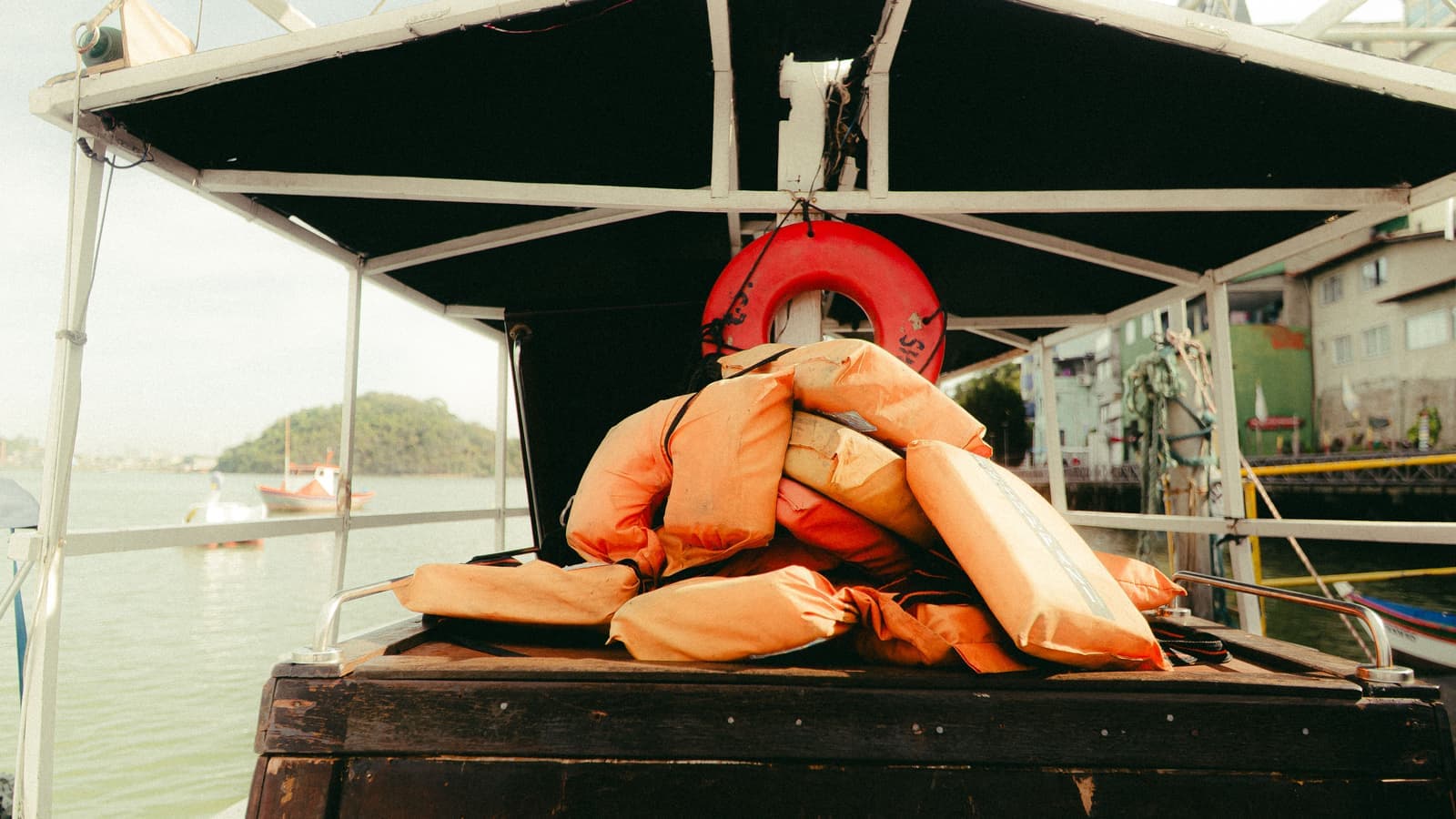
Best Life Jacket
The Best Life Jackets for Paddling
Approved vests compared on cut and comfort — the variables that decide whether it stays on.
Top pick
Onyx MoveVent Dynamic Paddle Vest
The PFD you will actually keep on
#ad · how this is funded · price as of October 18, 2026

Inflatable vs Hard Paddle Board
Hard boards are better boards. Inflatables are better first boards. Here is exactly where each one wins.
Top pick
Roc Inflatable Stand Up Paddle Board, 10 ft 6 in x 33 in
The default first inflatable board
#ad · how this is funded · price as of October 18, 2026

Best Dry Bag
Dry Bags and Keeping Things Dry
20 liters, roll-top, done. Why the size matters and why the number of folds does too.
Top pick
Pelican ExoDry 20L Dry Bag
Keeping the phone, keys and a dry layer dry
#ad · how this is funded · price as of October 18, 2026