Kayaks
Will a Kayak Fit Inside Your Car?
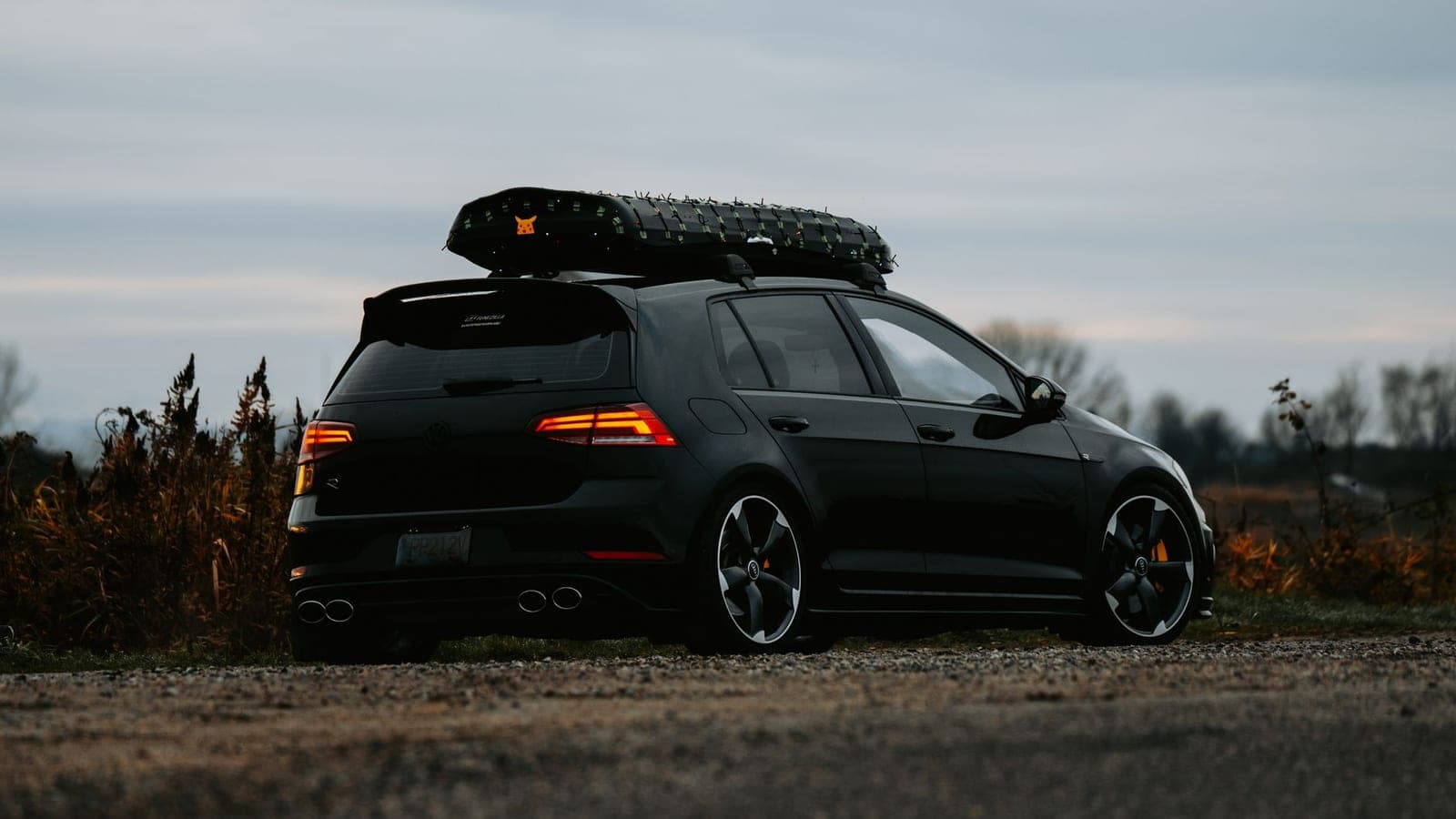
Almost certainly not, if it is a hard-shell. The cargo bay of a large SUV is about seven feet with the seats down, and the shortest kayak worth owning is nine and a half.
We have not paddled these, and we are not going to pretend we have. Here is what we did instead. Links to Amazon earn us a commission at no extra cost to you, and commission never decides a pick — how this site is funded.
| # | Product | Best for | The spec it turns on | Price |
|---|---|---|---|---|
| 1 | 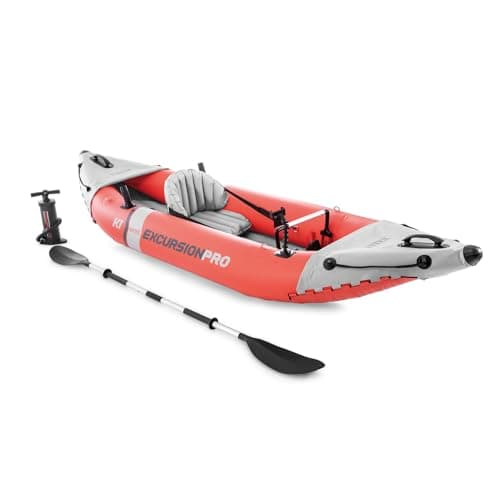 Intex Excursion Pro K1 Inflatable Kayak (paddle and pump included)Top pickA laminate hull and a high-pressure floor rather than plain vinyl, which is the difference between an inflatable that tracks and one that argues with you. | The stiffest inflatable in the entry price class | 120 in long, 36 in beam, 31.2 lb packed, 220 lb rated capacity | |
| 2 | 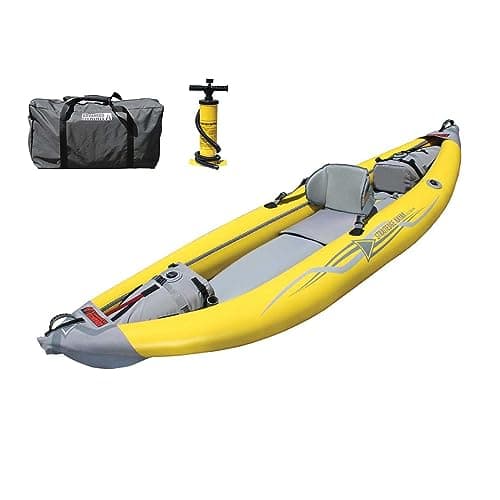 Advanced Elements StraitEdge Inflatable KayakRigid frames built into the bow and stern give an inflatable something the class normally cannot have: an actual pointed end that cuts water instead of pushing it. | An inflatable you would still choose with a garage | 116 in long, 35 in beam, 37 lb, 300 lb rated capacity, aluminum bow and stern ribs | |
| 3 | 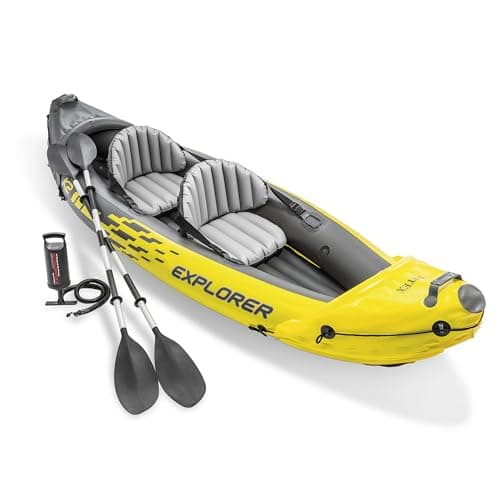 Intex Explorer K2 Inflatable Kayak, 2-person (oars and pump included)Bought as a tandem it disappoints; bought as a very roomy solo boat with 400 lb of rating and no rack requirement, it is the most useful inflatable here. | Two people, no roof rack, small budget | 123 in long, 36 in beam, 35 lb packed, 400 lb rated capacity, two oars and a pump included | |
| 4 | 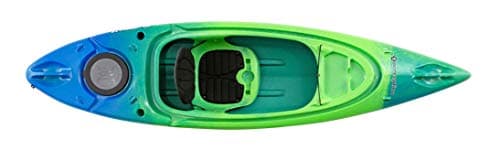 Perception Flash 9.5 Sit-Inside KayakA 325 lb rating in a hull under ten feet is unusual, and it is what makes this the short-boat answer for a larger paddler who still has to store it in an apartment. | The most capacity in the shortest hull | 113 in long, 28.5 in beam, 41 lb hull, 325 lb rated capacity |
This question is usually answered with a photo of somebody's boat in a van, which tells you about their van. The useful version is a measurement you can take in your own driveway in two minutes, and an honest accounting of the three boats that fit when a hard-shell does not.
Take the measurement first
Everything on this page depends on one number, and it is not a number any car brochure prints usefully. Cargo volume in cubic feet tells you nothing about whether a long rigid object fits.
- **Fold the rear seats flat** and move the front seats as far forward as you could still drive with.
- **Measure from the inside of the closed tailgate to the back of the front seats**, along the floor. That is your usable cargo length.
- **Measure the tailgate opening height and width.** A boat that fits the floor still has to go through the hole, and the hole is usually the binding constraint on a hatchback.
- **Add the length you are willing to let hang out of an open tailgate**, if you are willing to do that at all. Treat it as zero until you have read the section on that below.
Write that number down. Now compare it to what a kayak actually is.
| Boat | Published length | Fits inside a car? |
|---|---|---|
| Perception Flash 9.5 | 9 ft 5 in (113 in) | No — longer than any car's cargo floor |
| Pelican Argo 100X | 10 ft (120 in) | No |
| Perception Tribe 11.5 | 11 ft 5 in (137 in) | No |
| Perception Rambler 13.5 | 13 ft 5 in (161 in) | No |
| Intex Excursion Pro K1, packed | In a bag, 31.2 lb | Yes — trunk of a hatchback |
| Intex Explorer K2, packed | In a bag, 35 lb | Yes |
| Advanced Elements StraitEdge, packed | In a bag, 47 lb | Yes, and it is a heavy bag |
What does fit inside a car
Three kinds of boat, and they are three genuinely different purchases rather than three versions of the same compromise.
- **An inflatable.** Rolls into a bag that goes in a trunk, a closet, an overhead bin. This is the answer for most people asking this question, and the deciding spec is the published capacity rather than the packed size — every one of them fits the car.
- **A folding or frame-supported inflatable.** The Advanced Elements StraitEdge has rigid aluminum frames at bow and stern, which is the nearest thing in the class to a hard-shell's behavior. It also packs to 47 lb, which is as heavy as some hard hulls.
- **A truck bed or a van.** Not a car. A pickup with a 6 ft bed and a tailgate down carries a 10 ft hull with a red flag on the end, which is a roof-free solution if you happen to own a truck.
The capacity trap, which is the real decision
If the car has decided you are buying an inflatable, the next number is the one that actually determines whether the boat works for you, and it is the one the listings make least of.
So the honest sequence for a car-constrained buyer is: the Explorer K2 paddled solo if you weigh more than about 125 lb loaded, the Excursion Pro K1 if you do not and you want the stiffest floor in the class, and the StraitEdge only if you want pointed ends and will accept a 47 lb bag.
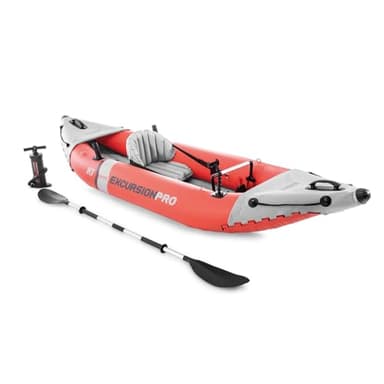
Top pick — The stiffest inflatable in the entry price class
Intex Excursion Pro K1 Inflatable Kayak (paddle and pump included)
A laminate hull and a high-pressure floor rather than plain vinyl, which is the difference between an inflatable that tracks and one that argues with you.
What the listing publishes
120 in long, 36 in beam, 31.2 lb packed, 220 lb rated capacity
Usable at the 65 percent rule: 143 lb (range 132–154 lb), which leaves about 123 lb of paddler after a 20 lb day kit. Why 65 percent.
220 lb rated is about 143 lb usable and 123 lb of paddler after gear -- the same limiting number as the Challenger K1, despite the better construction. Construction quality and capacity are separate specs and this is the clearest case of it on the site.
Stiffness is the whole story with inflatables. A high-pressure floor makes the hull behave like a shape instead of a bag, and it is the single upgrade that most changes how one paddles.
36 in of beam plus a stiff floor is an unusually settled platform for standing to fish or to take a photo.
What it does well
- Laminate hull and high-pressure floor track far better than plain vinyl
- 36 in beam plus a stiff floor is stable enough to stand on carefully
- 31 lb in a bag, still no rack required
What it costs you
- 220 lb rated -- roughly 123 lb of paddler after gear, same as the cheapest Intex
- Higher pressure means more pumping, and a gauge you should actually read
- Costs meaningfully more than the Challenger K1 for no extra capacity
Skip this if capacity is your constraint rather than feel. The Explorer K2 has 180 lb more rating for less money, and it is the better answer for a heavier paddler.
#ad · how this is funded · price as of October 18, 2026
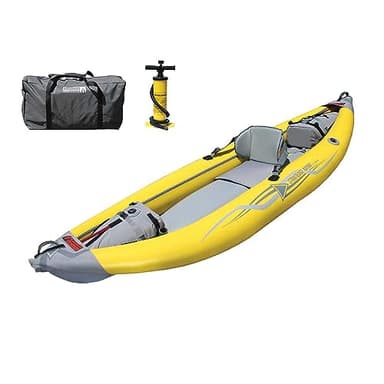
Pick 2 — An inflatable you would still choose with a garage
Advanced Elements StraitEdge Inflatable Kayak
Rigid frames built into the bow and stern give an inflatable something the class normally cannot have: an actual pointed end that cuts water instead of pushing it.
What the listing publishes
116 in long, 35 in beam, 37 lb, 300 lb rated capacity, aluminum bow and stern ribs
Usable at the 65 percent rule: 195 lb (range 180–210 lb), which leaves about 175 lb of paddler after a 20 lb day kit. Why 65 percent.
300 lb rated is about 195 lb usable at 65 percent and 175 lb of paddler after gear, which is 52 lb more headroom than any Intex here.
The aluminum ribs are the reason. A blunt inflatable bow shoves a wall of water; a defined one parts it, and the difference in effort over two miles is not subtle.
37 lb packed is the heaviest inflatable here and about the same as the lightest hard-shell we cover, so the storage advantage is real and the weight advantage is small.
What it does well
- Rigid bow and stern frames give it a real waterline shape, not a bag shape
- 300 lb rated is the highest of the solo inflatables here
- Folds into a bag, so an apartment is still not a problem
What it costs you
- 37 lb packed, the heaviest inflatable here
- Costs several times what an entry inflatable costs
- Setup is longer and fussier than a plain vinyl hull
Skip this if you are buying an inflatable purely because it is cheap. This is the expensive end of the class and the Explorer K2 covers the budget case.
#ad · how this is funded · price as of October 18, 2026
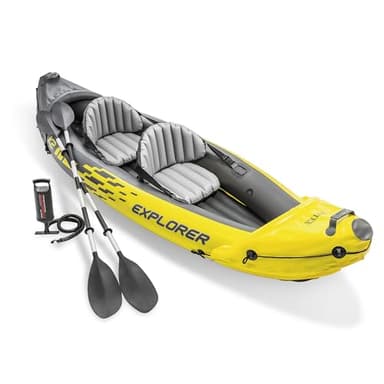
Pick 3 — Two people, no roof rack, small budget
Intex Explorer K2 Inflatable Kayak, 2-person (oars and pump included)
Bought as a tandem it disappoints; bought as a very roomy solo boat with 400 lb of rating and no rack requirement, it is the most useful inflatable here.
What the listing publishes
123 in long, 36 in beam, 35 lb packed, 400 lb rated capacity, two oars and a pump included
Usable at the 65 percent rule: 260 lb (range 240–280 lb), which leaves about 240 lb of paddler after a 20 lb day kit. Why 65 percent.
400 lb rated is about 260 lb usable at 65 percent. Two adults and gear will exceed that more often than not, which is why we recommend it as a spacious single rather than a genuine two-seater.
As a solo it is transformative: 260 lb of usable capacity against the Challenger K1's 143 lb, for nine extra pounds in the bag.
36 in of beam is wider than every hard-shell on this site. Inflatables are wide because air is what makes them stiff, and the side effect is a very forgiving platform.
What it does well
- 400 lb rated capacity -- 260 lb usable, which covers almost any solo adult with gear
- 36 in beam is the most stable platform on this site
- 35 lb in a bag: no rack, no straps, no garage
What it costs you
- Genuinely tight as a two-adult tandem once you apply the usable-capacity rule
- The included oars are oars, not proper kayak paddles -- budget to replace them
- Vinyl construction wallows in wind like every boat in this class
Skip this if you want a true two-adult tandem. Buy a hard-shell tandem with 500 lb or more of rating, or accept this as the roomiest solo inflatable in the price class.
#ad · how this is funded · price as of October 18, 2026
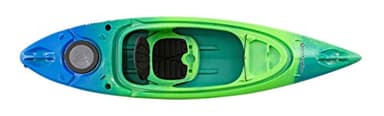
Pick 4 — The most capacity in the shortest hull
Perception Flash 9.5 Sit-Inside Kayak
A 325 lb rating in a hull under ten feet is unusual, and it is what makes this the short-boat answer for a larger paddler who still has to store it in an apartment.
What the listing publishes
113 in long, 28.5 in beam, 41 lb hull, 325 lb rated capacity
Usable at the 65 percent rule: 211 lb (range 195–227 lb), which leaves about 191 lb of paddler after a 20 lb day kit. Why 65 percent.
325 lb rated works out to about 211 lb usable at 65 percent, and roughly 191 lb of that is paddler once a paddle, PFD, water and a dry bag are subtracted. That is 30 lb more headroom than the Argo in a boat that is seven inches shorter.
Under 10 ft is the length that stops being a two-person carry and starts fitting on a balcony or standing on end in a closet. It is also the length that wanders on open water, because there is not enough waterline to hold a straight line in a crosswind.
The flat-bottom section is why the numbers work: a flatter hull carries more load for its length and feels solid at rest, at the cost of speed you were not going to use.
What it does well
- 325 lb rating is the highest of the sub-10-ft boats here
- Short enough to store somewhere a 12 ft boat will never fit
- Flat-bottom section feels settled the moment you sit down
What it costs you
- 9 ft 5 in wanders in wind -- you will correct your course constantly
- 41 lb is manageable but noticeably heavier than the Argo
- Slow. This is a hull for pottering, not for covering distance
Skip this if your water is a large lake or an open bay. Short hulls are hard work in wind, and that is a length problem no amount of technique fixes.
#ad · how this is funded · price as of October 18, 2026
If your answer has to be a hard-shell
Plenty of people asking this question would rather have a rigid boat and are hoping the car is not the obstacle. It is, and there are exactly three ways around it, none of which involves the inside of the car.
- **Foam blocks, on a bare roof.** A foam block carrier kit straps through the car's own door openings and needs no roof bars at all. This is the option most people do not know exists and it works on almost any car. How it is done, step by step.
- **Crossbars and J-cradles**, if the car already has roof rails. Faster to load, and two boats fit. The carriers, straps and carts.
- **A short, light hull.** If the lift onto the roof is the problem rather than the rack, the Perception Flash 9.5 is the shortest boat here and the lightweight ranking orders the whole range on published hull weight.
Three car shapes, and what each one can actually do
The answer changes less by car size than people expect, because the binding constraint is almost always the same — the distance from the tailgate to the front seats — and no passenger car has enough of it. What does change is which of the workarounds is available to you.
| Car | Hard-shell inside | On the roof | Inflatable inside |
|---|---|---|---|
| Sedan with a separate trunk | No, and the trunk opening rules it out twice | Yes, on foam blocks through the door openings | Yes, easily |
| Hatchback | No | Yes, foam blocks or bars if it has rails | Yes, in the trunk with room over |
| Estate or wagon | No | Yes, usually has factory rails | Yes |
| Mid-size or full-size SUV | No — about 7 ft of floor against a 9 ft 5 in hull | Yes, and the roof is high enough to be a two-person lift | Yes |
| Pickup with a 6 ft bed | Effectively yes, tailgate down and flagged | Not needed | Yes |
| Minivan with seats removed | Closest a passenger vehicle gets, and still short of a 10 ft hull | Yes | Yes |
The row worth noticing is the sedan. A sedan is the car people assume rules out a hard-shell entirely, and it does not — a foam block kit straps through the door openings and does not care whether the car has a hatch. The thing a sedan rules out is carrying the boat inside, which no car does anyway.
If you already bought the kayak
A good number of people arrive at this question in the wrong order, having bought a hull and then discovered the car. Nothing here is unfixable and the options are worth knowing before anybody resells anything at a loss.
- **Foam blocks and cam straps.** The cheapest fix and the one that works on nearly every car. Two blocks, two straps through the doors, and the boat is on the roof. The full method.
- **A cart for the walk.** If the boat is on the car and the problem is the hundred yards from the parking lot, that is a different purchase and a cheaper one. The carriers and carts.
- **Store it at the water.** Some marinas, clubs and campgrounds rent rack space by the season for less than a roof system costs, and it removes the transport question entirely.
- **Rent while you decide.** If the boat is not yet bought and the car is genuinely the obstacle, renting for a season is the honest way to find out whether you will use one at all. Rent or buy first.
On letting it hang out of the tailgate
People do this. We are not going to recommend it, and the reason is specific rather than squeamish.
- **An open tailgate can draw exhaust into the cabin**, which is the serious one and the reason manufacturers warn against driving with the rear hatch open.
- **An unsecured 45 lb object with a free end** becomes a projectile in a stop, and it is directly behind the headrests.
- **Overhang rules vary by state**, and a load projecting past the rear of the vehicle generally requires marking. Check your own state's rule rather than ours.
- **It does not actually solve it anyway.** A 9 ft 5 in boat in a 7 ft bay still leaves two and a half feet outside the car.
Foam blocks cost less than most of the accessories on this site and put the boat where it belongs. That is the answer to the hanging-out question.
What a paddle board does instead
Worth saying, because a good number of people asking this question would be happier with a board. An inflatable paddle board rolls into a backpack, weighs 20 to 25 lb, fits in a trunk with room left over, and needs nothing on the roof ever. If the car is your binding constraint and you have not decided between the two craft, the comparison is written for exactly that fork.
What you can ignore
- **Cargo volume in cubic feet.** It describes a shape, and a kayak is a line. Only the flat floor length matters.
- **'Fits in most vehicles' on a hard-shell listing.** It means on most vehicles.
- **Shipping box dimensions.** The box a kayak arrives in is not the boat's packed size, and no inflatable ships in a box the size of its carry bag.
- **Seat-removal tricks.** Taking out a rear seat buys inches, and the gap here is feet.
Questions people actually ask
Will a kayak fit inside my car?
Can you fit a 10 ft kayak in an SUV?
What is the best kayak for a small car?
Can I transport a kayak without a roof rack?
Is it safe to drive with a kayak sticking out of the tailgate?
How much does an inflatable kayak weigh packed?
Where these numbers came from
Every figure on this page traces to one of these. Where a number could not be sourced, the page says so rather than estimating it.
- Eddyline Kayaks — Maximum weight capacity versus ideal capacity for various styles of kayaks (manufacturer, states the 60-70% ideal-capacity band)
- Intex Excursion Pro K1 Inflatable Kayak — manufacturer specification as published on the Amazon listing, read 2026-09-02
- Advanced Elements StraitEdge Inflatable Kayak — manufacturer specification as published on the Amazon listing, read 2026-10-03
- Intex Explorer K2 Inflatable Kayak — manufacturer specification as published on the Amazon listing, read 2026-09-02
- Perception Flash 9.5 Sit-Inside Kayak — manufacturer specification as published on the Amazon listing, read 2026-09-02
Read next
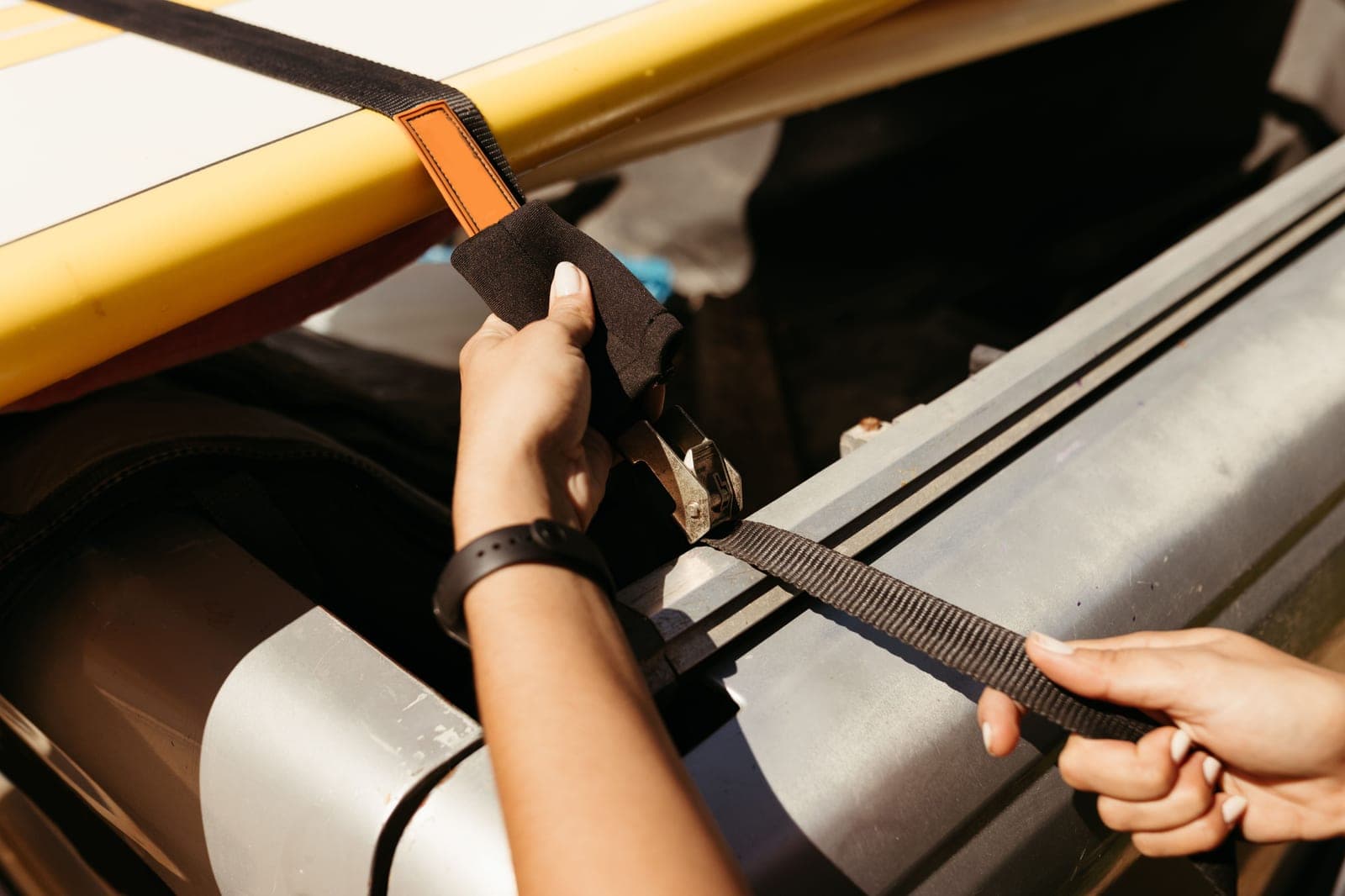
Getting Your Kayak to the Water
Four ways to move a kayak, including one that needs no roof bars and one that removes the problem entirely.
Top pick
Attwood Universal Rack-Free Car-Top Kayak Carrier Kit
A car with no roof bars at all
#ad · how this is funded · price as of October 18, 2026

Best Car-Top Carrier
Car-Top Carriers, Straps and Carts
Foam kits, J-cradles, cam straps and carts — which you need depends on your car and your parking lot.
Top pick
Attwood Universal Rack-Free Car-Top Kayak Carrier Kit
A car with no roof bars at all
#ad · how this is funded · price as of October 18, 2026
Lightest to Carry
The Best Lightweight Kayaks
Ranked on published hull weight, because the carry is what decides whether a kayak leaves the garage. What each pound saved costs in capacity.
Top pick
Pelican Argo 100X Sit-In Kayak, 10 ft
The lightest sit-inside to carry alone
#ad · how this is funded · price as of October 18, 2026

Best Inflatable Kayak
The Best Inflatable Kayaks
Inflatable kayaks ranked on capacity and hull stiffness — including the 220 lb rating that rules out most adults.
Top pick
Intex Explorer K2 Inflatable Kayak, 2-person (oars and pump included)
Two people, no roof rack, small budget
#ad · how this is funded · price as of October 18, 2026
Are Inflatable Kayaks Worth It?
Worth it if storage or a roof rack is your problem. Not worth it if performance is. How to tell which buyer you are from the published capacity and your own garage.
Top pick
Intex Explorer K2 Inflatable Kayak, 2-person (oars and pump included)
Two people, no roof rack, small budget
#ad · how this is funded · price as of October 18, 2026
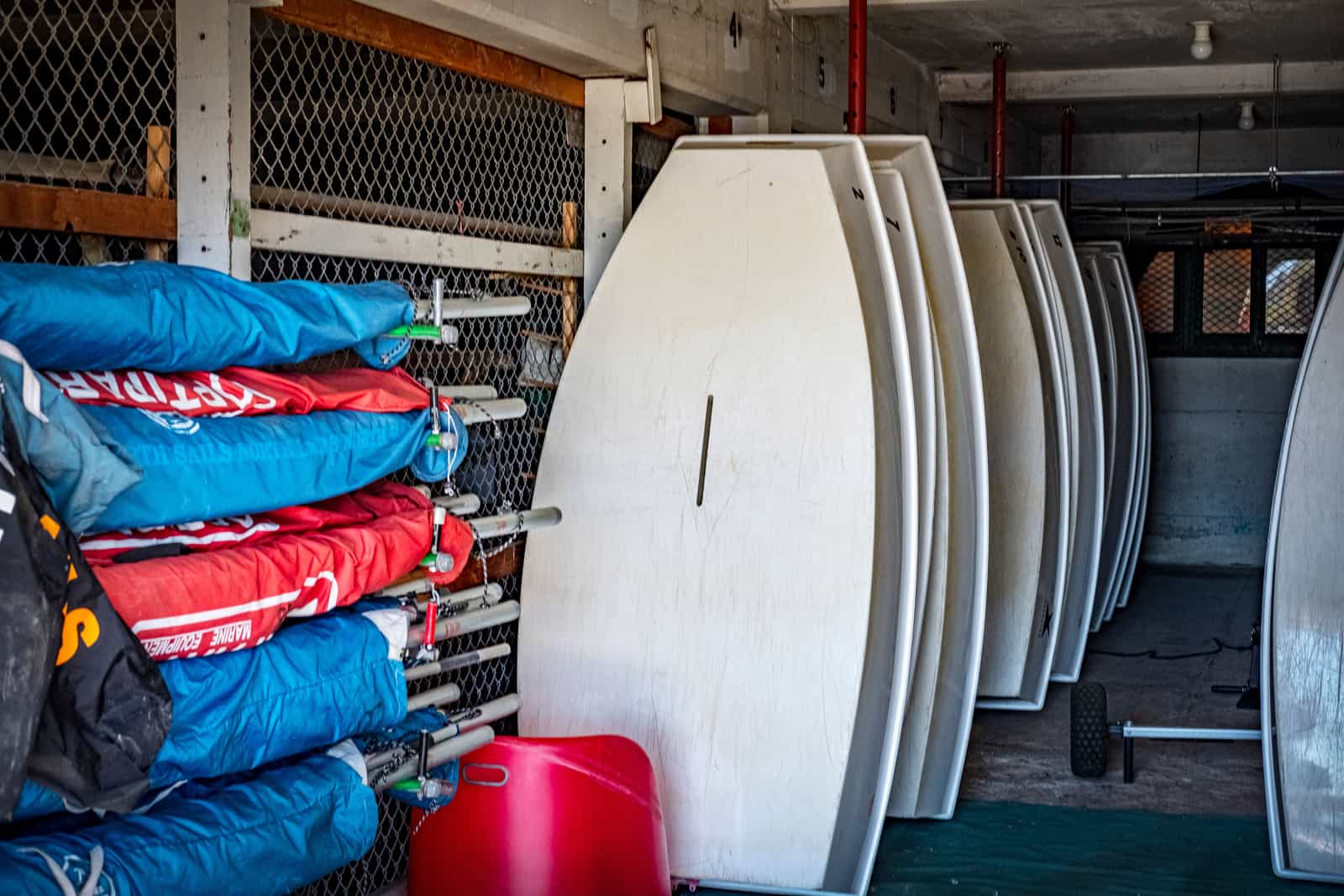
Where to Keep a Kayak or Paddle Board
Where to put it, how to avoid deforming the hull, and what the off-season actually requires.
Top pick
Roc Inflatable Stand Up Paddle Board, 10 ft 6 in x 33 in
The default first inflatable board
#ad · how this is funded · price as of October 18, 2026