Choosing Your First
Kayak or Canoe?
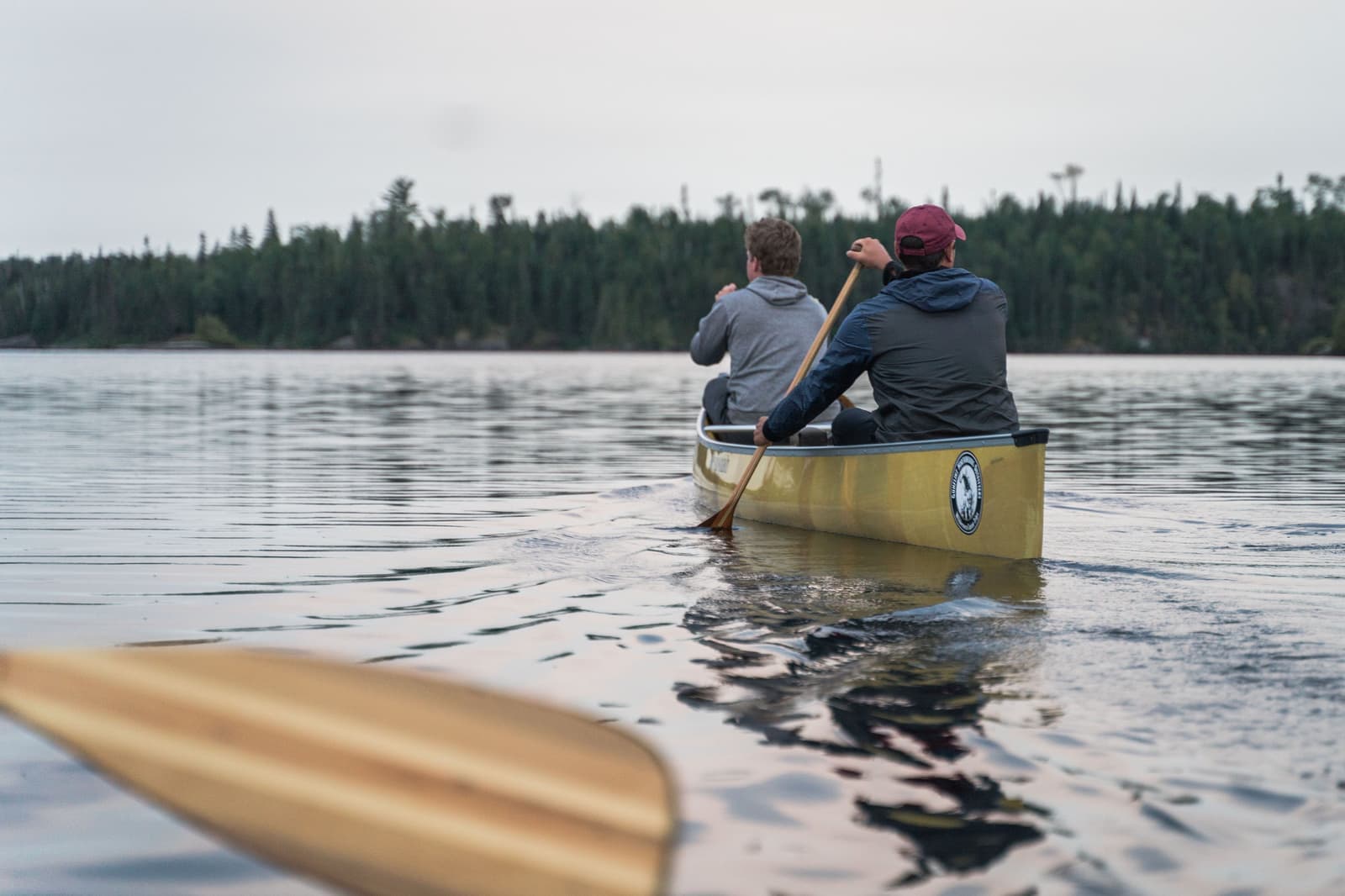
The internet has largely decided this in the kayak's favor. For a family, for carrying things, and for anyone who wants to change position occasionally, the canoe is a much better answer than its market share suggests.
We have not paddled these, and we are not going to pretend we have. Here is what we did instead. Links to Amazon earn us a commission at no extra cost to you, and commission never decides a pick — how this site is funded.
| # | Product | Best for | The spec it turns on | Price |
|---|---|---|---|---|
| 1 | 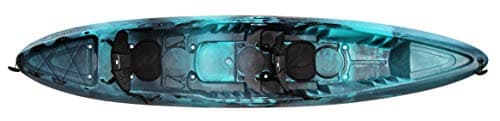 Perception Rambler 13.5 Tandem Sit-on-Top KayakTop pick550 lb rated is the highest here, and it is the only figure on this page that genuinely covers two adults and a passenger once the 65 percent rule is applied. | Two adults plus a child or a dog | 162 in long, 34 in beam, 78 lb hull, 550 lb rated capacity | |
| 2 | 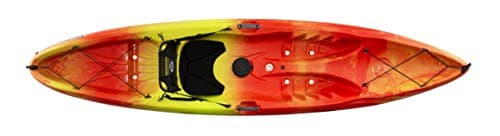 Perception Tribe 11.5 Sit-on-Top KayakThe combination almost nothing else manages: 350 lb of rating, a 30 in beam and enough waterline to hold a line, in a hull a first-timer can climb back onto from the water. | The all-round first sit-on-top | 137 in long, 30.25 in beam, 52 lb hull, 350 lb rated capacity |
Kayaks have won the market almost completely, and the reasons are mostly about storage, weight and marketing rather than about which is a better craft for a given job. It is worth putting the canoe's case properly.
One caveat up front, and it is a real one: we recommend kayaks and paddle boards on this site and we do not currently recommend a specific canoe. That is because the models we would want to check are not consistently available through the retailer we link to, and we would rather say that than pad a page with a pick we could not verify.
| Kayak | Canoe | |
|---|---|---|
| Capacity | 250 to 550 lb | 600 to 1,200 lb |
| Getting in and out | Awkward, especially a sit-inside | Easy — you step in |
| Changing position | You are fixed in one posture | Kneel, sit, shift, stretch your legs |
| Carrying gear | Hatches and tank wells | An open hull. Coolers, chairs, camping kit |
| Wind | Good. You sit low | Poor. High sides act as a sail |
| Speed for effort | Faster — double-bladed paddle | Slower — single blade |
| Weight | 36 to 80 lb | 55 to 90 lb |
| Staying dry | Wet in a sit-on-top, dry in a sit-inside | Dry, mostly |
| Learning curve | Ten minutes | Longer — the single-blade stroke takes practice |
| A dog | Possible on a sit-on-top | Ideal. There is a floor |
| Kids | Cramped in a tandem kayak | Two adults and two children fits |
The canoe's real advantage: it is a boat with a floor
This is the difference the specification table understates. A kayak is a shape you wear. A canoe is a container you sit in, with room to move, standing height to step in, and a floor you can put things on.
For a family that is transformative. Two adults, two children and a cooler is a normal canoe load and an impossible kayak one. For a dog it is the same story — a canoe has a floor a dog lies down on, rather than a deck a dog balances on.
It also matters for anyone whose back, hips or knees object to being fixed in one position for two hours. In a kayak you are in the seat you are in. In a canoe you can kneel, sit, shift and stretch.
The kayak's real advantage: wind
A canoe has high sides and a lot of hull above the waterline, and it catches wind badly. An empty canoe in a crosswind is genuinely difficult to hold on course — it weathercocks, spins, and demands constant correction from a paddler using a single blade on one side.
A kayak sits low, presents almost nothing to the wind, and gives you a blade on each side for immediate correction. On open water on an average day that is a large practical difference and it is why kayaks dominate lake paddling.
Choose a canoe if
- **You are a family of three or more.** Nothing in the kayak world competes with an open hull for this.
- **You want to carry actual gear** — a cooler, camping kit, chairs, a fishing tackle box.
- **You have a dog**, especially a large one. A floor beats a deck.
- **Getting in and out matters** for anyone in the group, on grounds of age, mobility or confidence.
- **You paddle sheltered water** — rivers, small lakes, backwaters where wind is not a routine factor.
Choose a kayak if
- **You paddle one or two up**, which is most people most of the time.
- **Your water is open and windy**, which is most lakes on most days.
- **Storage or carrying weight is tight**, or an inflatable is appealing.
- **You want to be competent immediately.** Ten minutes versus a season of learning the J-stroke.
- **You want to go faster for the same effort.** A double blade is simply more efficient.
The tandem kayak middle ground
If the canoe's appeal is 'space for more than one person and a dog' but the wind argument worries you, a tandem sit-on-top kayak is the compromise. 34 inches of beam, 550 lb of rating and a large open rear deck gets you most of the canoe's capacity in a hull that sits low.
It is not a canoe — you cannot stand up, cannot easily change position, and cannot fit four people. But for two adults and a dog, or an adult and two small children, it covers most of the same ground. The tandem options.
Top pick — Two adults plus a child or a dog
Perception Rambler 13.5 Tandem Sit-on-Top Kayak
550 lb rated is the highest here, and it is the only figure on this page that genuinely covers two adults and a passenger once the 65 percent rule is applied.
What the listing publishes
162 in long, 34 in beam, 78 lb hull, 550 lb rated capacity
Usable at the 65 percent rule: 358 lb (range 330–385 lb), which leaves about 338 lb of paddler after a 20 lb day kit. Why 65 percent.
550 lb rated is about 358 lb usable at 65 percent. Two 150 lb adults plus gear fits with room; two 200 lb adults plus gear does not, and no tandem's marketing copy will tell you that.
78 lb is a two-person carry, permanently. That is not a criticism, it is a planning fact: a tandem needs two people to move it and two people to paddle it well.
34 in of beam across 13 ft 6 in is why a dog can stand up on the back of this without it becoming an incident.
What it does well
- 550 lb rated capacity, the only figure here with room for three bodies
- 34 in beam is stable enough for a dog or a fidgeting child
- 13 ft 6 in tracks properly, so two paddlers out of sync still make progress
What it costs you
- 78 lb is a two-person lift every single time
- Needs roof bars and a real plan -- this does not go inside a car
- A tandem paddled solo from the back seat is genuinely awkward
Skip this if you will mostly paddle alone. A tandem solo is unbalanced and unpleasant, and two cheap solo boats often cost less than one good tandem.
#ad · how this is funded · price as of October 18, 2026
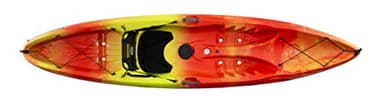
Pick 2 — The all-round first sit-on-top
Perception Tribe 11.5 Sit-on-Top Kayak
The combination almost nothing else manages: 350 lb of rating, a 30 in beam and enough waterline to hold a line, in a hull a first-timer can climb back onto from the water.
What the listing publishes
137 in long, 30.25 in beam, 52 lb hull, 350 lb rated capacity
Usable at the 65 percent rule: 228 lb (range 210–245 lb), which leaves about 208 lb of paddler after a 20 lb day kit. Why 65 percent.
350 lb rated is about 228 lb usable at 65 percent and 208 lb of paddler after a day kit -- the most headroom of any single boat here, and enough that a 200 lb adult is inside the comfortable band rather than at the edge of it.
Sit-on-top means the deck is open and self-draining. The reason that matters to a beginner is not comfort, it is that remounting from deep water is a maneuver you can actually perform, where a flooded sit-inside cockpit is not.
52 lb is the price. This is at the top of what one person carries any distance, and the reason a cart appears in our cost totals for this boat and not for the Argo.
What it does well
- 350 lb rated capacity gives real headroom for larger adults or a child up front
- Open self-draining deck is the forgiving choice for a first summer
- 137 in of hull tracks far better than the 9 and 10 ft boats here
What it costs you
- 52 lb is a two-person lift onto a roof for most people
- You will get wet. Sit-on-tops always do, and that is a season decision not a design flaw
- 11 ft 5 in needs more storage length than the 10 ft boats
Skip this if you paddle in cold water or a cold shoulder season. An open deck in 55-degree water is a different and less pleasant sport, and a sit-inside is the right answer there.
#ad · how this is funded · price as of October 18, 2026
Questions people actually ask
Is a canoe or kayak better for beginners?
Is a canoe better for a family?
Are canoes harder to paddle than kayaks?
Do canoes tip more easily than kayaks?
Which holds more weight, a canoe or a kayak?
Where these numbers came from
Every figure on this page traces to one of these. Where a number could not be sourced, the page says so rather than estimating it.
- Eddyline Kayaks — Maximum weight capacity versus ideal capacity for various styles of kayaks (manufacturer, states the 60-70% ideal-capacity band)
- U.S. Coast Guard — Recreational Boaters (federal equipment requirements for vessels, paddlecraft included)
- Perception Rambler 13.5 Tandem Sit-on-Top Kayak — manufacturer specification as published on the Amazon listing, read 2026-09-02
- Perception Tribe 11.5 Sit-on-Top Kayak — manufacturer specification as published on the Amazon listing, read 2026-09-02
Read next

Paddle Board vs Canoe
A canoe carries a family and a week of gear. A board carries you. Which one fits, and why most people asking are really asking something else.
Top pick
Roc Inflatable Stand Up Paddle Board, 10 ft 6 in x 33 in
The default first inflatable board
#ad · how this is funded · price as of October 18, 2026
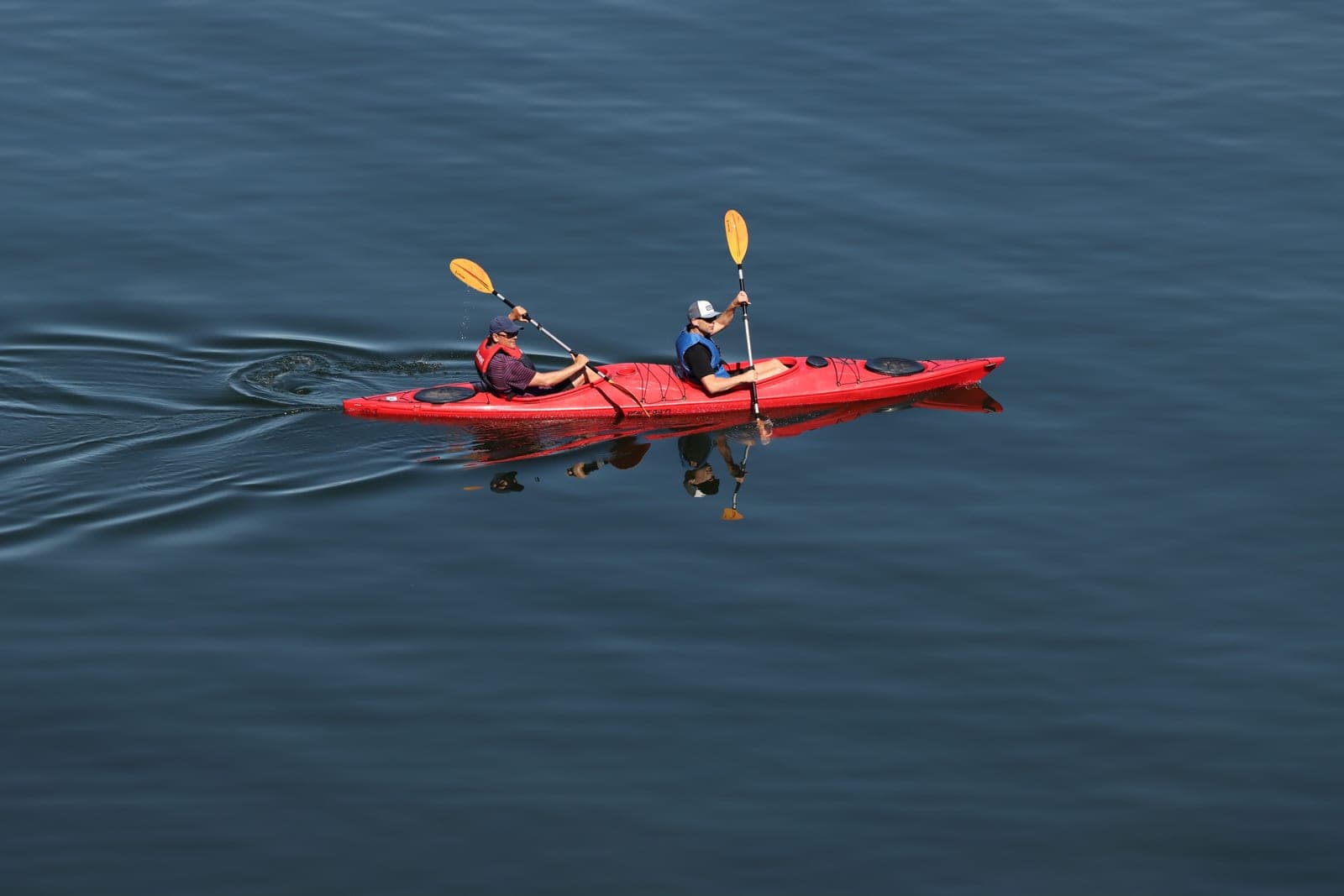
Best Tandem
The Best Tandem Kayaks
Tandem kayaks with the usable-capacity arithmetic done — a 500 lb tandem covers less than most buyers assume.
Top pick
Perception Rambler 13.5 Tandem Sit-on-Top Kayak
Two adults plus a child or a dog
#ad · how this is funded · price as of October 18, 2026
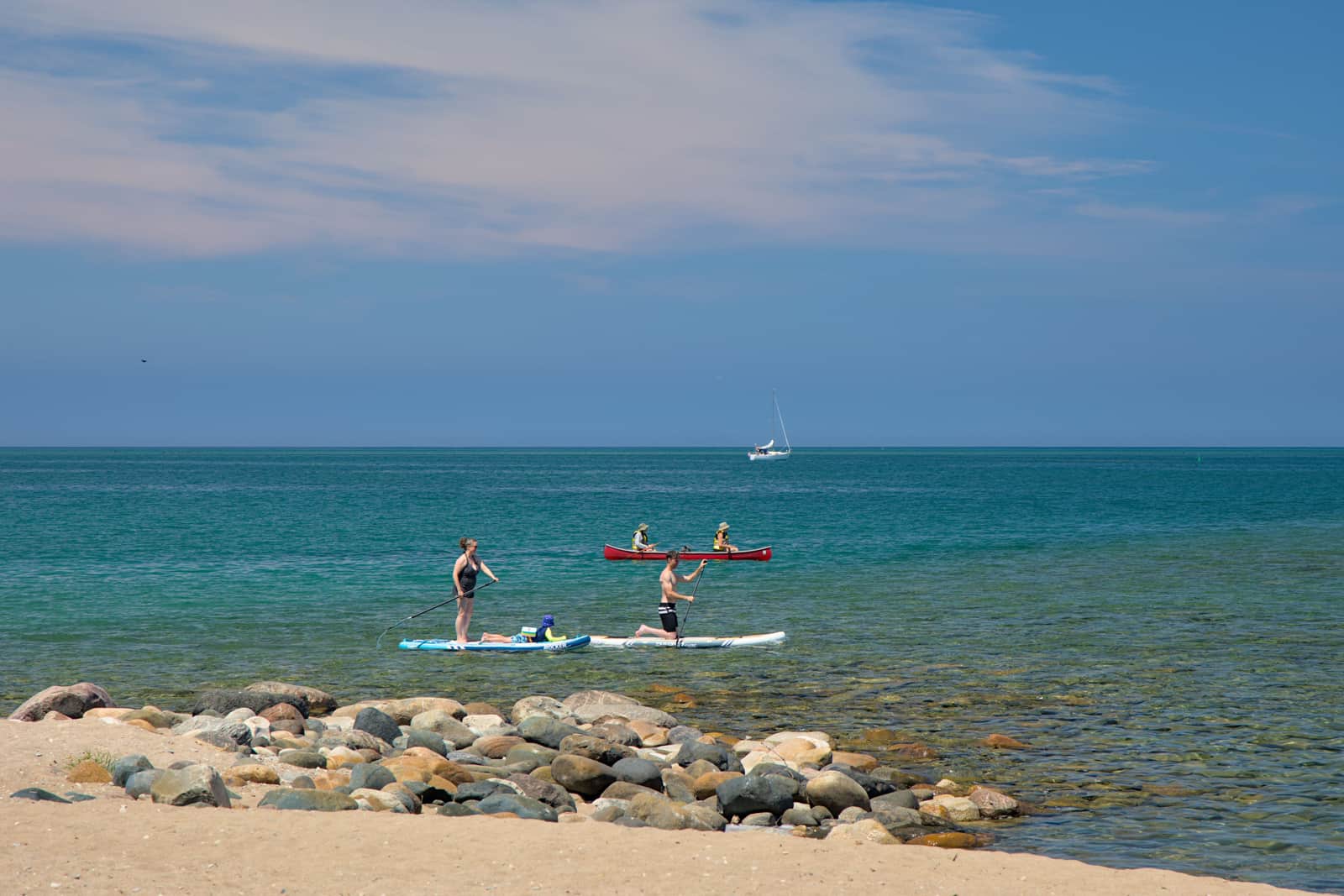
Paddle Board or Kayak?
The honest board-versus-boat comparison, from a site that earns identically either way.
Top pick
Roc Inflatable Stand Up Paddle Board, 10 ft 6 in x 33 in
The default first inflatable board
#ad · how this is funded · price as of October 18, 2026
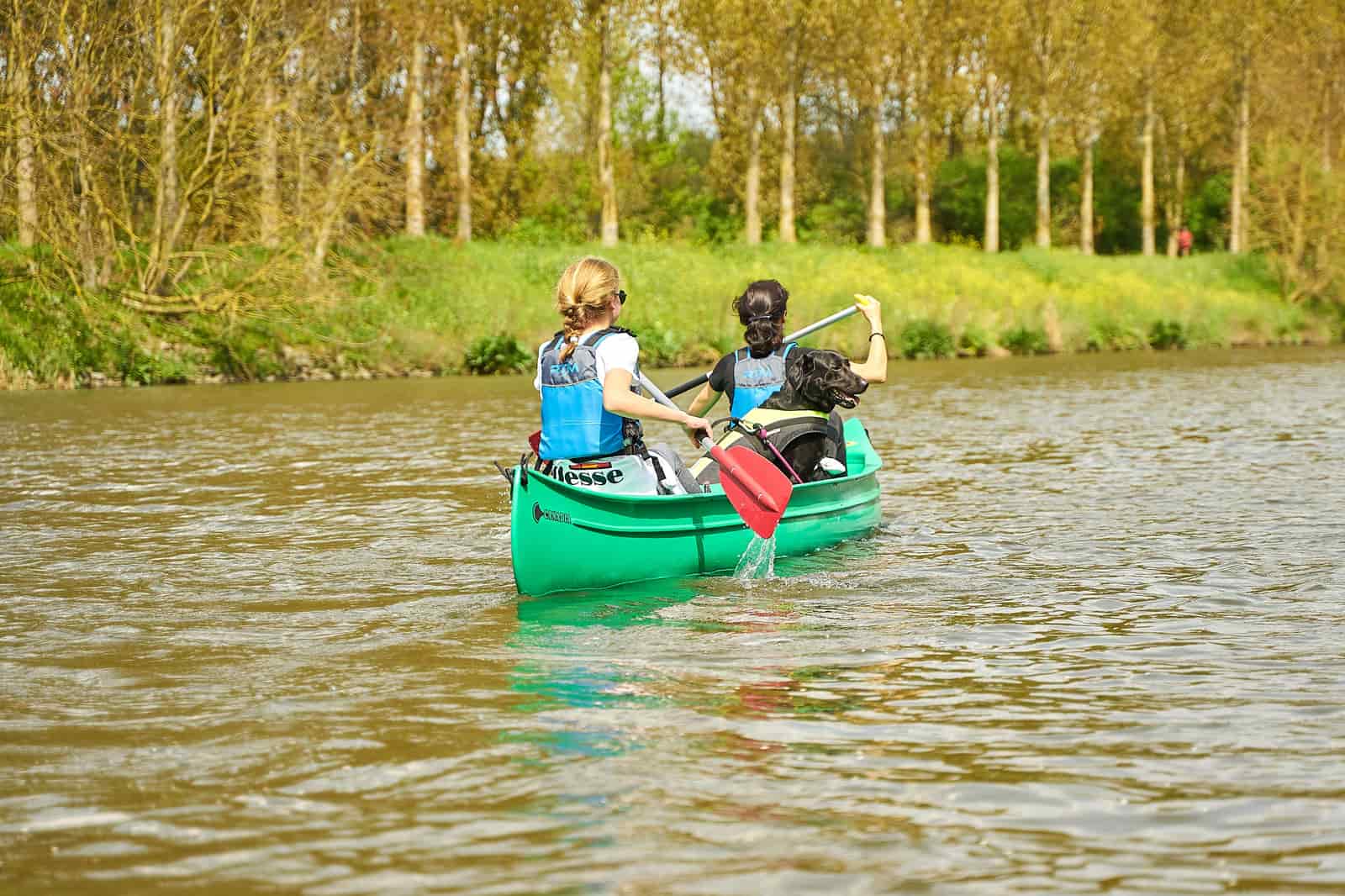
Best with a Dog
The Best Kayaks for Dogs
Deck space, grip and capacity headroom — the three things a dog needs from a kayak, and the boats that have them.
Top pick
Perception Rambler 13.5 Tandem Sit-on-Top Kayak
Two adults plus a child or a dog
#ad · how this is funded · price as of October 18, 2026
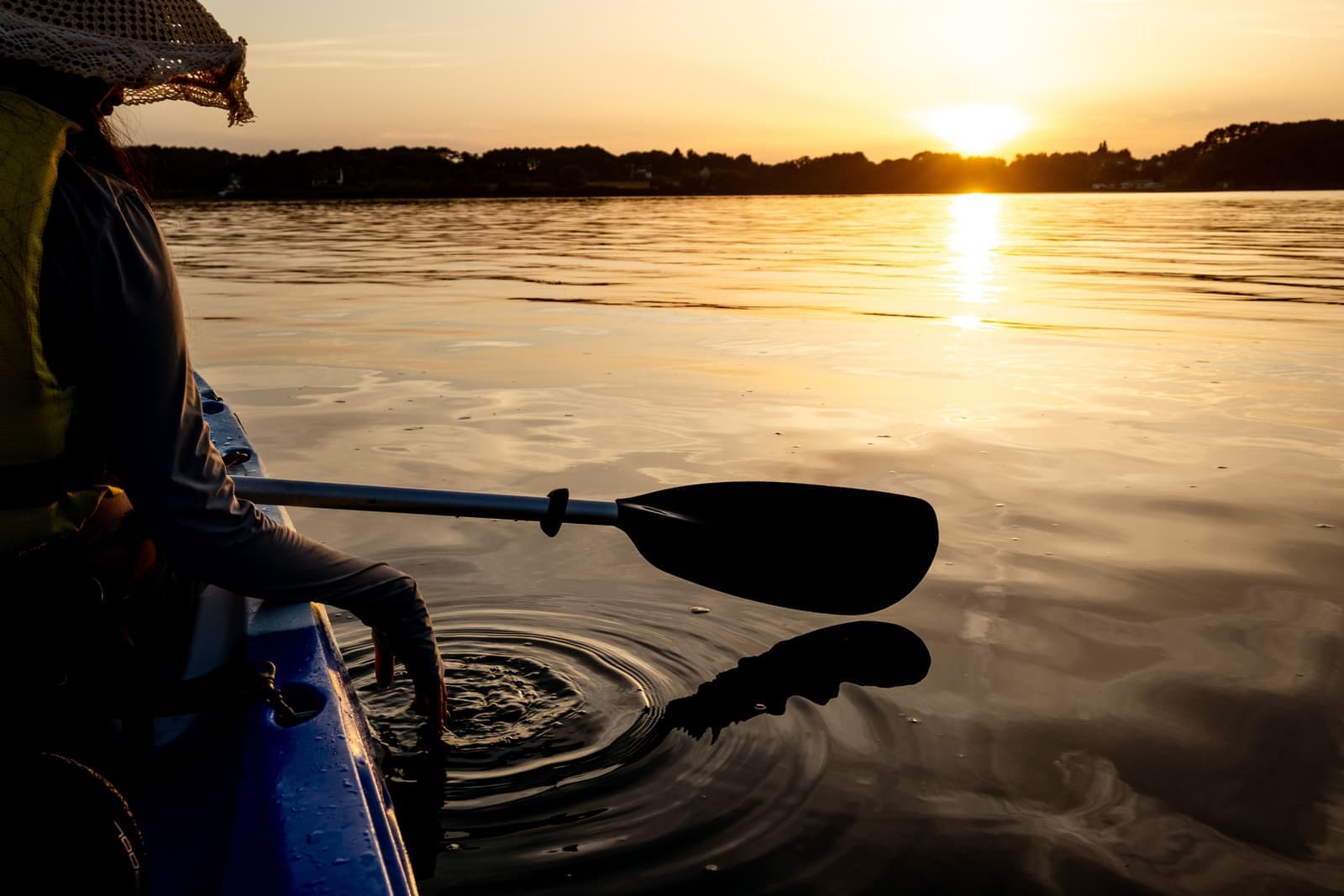
Best First Kayak
The Best Kayaks for Beginners
Beginner kayaks ranked on width, carry weight and usable capacity — with the 65 percent arithmetic run on every one.
Top pick
Perception Tribe 11.5 Sit-on-Top Kayak
The all-round first sit-on-top
#ad · how this is funded · price as of October 18, 2026
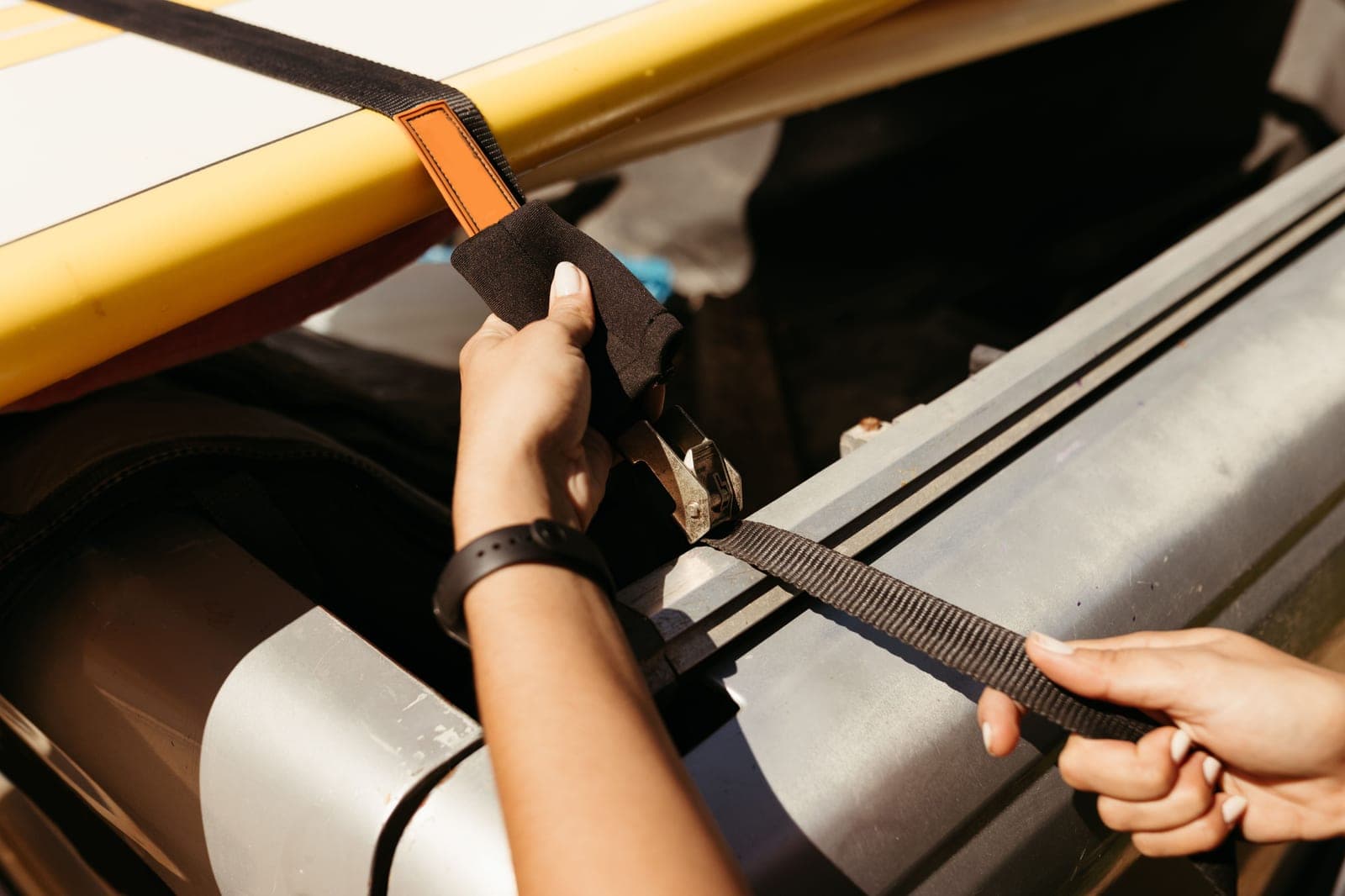
Getting Your Kayak to the Water
Four ways to move a kayak, including one that needs no roof bars and one that removes the problem entirely.
Top pick
Attwood Universal Rack-Free Car-Top Kayak Carrier Kit
A car with no roof bars at all
#ad · how this is funded · price as of October 18, 2026