Choosing Your First
Paddle Board vs Canoe
These two get compared because they are the extremes: the most and the least a beginner can put on the water. Almost nobody is genuinely deciding between them, and the ones who are have a specific question.

We have not paddled these, and we are not going to pretend we have. Here is what we did instead. Links to Amazon earn us a commission at no extra cost to you, and commission never decides a pick — how this site is funded.
| # | Product | Best for | The spec it turns on | Price |
|---|---|---|---|---|
| 1 | 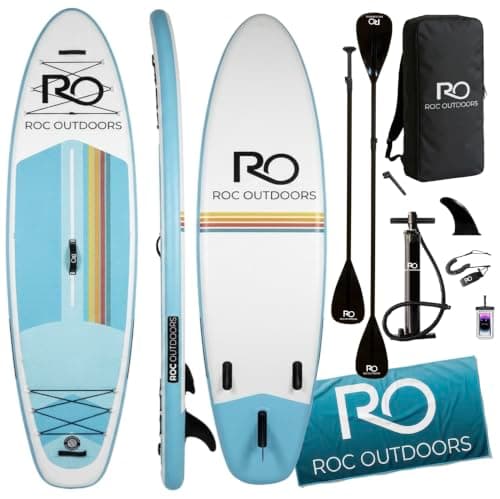 Roc Inflatable Stand Up Paddle Board, 10 ft 6 in x 33 inTop pick10 ft 6 in by 33 in is the shape the whole beginner category converged on, and this is the cheapest version of it that publishes a 350 lb rating. | The default first inflatable board | 126 x 33 x 6 in, 350 lb rated capacity, PVC drop-stitch, full accessory kit | |
| 2 | 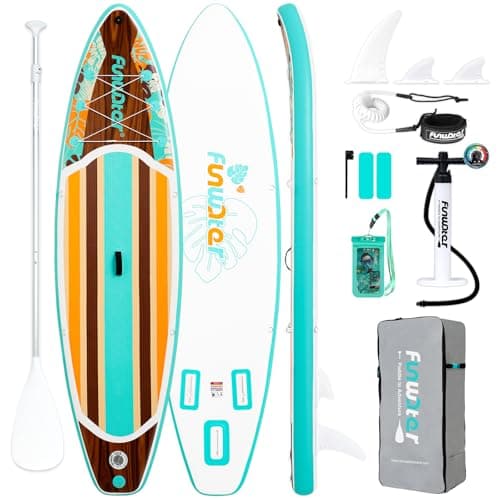 FunWater Inflatable Stand Up Paddle Board, 10 ft 6 in x 35 inThirty-five inches of width in a 10 ft 6 in board is the closest thing to a raft that still paddles like a board, and for a genuinely nervous beginner that is the right trade. | Maximum stability in a standard length | 126 x 35.1 x 6 in, 330 lb rated capacity, PVC drop-stitch | |
| 3 | 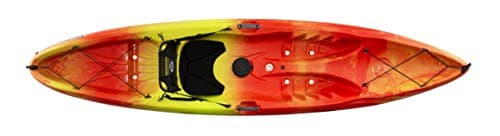 Perception Tribe 11.5 Sit-on-Top KayakThe combination almost nothing else manages: 350 lb of rating, a 30 in beam and enough waterline to hold a line, in a hull a first-timer can climb back onto from the water. | The all-round first sit-on-top | 137 in long, 30.25 in beam, 52 lb hull, 350 lb rated capacity |
This is the widest gap in paddlesports. A canoe is a cargo vessel that happens to be paddled; a paddle board is the least boat that still floats a person. Setting them side by side is genuinely useful, because the comparison exposes what you actually want.
The comparison, in the order it matters
| Paddle board | Canoe | |
|---|---|---|
| What it carries | You, and a dry bag | Two to three people, gear, a dog, a week of camping |
| Learning curve | Standing takes an hour. Kneeling takes minutes | Paddling straight solo is a genuine skill |
| In wind | Poor. You are the sail | Poor. High sides catch wind, and it is heavy to correct |
| Transport | Packs in a trunk if inflatable | Roof rack, two-person lift, always |
| Storage | A closet, if inflatable | A garage wall or a yard. 15 ft of it |
| Cost of entry | The lowest in paddlesports | Among the highest, and the used market is where most start |
| Getting wet | Frequently, at first | Rarely, unless something goes wrong |
Read that table and the answer is usually obvious, which is why the comparison is worth running. The two are not close substitutes and the choice between them is really a choice about payload.
The question behind the question
Most people typing this comparison are not choosing between a board and a canoe. They are asking one of three things, and each has a cleaner answer.
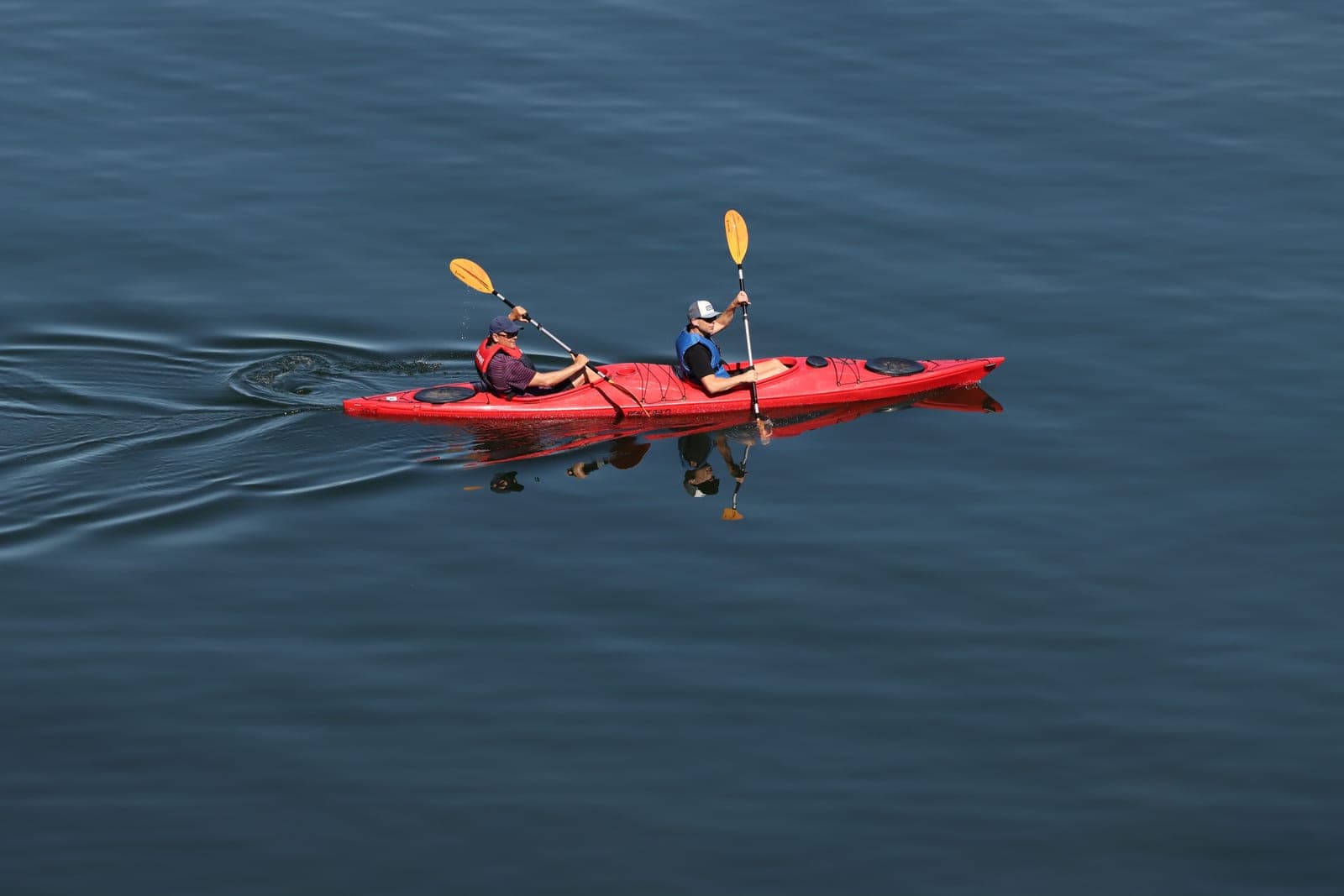
- **How do I get my family on the water?** That is a canoe or a tandem kayak question, not a board question. A canoe carries the most; a tandem kayak is easier to paddle solo when nobody else wants to come.
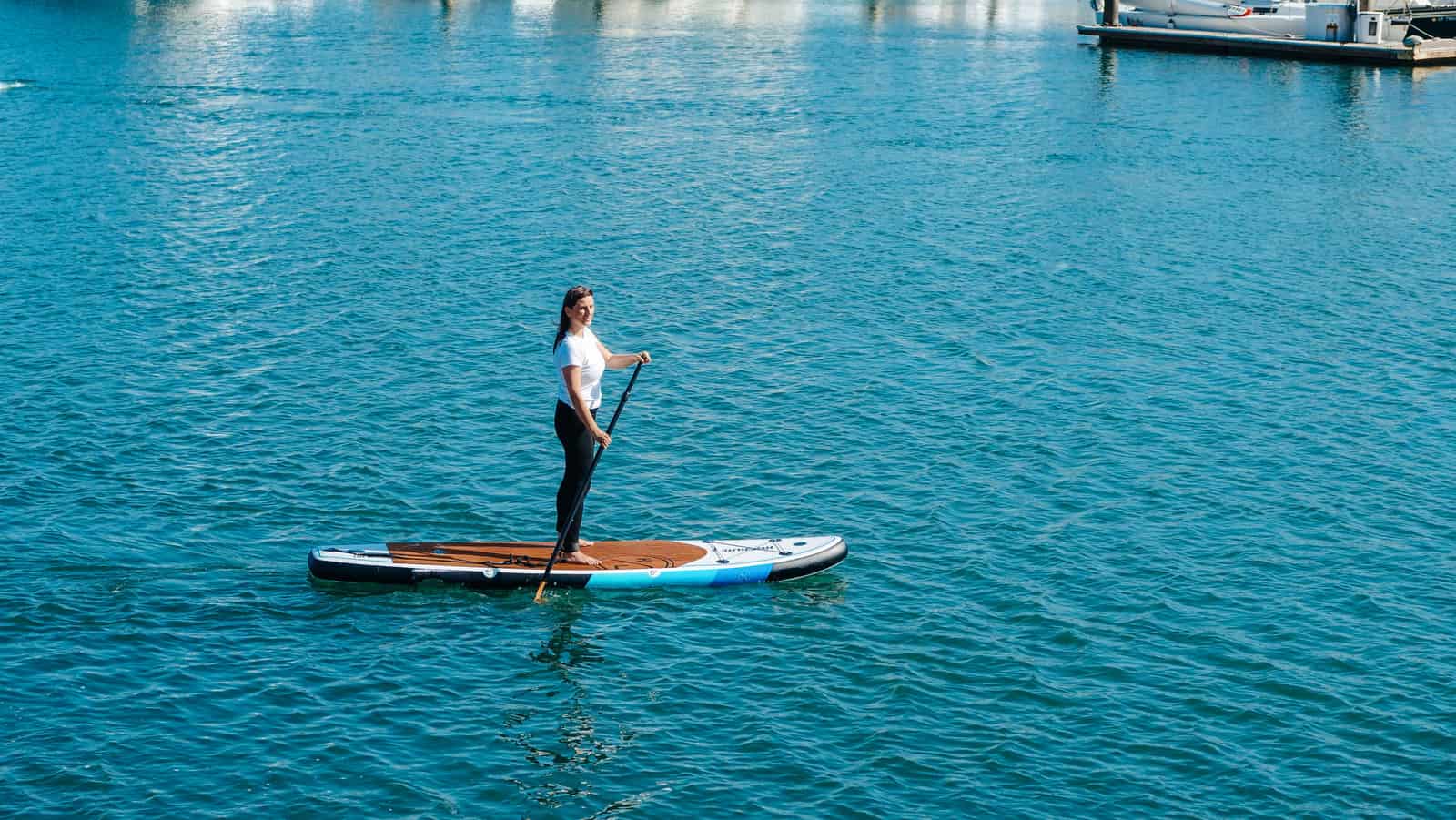
- **What is the easiest thing to own?** A board, decisively, and specifically an inflatable one. Nothing else in paddlesports fits in a closet and a trunk.
- **Which do I actually learn faster?** A board, on flat water, if you accept kneeling for the first hour. A canoe paddled solo in any wind is harder than either a board or a kayak, which surprises people who assume the biggest boat is the most forgiving.
Where the canoe genuinely wins
We recommend boards and kayaks on this site, and it would be dishonest to pretend the canoe is obsolete. It is the correct answer to a specific and not-unusual set of trips.
- **Real cargo.** A tandem canoe carries several hundred pounds of people and gear with room to move around, which no board and few kayaks approach.
- **Kids and a dog.** Everyone sits inside, above the water, with space between them. It is the friendliest craft on the water for passengers who cannot swim well.
- **Long trips with a portage.** The canoe is the reason wilderness canoe routes exist. One hull carries the whole camp and can be carried overhead between lakes.
- **Staying dry.** You sit well above the waterline. On a board, immersion is part of the activity.
If you recognized your own plans in that list, the honest recommendation is a canoe, and we do not sell them. Kayak or canoe works through the closer of the two comparisons in more detail.
Where the board wins, which is most first purchases
For one adult who wants to be on flat water this summer without solving a storage problem or a roof rack problem, the board is not merely adequate — it is the better craft.
The board's real advantage is friction. It lives in a closet, it rides in a trunk, one person carries it, and the decision to go paddling costs nothing but the evening. A canoe is a plan; a board is a whim. Over a first season, that difference produces far more time on the water than any performance spec.
Top pick — The default first inflatable board
Roc Inflatable Stand Up Paddle Board, 10 ft 6 in x 33 in
10 ft 6 in by 33 in is the shape the whole beginner category converged on, and this is the cheapest version of it that publishes a 350 lb rating.
What the listing publishes
126 x 33 x 6 in, 350 lb rated capacity, PVC drop-stitch, full accessory kit
Usable at the 65 percent rule: 228 lb (range 210–245 lb), which leaves about 208 lb of paddler after a 20 lb day kit. Why 65 percent.
33 in of width is the number that decides whether you stand up on day one. Our width guidance puts 32 to 33 in as the beginner band for an adult between 150 and 200 lb, and this sits in it.
350 lb rated capacity means about 227 lb of loaded paddler at 65 percent. Applying the displacement arithmetic instead, a 195 lb loaded paddler wants roughly 195 L of volume -- this hull's 126 x 33 x 6 in envelope is comfortably past that.
Six inches of thickness is what makes a modern inflatable stiff. Four-inch boards flex under an adult in the middle and that flex is what people mistake for the board being unstable.
What it does well
- 33 in wide -- the width that gets a first-timer standing rather than kneeling
- 350 lb rating covers an adult with a child or a dog on board
- Ships with pump, paddle, leash and bag, so the listing price is close to the total
What it costs you
- The included paddle and pump are starter parts you will eventually replace
- 10 ft 6 in is a compromise length -- not fast, not especially maneuverable
- The listing does not publish a board weight
Skip this if you already know you want to cover distance. A 10 ft 6 in all-around board is a cruiser and an 11 ft 6 in touring shape is the honest answer for mileage.
#ad · how this is funded · price as of October 8, 2026
Pick 2 — Maximum stability in a standard length
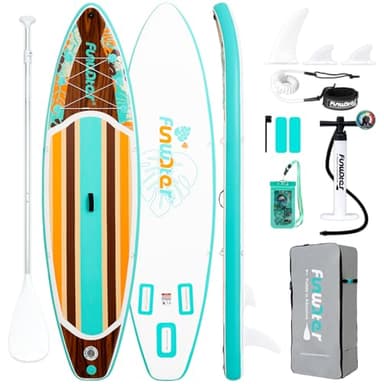
FunWater Inflatable Stand Up Paddle Board, 10 ft 6 in x 35 in
Thirty-five inches of width in a 10 ft 6 in board is the closest thing to a raft that still paddles like a board, and for a genuinely nervous beginner that is the right trade.
What the listing publishes
126 x 35.1 x 6 in, 330 lb rated capacity, PVC drop-stitch
Usable at the 65 percent rule: 215 lb (range 198–231 lb), which leaves about 195 lb of paddler after a 20 lb day kit. Why 65 percent.
35.1 in is above our beginner recommendation for every weight band on the site. Extra width is slower and it is not a mistake -- speed is not the thing standing between a first-timer and a good afternoon.
330 lb rated is about 215 lb of loaded paddler at 65 percent, the same as the FEATH-R-LITE, in a board three and a half inches wider.
Wide boards are harder to reach past when you paddle, so a wide board pushes you toward a slightly longer paddle. Our formula puts a 5 ft 8 in paddler on a 77 in SUP paddle regardless of board, but the reach penalty is real and worth knowing about.
What it does well
- 35.1 in wide -- as stable as an inflatable board gets at this length
- 330 lb rating with room for a child or a dog on the nose
- Full accessory kit included
What it costs you
- Wide is slow, and you will notice against a 31 in board
- Harder to reach the water past the rail, which tires your shoulders
- The listing does not publish a board weight
Skip this if you are reasonably confident on your feet already. Width you do not need is drag you pay for on every stroke.
#ad · how this is funded · price as of October 8, 2026
Pick 3 — The all-round first sit-on-top
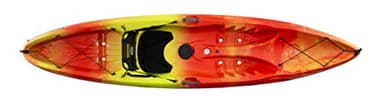
Perception Tribe 11.5 Sit-on-Top Kayak
The combination almost nothing else manages: 350 lb of rating, a 30 in beam and enough waterline to hold a line, in a hull a first-timer can climb back onto from the water.
What the listing publishes
137 in long, 30.25 in beam, 52 lb hull, 350 lb rated capacity
Usable at the 65 percent rule: 228 lb (range 210–245 lb), which leaves about 208 lb of paddler after a 20 lb day kit. Why 65 percent.
350 lb rated is about 228 lb usable at 65 percent and 208 lb of paddler after a day kit -- the most headroom of any single boat here, and enough that a 200 lb adult is inside the comfortable band rather than at the edge of it.
Sit-on-top means the deck is open and self-draining. The reason that matters to a beginner is not comfort, it is that remounting from deep water is a maneuver you can actually perform, where a flooded sit-inside cockpit is not.
52 lb is the price. This is at the top of what one person carries any distance, and the reason a cart appears in our cost totals for this boat and not for the Argo.
What it does well
- 350 lb rated capacity gives real headroom for larger adults or a child up front
- Open self-draining deck is the forgiving choice for a first summer
- 137 in of hull tracks far better than the 9 and 10 ft boats here
What it costs you
- 52 lb is a two-person lift onto a roof for most people
- You will get wet. Sit-on-tops always do, and that is a season decision not a design flaw
- 11 ft 5 in needs more storage length than the 10 ft boats
Skip this if you paddle in cold water or a cold shoulder season. An open deck in 55-degree water is a different and less pleasant sport, and a sit-inside is the right answer there.
#ad · how this is funded · price as of October 8, 2026
Why solo canoeing is the hard part
The assumption that the bigger, more stable-looking craft must be the easier one is where this comparison usually goes wrong. Sitting in a canoe is very stable. Making it go where you want, alone, is not.
- **You paddle from one side.** Every stroke turns the boat away from that side. Correcting it means either switching sides constantly or learning a corrective stroke, and neither is intuitive in the first hour.
- **Wind is a serious opponent.** A canoe has high sides and sits high in the water. Solo, with the bow light and unweighted, it will swing broadside to a crosswind and be genuinely difficult to bring back.
- **It is heavy to correct.** A 60 to 80 lb hull with momentum does not respond to a small input the way a board or a kayak does.
A board or a kayak is paddled with a double blade, alternating sides, which cancels the turning force automatically. That is the actual reason beginners progress faster on both — not stability, but the fact that going straight is the default rather than a skill.
Cost, over three seasons rather than one
The purchase price is the least interesting part of the comparison, because the two craft impose completely different ongoing costs.
| Inflatable paddle board | Canoe | |
|---|---|---|
| Getting it to water | In a trunk, one person | Roof rack and usually two people, every time |
| Storage | A closet | 15 ft of garage wall, a yard, or a rack |
| Extra gear needed | Paddle, leash, jacket — mostly in the kit | Two paddles, jackets, often a cart |
| Solo usability | Always | Possible, and harder in any wind |
| Resale | Weak. Inflatables age | Strong. Plastic and aluminum hulls last decades |
The row that decides it for most people is solo usability. A canoe is at its best with two people, and the frequency with which a second person is available is usually lower than anyone estimates when buying. A board is never waiting on anybody.
The safety difference worth knowing
A canoe capsize is a bigger event than a board fall. You go from dry and seated to swimming beside a large hull full of water, usually with loose gear floating away, and righting and re-entering a swamped canoe in deep water is a taught skill.
Falling off a board is routine, and remounting is easy from any side. That is a real safety advantage for a beginner alone on the water, and it is under-weighted because falling in looks like the less serious craft. A life jacket is required on both, and worn rather than stowed on both. What the rules actually say.
If you are still genuinely torn after all of that, the tiebreaker is who else is coming. A craft that needs a second person to be at its best will be used exactly as often as that second person is available, which over a season is almost always less than anyone predicts. Buy for the trips you will take alone, and treat the group outings as a bonus rather than the plan.
Questions people actually ask
Is a paddle board or a canoe better for beginners?
Can you carry a dog on a paddle board?
Which is harder to paddle, a canoe or a paddle board?
Is a canoe or a paddle board better for camping?
What about a kayak instead?
Why is a canoe hard to paddle alone?
Which holds its value better, a canoe or a paddle board?
Can one person carry a canoe?
Where these numbers came from
Every figure on this page traces to one of these. Where a number could not be sourced, the page says so rather than estimating it.
- Thurso Surf — What Size Paddle Board Is Right for You (manufacturer, states the weight-in-kg x 2 volume rule and the 32 in beginner width band)
- Eddyline Kayaks — Maximum weight capacity versus ideal capacity for various styles of kayaks (manufacturer, states the 60-70% ideal-capacity band)
- U.S. Coast Guard — Life Jacket Wear / Wearing Your Life Jacket (federal carriage and under-13 wear requirements)
- Roc Inflatable Stand Up Paddle Board 10 ft 6 in — manufacturer specification as published on the Amazon listing, read 2026-09-02
- FunWater Inflatable Stand Up Paddle Board — manufacturer specification as published on the Amazon listing, read 2026-09-02
- Perception Tribe 11.5 Sit-on-Top Kayak — manufacturer specification as published on the Amazon listing, read 2026-09-02
Read next
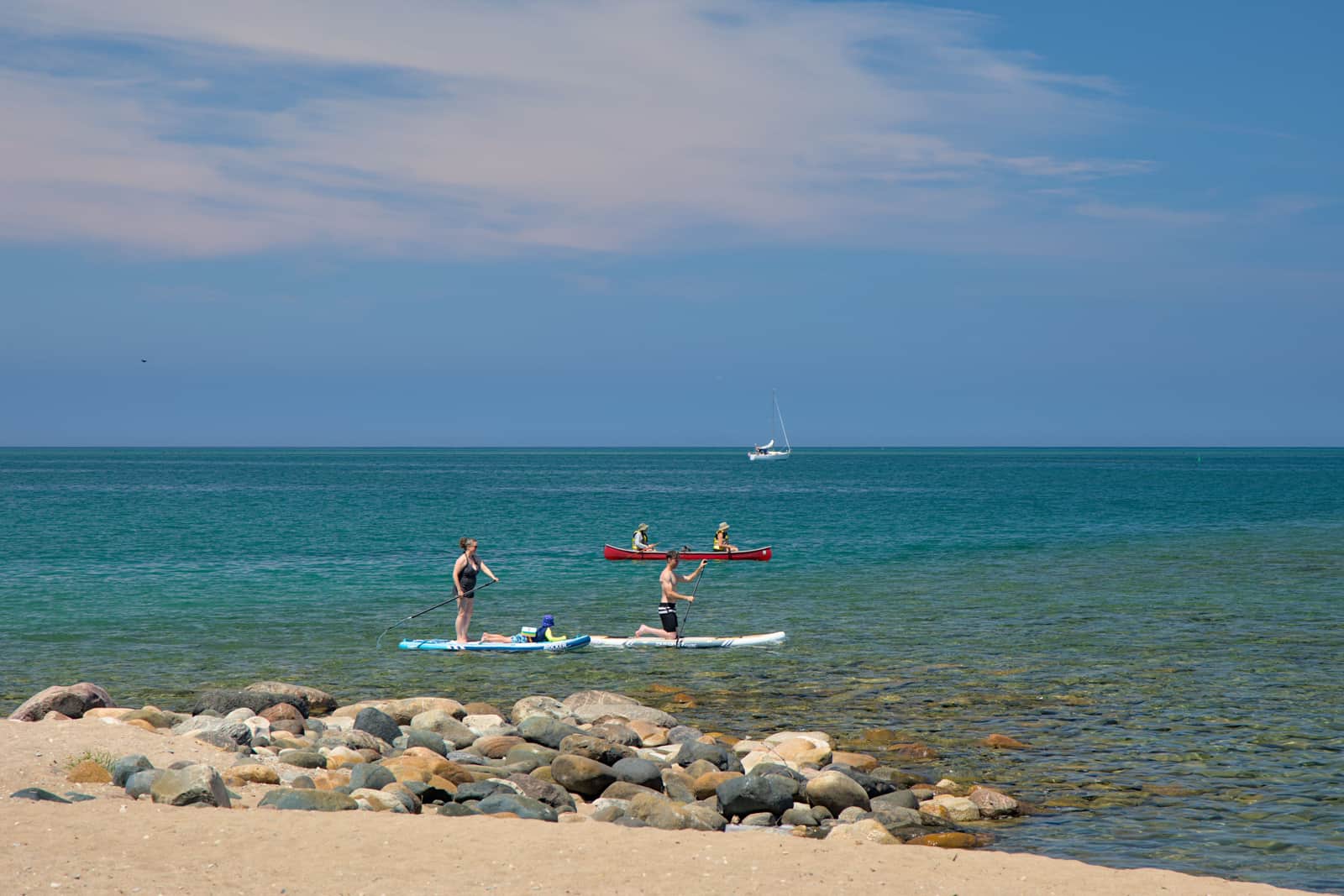
Paddle Board or Kayak?
The honest board-versus-boat comparison, from a site that earns identically either way.
Top pick
Roc Inflatable Stand Up Paddle Board, 10 ft 6 in x 33 in
The default first inflatable board
#ad · how this is funded · price as of October 8, 2026
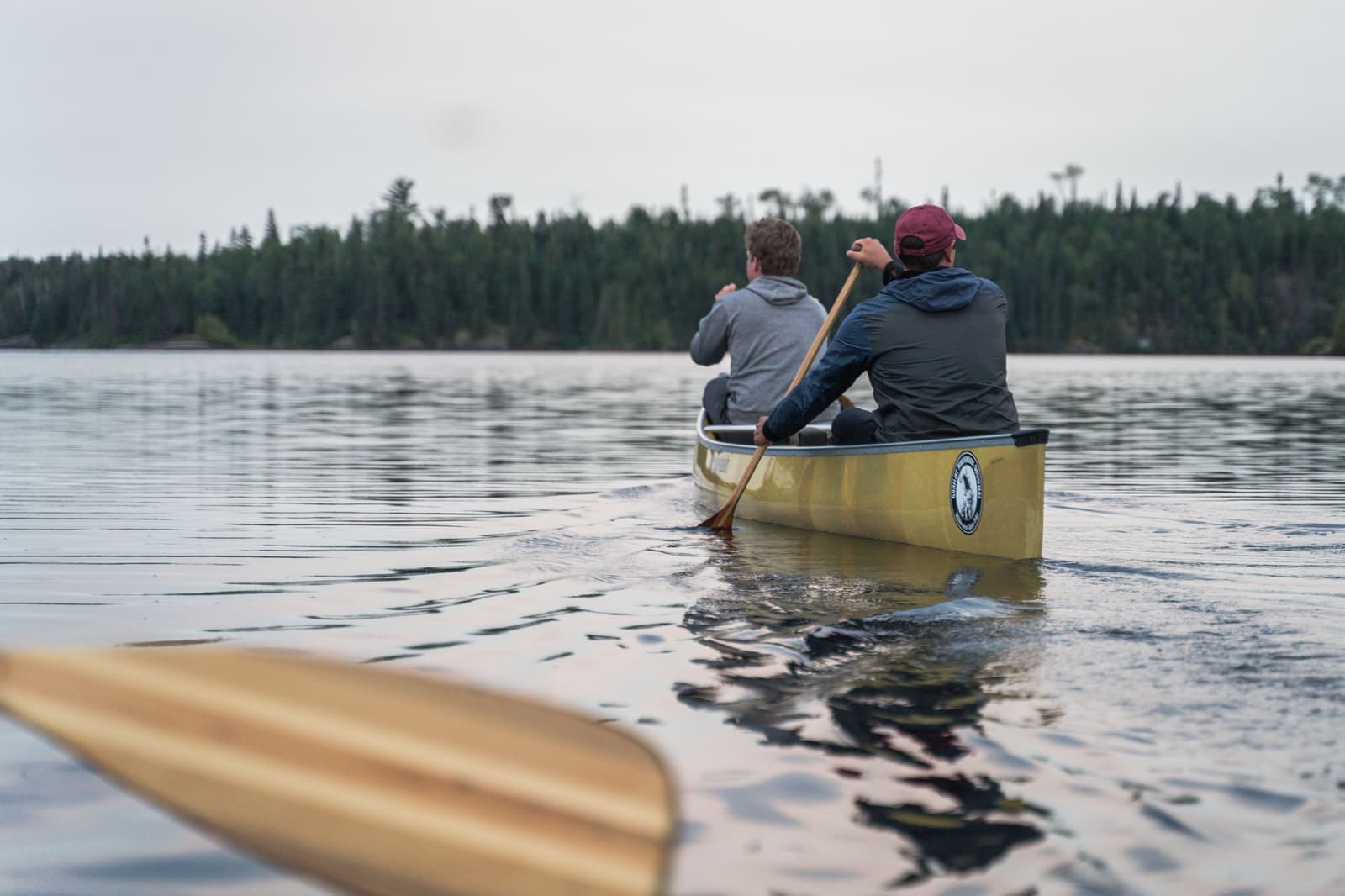
Kayak or Canoe?
The canoe is the better answer more often than the internet allows. Where each one genuinely wins.
Top pick
Perception Rambler 13.5 Tandem Sit-on-Top Kayak
Two adults plus a child or a dog
#ad · how this is funded · price as of October 8, 2026

What Size Paddle Board Do I Need?
A volume and width calculator that shows its working, and ends in an actual board rather than a chart.
Top pick
Roc Inflatable Stand Up Paddle Board, 10 ft 6 in x 33 in
The default first inflatable board
#ad · how this is funded · price as of October 8, 2026
Best Tandem
The Best Tandem Kayaks
Tandem kayaks with the usable-capacity arithmetic done — a 500 lb tandem covers less than most buyers assume.
Top pick
Perception Rambler 13.5 Tandem Sit-on-Top Kayak
Two adults plus a child or a dog
#ad · how this is funded · price as of October 8, 2026
Best First Board
The Best Paddle Boards for Beginners
Five beginner boards ranked on published width and usable capacity, with the displacement arithmetic run on each one.
Top pick
Roc Inflatable Stand Up Paddle Board, 10 ft 6 in x 33 in
The default first inflatable board
#ad · how this is funded · price as of October 8, 2026