Kayaks
Wilderness Systems Pungo 105: What the Specs Say
The most-recommended recreational kayak there is, and the one whose appeal is hardest to read off a spec sheet. Here is what its published numbers mean, and what they deliberately do not capture.
We have not paddled these, and we are not going to pretend we have. Here is what we did instead. Links to Amazon earn us a commission at no extra cost to you, and commission never decides a pick — how this site is funded.
| # | Product | Best for | The spec it turns on | Price |
|---|---|---|---|---|
| 1 | Wilderness Systems Pungo 105 Recreational Kayak, 10 ft 6 inTop pickThe only hull here that will still feel right in year three, because the seat and the waterline were designed for people who paddle for three hours rather than forty minutes. | The boat you keep after your first season | 126 in long, 30 in beam, 47 lb hull, 300 lb rated capacity |
We have not paddled this boat. What follows is what its published specification means, run through the same arithmetic we apply to every hull on this site, plus an honest account of where the spec sheet stops explaining the boat.
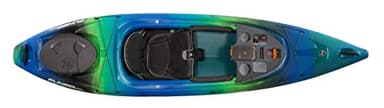
Top pick — The boat you keep after your first season
Wilderness Systems Pungo 105 Recreational Kayak, 10 ft 6 in
The only hull here that will still feel right in year three, because the seat and the waterline were designed for people who paddle for three hours rather than forty minutes.
What the listing publishes
126 in long, 30 in beam, 47 lb hull, 300 lb rated capacity
Usable at the 65 percent rule: 195 lb (range 180–210 lb), which leaves about 175 lb of paddler after a 20 lb day kit. Why 65 percent.
126 in of waterline with a defined keel line is why this tracks straight where a 9 ft 5 in flat-bottom does not. Distance stops being a fight, which is the difference between a boat you use twice and one you use twenty times.
300 lb rated is about 195 lb usable and 175 lb of paddler after a day kit. That is less headroom than the Flash despite being the better boat -- the rating is not the quality signal, and this is the clearest example of it on the site.
47 lb is the practical ceiling for a one-person carry from a driveway to a launch. Past this you are into cart territory, and a cart is a real cost that belongs in the total.
What it does well
- 126 in waterline plus a keel line means it holds a course without constant correction
- The seat is the reason people keep these boats -- it is a chair, not a molded dent
- 30 in beam is stable enough that a nervous first-timer relaxes inside ten minutes
What it costs you
- 47 lb is a real carry and gets old across a long parking lot
- 300 lb rating is mid-pack, so a heavier paddler runs out of room before the boat runs out of quality
- Costs more than every other sit-inside here, usually by a wide margin
Skip this if this is a once-or-twice-a-summer boat. Nothing about a better seat and a truer waterline is worth paying for if the hull spends eleven months against a garage wall.
#ad · how this is funded · price as of October 9, 2026
The numbers, in order of how much they matter
| Spec | Published | What it means |
|---|---|---|
| Length | 126 in (10 ft 6 in) | Enough waterline to hold a course. This is the spec doing the work |
| Beam | 30 in | Inside our 29 to 31 in beginner band. Settled without being slow |
| Hull weight | 47 lb | The practical ceiling for a one-person carry from a driveway to a launch |
| Rated capacity | 300 lb | About 195 lb usable at the 65 percent rule |
| Hull shape | Shallow-arch with a defined keel | Tracks. The keel line is why it does not wander |
| Deck | Sit-inside, large cockpit | Drier in cool weather. Harder to remount in deep water |
Who the 300 lb rating actually covers
This is the number people misread most often, because it is mid-pack on a boat that is not mid-pack. Rated capacity is not usable capacity: a hull loaded to its printed maximum sits low, handles badly, and takes water in any chop. The 65 percent figure manufacturers publish as the comfortable band is the one to size against.
Worth sitting with that, because it cuts against the recommendation: the Perception Tribe 11.5 is rated 350 lb and the Pelican Seek 100X is 300 lb at nine pounds lighter and a great deal cheaper. The Pungo does not win on capacity and it does not win on price. If either of those is your binding constraint, it is not your boat.
What the waterline buys
126 inches with a defined keel is the difference between a boat that goes where you point it and one that needs a correction stroke every few strokes. On a 9 ft 5 in flat-bottomed hull, a beginner spends the first hour fighting a yaw they do not yet know how to read. On this hull that problem largely does not appear, which means the first outing is spent looking around instead of correcting.
The cost of a keel line is turning. This boat is slower to spin than a short flat-bottom, which matters on a twisting creek and does not matter at all on open water. What each hull shape does covers the trade in full.
The seat, which is the actual product
The reason this boat has the reputation it has is not on the spec table. Most recreational kayaks in this price class have a molded dent with a nylon backband. This one has an adjustable frame seat with a real back, and the difference does not show up in the first twenty minutes — it shows up in hour three, which is exactly when a beginner decides whether they like kayaking.
How it compares to the cheaper sit-insides
This is the useful comparison, because nobody cross-shops a Pungo against a sit-on-top. They cross-shop it against the other closed-deck boats in the beginner aisle, and every one of those is cheaper.
| Boat | Length | Beam | Hull weight | Rated capacity |
|---|---|---|---|---|
| Wilderness Systems Pungo 105 | 126 in | 30 in | 47 lb | 300 lb |
| Old Town Vapor 10 | 120 in | not published | not published | 325 lb |
| Pelican Argo 100X | 120 in | 28 in | 36 lb | 275 lb |
| Lifetime Cruze 100 | 120 in | 31 in | 46 lb | 275 lb |
| Perception Flash 9.5 | 113 in | 29 in | 39 lb | 325 lb |
Read that table cold and the Pungo does not win a single column. It is not the lightest, not the widest, not the highest-rated, and it is the most expensive. Everything it is better at — the seat frame, the keel line, the way the cockpit is finished — is a thing the spec sheet has no column for. That is an uncomfortable position for a site that ranks on published numbers, and it is the honest description of this boat.
So the recommendation comes with its own counter-argument attached: if you are buying on the numbers, buy the Flash 9.5 or the Argo 100X and spend the difference on a better paddle. If you are buying on how three hours feels, this is the boat, and no table on this site will show you why.
The cockpit, and why entry matters more than it sounds
Closed-deck kayaks are described by cockpit size and beginners rarely register it as a spec. It decides two things that come up on every single outing: how easily you get in at the shore, and how quickly you get out if the boat goes over.
The Pungo cockpit is at the large end of the recreational class — closer to an opening you step into than a hole you thread your legs through. For an older paddler, a stiff paddler, or anyone nervous about being enclosed, that is the difference between a boat that feels like a chair and one that feels like a commitment. It is also why this hull suits people who would otherwise be pushed toward a sit-on-top on comfort grounds alone.
The cost of a large cockpit is that it takes on more water in chop and cannot take a spray skirt as effectively as a touring boat. On the flat, protected water this hull is meant for, that trade is entirely in your favor.
What the listing does not tell you
- **No paddle in the box.** Budget for one. A cheap paddle undoes a good hull faster than anything else you can buy — what to look for.
- **47 lb is a carry, not a lift.** It is fine to a launch fifty yards away and unpleasant across a long parking lot. A cart is a real line item for many people.
- **Sit-inside means a wet exit.** If you go over, this hull fills. That is a genuine skill gap for a first-season paddler and the main reason we send summer-only paddlers to a sit-on-top instead.
- **Storage is one dry hatch plus the cockpit.** Enough for a day kit, not enough for a camping load without a deck bag.
Questions people actually ask
Is the Pungo 105 good for a complete beginner?
What size paddler does the Pungo 105 fit?
Pungo 105 or Pungo 120?
Is the Pungo 105 worth the extra money?
Can you fish from a Pungo 105?
Where these numbers came from
Every figure on this page traces to one of these. Where a number could not be sourced, the page says so rather than estimating it.
Read next

Best Seat Upgrade
The Best Kayak Seat Upgrades
The seat is the weakest part of a budget kayak and the cheapest to fix. Which kind fits your hull, what back height actually helps, and five honest picks.
Top pick
BKC UH-PS223 Memory Foam Kayak Seat
A tall back on a sit-on-top, for the least money
#ad · how this is funded · price as of October 9, 2026
Best First Kayak
The Best Kayaks for Beginners
Beginner kayaks ranked on width, carry weight and usable capacity — with the 65 percent arithmetic run on every one.
Top pick
Perception Tribe 11.5 Sit-on-Top Kayak
The all-round first sit-on-top
#ad · how this is funded · price as of October 9, 2026

Sit-On-Top vs Sit-In Kayak
Water temperature and remounting decide this, not preference. The honest comparison, with picks for each.
Top pick
Perception Tribe 11.5 Sit-on-Top Kayak
The all-round first sit-on-top
#ad · how this is funded · price as of October 9, 2026

What Size Kayak Do I Need?
Capacity, length and width worked out properly — including the 65 percent rule that changes which boats you should be looking at.
Top pick
Perception Tribe 11.5 Sit-on-Top Kayak
The all-round first sit-on-top
#ad · how this is funded · price as of October 9, 2026
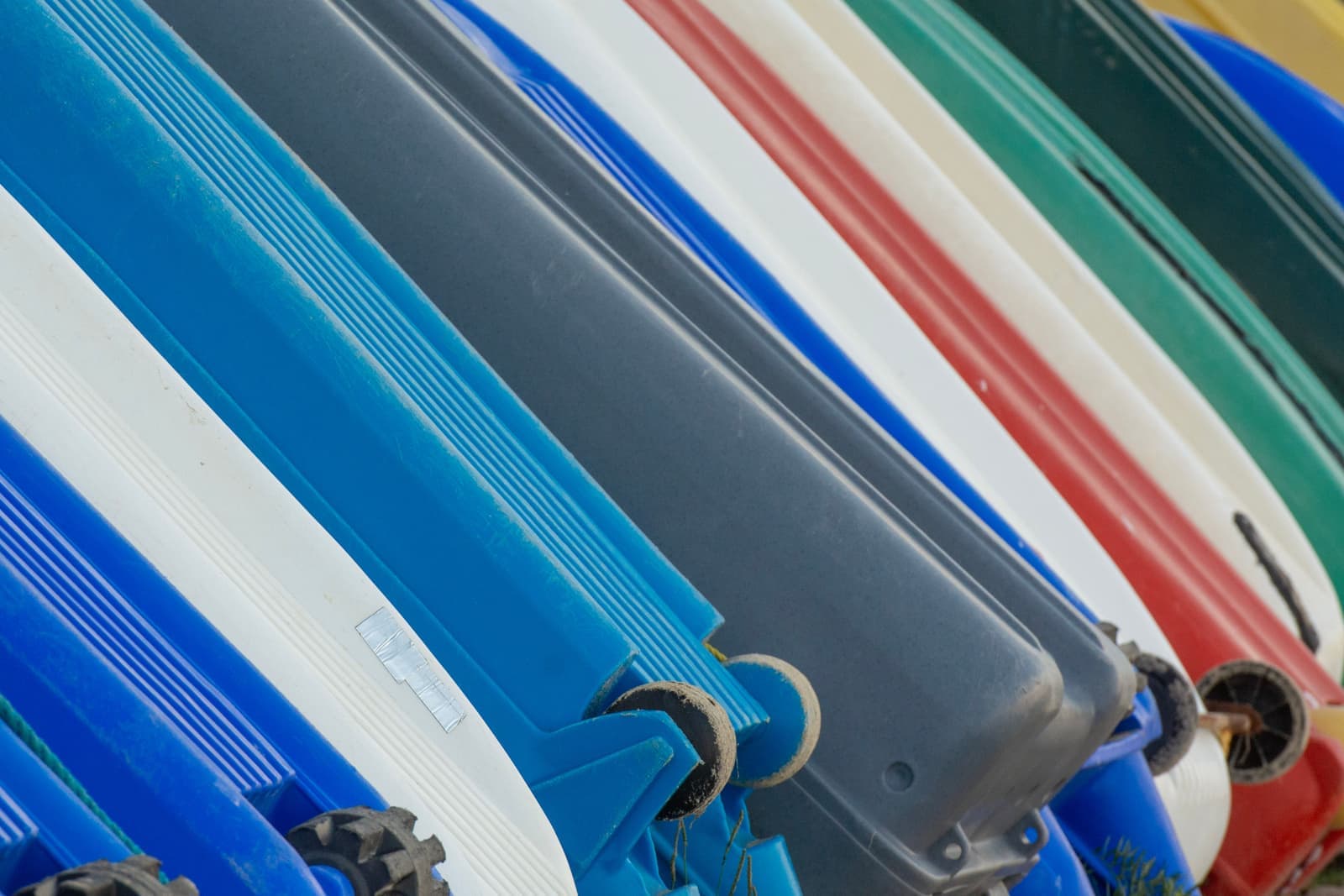
Kayak Hull Types: What Each Shape Does on the Water
Flat, shallow-V, rounded and pontoon hulls — what each shape actually does, and which one belongs under a beginner.
Top pick
Perception Tribe 11.5 Sit-on-Top Kayak
The all-round first sit-on-top
#ad · how this is funded · price as of October 9, 2026
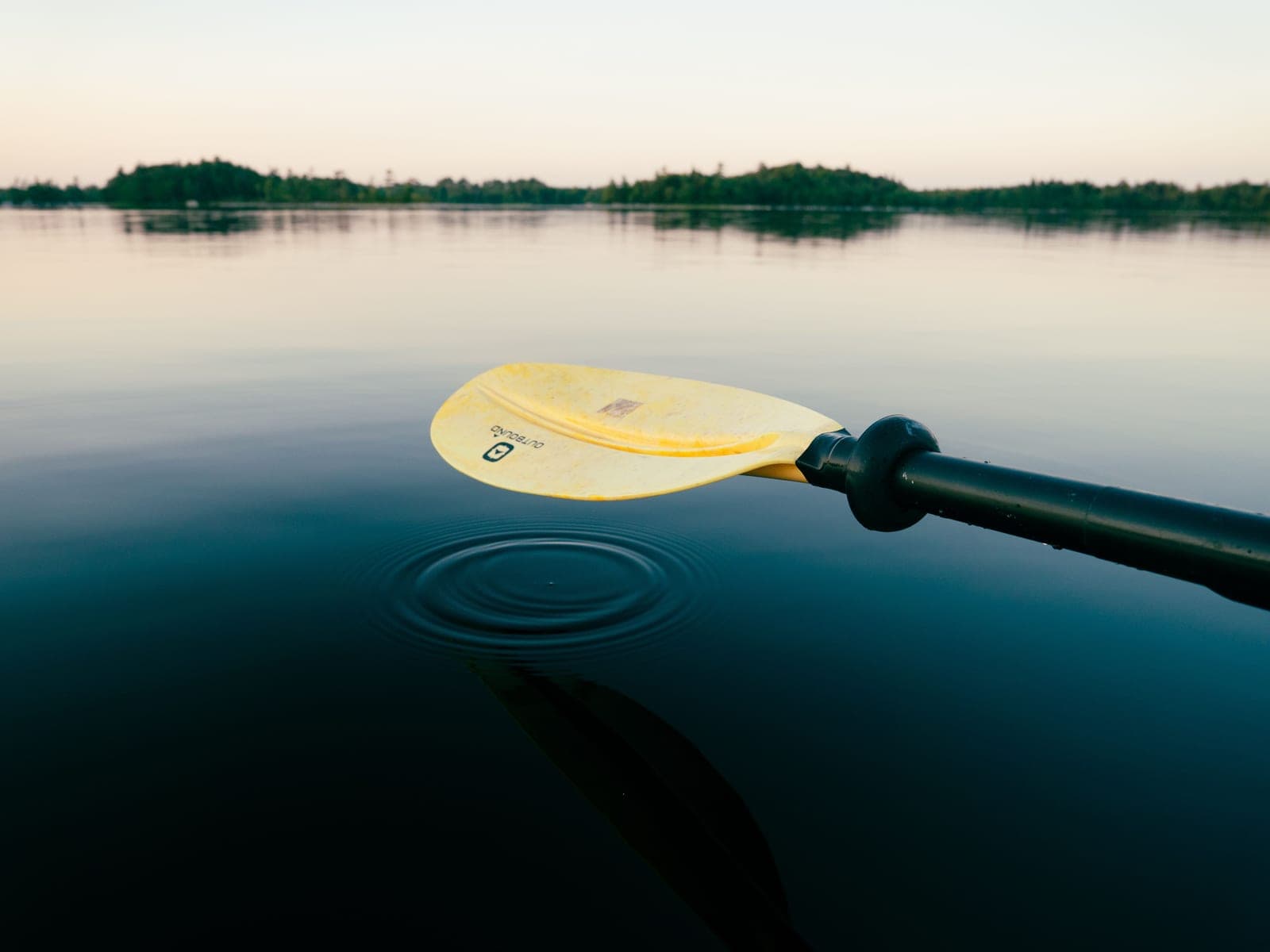
Best First Paddle
The Best Kayak Paddles for Beginners
Paddles at each common length, chosen by the size you actually need rather than by price bracket.
Top pick
Bending Branches Whisper Kayak Paddle, 230 cm
The first paddle worth keeping
#ad · how this is funded · price as of October 9, 2026