Choosing Your First
Can You Kayak If You Can't Swim?
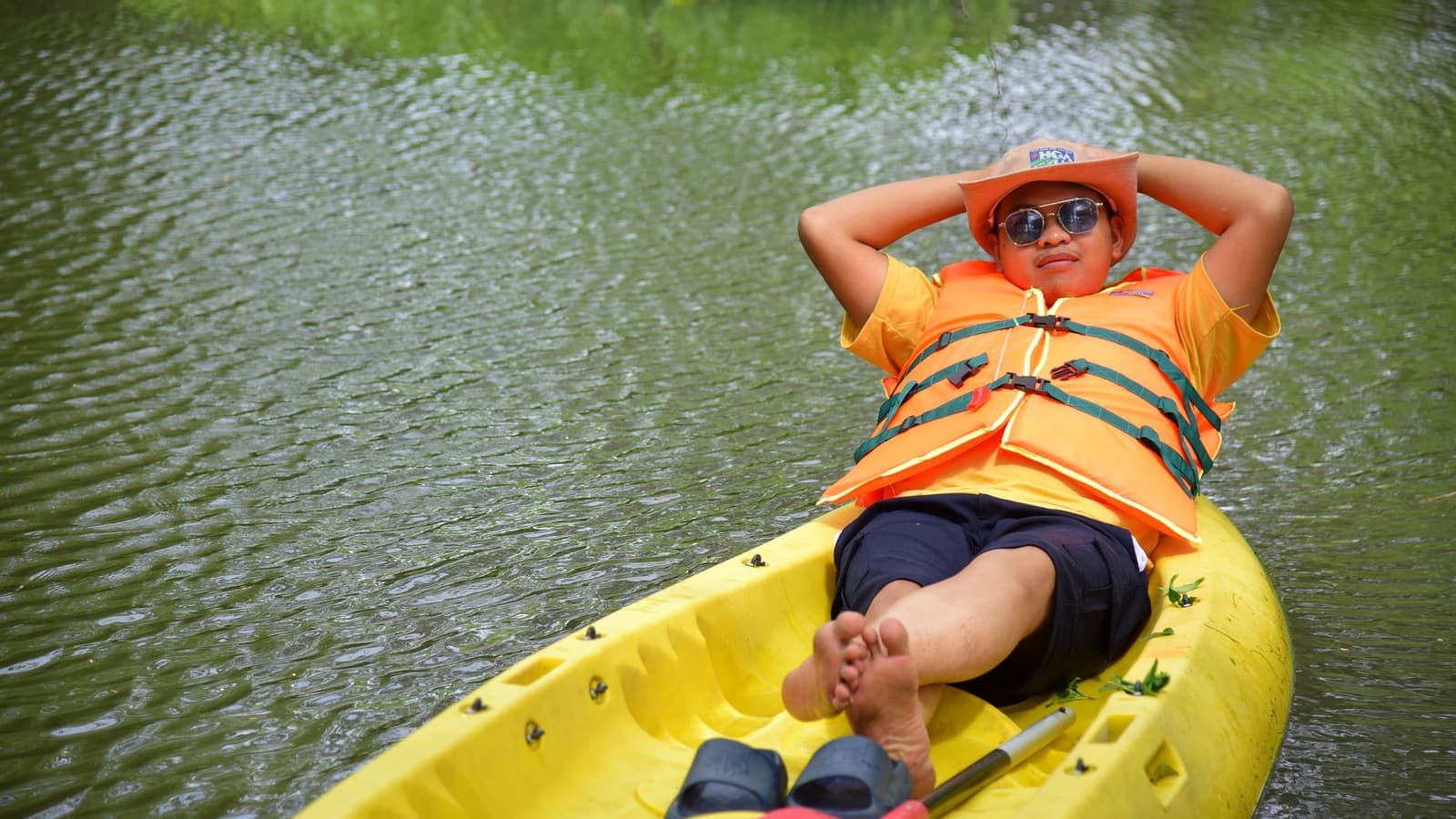
Yes, with four conditions, and the first one is not negotiable: the life jacket goes on before you get in and stays on. A worn PFD floats a non-swimmer exactly as well as a swimmer.
We have not paddled these, and we are not going to pretend we have. Here is what we did instead. Links to Amazon earn us a commission at no extra cost to you, and commission never decides a pick — how this site is funded.
| # | Product | Best for | The spec it turns on | Price |
|---|---|---|---|---|
| 1 | 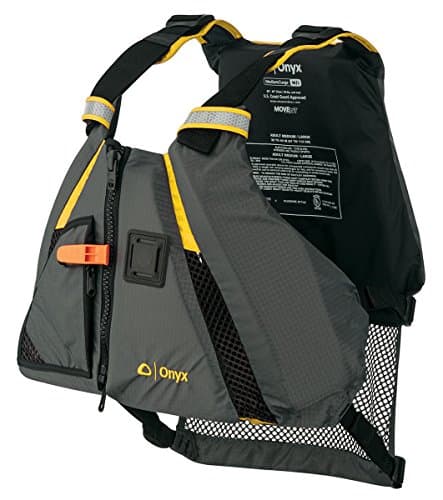 Onyx MoveVent Dynamic Paddle VestTop pickA paddling-cut vest with a mesh lower back, which is the design difference that stops a PFD from being pushed up your neck every time you sit against a seat back. | The PFD you will actually keep on | USCG and Transport Canada approved, 90 to 300 lb range, 1.7 lb, ventilated back panel | |
| 2 | 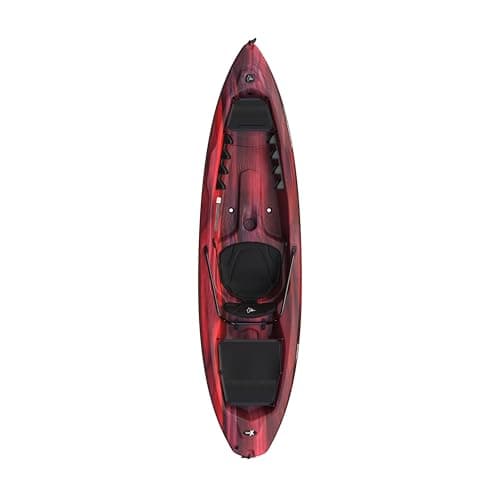 Pelican Seek 100X Sit-on-Top Kayak, 10 ftNine pounds lighter and seventeen inches shorter than the Tribe, for eight pounds less usable capacity. That trade is the whole reason to pick this one. | A sit-on-top that still fits a small car | 120 in long, 30 in beam, 43.1 lb hull, 300 lb rated capacity | |
| 3 | 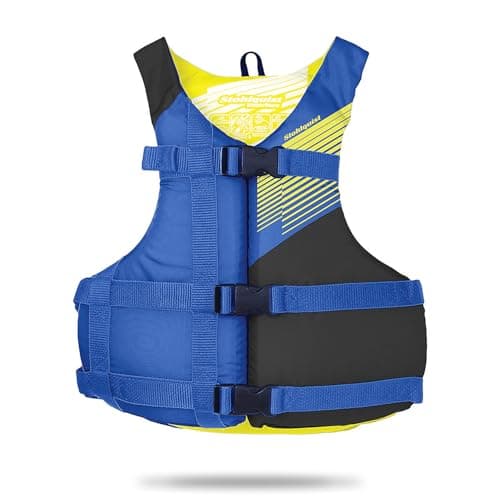 Stohlquist FIT Adult Life Jacket, Type IIIA universal-fit Type III is the sensible answer to the spare-PFD problem: the vest that lives in the garage for whoever comes along. | One vest that fits several adults | USCG approved Type III, universal fit, 90 to 300 lb range | |
| 4 | 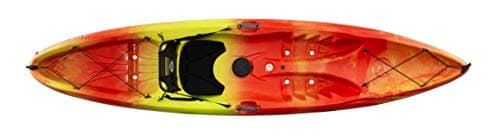 Perception Tribe 11.5 Sit-on-Top KayakThe combination almost nothing else manages: 350 lb of rating, a 30 in beam and enough waterline to hold a line, in a hull a first-timer can climb back onto from the water. | The all-round first sit-on-top | 137 in long, 30.25 in beam, 52 lb hull, 350 lb rated capacity |
This question usually gets a flat no, which is both unhelpful and not what the safety agencies say. The federal requirement is a life jacket, not a swimming certificate, and the reason is that in cold or rough water swimming ability helps far less than people assume. Here is the honest version, including where it stops.
Why the vest matters more than the stroke
The U.S. Coast Guard's 2024 recreational boating statistics record 556 deaths — the fewest in more than fifty years — and that 87 percent of those who drowned were not wearing a life jacket. That figure is the single most useful fact in this whole subject, and it is about equipment rather than ability.
A worn, approved PFD holds your head clear of the water without any effort from you. It does that for a non-swimmer exactly as well as for a swimmer. What a non-swimmer loses is not flotation — it is the composure to do things in the water, and that is what the other three conditions on this page are for.
The four conditions
- **Wear an approved life jacket, fitted and done up, from the car to the car.** Not carried, not loose, not unzipped. A vest that rides up over your ears when you are in the water is too big — check the fit by having someone pull up on the shoulders while you stand.
- **Pick water you could stand up in.** A shallow lake margin, a pond, a slow protected river, a lagoon. Within fifty yards of a shore you can walk out onto. This is the condition that turns falling in from an emergency into an inconvenience.
- **Take a sit-on-top, not a sit-inside.** A sit-on-top is an open deck you can haul yourself back onto in deep water. A sit-inside has a cockpit that fills, and emptying it before re-entry is a skill. The full comparison.
- **Go with somebody, in a second boat.** Not somebody on shore. A paddler alongside is the difference between a self-rescue you have never practiced and a hand on your boat.
All four, not three. Each one covers a different part of the same risk, and the commonest version of this going wrong is somebody who did the first three and went alone.
What falling in actually involves
Worth knowing in advance, because the thing that makes falling in dangerous for a non-swimmer is panic, and panic is mostly surprise.
- **You go under briefly and the vest brings you up.** It is a second or two. Expect it rather than being surprised by it.
- **You will gasp.** That is the involuntary reaction to sudden cold and it is the reason this page says warm water and shallow margins. Keep your mouth clear and breathe out.
- **Find the boat, then the paddle, in that order.** The boat floats and does not go far. The paddle floats too.
- **Hold the boat and get your breath.** You are floating. Nothing further is urgent.
- **Kick to shallow water if it is close**, which on the water this page recommends it is. Pushing the boat ahead of you is easier than towing it.
- **Remount in shallow water**, not in the deep. Standing beside the boat, lie across the deck, then swing your legs round.
The first-time-on-the-water guide walks through the rest of a first trip, and it is worth reading alongside this.
Which boat, and why width is the honest answer
Not falling in at all is better than handling it well, and the specification that decides how likely you are to fall in is beam — the width of the hull where it meets the water.
| Length | Where it works | How it behaves | Who it is for |
|---|---|---|---|
| Under 10 ft | Ponds, small lakes, tight creeks | Turns easily, slow, wanders on open water | Kids, small ponds, tiny storage |
| 10 to 11 ft | Lakes, slow rivers, first boat | The recreational default. Easy to turn, easy to carry, easy to store | Almost every first-time buyer |
| 11 to 12 ft | Bigger lakes, light touring | Noticeably faster, still turns, heavier to lift | A first boat you expect to keep |
| 12 to 14 ft | Open water, day trips with gear | Fast and tracks straight, needs a rack and two people to load | Second boat, not a first one |
| Over 14 ft | Sea kayaking, multi-day touring | Fast, gear-hungry, unforgiving of a beginner's edge control | Not a first boat |
For a nervous first paddler, 30 to 34 inches of beam on a sit-on-top is the combination. A 30 inch boat feels settled from the moment you sit down and a 26 inch boat does not. Length then decides whether it tracks or wanders, and 10 to 11 feet is the band that does both acceptably.
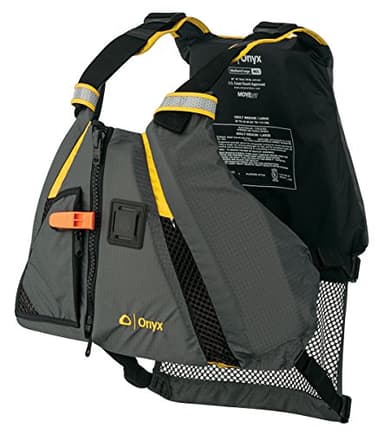
Top pick — The PFD you will actually keep on
Onyx MoveVent Dynamic Paddle Vest
A paddling-cut vest with a mesh lower back, which is the design difference that stops a PFD from being pushed up your neck every time you sit against a seat back.
What the listing publishes
USCG and Transport Canada approved, 90 to 300 lb range, 1.7 lb, ventilated back panel
The U.S. Coast Guard requires a wearable approved PFD for every person aboard a recreational vessel, and requires children under 13 to wear one while under way. Kayaks, canoes and paddle boards count as vessels. Carrying it satisfies the law for adults; wearing it is what actually works.
The 90 to 300 lb rating on the listing is a chest-size and buoyancy fit range, not a capacity. Get the size right -- a PFD that rides up when you lift your arms is one you will take off.
The ventilated back panel exists because kayak seats have backrests. A flat-backed general-purpose vest and a seat back fight each other for the same space, and the vest loses.
What it does well
- Cut for paddling, so the lower back clears a kayak seat
- Ventilated panel makes it bearable in real summer heat
- USCG and Transport Canada approved, which is the only certification that counts
What it costs you
- Costs several times a general-purpose orange vest
- Sized ranges mean you must check the fit chart, not just buy a Medium
- Mesh back panels snag on rough gear
Skip this if this is a once-a-year rental-style outing. A cheap approved vest is legally identical and the comfort argument only pays off with hours in it.
#ad · how this is funded · price as of October 18, 2026
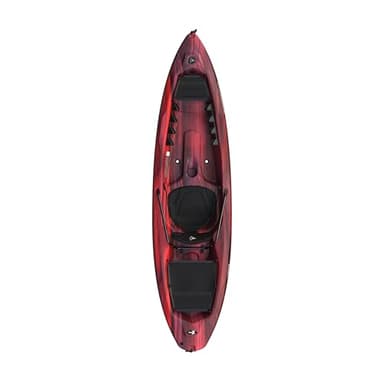
Pick 2 — A sit-on-top that still fits a small car
Pelican Seek 100X Sit-on-Top Kayak, 10 ft
Nine pounds lighter and seventeen inches shorter than the Tribe, for eight pounds less usable capacity. That trade is the whole reason to pick this one.
What the listing publishes
120 in long, 30 in beam, 43.1 lb hull, 300 lb rated capacity
Usable at the 65 percent rule: 195 lb (range 180–210 lb), which leaves about 175 lb of paddler after a 20 lb day kit. Why 65 percent.
300 lb rated is about 195 lb usable and 175 lb of paddler after gear -- enough for most adults, and 33 lb less headroom than the Tribe.
43 lb and 10 ft is the point where a sit-on-top becomes a one-person, one-trip job. Ten feet also fits inside a lot of vehicles that 11 ft 5 in does not.
The twin-arch hull section trades a little flat-water stillness for a hull that leans predictably rather than suddenly, which is a genuinely nicer feel once you are past the first hour.
What it does well
- 43 lb keeps this a one-person carry, unusual for a sit-on-top
- 30 in beam at only 10 ft means stability without the storage problem
- Self-draining deck with the same easy remount as any sit-on-top
What it costs you
- 300 lb rating is 50 lb short of the Tribe's
- 10 ft of hull wanders more than 11 ft 5 in on open water
- Same cold-water objection as every sit-on-top
Skip this if you and a child will regularly be on it together. The usable capacity does not cover two people once you subtract gear, and the Tribe or a tandem does.
#ad · how this is funded · price as of October 18, 2026
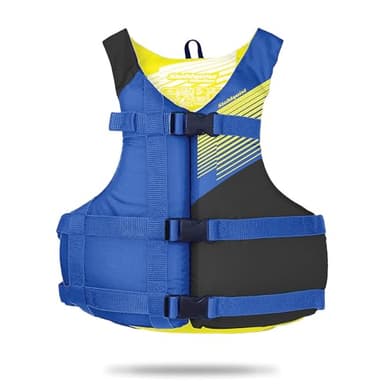
Pick 3 — One vest that fits several adults
Stohlquist FIT Adult Life Jacket, Type III
A universal-fit Type III is the sensible answer to the spare-PFD problem: the vest that lives in the garage for whoever comes along.
What the listing publishes
USCG approved Type III, universal fit, 90 to 300 lb range
Type III is the classification for a wearable flotation aid intended for conscious users in calm water where rescue is close -- which is exactly a lake, and exactly what recreational paddling is.
Universal fit means a wide adjustment range rather than a good fit for anyone in particular. As the guest vest that is right; as your own vest a sized paddling cut is better.
Every adult aboard needs their own approved wearable PFD. Two boats and two friends means four vests, not two, and that is a cost people forget when they budget a first setup.
What it does well
- One vest genuinely covers a wide range of adult guests
- USCG approved Type III, the correct class for recreational paddling
- Inexpensive enough to buy two
What it costs you
- Universal fit is a compromise for every individual wearing it
- Not cut for a kayak seat back the way a paddling vest is
- Adjustment straps need resetting for every new wearer
Skip this if this is your own everyday vest. Buy one cut and sized for you -- a vest that fits is a vest you wear.
#ad · how this is funded · price as of October 18, 2026
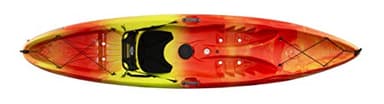
Pick 4 — The all-round first sit-on-top
Perception Tribe 11.5 Sit-on-Top Kayak
The combination almost nothing else manages: 350 lb of rating, a 30 in beam and enough waterline to hold a line, in a hull a first-timer can climb back onto from the water.
What the listing publishes
137 in long, 30.25 in beam, 52 lb hull, 350 lb rated capacity
Usable at the 65 percent rule: 228 lb (range 210–245 lb), which leaves about 208 lb of paddler after a 20 lb day kit. Why 65 percent.
350 lb rated is about 228 lb usable at 65 percent and 208 lb of paddler after a day kit -- the most headroom of any single boat here, and enough that a 200 lb adult is inside the comfortable band rather than at the edge of it.
Sit-on-top means the deck is open and self-draining. The reason that matters to a beginner is not comfort, it is that remounting from deep water is a maneuver you can actually perform, where a flooded sit-inside cockpit is not.
52 lb is the price. This is at the top of what one person carries any distance, and the reason a cart appears in our cost totals for this boat and not for the Argo.
What it does well
- 350 lb rated capacity gives real headroom for larger adults or a child up front
- Open self-draining deck is the forgiving choice for a first summer
- 137 in of hull tracks far better than the 9 and 10 ft boats here
What it costs you
- 52 lb is a two-person lift onto a roof for most people
- You will get wet. Sit-on-tops always do, and that is a season decision not a design flaw
- 11 ft 5 in needs more storage length than the 10 ft boats
Skip this if you paddle in cold water or a cold shoulder season. An open deck in 55-degree water is a different and less pleasant sport, and a sit-inside is the right answer there.
#ad · how this is funded · price as of October 18, 2026
The vest, chosen for this specifically
Three things matter in a PFD for a non-swimmer, and only one of them is on most listings.
- **U.S. Coast Guard approved, Type III.** That is the class for recreational paddling. Not a swim aid, not a water-ski belt, not an inflatable belt pack — a belt pack has to be deployed and then put on, which is exactly what a non-swimmer will not manage.
- **Fitted, not roomy.** A vest that is too large rides up and pushes against your chin while your body sinks. Buy to the chest measurement and do up every strap.
- **A high-back or paddling cut**, because a vest that fights the kayak seat is a vest you will loosen. The MoveVent Dynamic is cut for a seat back and ventilated, which is why it gets worn.
- **Bright.** You are the thing that needs to be seen, not the boat.
The full vest ranking covers the adult category, and the kids' version matters here too, because a non-swimming adult is often taking a non-swimming child.
A paddle board, which is the better answer for some people
Worth saying plainly: for a non-swimmer who is nervous rather than unable, a paddle board paddled kneeling or seated in shallow water is often a gentler start than a kayak. You are not enclosed, you can step off into water you can stand in, and the leash keeps the board attached to you.
The catch is that you will end up in the water more often on a board while learning, which is fine in a warm shallow margin and not fine anywhere else. The board-or-kayak fork, and leashes, which on a board are not optional.
Where this advice stops
There are versions of this question where the answer is genuinely no, and pretending otherwise would be the dishonest kind of helpful.
- **If being in water at all causes panic.** Flotation does not help with that, and a kayak is the wrong place to find out. Two or three lessons in a pool first is the right sequence, and it is cheaper than any boat on this site.
- **Cold water.** Everything on this page assumes water warm enough that an unplanned swim is uncomfortable rather than incapacitating. Shoulder-season and early-spring paddling is not a non-swimmer's first trip.
- **Open water, salt water, current, surf.** The coastal page explains why, and the short version is that the shore you would walk to is no longer there.
- **Alone.** Not under any of the above conditions. This is the one we would hold to hardest.
- **Any water where you cannot see the bottom near the bank.** The condition is a shore you can wade out onto, and you have to be able to confirm it.
What you can ignore
- **Needing to learn to roll.** That is whitewater and sea kayaking. A recreational boat on flat water is not a boat you roll.
- **Swimming certificates and tests.** No federal requirement exists. The requirement is the life jacket.
- **Inflatable belt-pack PFDs.** They are legal for some uses and wrong for this one, because they have to be deployed and donned in the water.
- **Spray skirts.** They keep water out of a cockpit and they are the last thing a nervous first paddler wants between themselves and the exit.
If you work through the four conditions and they all hold, a first trip is a reasonable thing to do. If one of them does not, fix that one rather than going anyway — they are each covering a different failure.
Questions people actually ask
Can you kayak if you can't swim?
Is it safe to kayak if you can't swim?
Do you legally need to be able to swim to kayak?
What kind of kayak should a non-swimmer use?
What happens if you fall out of a kayak and can't swim?
Is paddle boarding easier than kayaking for a non-swimmer?
What type of life jacket should a non-swimmer wear?
Should a non-swimmer kayak alone?
Where these numbers came from
Every figure on this page traces to one of these. Where a number could not be sourced, the page says so rather than estimating it.
- U.S. Coast Guard — 2024 Recreational Boating Statistics, press release (federal: 556 deaths, the fewest in more than 50 years; 87 percent of those who drowned were not wearing a life jacket; about 70 percent of deaths on vessels whose operator had no safety instruction), read 2026-10-17
- U.S. Coast Guard — Life Jacket Wear / Wearing Your Life Jacket (federal carriage and under-13 wear requirements)
- U.S. Coast Guard — Recreational Boaters (federal equipment requirements for vessels, paddlecraft included)
- Eddyline Kayaks — Maximum weight capacity versus ideal capacity for various styles of kayaks (manufacturer, states the 60-70% ideal-capacity band)
- Onyx MoveVent Dynamic Paddle Vest — manufacturer specification as published on the Amazon listing, read 2026-09-02
- Pelican Seek 100X Sit-on-Top Kayak — manufacturer specification as published on the Amazon listing, read 2026-09-02
- Stohlquist FIT Adult Life Jacket, Type III — manufacturer specification as published on the Amazon listing, read 2026-09-02
- Perception Tribe 11.5 Sit-on-Top Kayak — manufacturer specification as published on the Amazon listing, read 2026-09-02
Read next
Life Jacket Rules for Paddlers
The federal PFD requirement, the under-13 wear rule, and why your state matters — sourced, not paraphrased.
Top pick
Onyx MoveVent Dynamic Paddle Vest
The PFD you will actually keep on
#ad · how this is funded · price as of October 18, 2026

Your First Time on the Water
What a first outing is actually like, the checklist that matters, and the three mistakes beginners reliably make.
Top pick
Onyx MoveVent Dynamic Paddle Vest
The PFD you will actually keep on
#ad · how this is funded · price as of October 18, 2026
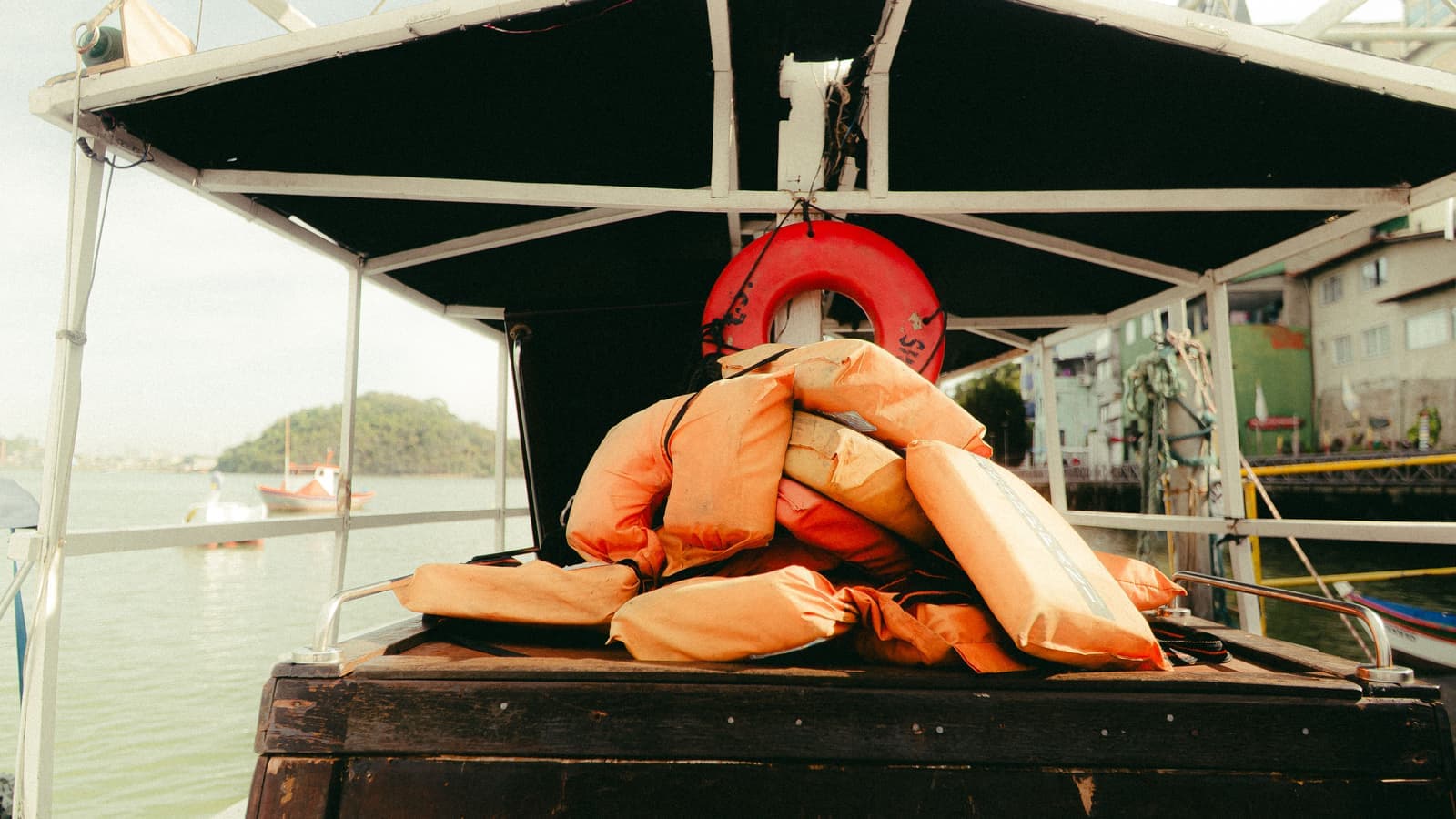
Best Life Jacket
The Best Life Jackets for Paddling
Approved vests compared on cut and comfort — the variables that decide whether it stays on.
Top pick
Onyx MoveVent Dynamic Paddle Vest
The PFD you will actually keep on
#ad · how this is funded · price as of October 18, 2026

Sit-On-Top vs Sit-In Kayak
Water temperature and remounting decide this, not preference. The honest comparison, with picks for each.
Top pick
Perception Tribe 11.5 Sit-on-Top Kayak
The all-round first sit-on-top
#ad · how this is funded · price as of October 18, 2026
Best First Kayak
The Best Kayaks for Beginners
Beginner kayaks ranked on width, carry weight and usable capacity — with the 65 percent arithmetic run on every one.
Top pick
Perception Tribe 11.5 Sit-on-Top Kayak
The all-round first sit-on-top
#ad · how this is funded · price as of October 18, 2026
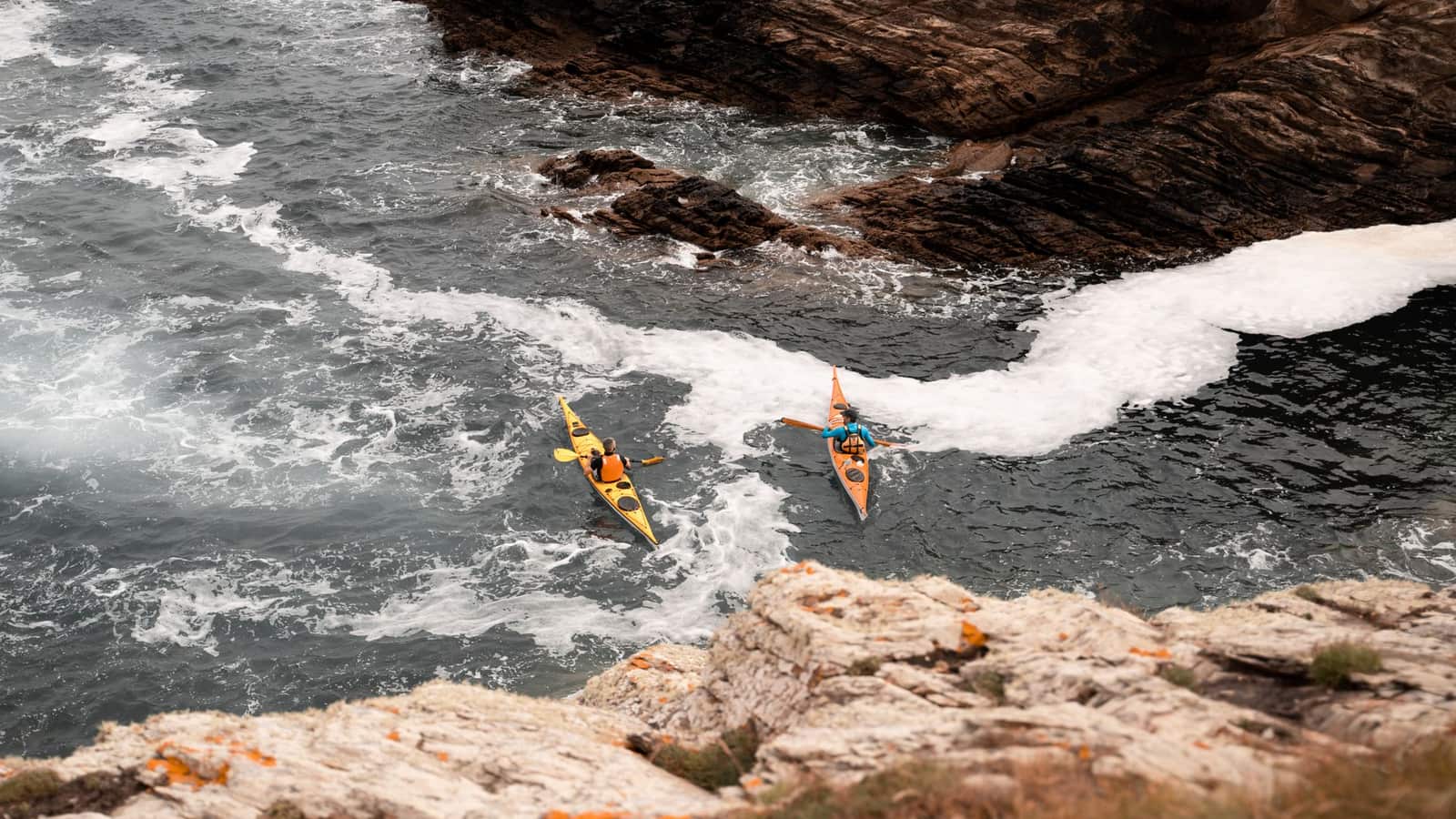
Can You Take a Beginner Kayak on the Ocean?
Bays and estuaries on a calm morning: yes, with the right length. Open coast and surf: no. The conditions that decide it, and the picks that handle a bay.
Top pick
Perception Tribe 11.5 Sit-on-Top Kayak
The all-round first sit-on-top
#ad · how this is funded · price as of October 18, 2026