The Logbook
What a Beginner Setup Really Weighs
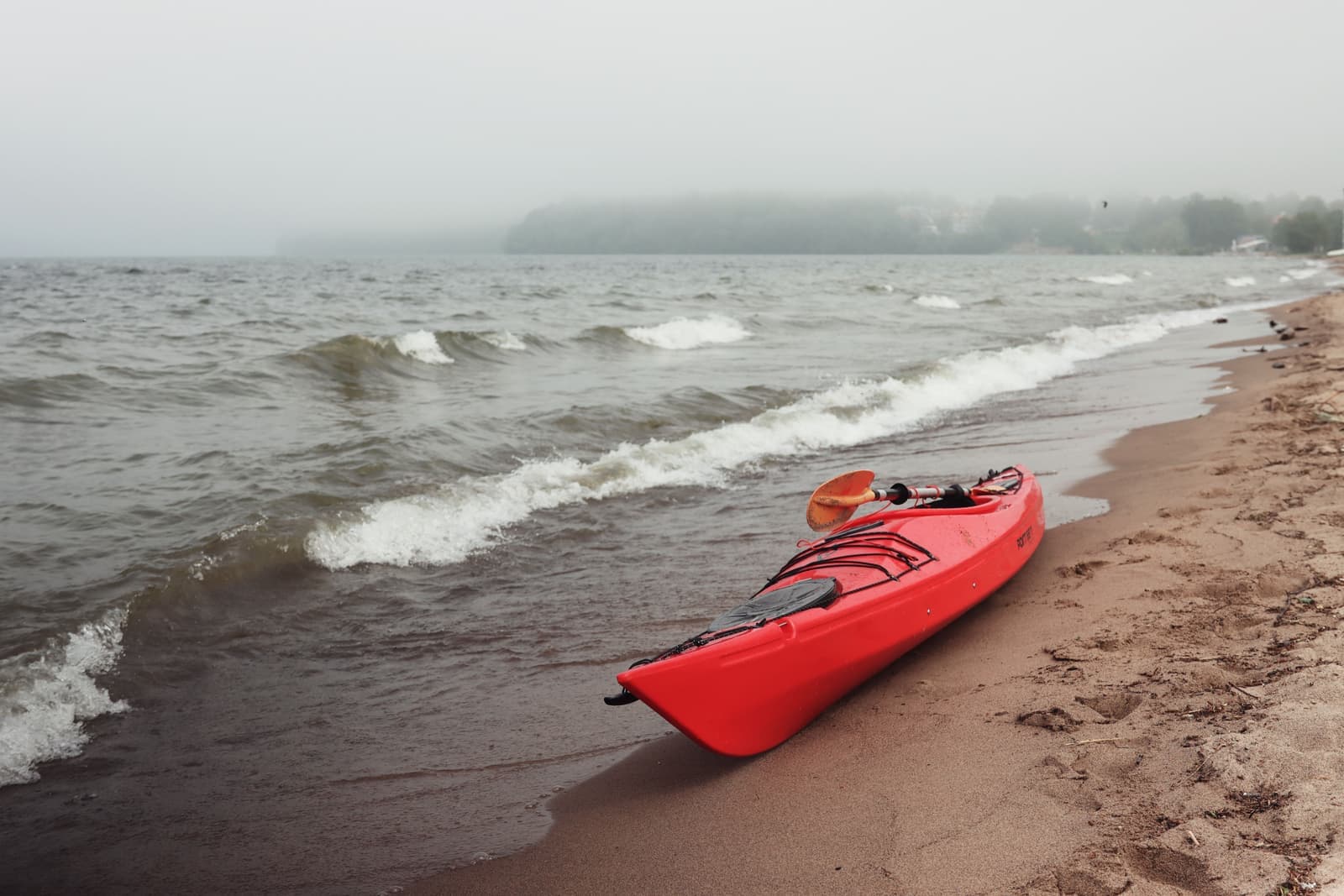
Everybody researches the hull and almost nobody researches how heavy it is. Across the boats we compiled, carry weight predicts actual use better than any other published number.
We have not paddled these, and we are not going to pretend we have. Here is what we did instead. Links to Amazon earn us a commission at no extra cost to you, and commission never decides a pick — how this site is funded.
| # | Product | Best for | The spec it turns on | Price |
|---|---|---|---|---|
| 1 | 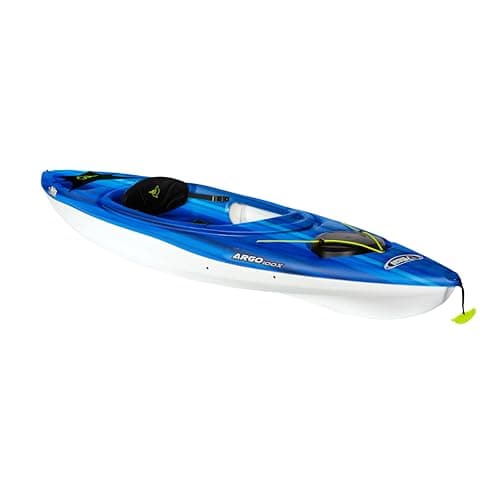 Pelican Argo 100X Sit-In Kayak, 10 ftTop pickThirty-six pounds is the number that matters here: it is the only 10-footer on this page one average adult can get off a car roof without a second person or a bad decision. | The lightest sit-inside to carry alone | 120 in long, 28 in beam, 36 lb hull, 275 lb rated capacity | |
| 2 | 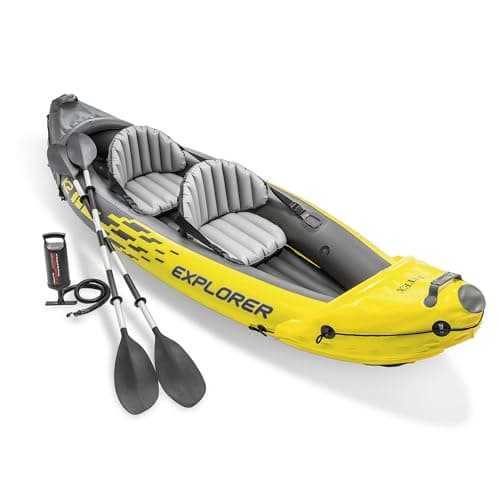 Intex Explorer K2 Inflatable Kayak, 2-person (oars and pump included)Bought as a tandem it disappoints; bought as a very roomy solo boat with 400 lb of rating and no rack requirement, it is the most useful inflatable here. | Two people, no roof rack, small budget | 123 in long, 36 in beam, 35 lb packed, 400 lb rated capacity, two oars and a pump included | |
| 3 | 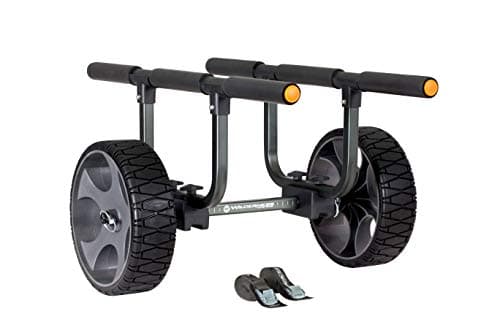 Wilderness Systems Heavy Duty Kayak CartThe purchase that decides how often a 52 lb boat gets used, because the distance from the car to the water is what people actually give up on. | A long walk from the parking lot to the water | 13 lb, 32 x 26 x 16 in, for kayaks and canoes |
Compiling the specifications for this site meant reading a hull weight off every listing that published one, which turned out to be most of the kayaks and about half of the paddle boards. Two things stood out.
The first is that the range is wider than the category's marketing suggests. The second is that this is the specification people research least and regret most.
The published numbers
| Craft | Published weight | What that means in practice |
|---|---|---|
| Intex Challenger K1 (inflatable) | 26 lb | A bag. Carried anywhere, by anyone |
| Intex Excursion Pro K1 (inflatable) | 31.2 lb | A bag, comfortably |
| Intex Explorer K2 (inflatable) | 35 lb | A heavy bag. Still one trip |
| Pelican Argo 100X | 36 lb | One adult, one trip, no planning |
| Advanced Elements StraitEdge (inflatable) | 37 lb | A heavy bag, and the heaviest inflatable here |
| Perception Flash 9.5 | 41 lb | One adult, and you feel it after 100 yards |
| Pelican Seek 100X | 43.1 lb | One adult, short distances |
| Lifetime Cruze 100 | 46 lb | Borderline. A cart starts making sense |
| Wilderness Pungo 105 | 47 lb | Borderline for most people |
| Perception Tribe 11.5 | 52 lb | Two-person roof lift for most people |
| Perception Rambler 13.5 (tandem) | 78 lb | Two people, permanently |
| Perception Tribe 13.5 (tandem) | 79 lb | Two people, permanently |
The Advanced Elements row is the surprise
An inflatable kayak at 37 lb weighs a pound more than the lightest hard-shell we compiled, the 36 lb Pelican Argo 100X. That is not the gap it would be against a heavy hull, and it is still enough to undercut one of the two headline arguments for buying an inflatable — and it is not obvious from any listing.
The storage argument survives completely — it still packs into a bag and lives in a cupboard. The carrying argument is thinner than people expect: this is the heaviest inflatable here, and it lands in the same bracket as the lightest rigid hull rather than well under it. It is worth knowing, because people buy inflatables assuming both advantages come as a pair.
Weight multiplied by distance is the real number
A 52 lb boat over 30 yards is nothing. The same boat over 300 yards is the reason it stays on the roof. Neither figure appears on any listing and their product is what actually determines how often the boat gets wet.
| Hull weight | Under 50 yards | 50 to 150 yards | Over 150 yards |
|---|---|---|---|
| Under 30 lb | Carry it | Carry it | Carry it |
| 30 to 45 lb | Carry it | Carry it, once | Cart |
| 45 to 55 lb | Carry it | Cart | Cart |
| Over 55 lb | Two people | Cart | Cart, definitely |
The trade against capacity
Light boats have low capacity, and it is the same design decision seen from two sides. Less plastic means less weight and less displaced volume, so the two move together — which is why the 36 lb Pelican Argo also has the lowest rating of the adult hard-shells at 275 lb.
| Boat | Hull weight | Rated capacity | Paddler after gear |
|---|---|---|---|
| Pelican Argo 100X | 36 lb | 275 lb | 159 lb |
| Perception Flash 9.5 | 41 lb | 325 lb | 191 lb |
| Wilderness Pungo 105 | 47 lb | 300 lb | 175 lb |
| Perception Tribe 11.5 | 52 lb | 350 lb | 208 lb |
Broadly, every 5 lb of hull buys about 20 lb of paddler capacity. The Pungo breaks the pattern in the wrong direction — it is heavier than the Flash and rated lower — because its weight goes into a better seat and a truer waterline rather than into carrying capacity. That is a legitimate design choice and it is not visible from the numbers alone.
What we would do about it
- **Measure your walk** from parking to water before buying anything.
- **Treat 50 lb as the ceiling** for a boat one adult will move alone regularly.
- **If the boat you want is over that, budget for a cart** in the same purchase rather than later. It is 13 lb of kit and it is what makes the boat get used.
- **Do not assume inflatable means light.** It means small when packed. Those are different claims and one of them is sometimes false.
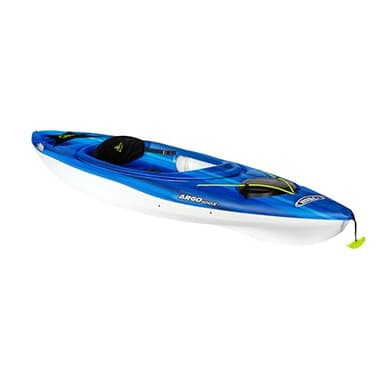
Top pick — The lightest sit-inside to carry alone
Pelican Argo 100X Sit-In Kayak, 10 ft
Thirty-six pounds is the number that matters here: it is the only 10-footer on this page one average adult can get off a car roof without a second person or a bad decision.
What the listing publishes
120 in long, 28 in beam, 36 lb hull, 275 lb rated capacity
Usable at the 65 percent rule: 179 lb (range 165–193 lb), which leaves about 159 lb of paddler after a 20 lb day kit. Why 65 percent.
A 275 lb rating sounds generous until you apply the 60 to 70 percent band Eddyline publishes for usable capacity. At 65 percent that is 179 lb of paddler, gear, clothing and PFD -- so a 160 lb paddler is comfortable and a 200 lb paddler is at the rating's edge before they pack anything.
The 28 in beam is the narrowest here, and narrow is the trade you make for a hull this light. It is stable enough for flat water and it will feel twitchier than a 30 in boat for the first hour.
Sit-inside means your legs are in a cockpit and out of the wind, which is why this is the shoulder-season pick rather than the July one.
What it does well
- 36 lb is genuinely one-person liftable, which decides how often the boat actually gets used
- Sit-inside cockpit keeps your legs dry and out of the wind on cool mornings
- 10 ft turns easily on a small lake and fits diagonally in most garages
What it costs you
- 28 in is the narrowest beam here and feels it on day one
- 275 lb rating is the lowest of the adult sit-insides on this page
- A cockpit is harder to get back into after a capsize than a sit-on-top deck
Skip this if you weigh over about 200 lb, or you expect to swim off the boat on hot days -- a sit-on-top is easier to remount and this hull's usable capacity runs out early.
#ad · how this is funded · price as of October 18, 2026
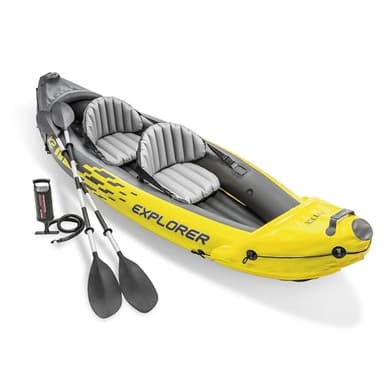
Pick 2 — Two people, no roof rack, small budget
Intex Explorer K2 Inflatable Kayak, 2-person (oars and pump included)
Bought as a tandem it disappoints; bought as a very roomy solo boat with 400 lb of rating and no rack requirement, it is the most useful inflatable here.
What the listing publishes
123 in long, 36 in beam, 35 lb packed, 400 lb rated capacity, two oars and a pump included
Usable at the 65 percent rule: 260 lb (range 240–280 lb), which leaves about 240 lb of paddler after a 20 lb day kit. Why 65 percent.
400 lb rated is about 260 lb usable at 65 percent. Two adults and gear will exceed that more often than not, which is why we recommend it as a spacious single rather than a genuine two-seater.
As a solo it is transformative: 260 lb of usable capacity against the Challenger K1's 143 lb, for nine extra pounds in the bag.
36 in of beam is wider than every hard-shell on this site. Inflatables are wide because air is what makes them stiff, and the side effect is a very forgiving platform.
What it does well
- 400 lb rated capacity -- 260 lb usable, which covers almost any solo adult with gear
- 36 in beam is the most stable platform on this site
- 35 lb in a bag: no rack, no straps, no garage
What it costs you
- Genuinely tight as a two-adult tandem once you apply the usable-capacity rule
- The included oars are oars, not proper kayak paddles -- budget to replace them
- Vinyl construction wallows in wind like every boat in this class
Skip this if you want a true two-adult tandem. Buy a hard-shell tandem with 500 lb or more of rating, or accept this as the roomiest solo inflatable in the price class.
#ad · how this is funded · price as of October 18, 2026
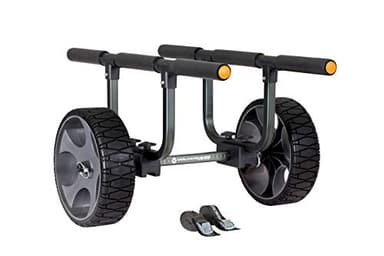
Pick 3 — A long walk from the parking lot to the water
Wilderness Systems Heavy Duty Kayak Cart
The purchase that decides how often a 52 lb boat gets used, because the distance from the car to the water is what people actually give up on.
What the listing publishes
13 lb, 32 x 26 x 16 in, for kayaks and canoes
Carry weight and carry distance multiply. A 52 lb boat over 30 yards is nothing; the same boat over 300 yards is the reason it stays on the roof.
13 lb of cart is 13 lb you also have to carry back to the car, or leave at the launch. Neither is a problem and both are worth knowing in advance.
This is the cost line most first-time buyers leave out, and it is the one that most changes how many times a year the boat gets wet.
What it does well
- Turns a long portage from a decision into a non-event
- Fits kayaks and canoes, so it survives your next boat
- Folds down enough to stow in a hatch or a boot
What it costs you
- 13 lb to carry back to the car or to leave unattended
- Small wheels struggle in soft sand
- Another thing to store
Skip this if you launch from a boat ramp you can park beside. A cart solves a distance problem and buys nothing if you do not have one.
#ad · how this is funded · price as of October 18, 2026
Questions people actually ask
How much does a beginner kayak weigh?
Are inflatable kayaks lighter than hard shells?
Is a 50 lb kayak too heavy to carry?
Why do lighter kayaks have lower weight capacity?
Where these numbers came from
Every figure on this page traces to one of these. Where a number could not be sourced, the page says so rather than estimating it.
- Eddyline Kayaks — Maximum weight capacity versus ideal capacity for various styles of kayaks (manufacturer, states the 60-70% ideal-capacity band)
- Pelican Argo 100X, 36 lb — manufacturer specification as published on the Amazon listing, read 2026-09-02
- Perception Tribe 11.5, 52 lb — manufacturer specification as published on the Amazon listing, read 2026-09-02
- Advanced Elements StraitEdge, 37 lb — manufacturer specification as published on the Amazon listing, read 2026-10-03
- Perception Rambler 13.5, 78 lb — manufacturer specification as published on the Amazon listing, read 2026-09-02
Read next
Lightest to Carry
The Lightest Paddle Boards, and What a Board Really Weighs
Published board weights run 12.2 to 24.5 lb across the boards we cover — and three of seven publish nothing at all. The lightest boards, and what light costs you.
Top pick
FEATH-R-LITE Inflatable Stand Up Paddle Board, 10 ft 6 in x 31.5 in
The lightest board to carry to the water
#ad · how this is funded · price as of October 18, 2026

Best First Kayak
The Best Kayaks for Beginners
Beginner kayaks ranked on width, carry weight and usable capacity — with the 65 percent arithmetic run on every one.
Top pick
Perception Tribe 11.5 Sit-on-Top Kayak
The all-round first sit-on-top
#ad · how this is funded · price as of October 18, 2026
Getting Your Kayak to the Water
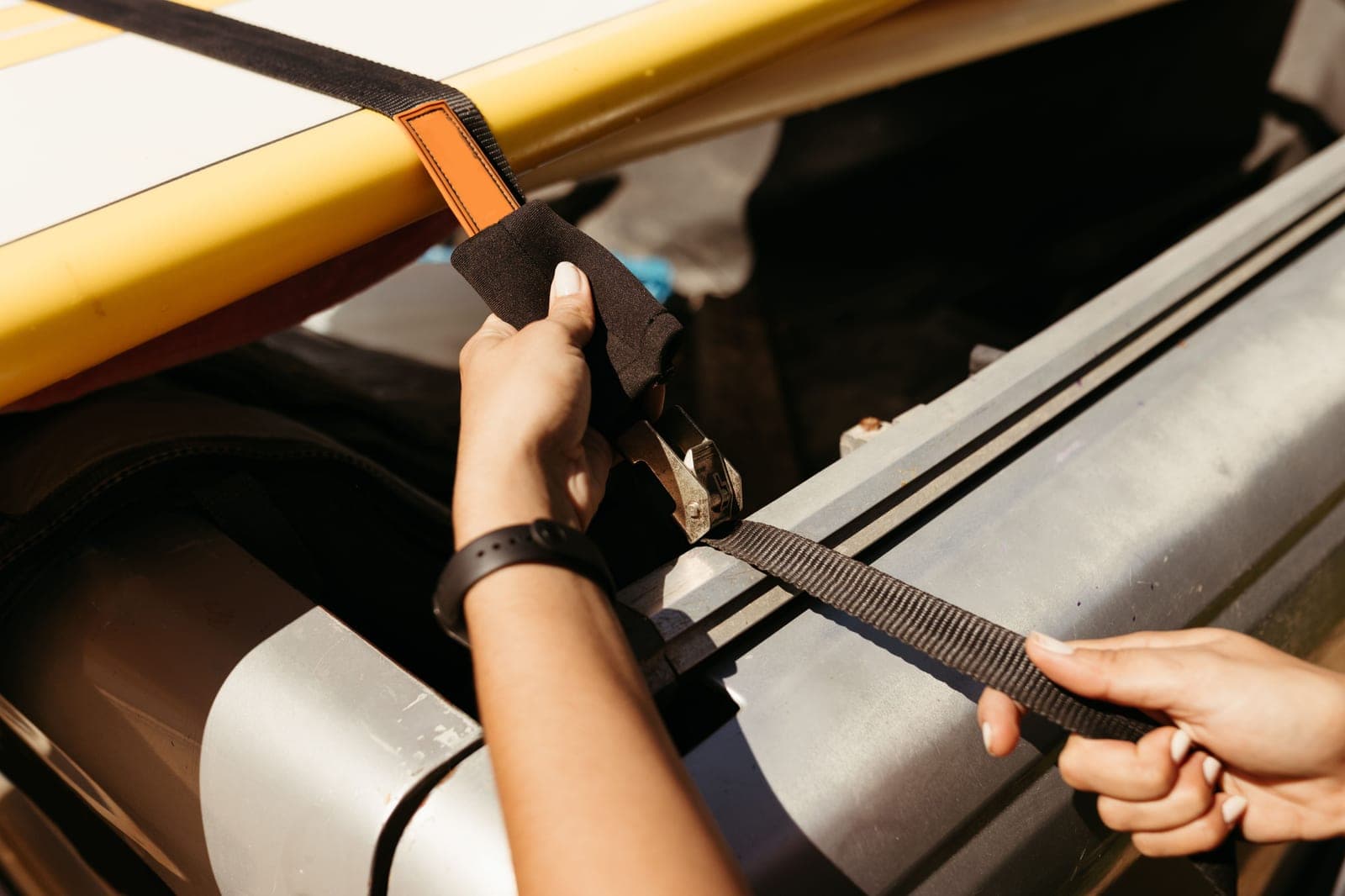
Four ways to move a kayak, including one that needs no roof bars and one that removes the problem entirely.
Top pick
Attwood Universal Rack-Free Car-Top Kayak Carrier Kit
A car with no roof bars at all
#ad · how this is funded · price as of October 18, 2026

Best Car-Top Carrier
Car-Top Carriers, Straps and Carts
Foam kits, J-cradles, cam straps and carts — which you need depends on your car and your parking lot.
Top pick
Attwood Universal Rack-Free Car-Top Kayak Carrier Kit
A car with no roof bars at all
#ad · how this is funded · price as of October 18, 2026
Best Inflatable Kayak
The Best Inflatable Kayaks
Inflatable kayaks ranked on capacity and hull stiffness — including the 220 lb rating that rules out most adults.
Top pick
Intex Explorer K2 Inflatable Kayak, 2-person (oars and pump included)
Two people, no roof rack, small budget
#ad · how this is funded · price as of October 18, 2026
Kayak Weight Capacity, Explained
The 65 percent rule, where it comes from, what happens when you ignore it, and how to size around it.
Top pick
Perception Tribe 11.5 Sit-on-Top Kayak
The all-round first sit-on-top
#ad · how this is funded · price as of October 18, 2026